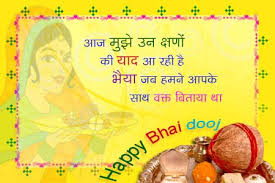
Bhai Dooj(भाई दूज) / Bhau-Beej / Bhai Tika / Bhai Phonta(ভাইফোঁটা) is a festival celebrated by Hindus of India and Nepal on the second lunar day of Shukla Paksha (bright fortnight) in the Vikram Samvat Hindu calendar month of Kartika.[3] It is the last day of the five-day-long Diwali or Tihar festival.
The celebrations of this day are similar to the festival of Raksha Bandhan. On this day, brothers get gifts from sisters.
In souther part of the country, the day is celebrated as Yama Dwitiya.
Regional names
The festival is known as:
- Bhai Dooj (Hindi:भाई दूज) in entire Northern part of India, observed on the last day of the five-day Diwali festival. This is also the second day of the Vikrami Samvat New Year, the calendar followed in Northern India (including Kashmir), which starts from the lunar month of Kārtika. The first day of this New Year is observed as Govardhan Pūja.
- Bhai Tika (Nepali:भाई टीका) in Nepal, where it is the most important festival after Dashain (Vijaya Dashmi / Dussehra). Observed on the third day from Tyohar festival, it is widely celebrated by Newari, Maithali, Tharu, Bahun and Chhetri people. Also known as Bhai Dooj in Nepal, too.
- Bhai Phonta (Bengali:ভাই ফোঁটা) in Bengal and it takes place every year on the first or the second day of the Kali Puja festival.
- Bhai Bij, Bhau Beej, or Bhav Bij (Marathi : भाऊबीज) amongst the Gujarati, Marathi and Konkani-speaking communities in the states of Gujarat, Maharashtra, Goa and Karnataka.
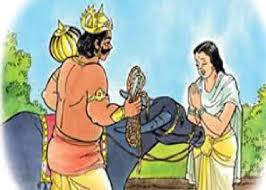
- Another name for the day is Yamadwitheya or Yamadvitiya, after a legendary meeting between Yama the god of Death and his sister Yamuna (the famous river) on Dwitheya (the second day after new moon).
- Other names include Bhatru Dviteeya, or Bhatri Ditya.
According to a popular legend in Hindu mythology, after slaying the evil demon Narkasur, Lord Krishna visited his sister Subhadra who gave him a warm welcome with sweets and flowers. She also affectionately applied tilak on Krishna’s forehead. Some believe this to be the origin of the festival.
The ceremony
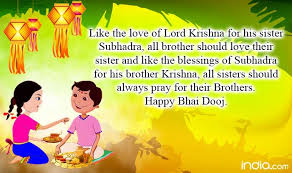
On the day of the festival, sisters invite their brothers for a sumptuous meal often including their favorite dishes/sweets. The procedure may be different in bihar and central india. The whole ceremony signifies the duty of a brother to protect his sister, as well as a sister’s blessings for her brother.
Carrying forward the ceremony in traditional style, sisters perform aarti for their brother and apply a red tika on the brother’s forehead. This tika ceremony on the occasion of Bhai Bij signifies the sister’s sincerest prayers for the long and happy life of her brother and treat them with gifts. In return brothers bless their sisters and may treat them also with gifts or cash.
As it is customary in Haryana, Maharashtra to celebrate the auspicious occasion of Bhau-beej, women who do not have a brother worship the moon god instead. They apply mehendi on girls as their tradition.
The sister whose brother lives far away from her and can not go to her house, sends her sincerest prayers for the long and happy life of her brother through the moon god. She performs aarti for the moon. This is the reason why children of Hindu parents affectionately call the moon Chandamama (Chanda means moon and mama means mother’s brother).
The celebration
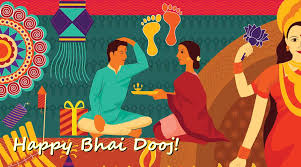
Bhai Phonta in West Bengal is celebrated with much splendor. The ceremony is marked with many rituals along with a grand feast arranged for the brothers.
The festival of Bhai Bij is popular in Haryana, Gujarat, Maharashtra and Goa and is celebrated with great fervour and gaiety. Brothers and sisters look forward to the occasion with immense enthusiasm. To add charm to the occasion, Bhai Bij gifts are exchanged between brothers and sisters as a token of love and appreciation.
Bhav Bij is a time for family reunions as all brothers and sisters in the family get together. Close relatives and friends are also invited to celebrate the Bhav Bij in many families.
Special dishes for the festival include the Maharashtra sweet called basundi poori or kheerni poori.On this occasion sisters give gifts to their brothers.
Bhaitika in Nepal
Bhaitika in Nepal is also known as Bhaitihar meaning tihar of brothers. On this day, sisters pray to Yamraj for her brother’s long life and prosperity.[4] Sisters put seven colored long tika on forehead of their brothers.
(Sources: https://en.wikipedia.org/wiki/Bhau-beej)
 Business So Simple