Major push by ECI for Enforcing due Compliances by Registered Unrecognized Political Parties (RUPPs)

Major push by ECI for Enforcing due Compliances by Registered Unrecognized Political Parties (RUPPs)


Graded Action to be initiated against more than 2100 RUPPs

66 RUPPs claimed IT exemption in FY20 without complying with statutory requirements under Section 29 C of RP Act, 1951; 2174 RUPPs have not submitted contribution report; Action to be initiated against those receiving donations without due statutory compliances

Action initiated against three RUPPs reported to be involved in Serious Financial Impropriety

87 Non-existent RUPPs shall be deleted from the list and benefits under the Symbols Order (1968) withdrawn

The Election Commission of India has initiated action for enforcing due compliances by Registered Unrecognized Political Parties (RUPPs) for relevant sections 29A and 29C of the RP Act 1951. The Commission is cognizant that compliance to the conditions and regulations in the said Act are essential conditions for maintaining financial discipline, propriety, public accountability, transparency and empowering voters for making informed decisions. In the absence of required compliance, the electorate and ECI are deprived of basic factual information in ensuring ECI’s mandate of conducting free, fair and transparent elections. The Commission has evidence of serious financial impropriety, willful attempts for tax evasion and other illegal financial activities against three specific Registered Unrecognized Political Parties (RUPPs) amounting to fraudulent use of privileges and public trust available to them.

There are 2796 Registered Unrecognized Political Parties (RUPP) as in September, 2021(https://eci.gov.in/files/file/13711-list-of-political-parties-symbol-main-notification- dated23092021/), which is an increase of over 300% since 2001. Every RUPP so registered is required to comply with the following rules/instructions and directions:

1. Section 29Cof RP Act 1951requires a RUPP to furnish a contribution report as prescribed in Form 24 A under Rule 85 B of Conduct of Election Rules 1961.Such contributions received by RUPPs are also 100%exempted from Income Tax as an incentive to the parties for strengthening the electoral democracy.


2. Section 29A(9) mandates every political party to communicate any change in its name, head office, office bearers, address, PAN number to the Commission without delay.


3. The political parties are mandated to also furnish Audited Annual Statements, flowing from ECI’s transparency guidelines dated 29/08/2014.Hon’ble Supreme Court in Common Cause vs. UoI & Others (AIR 1996 SC 3081) has upheld the requirement of maintaining audited accounts by the political parties as mandatory and to be strictly enforced. The political parties, therefore, are under a statutory obligation to furnish a return of income for each assessment year to be eligible for exemption from income-tax.


4. The Political Party, [for being registered, as a condition precedent prescribed by ECI under its power under section 29 A (6)] needs to undertake to include in its constitution that it must contest an election conducted by the Election Commission within 5 years of its registration.


5. Further, upon participation in an election, Political Parties are required to furnish their election expenditure statement within 75 days, in case of Assembly elections, and within 90 days, in case of Lok Sabha elections.

  • Out of 2354* RUPPs, over 92% RUPPs have not filed their Contribution Report in 2019
  • 199 RUPPs claimed Rs 445 Cr IT exemption in 2018-19
  • 219 RUPPs claimed Rs 608 Cr IT exemption in 2019-20. Out of these, 66 RUPPs have claimed income tax exemption without submitting contribution reports in Form 24A as mandated under section 29C of the Act.
  • 87RUPPs have been found to be not in existence
  • For the year 2019, 2056 RUPPs have not yet filed their Annual Audited Accounts.
  • In GE 2019, out of 2354 RUPPs only 623 contested elections⁓70% RUPPs did not contest elections**
  • Out of 115 RUPPs (headquartered in the 5 election gone States of Assam, Kerala, West Bengal, Tamil Nadu & UT Puducherry) and which contested Assembly elections of 2021, only 15 RUPPs have filed their Election Expenditure Statement till date.

*(https://eci.gov.in/files/file/9787-amendment-notificaiton-list-of-parties-and-symbols-english-dated-01042019/

**(https://eci.gov.in/files/category/1551-general-election-2019-including-vellore-pc/)

The Commission has noted with serious concern that out of total 2796 RUPPs, a large number are neither taking part in electoral process nor adhering to the one or several of the above requirements which is not only violative of statutory requirements but also defeats the purpose of clean electoral ecosystem. In view of the foregoing, the Commission, in discharge of its mandate of ensuring just, free, fair & transparent electoral process hereby directs the following corrective measures:

1. There are 87 RUPPs, whose address of communication, was statutorily required as registration requirement under section 29A(4).Any change in address was required to be communicated to the ECI under section 29A(9), which they have not complied. These RUPPs have been found to be non-existent after a physical verification carried out by the respective Chief Electoral Officers. The names of such non-existent RUPPs shall be deleted from the list of register of unrecognized registered political parties. Any party aggrieved from this, may approach the concerned Chief Electoral Officer/ Election Commission within 30 days of the issue of this direction along with all evidences of existence, other legal and regulatory compliances including year wise annual audited accounts, contribution report, expenditure report, updation of office bearers including authorized signatories for financial transactions (including bank account). The segregated list of such RUPPs shall be sent to respective CEOs and CBDT for requisite action under extant legal framework.

2. 87 such RUPPs, in absence of ensuring remedial measures listed above, render themselves liable to be not entitled to have benefits under the Symbols Order, 1968, including allocation of common symbol.

3. Three RUPPs which have been reported, prima facie to be involved in serious financial impropriety such as incriminating documents related to bogus donation receipts, formation of shell entities, bogus and non-genuine purchases, facilitating accommodation entries, etc., shall be proceeded against under the extant legal/regulatory regime including entitlement to avail the benefits of Symbols Order, 1968. A reference shall be sent to the Department of Revenue, who have reported misuse, for taking all necessary legal and criminal actions against 3 RUPPs, as appropriate under the extant legal framework.

4. It has been reported that income tax exemptions have been taken to the tune of Rs 445 crores in 2018-19 by 199 RUPPs and Rs 608 crores in 2019-20 by 219 RUPPs. Of these, 66 RUPPS have claimed income tax exemption without submitting contribution reports in Form 24A as mandated under section 29C of the Act.

In view of the fact that there are 2174 RUPPs, which have not submitted contribution reports, the list shall be sent to the Department of Revenue for taking all consequential action as per the RP Act 1951 read with the relevant provisions of the Income Tax Act, 1961 and other statutory/regulatory regime including not granting exemption / withdrawing exemption, if already granted/ examining liability of wrongly claiming exemption as the case may be.

5. 2056 RUPPs, which have failed to furnish Annual Audited Account of the concerned financial year, are indicative of gaps in vital financial information including bank account, PAN, authorized signatories pertaining to those RUPPs, statement of assets and liabilities, contributions received details of donors, expenditure, etc. Therefore, CEOs shall put the list of such RUPPS on their respective websites and afford an opportunity to such RUPPs to comply with extant legal and regulatory regime within 30 days. Non-compliance may make such RUPPs not entitled to have benefits under the Symbols Order, 1968, including allocation of common symbol.

6. 100 RUPPs, which have failed to furnish Election Expenditure Statements after the contest of election(s), have violated the directions of Election Commission. They may approach concerned Chief Electoral Officer with full facts within 30 days of the issue of this direction for remedial action, if any, to avoid any consequential action. 

7. All Chief Electoral Officers shall put this order on their websites for compliance and for affording an opportunity to anyone aggrieved by above action. Any RUPP aggrieved by any action under point 8.1 to 8.6 may approach concerned Chief Electoral Officer with full facts within 30 days of the issue of this direction with all evidences inter-alia including proof of existence, other legal and regulatory compliances made till now such as submission of year wise annual audited accounts, contribution report, expenditure report , if any, updation of office bearers including authorized signatories for financial transactions (including bank account) and operations under the Symbols Order 1968, etc.

Order No. 56/pol.parties/2021/PPS-III (Part)/Conf-2022 dated May 25, 2022 can be accessed on https://eci.gov.in/

Press Release dated 25 May 2022, Release Id :-1828251
Awareness Building and Guidance on using the PPP Toolkits

The Toolkits available on www.pppinindia.gov.in  are for use by PPP practitioners across India in both the public and private sectors.

A public-private partnership (PPP) is a funding model for public infrastructure projects and initiatives such as a new telecommunications system, public transportation system, airport or power plant. Government agencies represent the public partner at a local, state and/or national level.

A two day -workshop on Awareness Building and Guidance on using the PPP Toolkits was organized by the Department of Economic Affairs (DEA), Ministry of Finance, in collaboration with Foreign, Commonwealth and Development Office, UK with an objective to sensitize and train government officials in using PPP toolkits for decision making in PPP projects. The Training programme was inaugurated by Joint Secretary, DEA, Shri. Baldeo Purushartha. Special addressees included Mr. Shantanu Mitra, Head- Infrastructure and Urban Development, FCDO, Ms. Sangeeta Mehta, Senior Programme officer (FCDO), Mr. Shoubhik Ganguly, Senior Infrastructure Advisor (FCDO). A vote of thanks was delivered by Dr. Molishree, Deputy Secretary, DEA.

For reaching out to maximum stakeholders involved in decision making process, the workshop was organized on hybrid mode. The workshop witnessed active participation of 155 participants (35 participants from 16 Central Infrastructure Line Ministries and Departments including NITI Aayog (M/o Housing Affairs, Civil Aviation, Steel, Road Transport and Highways, New and Renewable energy, Power, Railways, Shipping, Food Processing Industries and D/o Telecom, Rural Development, Expenditure, Food and Public Distribution, Water Resources, Promotion of Industry and Internal Trade; and 120 participants from 15 states and 2 UTs (Gujarat, Kerala, Rajasthan, Nagaland, Manipur, Chandigarh, Uttarakhand, Tamil Nadu, Haryana, Madhya Pradesh, Chhattisgarh, Karnataka, Odisha, Andhra Pradesh, Punjab, Jammu and Kashmir and Pondicherry).

The workshop broadly covered introduction and walkthrough of PPP structuring Toolkit, Value-for Money Toolkit, Framework for recognition, valuation and reporting of contingent liabilities Toolkit, Post Award Contract Management (PACM) toolkit. The sessions were delivered by Industry experts including Ms. Mehali Patel, Director CRISIL, Mr. RNK Prasad, Consultant Price Waterhouse Coopers and Mr. Kushal Kumar Singh, Partner, Deloitte Touche Tohmatsu India LLP.

PPP structuring Toolkits developed by DEA are a web-based resource that has been designed to help improve decision-making for infrastructure PPPs in India and to improve the quality of the infrastructure PPPs that are implemented in India. The Toolkits available on http://www.pppinindia.gov.in are for use by PPP practitioners across India in both the public and private sectors. The toolkit covers five infrastructure sectors- State highways, Water and sanitation, Ports, Solid waste management, Urban Transport. Other toolkits such as PPP Post-Award Contract Management Toolkit, Value for Money (VfM) toolkit, and Framework for recognition, valuation and reporting of contingent liabilities have also been developed to assist in the PPP decision-making process.

Sources: Press Release 25 May 2022

Foreign Investment Facilitation Portal (FIF) completes 5 years since Union Cabinet decision to abolish FIPB. 853 FDI proposals disposed off in the last 5 years; FDI jumped by 39% since FIF came into being

853 FDI proposals have been disposed off through the Foreign Investment Facilitation Portal (FIF) since abolishment of Foreign Investment Promotion Board (FIPB). The proposal for abolition of FIPB was approved by the Union Cabinet in its meeting on 24th May, 2017. Subsequent to abolition of the Foreign Investment Promotion Board (FIPB), granting of government approval for foreign investment under the extant FDI Policy and FEMA Regulations was entrusted to the concerned Administrative Ministries/Departments and Department for Promotion of Industry and Internal Trade (DPIIT), Ministry of Commerce & Industry, was made the nodal Department.

The FDI proposals were, thereafter, required to be filed only on Foreign Investment Facilitation Portal (FIF Portal) at https://fifp.gov.in, which is managed by DPIIT. The proposals filed on FIF Portal are forwarded to the concerned Administrative Ministry and are also simultaneously marked to Ministry of External Affairs (MEA) and Reserve Bank of India (RBI) for comments and to Ministry of Home Affairs (MHA) for necessary security clearance, wherever required as per the FDI Policy/ FEM Regulations.

A Standard Operating Procedure (SOP) for processing of FDI proposals, including documents to be filed, through FIF Portal was framed and laid down by DPIIT on 29th June, 2017 with amendment on 09th Jan, 2020.

Since then, not only the FDI has increased so have the number of countries bringing in FDI into India.  In FY 2014-15, FDI inflow in India stood at mere USD 45.15 billion, which increased to USD 60.22 billion in 2016-17 and further to the highest ever annual FDI inflow of USD 83.57 billion reported during the FY 2021-22 despite COVID-19 pandemic and recent Russia-Ukraine conflict. During FY 2021-22 FDI has been reported from 101 countries, whereas, it was reported from 97 countries during previous financial year (2020-21).

Automated alerts through SMS and emails to concerned ministries/ departments are being used to regulate pendency of FDI proposals. Secretary, DPIIT reviews the pendency of FDI proposals across all ministries / departments on monthly basis. This has expedited the disposal of FDI proposals. Regular training sessions are also being conducted to educate ministries/departments regarding judicious and expeditious processing of FDI proposal. 

Regular round table conferences are conducted with investors and law firms alike to keep abreast of the practical issues and problems being faced at the ground level. The FDI proposal form on FIF Portal is regularly reviewed to reduce compliance burden on applicants. FAQs have been updated and placed on DPIIT website and on FIF Portal for ease of access. Hence, continuous effort is made by DPIIT to ensure that India remains an investor friendly destination.

Press Release dated 24 May 2022

ONGC first Indian Exploration & Production company to trade domestic gas on Indian Gas Exchange

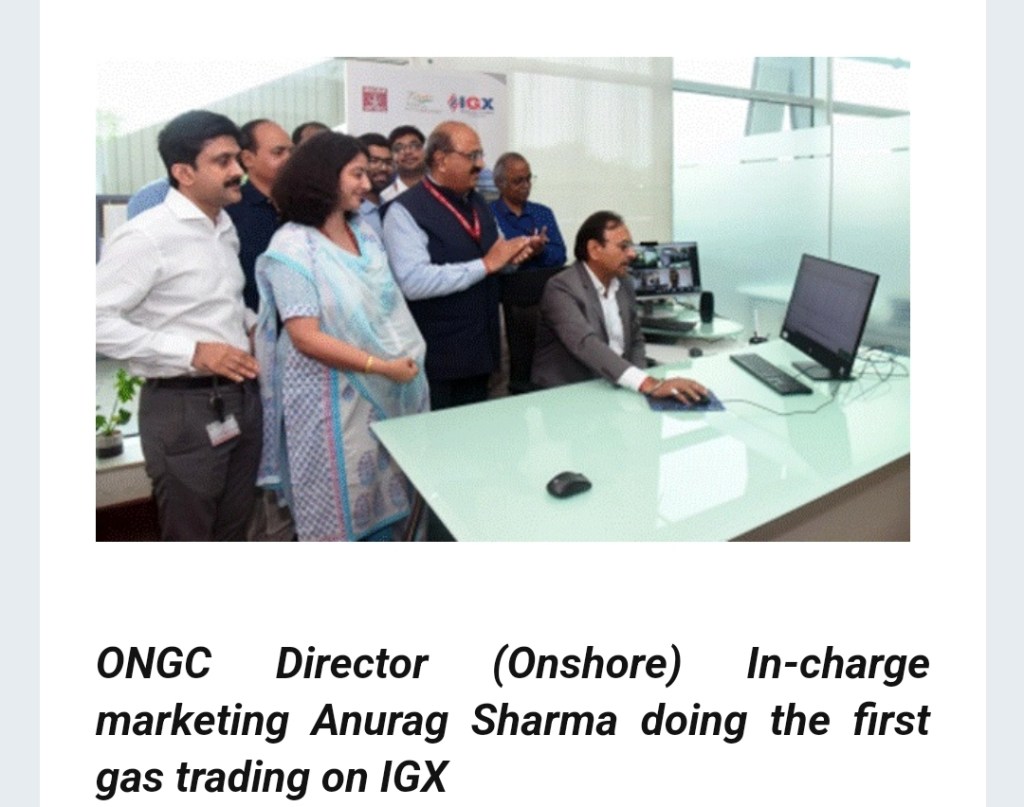
Oil and Natural Gas Corporation Ltd. (ONGC) has become the first Exploration and Production (E&P) company in India to trade domestic gas on Indian Gas Exchange. The first online trade was made on 23 May 2022 by ONGC Director (Onshore) In-charge Marketing Anurag Sharma on India’s first automated national level Gas Exchange, IGX. The gas traded is from ONGC Krishna Godavari 98/2 block.


After the deregulation in gas pricing ecosystem in 2000-21, ONGC has prepared itself to reap the benefits. The quantity sold by ONGC through the Gas Exchange will be enhanced slowly.

Press Release dated 23rd May 2022

Investment Incentive Agreement between the Government of the United States of America and the Government of India

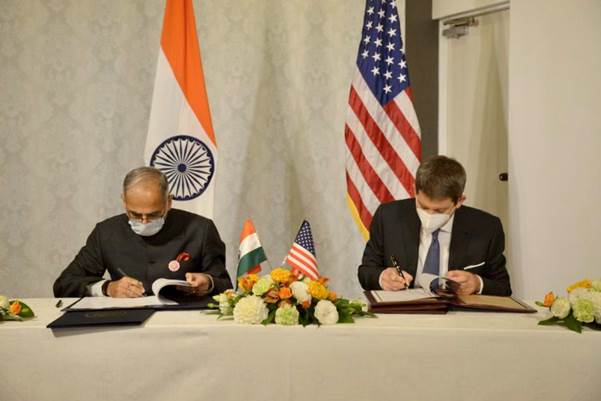
The Government of India and the Government of the United States of America has signed an Investment Incentive Agreement (IIA) today at Tokyo, Japan. The IIA was signed by Shri Vinay Kwatra, Foreign Secretary, Government of India, and Mr. Scott Nathan, Chief Executive Officer, U.S. International Development Finance Corporation (DFC).

This IIA supersedes the Investment Incentive Agreement signed between the Government of India and the Government of the United States of America in the year 1997. Significant developments have taken place since the signing of the earlier IIA in 1997 including the creation of a new agency called DFC, a development finance agency of Government of USA, as a successor agency of the erstwhile Overseas Private Investment Corporation (OPIC) after the enactment of a recent legislation of USA, the BUILD Act 2018. IIA has been signed, to keep pace with the additional investment support programmes, offered by the DFC, such as debt, equity investment, investment guaranty, investment insurance or reinsurance, feasibility studies for potential projects and grants.

The Agreement is the legal requirement for DFC, to continue providing investment support in India. DFC or their predecessor agencies are active in India since 1974 and have so far provided investment support worth $5.8 billion of which $2.9 billion is still outstanding. Proposals worth $4 billion are under consideration by DFC for providing investment support in India. DFC has provided investment support in sectors that matter for development such as COVID-19 vaccine manufacturing, healthcare financing, renewable energy, SME financing, financial inclusion, infrastructure etc.

It is expected that signing of IIA would lead to enhanced Investment support provided by DFC in India, which shall further help in India’s development.

Press Release dated 23 May 2022

India gets the highest annual FDI inflow of USD 83.57 billion in FY21-22

India gets the highest annual FDI inflow of USD 83.57 billion in FY21-22


India rapidly emerges as a preferred investment destination; FDI inflows have increased 20-fold in last 20 years.

FDI equity inflows in Manufacturing rise by 76% in FY 2021-22

FDI inflows rise by 23% post-Covid

Karnataka emerges as the top FDI equity inflow recipient state in India

Top FDI equity inflows from Singapore (27%) followed by U.S.A (18%)

Computer Software and Hardware becomes the top recipient sector of FDI Equity inflow with a share of around 25%

India has recorded highest ever annual FDI inflow of USD 83.57 billion in the Financial Year 2021-22. In 2014-2015, FDI inflow in India stood at mere 45.15 USD billion as compared to the highest ever annual FDI inflow of USD 83.57 billion reported during the financial year 2021-22 overtaking last year’s FDI by USD 1.60 billion despite military operation in Ukraine and COVID-19 pandemic. India’s FDI inflows have increased 20-fold since FY03-04, when the inflows were USD 4.3 billion only.

The details of total FDI inflows reported during the last four financial years are as under:

Further, India is rapidly emerging as a preferred country for foreign investments in the manufacturing sector. FDI Equity inflow in Manufacturing Sectors have increased by 76% in FY 2021-22 (USD 21.34 billion) compared to previous FY 2020-21 (USD 12.09 billion).

The following trends in India’s Foreign Direct Investment inflow are an endorsement of its status as a preferred investment destination amongst global investors.

It may be noted that FDI inflow has increased by 23% post-Covid (March, 2020 to March 2022: USD 171.84 billion) in comparison to FDI inflow reported pre-Covid (February, 2018 to February, 2020: USD 141.10 billion) in India.

In terms of top investor countries of FDI Equity inflow, ‘Singapore’ is at the apex with 27%, followed by U.S.A (18%) and Mauritius (16%) for the FY 2021-22.‘Computer Software & Hardware’ has emerged as the top recipient sector of FDI Equity inflow during FY 2021-22 with around 25% share followed by Services Sector (12%) and Automobile Industry (12%) respectively.

Under the sector `Computer Software & Hardware’, the major recipient states of FDI Equity inflow are Karnataka (53%), Delhi (17%) and Maharashtra (17%) during FY 2021-22. Karnataka is the top recipient state with 38% share of the total FDI Equity inflow reported during the FY 2021-22 followed by Maharashtra (26%) and Delhi (14%). Majority of the equity inflow of Karnataka has been reported in the sectors `Computer Software & Hardware’ (35%), Automobile Industry (20%) and `Education’ (12%) during the FY 2021-22.

The steps taken by the Government during the last eight years have borne fruit as is evident from the ever-increasing volumes of FDI inflow being received into the country, setting new records. The Government reviews the FDI policy on an ongoing basis and makes significant changes from time to time, to ensure that India remains attractive and investor friendly destination. Government has put in place a liberal and transparent policy for FDI, wherein most of the sectors are open to FDI under the automatic route. To further liberalise and simplify FDI policy for providing Ease of doing business and attract investments, reforms have been undertaken recently across sectors such as Coal Mining, Contract Manufacturing, Digital Media, Single Brand Retail Trading, Civil Aviation, Defence, Insurance and Telecom.

Press Release dated 20 May 2022

Streamlining the Process of Rights Issue (Application in Rights Issue – SEBI notifies Gap of atleast 3 working days) (SEBI Circular dated 19th May 2022)

SEBI Circular No. SEBI/HO/CFD/SSEP/CIR/P/2022/66 Dated May 19, 2022

SEBI vide Circular No. SEBI/HO/CFD/DIL2/CIR/P/2020/13 dated January 22, 2020, had stipulated procedures streamlining the Rights Issue process (‘the circular’).

  • In respect of the aforesaid circular, para 1.4.1 and at Annexure I para C (e) of the Circular, deal with the requirement regarding minimum time period between closure of trading in Right Entitlements on stock exchange platform and closure of the rights issue, which requires trading in REs on the secondary market platform of stock exchanges commence along with the opening of the rights issue and has to be closed at least four days prior to the closure of the rights issue.
  •  SEBI received market representation that in case there are trading holidays between last date of REs trading date and issue closure, provision of minimum gap of four days may not always ensure that there are adequate days for settlement, as minimum 2 working days are required for settlement of REs traded on last day of REs trading window (REs traded on exchange platform have T+2 rolling settlement). It was further represented that there should be a minimum gap of three working days considering two days for settlement and one additional day for investor to make application in Rights Issue.
  • Therefore, in view of above it has been decided that para 1.4.1 and at Annexure I para C (e) of the Circular paragraphs are amended as under:

The words ‘at least four days’ are replaced with ‘at least three working days’.

  • Applicability of this Circular: This circular shall be applicable for all rights issues and fast track rights issue with immediate effect.
  • All entities involved in the Rights Issue process are advised to take necessary steps to ensure compliance with this circular.
  • The recognized stock exchanges are directed to bring the provisions of this circular to the notice of the listed companies and also to disseminate the same on their website
  • This circular is being issued in exercise of the powers under section 11 read with section 11A of the Securities and Exchange Board of India Act, 1992.

A copy of this circular is available on SEBI website at sebi.gov.in under the categories “Legal Framework/Circulars”.

Simplification of procedure and standardization of formats of documents for transmission of securities (SEBI Circular dated 18 May 2022)

1. SEBI has reviewed the process being followed by the Registrars to an Issue and Share Transfer Agents (“RTAs”) and the Depositories/ Issuer companies for effecting transmission of securities.

2. As an on-going measure to enhance ease of dealing in securities markets and with a view to make the transmission process more efficient and investor friendly, the procedure for transmission of securities has been further simplified vide the Securities and Exchange Board of India (Listing Obligations and Disclosure Requirements) (Fourth Amendment) Regulations, 2022 (“LODR Amendment Regulations”) Gazette Notification no. SEBI/LAD-NRO/GN/2022/80 dated April 25th, 2022).

3. The LODR Amendment Regulations has inter alia enhanced the monetary limits for simplified documentation for transmission of securities, allowed ‘Legal Heirship Certificate or equivalent certificate’ as one of the acceptable documents for transmission and provided clarification regarding acceptability of Will as one of the valid documents for transmission of securities. Pursuant to the notification of the LODR Amendment Regulations, this Circular is being issued to specify the formats of various documents which are required to be furnished for the processing of transmission of securities.

 4. For ease of reference, a ready reckoner listing out the documents required for transmission of securities, in case of demise of the sole holder, is provided in Annexure – A to this Circular. The Operational Guidelines for processing investor’s service request for the purpose of transmission of securities are provided in Annexure – B to this Circular.

 5. The format of the form to be filed by nominee/claimant/legal heir while requesting transmission of securities is provided in Annexure – C to this Circular.

6. The revised documentation requirements in case of transmission of securities are specified below :

6.1 Where the securities are held in a single name with a nomination, nominee shall be informed about the procedure to be followed for the claim on the receipt of the intimation of death of the security holder.

6.2 Where the securities are held in single name with a nomination, the following documents shall be submitted:

(a) duly signed transmission request form by the nominee;

(b) original death certificate or copy of death certificate attested by the nominee subject to verification with the original or copy of death certificate duly attested by a notary public or by a gazetted officer;

(c) self-attested copy of the Permanent Account Number card of the nominee, issued by the Income Tax Department.

(d) a notarized affidavit, in the format provided in Annexure – D to this Circular from all legal heir(s) made on non-judicial stamp paper of appropriate value, to the effect of identification and claim of legal ownership to the securities. However, in case the legal heir(s)/claimant(s) are named in any of the documents for transmission of securities as mentioned in serial number 7 in Annexure – A to this Circular, an affidavit from such legal heir(s)/claimant(s) alone shall be sufficient;

(e) a copy of other requisite documents for transmission of securities as may be applicable as per Annexure – A to this Circular, attested by the legal heir(s)/claimant(s) subject to verification with the original or duly attested by a notary public or by a gazetted officer:

6.4 In cases where a copy of Will is submitted as may be applicable in terms of Indian Succession Act,1925 (39 of 1925) the same shall be accompanied with a notarized indemnity bond from the claimant (appropriate beneficiary of the Will) to whom the securities are transmitted, in the format provided in Annexure – E to this Circular.

 6.5 In cases where a copy of Legal Heirship Certificate or its equivalent certificate issued by a competent Government Authority is submitted, the same shall be accompanied with:

i. a notarized indemnity bond from the legal heir(s) /claimant(s) to whom the securities are transmitted, in the format provided in Annexure – E to this Circular.

 ii. No Objection from all non-claimants (remaining legal heirs), stating that they have relinquished their rights to the claim for transmission of securities, duly attested by a notary public or by a gazetted officer, in the format provided in Annexure – F to this Circular.

6.6 For value of securities up to rupees five lakhs per listed entity in case of securities held in physical mode, and up to rupees fifteen lakhs per beneficial owner in case of securities held in dematerialized mode, as on date of application by the claimant, and where the documents mentioned in serial number 9 in Annexure – A, are not available, the legal heir(s) /claimant(s) may submit the following documents:

(i) a notarized indemnity bond made on non-judicial stamp paper of appropriate value in the format provided in Annexure – E to this Circular, indemnifying the Share Transfer Agent/ listed entity:

 (ii) no objection certificate from all legal heir(s) stating that they do not object to such transmission in the format provided in Annexure – F to this Circular or copy of family settlement deed executed by all the legal heirs, duly attested by a notary public or by a gazetted officer; and The listed entity may, at its discretion, enhance the value of securities from the threshold limit of rupees five lakhs, in case of securities held in physical mode.


7. For transmission of securities to the surviving joint holder(s), RTAs shall comply with clause 23 of Table F in Schedule 1 read with Section 56(2) & 56(4)(c) of the Companies Act, 2013, and transmit securities in favour of surviving Joint holder(s), in the event of demise of one or more joint holder(s), provided that there is nothing contrary in the Articles of Association of the company.

 8. The common norms stipulated in SEBI Circular SEBI/HO/MIRSD/MIRSD RTAMB/P/CIR/2021/655 dated November 03, 2021 and SEBI Circular SEBI/HO/MIRSD/MIRSD RTAMB/P/CIR/2021/687 dated December 14, 2021 shall be applicable for transmission service requests.

9. In case the securities were held by the deceased holder in a single name and in physical mode, then after verifying and processing the documents submitted for transmission of securities, the RTAs/ Issuer companies shall intimate the claimant(s) about its execution as may be applicable, within 30 days of the receipt of such request, by way of issuing a Letter of Confirmation in the format provided in Annexure – G to this Circular.

10. The provisions of this Circular shall come into force with immediate effect in supersession of the following circulars: a) Circular No. CIR/MIRSD/10/2013 dated October 28, 2013, b) Circular No. SEBI/HO/MIRSD3/CIR/P/2016/0000000085 dated September 15, 2016, c) Circular No. SEBI/HO/MIRSD/DOP/CIR/P/2019/05 dated January 4, 2019, and d) Circular No. SEBI/HO/MIRSD/MIRSD_RTAMB/P/CIR/2021/644 dated October 18, 2021.

11. Stock Exchanges and Depositories are advised to: a) make necessary amendments to the relevant bye-laws, rules and regulations, operational instructions, as the case may be, for the implementation of the above Circular; and b) to bring the provisions of this Circular to the notice of their constituents and also disseminate the same on their websites.

12. The RTAs/ listed issuers/ Depositories shall strictly adhere to the formats and documentation specified through this Circular for all transmission matters including requirement of Will.

13. This Circular is being issued to protect the interests of investors in securities and to promote the development of, and to regulate the securities market read in exercise of powers conferred under Section 11 (1) of the Securities and Exchange Board of India Act, 1992 read with Regulation 101 of the Securities and Exchange Board of India (Listing Obligations and Disclosure Requirements), 2015.

This Circular is available on SEBI website at http://www.sebi.gov.in under the categories “Legal Framework -> Circulars”

New Definition of Micro, Small and Medium Enterprises – Clarification (RBI Notification dated 19th May 2022)

Refer to circulars FIDD.MSME & NFS.BC.No.3/06.02.31/2020-21 dated July 2, 2020FIDD.MSME & NFS.BC.No.4/06.02.31/2020-21 dated August 21, 2020 and FIDD.MSME & NFS.BC.No.16/06.02.31/2021-22 dated February 18, 2022, regarding revised criteria for classification of Micro, Small and Medium Enterprises Government of India, vide Gazette Notification S.O. 2134(E) dated May 06, 2022, has notified amendments in sub paragraph (3) paragraph (7) of the notification of Government of India, Ministry of Micro, Small and Medium Enterprises number S.O. 2119 (E), dated June 26, 2020, published in the Gazette of India.

In view of the above amendment, it is clarified that:

  1. the existing Entrepreneurs Memorandum (EM) Part II and Udyog Aadhaar Memorandum (UAM) of the MSMEs obtained till June 30, 2020 shall remain valid till June 30, 2022 for classification as MSMEs; and
  2. the validity of documents obtained in terms of O.M. No.12(4)/ 2017-SME dated March 8, 2017 (RBI Circular FIDD.MSME & NFS.BC.No.10/06.02.31/2017-18 dated July 13, 2017), for classification of MSMEs upto June 30, 2020, has been extended upto June 30, 2022.

Refer notification:

https://m.rbi.org.in/Scripts/NotificationUser.aspx?Id=12319&Mode=0