Delhi Customs seize 5.85 kg cocaine, the biggest at any airport in India, on 6th April 2022 night

Delhi Customs seize 5.85 kg cocaine, the biggest at any airport in India, on 6th April 2022 night


In past six months, Delhi Airport Customs seized 33.70 kg of Heroin and 12.60 kg  Cocaine at IGI Airport

35 cases booked by Customs at IGI Airport, with street value of drug seized at Rs. 887.35 crore and 34 passengers arrested in 2021-22 alonePosted Date:- Apr 07, 2022

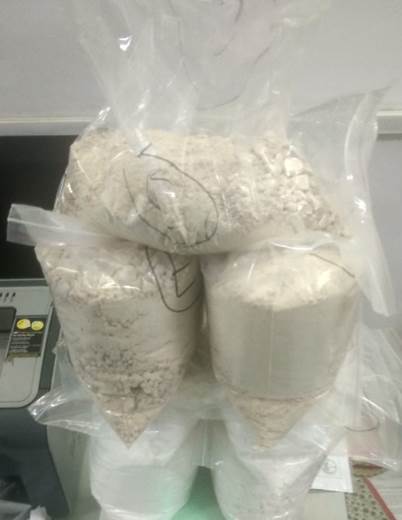
The Delhi Airport Customs seized 5.85 kg cocaine, the biggest at any airport in India, on 6th April 2022 night at the IGI International Airport. The seizure last night by the Delhi Customs signifies the fight carried out by the Indian Customs against the menace of drugs.

5.85 kg cocaine was seized by Delhi Customs at IGI Airport on 6th April 2022.

Continuous flow from source countries have made drug accessibility easy. IGI Airport, being the premier Capital airport of the country receives lakhs of passengers annually, some of whom are actively operating as drugs carriers. Customs at IGI Airport is waging a relentless fight against such carriers and their handlers.

In the past six months, Customs at the IGI Airport alone has booked no less than 16 cases under NDPS Act, the highest number at any airport in the Country. In the process, almost 33.70 kg of Heroin and 12.60 kg of Cocaine has been seized from International passengers, mostly nationals of African origin. For the entire 2021-22, 35 cases booked by Customs at IGI Airport, with a street value of drugs estimated at Rs. 887.35 crore. 34 passengers have also been arrested in the process.

Two distinct modus operandi have been observed in these seizures. Some of the passengers pack the drugs inside latex capsules, which are then swallowed by them in order to get past Customs officers easily at the Airport. Later, they eject these capsules after consuming laxatives, running a great risk to their own lives. This modus operandi is not only very difficult to detect, but also very difficult to retrieve. The suspected passengers need to be admitted to government hospitals, where the extraction is conducted under medical supervision. This process often takes 4 to 5 days, sometimes longer. Needless to add, these passengers are kept constantly under strict observation and guarded day-and-night by the Customs officers, at great risk to their own lives due to COVID-19 pandemic. The seizure of narcotics drugs at the airport is just the beginning of a tough, long legal battle that ensues later.

In the second method, the drug is concealed in specially made cavities in the hand-baggage or Checked-in baggage being carried by the passengers. Such cases are detected by the combined use of the Customs Canine Squad and High-resolution X-ray. Both these modus operandi have been detected at IGI Airport. The expanding market and the remunerative lucrativeness has ensured that there is no reduction in the relentless flow of drugs attempted to be smuggled into India though the airports.

Changes in Company Inspection Rules (Companies (Management & Administration ) Amendment Rules 2022 MCA Notification dated 06th April 2022)

Changes in Company Inspection Rules

Companies (Management & Administration ) Amendment Rules 2022 MCA Notification dated 06th April 2022)

MCA amends Companies ( Management and Administration) Rules 2014 . The following particulars of Registers, Index or Return of a member of a company shall not be available for inspection or taking extracts or copies under sub -section (3) of Section 94 of Companies Act 2013 namely

1 Address or Registered Address ( in case of body corporate)
2 Email id
3 Unique Identification Number
4 PAN

👉 Relevant section & rules

Rule 14 of Company (Management & amendment) Rules 2014

Section 94 of Companies Act, 2013

Section 88 of Companies Act, 2013

Export Policy for MSMES

E-Commerce is widely considered as a medium to reduce costs related to penetration and sustainability of exporters in international markets. Indian MSMEs stand to benefit from the enhanced visibility provided by e-commerce platforms. Improved infrastructure, competitive pricing and reduced costs associated with marketing and outreach of products over a digital platform contribute to promoting online sales.

Government of India has taken several measures to enhance the exports by Micro, Small and Medium Enterprises (MSMEs). These include efforts made under Make in India Programme, Promotion of Ease of Doing Business, improved availability of credit through MUDRA, Stand up India.  Further, Ministry of MSME has established 52 Export Facilitation Centers (EFCs) across the country with an aim to provide requisite mentoring and handholding support to MSEs in exporting their products and services to the foreign market; and 102  Enterprise Development Centers (EDCs) have been setup with the aim to build a network of entrepreneurial leaders by providing professional mentoring and handholding support services to existing as well as aspiring MSMEs with special focus on rural enterprises on continuous basis. These EDCs act as “One-stop-shop” and provide services under components including Awareness, Incubation, Enterprise Facilitation etc. In addition to these, Ministry is also implementing International Cooperation Scheme for enhancing the marketability of products and services in the MSME sector by facilitating visit /participation of MSMEs in international exhibitions /trade fairs/buyer-seller meet etc. abroad and also holding International conferences/seminars/workshops in India, for technology infusion, exploring business opportunities, joint ventures etc. Also, Cluster Development Programme is being implemented by Office of Development Commissioner(MSME) for enhancing the productivity and competitiveness as well as capacity building of Micro and Small Enterprises (MSEs) to increase demand of domestic products in global markets.

Ministry of Micro, Small & Medium Enterprises (MSME) has taken multiple initiatives for enhancing participation of MSMEs in e-commerce, which include:

  • Procurement and Marketing Support (PMS) Scheme: Under this Scheme, the sub-component of “Adoption of e-Commerce by Micro Enterprises” has been introduced. This new component includes providing financial assistance for selling products or services by Micro Enterprises (up to 10 new products) through e-commerce portals.
  • Portal of National Small Industries Corporation (NSIC): NSIC, a PSU under the Ministry of MSME has launched MSME Global Mart Portal (www.msmemart.com) – a B2B e-commerce marketing platform for Micro, Small and Medium Enterprises (MSMEs), which provides Global Trade Leads, Tender Information, Franchise Opportunities, Data on Used Machineries, etc.
  • E-commerce portal of Khadi and Village Industries Commission (KVIC): KVIC a statutory body under the Ministry of Micro, Small and Medium Enterprises has also launched a portal ekhadiindia.com for B2C 
  • outreach, which enables all businesses to have a global reach with Interactivity, Immediacy and Ease of Adaptation.

This information was given by the Minister of State for Micro Small and Medium Enterprises, Shri Bhanu Pratap Singh Verma in a written reply to the Lok Sabha.

Press Release 31 March 2022

More than Rs 30,160 crore loans sanctioned to over 1,33,995 accounts under Stand-Up India Scheme in 6 years (Press release 05 April 2022)

More than Rs 30,160 crore loans sanctioned to over 1,33,995 accounts under Stand-Up India Scheme in 6 years


“As more and more beneficiaries from underserved segments of entrepreneurs are targeted for coverage, we would make significant strides towards building an Atmanirbhar Bharat”: Finance Minister

As we celebrate the sixth anniversary of Stand Up India Scheme, let us take a look at how this scheme has fulfilled the aspirations entrepreneurs, particularly women and Scheduled Castes (SCs), Scheduled Tribes (STs) and also sift through the achievements, salient features and enhancement to the scheme over the years.

Recognizing the challenges faced by Aspiring SC, ST and women entrepreneurs, Stand up India Scheme was launched on 5th April 2016 to promote entrepreneurship at grassroot level focusing on economic empowerment and job creation. In 2019-20, the Stand Up India scheme was extended for the entire period coinciding with the 15th Finance Commission period of 2020-25.

On the occasion, Union Finance & Corporate Affairs Minister Smt. Nirmala Sitharaman said, “As we commemorate the sixth anniversary of the Stand-Up India Scheme, it is heartening to see that more than 1.33 lakh new job-creators and entrepreneurs have so far been facilitated under this Scheme.”

Smt. Sitharaman further said, “More than 1 lakh women promoters have benefitted from this Scheme during its six years of operation. The Government understands the potential these rising entrepreneurs have in driving economic growth through their roles as not just wealth-creators but also job-creators.”

“As more and more beneficiaries from the underserved segments of entrepreneurs are targeted for coverage, we would make significant strides towards building an Atmanirbhar Bharat,” the Finance Minister added.

As India is growing rapidly, hopes, aspirations and expectations of a large group of potential entrepreneurs, particularly women and Scheduled Castes (SCs), Scheduled Tribes (STs), are rising. They want to set up an enterprise of their own to allow themselves to thrive and grow. Such entrepreneurs are spread across country and are bubbling with ideas on what they can do for themselves and their families. The scheme envisages to facilitate the dreams of aspiring SC, ST and women entrepreneurs to reality by supporting their energy and enthusiasm and removing many hurdles from their path.

As we celebrate the sixth anniversary of Stand Up India Scheme, let us take a look at the features and achievement of this Scheme.

Theobjective of Stand-Up India is to promote entrepreneurship amongst women, Scheduled Castes (SC) & Scheduled Tribes (ST) categories, to help them in starting a greenfield enterprise in manufacturing, services or the trading sector and activities allied to agriculture.

The purpose of Stand-Up India is to:

  • promote entrepreneurship amongst women, SC & ST category; 
  • provide loans for greenfield enterprises in manufacturing, services or the trading sector and activities allied to agriculture;
  • facilitate bank loans between Rs.10 lakh and Rs.1 crore to at least one Scheduled Caste/ Scheduled Tribe borrower and at least one woman borrower per bank branch of Scheduled Commercial Banks.

Why Stand-Up India?

The Stand-Up India scheme is based on recognition of the challenges faced by SC, ST and women entrepreneurs in setting up enterprises, obtaining loans and other support needed from time to time for succeeding in business. The scheme therefore endeavors to create an eco-system which facilitates and continues to provide a supportive environment for doing business. The scheme seeks to give access to loans from bank branches to borrowers to help them set up their own enterprise. The scheme, which covers all branches of Scheduled Commercial Banks, will be accessed in three potential ways:

  • Directly at the branch or,
  • Through Stand-Up India Portal (www.standupmitra.in) or,
  • Through the Lead District Manager (LDM).

Who all are eligible for a loan?

  • SC/ST and/or women entrepreneurs, above 18 years of age;
  • Loans under the scheme are available for only green field projects. Green field signifies; in this context, the first time venture of the beneficiary in manufacturing, services or the trading sector and activities allied to agriculture;
  • In case of non-individual enterprises, 51% of the shareholding and controlling stake should be held by either SC/ST and/or Women Entrepreneur;
  • Borrowers should not be in default to any bank/financial institution;
  • The Scheme envisages ‘upto 15%’ margin money which can be provided in convergence with eligible Central/State schemes. While such schemes can be drawn upon for availing admissible subsidies or for meeting margin money requirements, in all cases, the borrower shall be required to bring in minimum of 10 % of the project cost as own contribution.

Handholding Support:

Apart from linking prospective borrowers to banks for loans, the online portal http://www.standupmitra.in developed by Small Industries Development Bank of India (SIDBI) for Stand Up India Scheme is also providing guidance to prospective entrepreneurs in their endeavour to set up business enterprises, starting from training to filling up loan applications as per bank requirements. Through a network of more than 8,000 Hand Holding Agencies, this portal facilitates step by step guidance for connecting prospective borrowers to various agencies with specific expertise viz. Skilling Centres, Mentorship support, Entrepreneurship Development Program Centres, District Industries Centre, together with addresses and contact number.

Changes to Stand Up India Scheme

Pursuant to an announcement by the Union Finance Minister in the Budget speech FY 2021-22, the following changes have been made in the Stand Up India Scheme:-

  • The extent of margin money to be brought by the borrower has been reduced from ‘upto 25%’ to ‘upto 15%’ of the project cost.  However, the borrower will continue to contribute at least 10% of the project cost as own contribution;
  • Loans for enterprises in ‘Activities allied to agriculture’ e.g. pisciculture, beekeeping, poultry, livestock, rearing, grading, sorting, aggregation agro industries, dairy, fishery, agriclinic and agribusiness centers, food & agro-processing, etc. (excluding crop loans, land improvement such as canals, irrigation, wells) and services supporting these, shall be eligible for coverage under the Scheme.

To extend collateral free coverage, Government of India has set up the Credit Guarantee Fund for Stand Up India (CGFSI). Apart from providing credit facility, Stand Up India Scheme also envisages extending handholding support to the potential borrowers. It also provides for convergence with Central/State Government schemes. Applications under the scheme can also be made online at (www.standupmitra.in) portal.

Achievements of this Scheme as on 21.03.2022

  • Rs. 30160 crore has been sanctioned under Stand Up India Scheme to 133,995accounts upto 21.03.2022 since inception of the Scheme.
  • Total number of SC/ST and Woman borrowers benefited under Stand Up India scheme, as on 21.03.2022 are as below:
  • (Amt. in Rs. Crore)

SC

ST

  Women

Total

No Of A/Cs

Sanctioned Amt.

No Of A/Cs

Sanctioned Amt.

No Of A/Cs

Sanctioned Amt.

No Of A/Cs

Sanctioned Amt.

19310

3976.84

6435

1373.71

108250

24809.89

133995

30160.45

****
Amendment In Easements Act, 1882 (Press release 04 April 2022)

As per available information, the ground water levels in certain parts of the country are declining because of continuous withdrawal necessitated by increased demand of fresh water for various uses, vagaries of rainfall, increased population, industrialization & urbanization etc, Certain provision of Easements Act 1882 may have contributed to over-extraction of groundwater in certain places vis-à-vis extraction of groundwater by the landowners for domestic and agricultural purposes.

Though water is a State subject, Central Government has taken a number of important measures for conservation, management of ground water including effective implementation of rain water harvesting in the country, which can be seen at

URL:http://jalshakti-dowr.gov.in/sites/default/files/Steps_to_control_water_depletion_Feb2021.pdf

Central Ground Water Authority (CGWA) has been constituted under the ‘Environment (Protection) Act, 1986’ for the purpose of regulation and control of ground water extraction. The Department of Water Resources, River Development & Ganga Rejuvenation has issued latest guidelines for regulation and control of groundwater extraction on 24 Sept. 2020. These guidelines advocate a participatory approach for sustainable ground water management in agriculture sector including working towards crop rotation, diversification & other initiatives to reduce over-dependence on groundwater. CGWA is regulating ground water in 20 states/UTs and in remaining States/UTs, regulation is being carried out by respective State Governments/UT Administration.

This Information was given by the Minister of State for Jal Shakti, Shri Bishweswar Tudu in a written  reply in Rajya Sabha today.

Competition Commission of India Revises Long Form for Merger & Acquisitions w.e f. 01st May 2022 (CCI Notification dated 31st March 2022)

The Competition Commission of India (CCI) has notified the revised format of Form II (i.e. long form of merger notification) vide Notification no. CCI/CD/Amend/Comb. Regl./2022 dated 31st March 2022. This amendment revises the content and format of information that the parties to a combination uses to file under section 6(2), where the post-combination market share exceeds 15% in cases of horizontal overlap and 25% in cases of vertical interface. Generally, these are the cases requiring detailed examination to assess the likely effect of the combination on competition in India.

The revised Form II will be effective from 1st May 2022. The one-month period has been given for making the revised form effective. Time period of one month will provide sufficient time for the notifying parties to get familiarised with the revised Form – II.

The amendment to the Form – II is a part of series of measures undertaken by the CCI towards ease of doing business, reducing the compliance burden on the parties and making the assessment of the combination more objective and focussed. Previously, the CCI had also amended the Form – I (i.e. short form of merger notification) in August 2019. This form is used by parties to provide information while seeking approval of the Commission for a combination, where the combined market share post-merger is not significant. Amendment to Form – I was followed by detailed guidance notes to Form – I issued in March 2020 that provided clarifications on the nature and scope of information to be filed and elaborated criterion for availing green channel by the parties.

The amendment to the Form – II is aimed to remove duplicity and limit the information requirement so that they remain focused and relevant to the objective of assessment of a merger, suitably clustering the information on common subject, streamlining the flow of information for better navigation and appreciation of material furnished in the notification. Further, the template of revised long form is based on the structure of short form so as to have modular formats of merger notification that would reduce the time and efforts required to move from the short form to the long form. Further, revision in the long form has been undertaken without sacrificing the cause of merger regulation. Revised long form is intended to strike a balance between facilitation and enforcement functions and create a culture of compliance.

The CCI also intends to issue guidance notes for revised Form II in due course. This guidance notes will elaborate upon the queries in revised Form II and include certain queries from existing Form II that are explanatory in nature.

The amendments to Combination Regulations are available at www.cci.gov.in.

CCI approves acquisition of certain compulsorily convertible preference shares of Hero FinCorp Limited by AHVF II Holdings Singapore II Pte. Ltd. (CCI Press Release 04 April 2022)

The Competition Commission of India (CCI) approves acquisition of certain compulsorily convertible preference shares of Hero FinCorp Limited (Target) by AHVF II Holdings Singapore II Pte. Ltd. (Acquirer) under Section 31(1) of the Competition Act, 2002.

The Proposed Combination relates to the subscription of certain compulsorily convertible preference shares by Acquirer of Target, which upon conversion will represent a certain shareholding in HFL.

Acquirer is a private limited company incorporated in Singapore. It is owned by investment funds managed by affiliates of Apollo Management, L.P. Apollo Management, L.P., its affiliates, and investment funds managed by its affiliates are together hereinafter referred to as Apollo.  Apollo Management L.P. is a limited partnership formed in accordance with the laws of the State of Delaware, U.S.A. Investment funds managed by affiliates of Apollo invest in companies and debt issued by companies involved in various businesses throughout the world.

Target is an entity incorporated in India and is primarily engaged in the business of financing and related financial services. HFL is registered as a systemically important non-deposit taking non-banking finance company with the Reserve Bank of India. HFL’s sole wholly owned subsidiary, Hero Housing Finance Limited offers a range of housing loans and loans against property to various segments of society.

Detailed order of the CCI will follow.