Budget Series #2- ICAI Budget 2022 recommendations -Section 2(14) – Treatment of LIP as capital asset

Suggestion

It is suggested that LIP be treated as a capital asset falling within the definition of “property” under section 2(14) of the Act. Indexation benefit (for premiums paid) will take care of inflationary impact – resulting in parity with other capital asset (SUGGESTION FOR RATIONALIZATION OF THE PROVISIONS OF DIRECT TAX LAWS)

Issue: Whether LIP can be regarded as capital asset?

Justification :

Any sum received under life insurance policies (‘LIPs’) not exempt under section 10(10D) are taxable currently. Deduction of only premium while computing the net income / loss after surrender / withdrawal of policy doesn’t take care of inflation resulting in higher taxability.

Budget Series #1- ICAI Budget 2022 recommendations – Section 2(1B) – Definition of Amalgamation

Suggestion:

It is suggested that the provisions of Section 2(1B) be amended to clarify that the shares are to be issued by the amalgamated company to the shareholders of amalgamating company as they exist on the effective date and not on the appointed date. (SUGGESTION FOR RATIONALIZATION OF THE PROVISIONS OF DIRECT TAX LAWS)

Issue & Justification

Section 2(1B) of the Act provides for definition of Amalgamation in relation to the companies. The definition also contains various conditions to be satisfied for the amalgamation to be treated as tax neutral under the Act. The conditions contained in item (iii) of the said clause is that the shareholders holding at least three fourth in value of shares in the amalgamating company immediately before amalgamation should become shareholders of the amalgamated company. It is a known fact that the Amalgamation is given effect from the appointed date whereas the shares are issued on the effective date. Generally, there is time lag between the Appointed date and the effective date. In case of change in the shareholding in between the two dates, it would not be able to comply with the condition if read literally. It is also a fact that shares can be issued to the shareholders of the amalgamating company only after the effective date as shares cannot be issued retrospectively from the Appointed date. In order to clarify the position and avoid any litigation on the matter it needs to be provided that the condition needs to be satisfied with reference to the shareholders as on the effective date and not the Appointed date.

Finance Minister Smt. Nirmala Sitharaman concludes pre-Budget meetings for forthcoming Union Budget 2022-23

More than 120 invitees representing 7 stakeholder groups participated in 8 virtual meetings

Press Release dated Dec 22, 2021

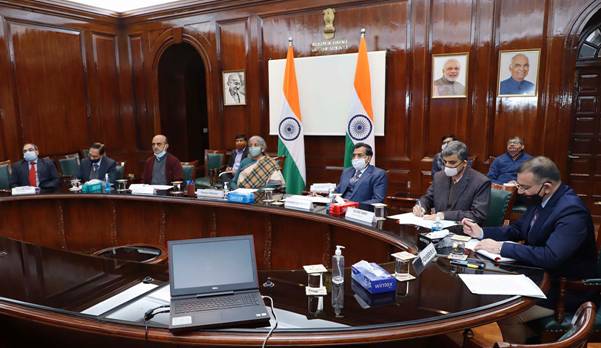
Union Minister for Finance & Corporate Affairs Smt. Nirmala Sitharaman chaired the pre-budget consultation meetings for Budget 2022-23 held in virtual mode from 15th to 22nd December, 2021.

More than 120 invitees representing 7 stakeholder groups participated in 8 meetings scheduled during this period. The stakeholder groups include representatives and experts from Agriculture and Agro Processing Industry; Industry, Infrastructure and Climate Change; Financial Sector and Capital Markets; Services and Trade; Social Sector; Trade Union & Labour Organization and Economists.

Union Ministers of State for Finance Shri Pankaj Chaudhary and Dr. Bhagwat Kishanrao Karad, Finance Secretary Shri T.V. Somanathan; Secretary, DEA, Shri Ajay Seth; Secretary, DIPAM, Shri Tuhin Kanta Pandey; Secretary, Financial Services, Shri Debashish Panda; Secretary, Corporate Affairs, Shri Rajesh Verma; Secretary, Revenue Shri Tarun Bajaj and senior officers from Ministry of Finance were also present during the meetings. Secretaries of other Ministries/Departments concerned participated through online mode.

The stakeholder groups made several suggestions on various issues that included increased R&D spending, infrastructure status for digital services, incentives to hydrogen storage and fuel cell development, rationalisation of income tax slabs, investments in online safety measures etc., among others.

The participants lauded government’s efforts in efficient handling of the economy during the pandemic and retaining India’s status as the fastest growing major economy.

Finance Minister Smt. Sitharaman thanked the participants for sharing their valuable suggestions and assured that suggestions will be carefully considered while preparing the Budget 2022-23.

88% growth in volume of digital transactions during last 3 years since 2018-19 (Press release dated 21st Dec 2021)

88% growth in volume of digital transactions during last 3 years since 2018-19

With over 22 billion transactions in FY 2020-21, UPI emerges as favourite digital payment choice

As a result of the initiatives taken by the Government, there has been a paradigm shift in digital transactions in India. This was stated by Union Minister of State for Finance Dr Bhagwat Kisanrao Karad in a written reply to a question in Rajya Sabha.

The Minster stated that the paradigm shift is reflected in terms of the increase in the volume of digital transactions over the last three financial years as illustrated below:

Financial Year

Volume (in lakhs)

2018-19

2,32,602

2019-20

3,40,025

2020-21

4,37,445

Source: RBI

As observed from the above table, there has been a growth of 88% in volume of digital transactions during the last 3 years since 2018-19, the Minister stated.

The digital transaction platform is a pan India platform with a facility of ‘’anytime anywhere’’ banking. Accordingly, the data is captured only at the National level, the Minister added.

The Minister further stated that as per the data sourced from National Payments Corporation of India (NPCI), India’s own payment platform, UPI has emerged as the country’s favourite digital payment choice, with over 22 billion transactions registered during FY 2020-21, showing 4 times growth over the last 3 years. Also, AePS inter-bank transactions during FY 2020-21 registered a 9-fold growth, over the past 4 years.

To promote digital transaction in the country, the Minister stated that RuPay debit cards are issued to Jan-Dhan account holders under Pradhan Mantri Jan-Dhan Yojana (PMJDY). As on 08.12.2021, 31.17 crore RuPay debit cards have been issued to PMJDY account holders. As digital payment is one of the priorities of the Government to facilitate hassle free and seamless banking transactions in the country, several other initiatives have been taken by Government of India through its various programs/agencies, Reserve Bank of India (RBI) and banks, to promote and create awareness about digital payments in rural areas.

While answering a question on preventing frauds in digital transactions, the Minister state that the Unique Identification Authority of India (UIDAI) issues the Aadhaar numbers to the residents of the country and provides authentication services for establishing identity of the individual. UIDAI already provides for various modes of authentication namely biometric (which includes fingerprint, iris), One Time Pin-based (OTP) and demographic authentication. These can be used in a single factor or multi-factor mode. Any user agency/ department can opt for one or a combination of these modes depending upon their security/ risk assessment of their respective systems, the Minister stated.

The Minster further apprised that NPCI, RuPay Debit and Credit cards are used at both domestic and international payment gateways. These international and domestic transactions are facilitated by NPCI’s International network partners and domestic tie-ups. In addition, acquiring banks also have their own payment gateways that work with RuPay cards.
Steps taken by Government to improve flow of credit to MSME sector (Press release dated 21st Dec 2021)

The Reserve Bank of India (RBI) vide circular dated 05.02.2021 and 05.05.2021, has allowed Scheduled Commercial Banks (SCBs) to deduct the amount equivalent to credit disbursed to New Micro Small and Medium Enterprises (MSMEs), who have not availed any credit facilities from banking_system as on 01.01.2021, from their Net Demand and Time Liabilities (NDTL) for calculation of the Cash Reserve Ratio (CRR). This was stated by Union Minister of State for Finance Dr Bhagwat Kisanrao Karad in a written reply to a question in Rajya Sabha.

The Minister stated that this exemption is available upto Rs 25 lakh per borrower, disbursed upto fortnight ending 31.12.2021, for a period of one year from date of origination of loan or the tenure of the loan, whichever is earlier.

The Minister listed out the measures taken by the Government for improving the flow of credit to MSME sector:

  1. The Emergency Credit Line Guarantee Scheme (ECLGS) was announced as part of the Aatma Nirbhar Bharat Package with the objective to help MSMEs and business enterprises to meet their operational liabilities and resume businesses in view of the distress caused by the COVID-19 crisis, by providing Lending Institutions 100 per cent guarantee against any losses suffered by them due to non-repayment by borrowers. As informed by National Credit Guarantee Trustee Company Limited, as on 10,12.2021, loans amounting to Rs. 3.09 lakh crore have been sanctioned under the Scheme.
  2. The psbloansin59minutes Portal was launched on 2nd November 2018 to facilitate in-principle approval of loans of up to Rs 1 crore (enhanced subsequently to Rs. 5 crore) to MSMEs without human intervention. As informed by SIDBI as on 30.11.2021, loans amounting to 79,285 crore were sanctioned on the portal.
  3. RBI operationalized TReDS in 2017 to solve the problem of delayed payments to MSMEs. TReDS is an electronic platform where receivables of MSMEs drawn against buyers (large corporates, PSUs, Government Departments, etc.) are financed through multiple financiers at competitive rates through an auction mechanism. As on 03.12.2021, 26.64 lakh invoices amounting to Rs 56,694.14 crore have been discounted since inception by the three entities on TReDS platform.
  4. Factoring transactions taking place through TReDS are eligible for classification under Priority Sector Lending (PSL). Further, loans sanctioned by banks to NBFC­ MFls and other MFls (Societies, trusts, etc.) which are members of RBI recognized SRO for the sector for on-lending to MSE sector, loans to registered NBFCs (other than MFls) for on-lending to MSMEs and bank finance to start-ups up to 50 crore also form a part of PSL. RBI has also permitted co-lending by Banks and NBFCs to Priority sector.
  5. Subordinate Debt scheme for Stressed MSMEs was approved on 01.06.2020. Under the scheme, banks provide promoters of stressed MSMEs with subordinate debt up to 15% of promoter’s stake or Rs. 75 lakh, whichever is lower to be infused as equity/quasi equity in the business.
  6. Pradhan Mantri Mudra Yojana (PMMY) scheme was launched on 08.04.2015 to provide access to institutional finance to unfunded Micro/Small business units with collateral free loans up to Rs 10 lakh for manufacturing, processing, trading, services and activities allied to agriculture and to help in creating income generating activities and employment.
  7. RBI had permitted one-time restructuring for MSME accounts vide circular dated 01.01.2019, 11.02.2020 and 06.08.2020. In view of the need to support the viable MSME entities on account of the fallout of COVID-19, it was decided to extend the facility for restructuring existing loans to MSMEs up to 50 crore classified as ‘standard’ without a downgrade in the asset classification subject to the conditions issued vide circular, dated 05.05.2021 and 04.06. 2021 on ‘Resolution Framework 2.0.
  8. For better transmission of monetary policy, RBI has advised banks to link all new floating rate loans to external benchmark for MSEs from 01.10.2019 and Medium enterprises from 01.04.2020.
  9. The Regulatory Retail Portfolio threshold to a single counterparty was increased from 5 crore to 7.5 crore enabling Banks to assign a lower risk weight of 75% to such exposure to MSME entities.

Income Tax Department conducts searches in Uttar Pradesh and Karnataka (Press release dated 21st Dec 2021)

The Income Tax Department carried out search and seizure operation on 18.12.2021 on various persons and their business entities, engaged in the business of civil construction and real estate and running educational institutes in UP and Karnataka. A Kolkata based entry operator has also been covered in the search operation.

The search action covered more than 30 premises spread over various locations including Lucknow, Mainpuri, Mau, Kolkata, Bengaluru and NCR. Large number of incriminating evidences including hard copy documents and digital data have been found and seized during the search. Preliminary analysis of the same has revealed the following modus-operandi of tax evasion:

  1. It was found that several entities, engaged in the business of civil construction, were involved in claiming of bogus expenditure running into crores of rupees. Various incriminating documents including blank bill books, stamps, signed cheque books of bogus suppliers have been found and seized. In case of one company, undisclosed income of over Rs. 86 crore of the directors of the company has been detected. Out of it, the person concerned has admitted a sum of Rs. 68 crore as his undisclosed income and offered to pay tax thereon. In the case of a proprietary concern, books of accounts relating to its turnover exceeding Rs. 150 crore during the last few years could not be produced. In another concern, it was detected that it used the conduit of shell companies to route its unexplained income and investments. Such unexplained investment to the tune of Rs. 12 crore has been identified. In case of another person, unexplained investment of Rs. 11 crore in a shell company and investments in benami properties worth Rs. 3.5 crore have been identified.
  2. Further, a Kolkata based accommodation entry provider was also covered in connection with providing accommodation entries to these persons. It was found that the entry operator formed various shell companies to provide accommodation entries of bogus share capital to the tune of Rs. 408 crore and bogus unsecured loan of Rs. 154 crore through these shell companies. Substantial amount of digital data evidencing hawala transactions has also been found & seized during the search operation. The entry operator has admitted to the above modus-operandi, and also disclosed unaccounted commission income of Rs. 5 crore.
  3. In respect of a Bengaluru based Trust and its related entities covered in the search action, it is revealed that substantial amounts of trust funds amounting to Rs. 80 lakh have been transferred, in the guise of donation, for non-trust purposes, to certain Kerala based entities including Markazu Saquafathi Ssunniyya Trust and Markaz Knowledge City Trust, connected with Gulf countries, for the personal benefit of the trustees. This, prima-facie indicates violation of relevant provisions relating to registration of trusts under the Income-tax Act, 1961 for claim of exemption, as well as, FEMA provisions. Evidences with regard to collection of capitation fee of about Rs. 10 crore in cash, and expenses to the tune of over Rs. 4.8 crore incurred from the account of the Trust, for the trustees’ personal benefit, over the last 3 years, have also been gathered.

The search action has resulted in seizure of unaccounted cash of Rs. 1.12 crore.

Further investigations are in progress.

7,288 kg gold seized by Customs and DRI in less than 3 years (Press Release dated 21st Dec 2021)

Customs field formations and Directorate of Revenue Intelligence have seized 3626.85 kg during 2019-20, 1944.392 kg during 2020-21 and 1717.396 kg during 2021-22 (till November). This was stated by Union Minister of State for Finance Shri Pankaj Chaudhary in a written reply to a question in Rajya Sabha.

However, the Minister stated, being a clandestine activity, the quantity of gold smuggled into the country cannot be accurately estimated.

The Minister stated that there is no credible report / study from which any inference on the impact of flourishing unofficial trade on organized bullion and jewellery trade can be made. The Government makes policy interventions and also takes operational measures to check smuggling, the Minister added.

Income Tax Department conducts searches in Tamil Nadu (Press release dated 21st Dec 2021)

The Income Tax Department carried out search and seizure operation on 16.12.2021 on a Neyveli based group, engaged in the business of chit funds, finance and real estate. The group also runs educational institutions through its trusts. The search action covered around 30 premises located at various places like Neyveli, Chennai, Coimbatore, Nilgiris, etc.

During the course of the search operations, a remotely located cloud server containing parallel set of books of account secretly maintained by key persons of the group has been unearthed. Various documentary and digital evidences have also been seized. The preliminary analysis of these digital evidences and other related evidences clearly reveals the details of unaccounted money generated through under-reporting of income from chit fund business and deposits received in cash from various parties. The seized evidences also indicate that the unaccounted money, so generated, has been utilised to make ‘on-money’ payments for investments in real estate business. Prima facie analysis indicates the quantum of unaccounted cash transactions in immovable properties to be to the tune of Rs. 250 crore.

The search action has led to seizure of unaccounted cash of more than Rs.12 crore.

Further investigations are in progress.

Income Tax Department conducts searches in West Bengal (Press release dated 21 Dec 2021)

The Income Tax Department carried out search and seizure operation on 16.12.2021 on two prominent Asansol based groups, engaged in business of iron and steel products, infrastructure, cement, poly fabs, agro-tech & food processing, etc. The search action covered more than 30 premises spread over West Bengal.

 A large number of incriminating evidences in the form of documents and digital data stored in SD cards, WhatsApp chats, etc. have been found and seized. The search team has detected that SD cards have been used to keep details of a parallel set of unaccounted sales, excel sheets of actual production data, parallel tally accounts files, cash payment details made to various parties etc.

 A preliminary analysis of seized SD cards and related evidences reveal that these contain unaccounted cash handled by key employees of the directors and owners of the entities. The key persons of one of the groups have admitted that unaccounted income of more than Rs. 66 crore has been generated through unaccounted cash sales from its manufacturing units during the financial year FY 20-21. In certain other entities, evidences have been found relating to claim of unsubstantiated purchases, out of which purchases to the extent of Rs. 20 crore have also been admitted by the directors as undisclosed income.

Further, analysis of seized evidences of another group reveals that many paper companies, which are run by entry operators, have been used to provide accommodation entries to its flagship concerns. These shell entities have been found to have routed back the unaccounted money of the group in the guise of share capital/unsecured loan into the books of account of these entities. It has been corroborated, with admission by directors of these entities concerned, that, quantum of such routing exceeds Rs. 40 crore.

Thus, the search action has unearthed various methods of tax evasion adopted by the groups such as unaccounted cash sales, inflation of expenses through claim of bogus purchases and routing of unaccounted income through accommodation entries.

The search has resulted in seizure of unaccounted cash and jewellery of more than Rs.2 crore and has, so far, led to detection of total unaccounted income exceeding Rs. 125 crore.

Further investigations are in progress.

Judicial updates (GST)- 20th Dec 2021

Whether Form GSTR-3B is a return or not under the CGST Law

SC in Union of India & Ors. v. Aap and Company [Civil Appeal No(s). 5978/2021 dated December 10, 2021] reversed the judgment of the Gujarat High Court, ruling that FORM GSTR-3B is not a return under Section 39 of the CGST Act.

Union Of India & Ors. Vs. AAP And Company (Supreme Court) dated 10/12/2021

No Denial of ITC if transactions were genuine & supplier registration cancelled thereafter- HC

LGW Industries Limited & Ors. Vs Union of India & Ors. (Calcutta High Court) dated 13/12/2021

GST not payable on accommodation services if per day declared tariff is below Rs. 1000

In re Healersark Resources Private Limited (GST AAR Karnataka) dated 06/12/2021

GST not leviable on free of cost supply during warranty period

In re South Indian Federation of Fishermen Societies (GST AAR Karnataka) dated 06/12/2021

GST on supply of services relating to sale or purchase of rice

 In re Hindustan Agencies (GST AAR Karnataka) dated 06/12/2021

GST on reimbursement of Electricity & Water charge

Electricity and water charges reimbursed directly, charged to the licensee by issuing debit note or paid by the licensee is considered monthly License fee and total value along with fixed monthly rent is to be considered as transaction value of rent for the purpose levy of tax under GST Act.

 In re Indiana Engineering Works (Bombay) Pvt. Ltd (GST AAR Maharashtra) dated 06/12/2021

GST on Part Recovery of transport facility provided to employees

In re Integrated Decisions And Systems India Pvt Ltd (GST AAR Maharashtra) dated 06/12/2021

Regards,

Bipul Kumar