Dear Sir,
Please find below YouTube video link on What is National Single Window System ? II All CG/SG approvals under one mouse click II Complete Business set up guidelines
Regards,
Bipul Kumar
Simplifying your business ideas, structures, functionalities, relations & operations
Dear Sir,
Please find below YouTube video link on What is National Single Window System ? II All CG/SG approvals under one mouse click II Complete Business set up guidelines
Regards,
Bipul Kumar
Shri Piyush Goyal says India will be the next investment global hotspot
Under Prime Minister Modi, India attracted a record FDI during last seven years, each year breaking the previous record for 7 years in a row – Shri Piyush Goyal
“‘Why India?’ to ‘Why Not India!’, and today ‘We must be in India!’, – Global sentiment has changed”
“More success stories here than anywhere in the world today; come, be a part of the unfolding India story” – Minister’s message to the CII National Conference on MNCs
The Minister for Commerce and Industry, Consumer Affairs, Food and Public Distribution and Textiles, Shri Piyush Goyal has said, as per a recent CII-Ernst & Young report, India will be the next investment global hotspot.
“We have the potential to attract an annual FDI in the range of $120- $160 billion by 2025. Last seven years we’ve seen a record FDI, each year breaking the previous record for 7 years in a row. And I do hope to see that continue looking at the major structural reforms, the fact that we have a proactive leader in Prime Minister Modi, willing to listen and willing to change with the changing times,” he said, addressing the 2nd edition of the CII National Conference on MNCs, 2021, through video conference today.
Shri Goyal said global sentiments have changed from ‘Why India?’ to ‘Why Not India!’, and today ‘We must be in India!’ “There are more success stories here than anywhere in the world today, 71 unicorns. Naukri Jobspeak Index for Oct’ 2021 reports a 43% growth in employment over the same month last year. Our Manufacturing PMI (is high) and Service PMI reached a decade high,” he said.
Shri Goyal said Government has introduced several key policy and business reforms for improving the investment climate. “The closest and most recent decision like the privatization of Air India which was successfully bid by the Tata group, the removal of that very, very unfortunate Retrospective Tax which has, I believe, cost us dear in terms of investment climate for many years, the kind of reforms in Mining, in the Coal sector, ones that we are hoping to do in Power, the huge Renewable Energy growth story in India, all of these things, I think, encourage us to look for a brighter future,” he said.
Shri Goyal said the National Single Window System (NSWS) has been launched to serve as a one-stop-shop for approvals and clearance needed by investors. “The portal hosts approvals across 18 Central departments and 9 States. Another 14 Central departments and 5 States will be added by December.”
Shri Goyal said India has all the right ingredients for the Multi-National Corporations (MNCs) and can help MNCs become more competitive at global level. “Diverse business landscape, rule of law & transparent systems, skilled workforce & low labour cost, no forced technology transfers.”
Encouraging the Indian MNCs to take ‘Brand India’ to the world and be ambassadors of India’s culture, quality and values, Shri Goyal said MNCs have been an integral part of India’s growth story and their contribution is immense.
“Whether it’s in terms of building highly skilled managerial talent, whether it’s building good business practices or good manufacturing practices in India, whether it’s the good Corporate Social Responsibility and such social initiatives that are taken up by many of our MNCs. Whether it’s skill development, I think, a huge contribution by the MNCs when it comes to skill development in India, and all of these have had a multiplier effect on the economy,” he said.
Shri Goyal stressed on promoting partnership between the Government and Industry. “This partnership is important more because in today’s time because it gives us ideas, it gives us thoughts, it gives us an opportunity to understand where you come from, what needs to be done and, I think, this partnership needs to be strengthened further as we go along.”
Quoting Prime Minister Modi, “Good and smart governance is needed to bring reforms. The world is a witness to how India is writing a new chapter of governance”, Shri Goyal invited entrepreneurs to be a part of the unfolding India story.
With a view to enhance the investment climate in the country in the wake of strong recovery and the opportunities accorded by a shift in geo-political realities post pandemic, Union Minister for Finance & Corporate Affairs Smt. Nirmala Sitharaman interacted with Chief Ministers and Finance Ministers of all States/ Lt Governors of UTs via virtual conference here today.
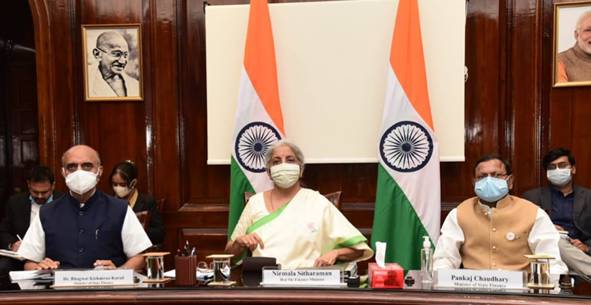
The meeting was attended by Chief Ministers of Assam, Chhattisgarh, Goa, Haryana, Himachal Pradesh, Karnataka, Madhya Pradesh, Manipur, Meghalaya, Mizoram, Nagaland, Puducherry, Sikkim, Tripura, and Uttar Pradesh. Lt Governors of Jammu and Kashmir; Deputy Chief Ministers of Arunachal Pradesh, Bihar, and Delhi. State Ministers of Andhra Pradesh, Gujarat, Kerala, Odisha, Punjab, Rajasthan, Tamil Nadu, Telangana, Uttarakhand, and West Bengal; State Government Officials of Ladakh, Maharashtra, Jharkhand, Andaman & Nicobar, Chandigarh, Dadra and Nagar Haveli & Daman and Diu, Lakshadweep along withSecretaries of GoI Line Ministries, Chief Secretaries and Finance Secretaries Secretary (Economic Affairs), Joint Secretaries (Economic Affairs) and other officials of Centre and State.
In her opening remarks, Finance Minister emphasized that the economy has been growing significantly post the second wave of pandemic and indicators such as imports, exports, PMI manufacturing, digital payments, etc. have already reached pre-pandemic levels. Smt. Sitharaman highlighted that with favourable international perception of India’s growth and in light of the structural, sectoral & financial, reforms undertaken by Government of India, global and domestic investors are upbeat about the investment attractiveness of the country. States should leverage this opportunity to scale up investments and growth.
The Finance Minister also said that the Government of India has taken concrete steps to increase capital spending and drive an infrastructure and investment-led growth. Benefits of higher investment in Infrastructure manifest in form of increased employment opportunities, access to market and materials, improved quality of life and empowerment of vulnerable sections. Union Budget FY 2021-22 has allocated Rs 5.54 lakh crore capital outlay, an increase of 34.5% over last year. Additionally, around Rs 2 lakh crore allocation is for states and autonomous bodies for their capital expenditure. Over and above this, a new incentive scheme was launched by GoI for states that could achieve at least 15 % of the target set for FY21-22 by the end of 1st quarter, 45% by end of 2nd quarter, 70 % by the end of 3rd quarter. States that achieve their targets become eligible for incremental borrowing. After the end of 1st quarter, 11 states got permission to mobilise an additional total amount of Rs 15,271 crore.
Smt. Sitharaman further said that the recently launched National Monetization Pipeline includes only Central government assets and State assets have been out of its purview as of now. Smt. Sitharaman suggested that there is a significant potentially monetizable asset base in states which could be leveraged to enhance the capital available for new infrastructure creation and other social sector pressing priorities.
Smt. Sitharaman urged states to help India become the fastest growing economy in coming years, through facilitating investment attractiveness and expediting ease of doing business measures and undertake power reforms with regards to reduction in AT&C and ACS-RRR. Smt. Sitharaman further emphasized that since in many cases land is one of the major bottlenecks for project on-grounding, states must contrive to smoothen land acquisition procedures and create land banks to be tapped at the time of investment.
The Finance Minister urged the States to strengthen their urban local bodies (ULBs) in light of the fact that there has been decidedly a larger allocation to ULBs than earlier and are increasingly been encouraged to pursue resource mobilization.
Since infrastructure projects require technical assistance in addition to financial resources, Smt. Sitharaman said that GoI Line Ministries and DEA would extend all possible cooperation for technical or advisory assistance to states. Moreover, the Viability Gap Funding provision will help finance socially relevant but financially unviable projects especially across social sectors.
The Finance Minister said that she is looking forward to listening from states and understand their ideas and plans in the direction of investment enhancement. In the open interaction, States thanked GoI for organizing this consultative interaction. Each of the states enumerated the list of reforms and pro-active policies they are pursuing to establish good governance and to facilitate investments.
Following are the key ideas and requests shared by states to facilitate investment promotion:
The meeting ended with vote of thanks to the chair.
The Competition Commission of India (CCI) approves acquisition of 71.25% shareholding of ASK Investment Managers Limited by BCP TopCo XII Pte Ltd.
BCP TopCo XII Pte Ltd. (Acquirer)is an affiliate of funds advised or managed by the affiliates of the Blackstone Group Inc. The principal activity of the Acquirer is that of investment holding and related activities. However, at present, it does not have any business operations, in India or worldwide.
ASK Investment Managers Limited (Target)is an asset and wealth management company with an established client base in India. The Target, directly and through the associate and subsidiary companies, is engaged in the business of providing financial services, including in particular (i) providing portfolio management services to individuals, groups of individuals, family offices and other entities; (ii) offering investment solutions, investment advisory services, and wealth management and wealth planning services (including digital services) for individuals, family offices and corporates; (iii) sponsoring and managing alternate investment funds; (iv) sponsoring, setting up or advising funds; (v) providing credit facilities; and (vi) distribution of financial products (including insurance products and mutual funds).
The Proposed Combination involves acquisition of 71.25% shareholding of the Target by the Acquirer.
Detailed order of the CCI will follow.
Shri M. Ajit Kumar, Chairman, CBIC, inaugurated the Customs & GST pavilion here today at Hall no.12 of Pragati Maidan, New Delhi.
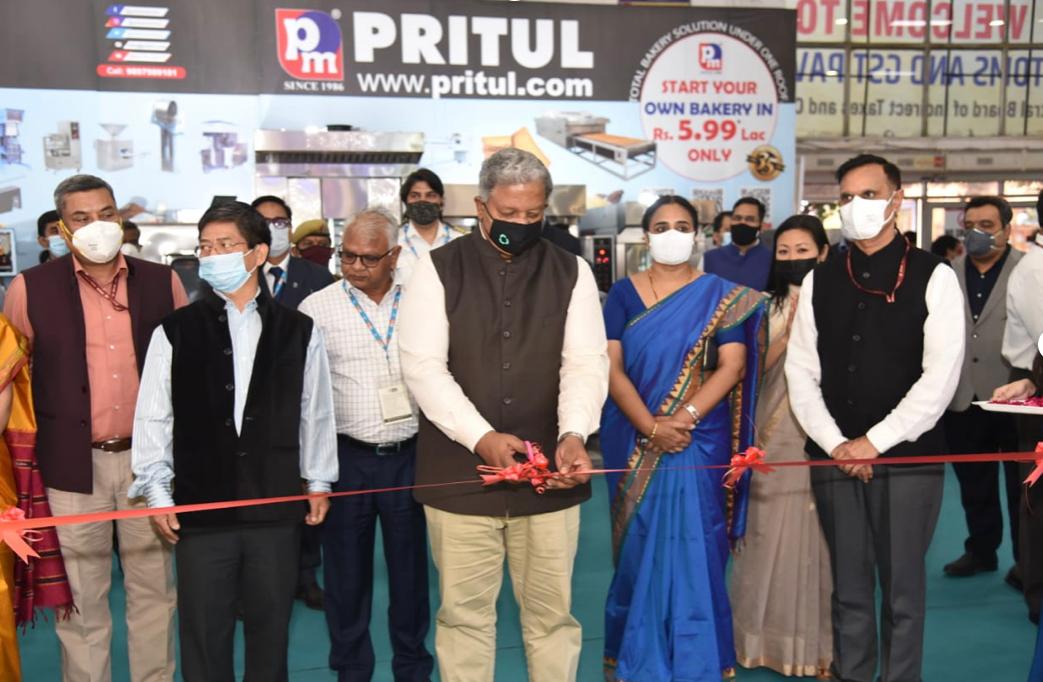
Central Board of Indirect Taxes and Customs (CBIC) has set up Customs & GST pavilion in the 40th edition of India International Trade Fair. The CBIC has been putting up pavilions in the IITFs since 2012 with an objective to educate visiting members of trade & public about compliance requirements under GST and Customs Acts and to inform them about various trade facilitation measures which the Department periodically takes.
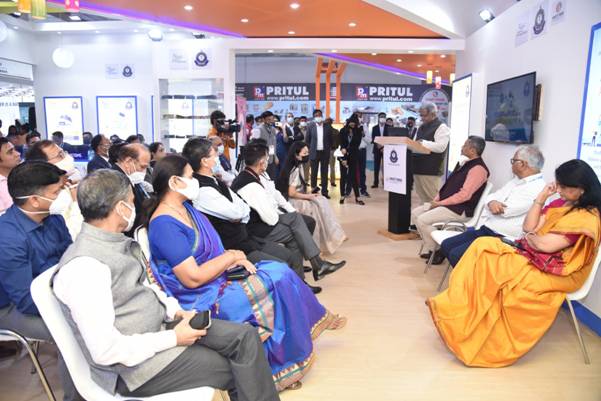
Aligned to ITPO’s theme of Atmanirbhar Bharat, theme-based events on each day are being organised in the Customs & GST pavilion. Sessions on Government of India initiatives to encourage ‘Make in India’ such as Manufacturing and other Operations in Warehouse Regulations (MOOWR) Scheme, Production linked Incentive (PLI) Scheme and Import of Goods at Concessional Rate of Duty Rules, 2017 (IGCR, 2017) are being organised. CBIC’s initiatives on leveraging technology in Customs & GST, cross-border e-Commerce, and securing transactions in Customs will also be showcased and discussed. Various Industry partners such as Invest India, EICI, FIEO and CII have associated with CBIC to organise these theme-based events.
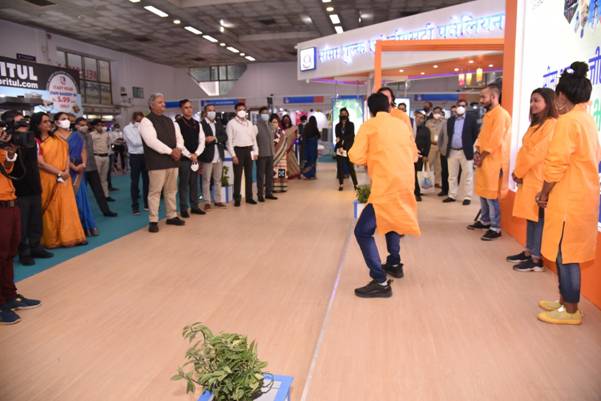
Six Helpdesks viz. GST, Customs, Authorized Economic Operator (AEO) scheme, GSTN and Systems have been setup in the pavilion. Officers from the concerned departments will be available to discuss and suggesting resolution to the issues faced by the tax-payers and visitors. Based on the theme of taxation, the pavilion will also engage and educate general public through quiz competitions, nukkad nataks, pantomimes etc. Some of the illustrious and internationally awarded sports persons who are employed with Department will also be available for interaction with public.
All Covid-19 protocols are being followed at the Customs & GST pavilion.
The Income Tax Department carried out search and seizure operations on 10.11.2021 on two groups, one engaged in real estate and hospitality and the other, a tools and equipment manufacturing group at Gurugram.
Various incriminating documents and electronic data relating to unaccounted investment in real estate, unaccounted sales and purchases, difference in stock, acquisition of shell companies, benami properties and transactions, bogus unsecured loans and share application money, evasion of capital gains, etc. were found and seized. Further, evidence of large sums of money having been received in the form of salary and remuneration by family members without any commensurate qualification or participation in the management of the businesses has been found and seized in one of the groups.
Total cash amounting to Rs. 3.54 crore and Jewellery valued at Rs. 5.15 crore have been seized. In total, 18 bank lockers have been placed under restraint.
The search action, in these groups, has led to the detection of estimated unaccounted income to the tune of Rs. 600 crore.
Further investigations are in progress.
What is RBI Retail Direct Scheme?
Retail Direct scheme is a one-stop solution to facilitate investment in Government Securities by Individual Investors. Under this scheme Individual Retail investors can open Gilt Securities Account – “Retail Direct Gilt (RDG)” Account with the RBI.
Who can open Retail Direct Gilt Account?
Retail investors would mean all individuals (natural persons)
What are the benefits of the Scheme?
Retail investors (individuals) will have the facility to open and maintain the ‘Retail Direct Gilt Account’ (RDG Account) with RBI.
The investor can place non competitive bids in Primary issuance of all Central Government securities (including Treasury Bills and Sovereign Gold bonds) as well as securities issued by various State Governments.
Under this scheme, the individual can also access Secondary market through “NDS OM” – RBI’s trading system.
The investor will automatically receive any interest paid/maturity proceeds into his linked bank account on due dates.
What are the facilities available on the RBI Retail Direct Portal?
The RBI Retail Direct Online Portal will facilitate the following:
What is the procedure for opening a Retail Direct Gilt Account?
What is permitted under Primary Issuances?
RDG Account holders have been allowed to participate in the primary issuance of CG/SG/T-bill/SGB. CCIL will act as the Aggregator for receiving bids for Primary Auctions from such Retail Direct (RD) Investors;
CCIL will also act as the Receiving Office for receiving bids for Sovereign Gold Bonds (SGB) from such RD Investors;
How will the bidding happen using the RBI Retail Direct Portal?
How will the payment be made for the bids placed on the RBI Retail Direct Portal?
For the Primary Auction market, a Bid is required to be backed by funding based on indicative price and accrued interest alongwith a Markup (as non-competitive allotment price shall be known only after auction cut off) for protection against any adverse price movement till Auction Settlement Date. The Markup will be refunded to the Investor post allocation based on the Cut Off Price for the Auction;
In case of SGBs, the funding will be based on Issue Price declared for the particular Issue;
For making payment for the bids, the retail clients can use services like UPI (Transfer or Block) and Net Banking to transfer funds to a designated current account using Payment Gateways linked to the Online Portal;
The funding of the bids can be done either at the time of bidding or at a later time, but, before the closure of bidding/subscription window. Bids which are not funded as on the date of submission of bids to RBI will be cancelled.
When will the allotment be made and credited to the RDG Account?
Based on the allotment advice received as a part of the auction result, the allotments will be made to the Individual Investors;
In case of full allotment, each bidder will be allocated in full FV for which he/she had submitted the bid. In case of partial allotment, a pro-rata allotment will be made to the bidder based on the partial allocation percentage determined during the result declaration process;
Once the allotment is completed, the revised consideration for allotted bids shall be recomputed based on Weighted Average Price (WAP) declared by RBI in respective Security Auction;
On settlement date of Auction, post settlement at RBI, the RDG account shall be credited with the security to the extent of Face Value allotment;
In case of SGBs, post allotment of SGB units at RBI, the RDG account shall be credited with the SGB unit to the extent of allotment;
RDG account holders shall be provided with requisite queries to view the allotment on the portal. RDG account holders shall also be notified through a SMS message on their registered mobile and registered email;
When will the excess mark up collected at the time of bidding be refunded?
After the weighted average price is announced by RBI, the excess markup,will be refunded to the Retail Direct Investor on the settlement date.
Such refunds will be processed by the online portal and will be remitted to the retail client’s respective bank accounts;
The retail client can view such details on the portal. Email and SMS will also be sent to the client about such updates;
How can the NDS OM Secondary Market Portal be accessed?
The NDS OM Secondary Market Portal can be accessed through the RBI Retail Direct Portal. Each registered RD Investor opting for secondary market trading on NDS OM will be provided a CCIL ID. RDG will be permitted to access NDS-OM Order Matching Segment and Request for Quote (RFQ) Segment.
What is the procedure for carrying out secondary market trades on NDS OM?
RDG Account holders can trade in CG/SG/T-bill/SGB, in the Odd Lot segment. RDG available balances would be transferred to NDS OM at the beginning of the day;
RDG can place sell orders only to the extent of balances available. Other transfers would be permitted in the RDG Account only after end of trading day;
RDG can place buy orders only after remittance of funds using service like UPI(Transfer/Block) and Net Baking through Payment Gateways linked to the NDS OM Retail Portal. Funds remitted by RDG shall be received in the designated current account with the Bank providing Payment Gateway;
How does the secondary market settlement happen?
Trades executed by Retail Direct Investors will flow to CCIL for settlement. Settlement would happen on T+1 day;
Securities credit to RDG in respect of their purchases shall be made post completion of settlement on settlement date;
Fund credit to RDG in respect of their sale shall be made after completion of settlement on settlement date to their registered Bank Accounts;
In case the funds remitted by the Retail Direct Investor using the Payment Gateway is not received by CCIL, the securities purchased by the Retail Direct Investor may not be credited to the RDG Account, till the time the funds are received by CCIL from the Payment Gateway.
In case of a failure by a seller from whom the Retail Direct Investor has purchased a security, to deliver the concerned security, the funds remitted by the Retail Direct Investor will be refunded to the Retail Direct Investor on the settlement day.
How will the corporate actions (coupon and redemption) on the RDG holdings serviced?
On receipt of coupon/ redemption proceeds from RBI, the exact entitlement of each RDG account holder will be computed based on their holdings;
The exact amount to be paid will be computed and remitted to the respective bank account of each RDG Account holder holding concerned security on the day of receipt from RBI;
The RDG account holders can view such Corporate Action details on the online portal;
How can the Holding Statement of RDG Accounts be viewed?
The RDG Account holder will have access to information about his/her holding balances on a daily basis. Such information can be viewed on the portal by the RDG Account holder. Period Account Statements will also be mailed to the RDG Account Holder;
What are the other services available under the Retail Direct scheme?
The following additional services are proposed to be made available to the Retail Direct Investor on the RBI Retail Direct Portal:
What is the Role of Clearing Corporation of India Ltd (CCIL)?
CCIL is authorized by the Reserve Bank of India to act as an aggregator for Primary Issuances and as Receiving Office for Sovereign Gold Bondsfor the Retail Direct Investors. CCIL is also authorized by RBI to operate the NDS OM platform.
The release of quick estimates of Index of Industrial Production (IIP) for the month of September, 2021 shows a sustained increase in industrial production. The IIP, in FY 2021-22, has grown from an average of 121.3 in Q1 to 130.2 in Q2. The IIP in Q2 would have been still higher but for heavy monsoons disrupting mining activity, especially coal and consequently electricity generation, that repressed the growth of overall production index.
The manufacturing index in IIP has held steady and is likely to rise in subsequent months mirroring the eight-month high in Purchasing Manager’s Index (PMI) for manufacturing reaching 55.9 in October, 2021.
A sharp increase in capital goods index from an average of 74.0 in Q1 of FY 2021-22 to 91.7 in Q2 underscores a significant recovery in investment.
There are clear signs of investment being induced by rise in consumption in FY 2021-22 as consumer durables index increases from 91.7 in Q1 to 121.2 in Q2 while consumer non-durables index also moves up from 139.1 to 146.9 across the two quarters.
The release of Consumer Price Index (CPI) numbers for the month of October 2021 shows that the decline in annual consumer price inflation has now gradually set in FY 2021-22. The annual CPI inflation has declined from 5.6 per cent in Q1 to 5.1 per cent in Q2 and it is lower still at 4.5 per cent in October of FY 2021-22.
Similarly, Consumer Food Price Inflation (CFPI) has declined from 4.0 per cent in Q1 of FY 2021-22 to 2.6 per cent in Q2 and further to 0.8 per cent in October showing that supply side disruptions to food distribution have considerably eased.
Activity levels have been steadily increasing in FY 2021-22 as reflected in the latest levels of several High Frequency Indicators including E-way bills, power consumption and GST collections. GST collections have soared in FY 2021-22 to reach its second highest monthly collections ever of Rs.1.3 lakh crore in October, 2021, reflecting robustness of growth revival. Tractor sales hit a record high of 1,15,615 units in October 2021, 25 % higher than September, 2021 volumes, indicative of sustained growth in the agricultural sector.
PMI services has accelerated to a decadal high of 58.4 in October, 2021, suggesting a strong revival in contact-based services sector with the weakening of the pandemic. Average Hotel Occupancy rate in leisure destinations rising from about 55 per cent in Q1 of FY 2021-22 to over 60 per cent in Q2 underscores the service sector growing optimism.
Exports are visibly emerging as the engine of growth for India’s economy having crossed $30 billion for the seventh successive month in October of FY 2021-22. On a cumulative basis, India’s merchandise exports in April-October stood at $232.58 billion, up 54.5% over the same period in 2019.
Outstanding credit of the scheduled commercial banks has been steadily rising in FY 2021-22. Retail credit in particular has been noticeably increasing suggestive of strengthening consumption in the economy. According to CIBIL, inquiry volumes have increased by 54 per cent between February and October of 2021 as economic activity has gained momentum.
Default bail U/s. 167(2) Cr.P.C. cannot be equated with discretion of Court U/s. 437, 438 or 439 Cr.P.C.
Amandeep Singh Bhui Vs Inspector (Preventive) Central Goods and Service Tax (Punjab and Haryana High Court) dated 28/10/2021
GST on reimbursement received from MMRDA
In re Maha Mumbai Metro (M3) Operation Corporation Limited (GST AAR Maharashtra) dated 10/11/2021
Writ maintainable Alternative Remedy available examining records, facts mis-match
Kanunga Extrusion Private Limited Vs Assistant Commissioner (ST) (Madras High Court) dated 21/10/2021
Income Tax
No addition on account of capitalization of royalty expenses as same is revenue in nature
Honda Motorcycle and Scooter India Pvt. Ltd. Vs ACIT (ITAT Delhi) dated 09/11/2021
Other Corporate Laws
Stamp Duty refund cannot be denied for delay in Application due to Judicial Proceedings
Rajeev Nohwar Vs Chief Controlling Revenue Authority Maharashtra State, Pune and Others (Supreme Court of India) dated 24/09/2021
In a contempt jurisdiction, Court cannot travel beyond original judgment: SC
V. Senthur And Another Vs M. Vijayakumar (Supreme Court of India) dated 01/10/2021
Onus to Prove Deficiency in Service is on Complainant: SC
SGS India Ltd. Vs Dolphin International Ltd. (Supreme Court) dated 06/10/2021
Regards,
Bipul Kumar
क्या आपका बैंक उचित सेवा नहीं देता ? RBI ने 12 Nov 2021 से नयी ओम्बड्समैन स्कीम (One Nation One Ombudsman ) लाकर कस्टमर को दी एक नयी राहत
https://youtu.be/GXK8_RhvMqA
One Nation, One Ombudsman -Remedy against deficiency in Banking Services w.e.f. 12 Nov 2021
 Business So Simple