Thought of the day- 05 Aug 2021 -Each is great in his own place (Part-5)

The Karma-Yogi is the man who understands that the highest ideal is non-resistance, and who also knows that this non-resistance is the highest
manifestation of power in actual possession, and also what is called the resisting of evil is but a step on the way towards the manifestation of this highest power, namely, non-resistance.
Before reaching this highest ideal, man’s duty is to resist evil; let him work, let him fight, let him strike straight from the shoulder. Then only, when he has gained the power to resist, will non-resistance be a virtue.

I once met a man in my country whom I had known before as a very stupid, dull person, who knew nothing and had not the desire to know anything, and was living the life of a brute. He asked me what he should do to know God, how he was to get free. “Can you tell a lie?” I asked him. “No,” he replied. “Then you must learn to do so. It is better to tell a lie than to be a brute, or a log of wood. You are inactive; you have not certainly reached the highest state,
which is beyond all actions, calm and serene; you are too dull even to do something wicked.” That was an extreme case, of course, and I was joking with him; but what I meant was that a man must be active in order to pass through activity to perfect calmness.

-Swami Vivekananda

India and EU have agreed to resume the negotiations for a balanced, ambitious, comprehensive and mutually beneficial trade agreement

India and EU have agreed to resume the negotiations for a balanced, ambitious, comprehensive and mutually beneficial trade agreement. Free Trade Agreement (FTA) negotiations, including those on specific issues, are to be held considering the interest of either side. The commodities included / excluded in the FTA negotiations are to be finalized based on extensive consultations with the stakeholders, once negotiations resume.

Review of the existing FTAs is an ongoing process to maximize country’s export potential to benefit the domestic industry, and to make the FTAs more user friendly, simple and trade facilitative.

This information was given by the Minister of State in the Ministry of Commerce and Industry, Smt. Anupriya Patel, in a written reply in the Lok Sabha today.

Ministry of Commerce & Industry Press Release dated 04th Aug 2021

Various measures taken by Government for promotion of exports, Government is continuously engaged in strengthening Indian industry through “ease of doing business” for improving the business environment and attracting foreign investments

Government is committed for promoting Indian exports in international markets and suitable interventions are done from time to time. The key schemes/interventions taken are:

  1. The Foreign Trade Policy has been extended upto 30.09.2021 to provide a stable regime during the Covid-19 pandemic.
  2. Schemes such as the Advance Authorization Scheme and the Export Promotion Capital Goods (EPCG) Scheme are being implemented to enable duty free import of raw materials and capital goods for export production.
  3. The Interest Equalization Scheme, which provides pre and post shipment Rupee export credit has been extended upto 30.09.2021.
  4. Remission of Duties and Taxes on Exported Products (RoDTEP) scheme has been operationalized for exports with effect from 01.01.2021.
  5. It has been decided to extend the Rebate of State and Central Levies and Taxes (RoSCTL) Scheme for apparel and made-up exports till March 2024.
  6. Transport and Marketing Assistance (TMA) scheme for specified agriculture products provides assistance for the international component of freight and marketing of agricultural produce and to promote brand recognition for Indian agricultural products in the specified overseas markets.
  7. A common digital platform for Certificate of Origin (CoO) has been launched to increase Free Trade Agreement (FTA) utilization by exporters. 
  8. In order to leverage the full export potential of our vast country,  Districts are being promoted as Exports Hubs by identifying products and services with export potential in each district, addressing bottlenecks for exporting these products/services and supporting such local exporters/manufactures through institutional and strategic interventions. District specific export action plans for 478 districts have been prepared.
  9. Exports of services is being supported through negotiating meaningful market access through multilateral, regional and bilateral trade agreements, through participation in and organization of international fairs/exhibitions like the Global Exhibition on Services. An ‘Action Plan for Champion Sectors in Services’ is being developed  to give focused attention to identified Champion Services Sectors through  identified nodal Ministries/Departments
  10. Assistance is being extended to exporters under the Market Access Initiative (MAI) scheme for various activities such as export market research & product development, product registration, organizing / participating in fairs, exhibitions and Buyer Seller Meets (BSMs) abroad, Reverse Buyer Seller Meets etc.
  11. In order to have a coordinated and focused attention on development of export infrastructure, a working group on infrastructure up-gradation has been constituted under National Committee on Trade Facilitation (NCTF) and a National Trade Facilitation Action Plan (NTFAP) has been formulated. This includes measures for improving road and rail connectivity to ports and smart gates at sea ports.

Government is continuously engaged in strengthening Indian industry through “ease of doing business” for improving the business environment and attracting foreign investments.

To make domestic manufacturing globally competitive and to create global champions in manufacturing,Production Linked Incentive (PLI) Schemes in 13 sectors are being implemented. The Government has initiated a review of some of the existing Free Trade Agreements (FTAs) to maximize its export potential to benefit domestic industry as well as to make them more user friendly, simple and trade facilitative. In addition, bilateral trade negotiations have been initiated with a number ofcountries.

This information was given by the Minister of State in the Ministry of Commerce and Industry, Smt. Anupriya Patel, in a written reply in the Lok Sabha today.

Ministryof Commerce & Industry Press Release dated 04th Aug 2021

India registered its highest ever annual FDI Inflow of US $81.72 billion during the last financial year 2020-21, India has received FDI inflow worth US$ 440.01 billion which is 58 percent of the FDI reported in the last 21 years

Make in India is an initiative which was launched on 25thSeptember, 2014 to facilitate investment, foster innovation, build best in class infrastructure, and make India a hub for manufacturing, design, and innovation. Development of a robust manufacturing sector continues to be a key priority of the Indian Government. It was one of the first ‘Vocal for Local’ initiatives that exposed India’s manufacturing domain to the world. The sector has the potential to not only take economic growth to a higher trajectory but also to provide employment to a large pool of our young labour force.

Make in India initiative has made significant achievements and presently focuses on 27 sectors under Make in India 2.0. Department for Promotion of Industry and Internal Trade is coordinating action plans for manufacturing sector, while Department of Commerce is coordinating service sector.

Activities under Make in India initiative are being undertaken by several Central and State Government departments from time to time. Programme specific data of such activities and details of foreign companies are not centrally maintained.

India has registered its highest ever annual FDI Inflow of US $81.72 billion (provisional figure) during the last financial year 2020-21 as compared to US $ 45.15 billion in 2014-2015. In the last seven financial years (2014-20), India has received FDI inflow worth US$ 440.01 billion which is 58 percent of the FDI reported in the last 21 years (US$ 763.58 billion). Year wise FDI inflow since 2014 is given in below table:

Table: Year wise FDI inflow since 2014-15

Sl. No.

Year

FDI (in US$ billion)

1

2014-15

45.15

2

2015-16

55.56

3

2016-17

60.22

4

2017-18

60.97

5

2018-19

62.00

6

2019-20 (P)

74.39

7

2020-21 (P)

81.72

(P): Data is Provisional. Subject to reconciliation with RBI

This information was given by the Minister of State in the Ministry of Commerce and Industry, ShriSomParkash, in a written reply in the Lok Sabha today.

Ministryof Commerce and Industry Press Release dated 04 Aug 2021

India and World Bank sign $250 million project to make existing dams safe and resilient

Ministry of Finance Press Release dated 04 Aug 2021

The Government of India, the Central Water Commission, government representatives from 10 participating states and the World Bank today signed a $250 million project for long-term dam safety program and improving the safety and performance of existing dams across various states of India.

The Second Dam Rehabilitation and Improvement Project (DRIP-2) will strengthen dam safety by building dam safety guidelines, bring in global experience, and introduce innovative technologies. Another major innovation envisaged under the project, that is likely to transform dam safety management, is the introduction of a risk-based approach to dam asset management that will help to effectively allocate financial resources towards priority dam safety needs.

The project will be implemented in approximately 120 dams across the states of Chhattisgarh, Gujarat, Kerala, Madhya Pradesh, Maharashtra, Manipur, Meghalaya, Odisha, Rajasthan, and Tamil Nadu, and at the national level through the Central Water Commission (CWC). Other states or agencies may be added to the project during project implementation.

The agreement was signed by Additional Secretary, Department of Economic Affairs, Ministry of Finance on behalf of the Government of India; representatives from the state governments of Chhattisgarh, Gujarat, Kerala, Madhya Pradesh, Maharashtra, Manipur, Meghalaya, Odisha, Rajasthan, and Tamil Nadu; and Mr. Junaid Ahmad, Country Director, India on behalf of the World Bank.

World Bank support to dam safety in India includes the recently closed DRIP-1 ($279 million + $62 million Additional Financing) that improved the safety and sustainable performance of 223 dams in six states of India and one central agency.

Other important measures that DRIP-2 will support include flood forecasting systems and integrated reservoir operations that will contribute to building climate resilience; the preparation and implementation of Emergency Action Plans to enable vulnerable downstream communities to prepare for and enhance resilience against the possible negative impacts and risks of climate change; and the piloting of supplemental revenue generation schemes such as floating solar panels.

CBIC launches Compliance Information Portal (CIP)

CBIC launches Compliance Information Portal (CIP)


CIP provides free access to information on all Customs procedures and regulatory compliance for nearly 12,000 Customs Tariff Items

Ministry of Finance Press Release dated Aug 04, 2021

The Central Board for Indirect Taxes & Customs (CBIC) here today launched the Indian Customs Compliance Information Portal (CIP) at www.cip.icegate.gov.in/CIP for providing free access to information on all Customs procedures and regulatory compliance for nearly 12,000 Customs Tariff Items.

CIP is yet another facilitation tool developed by CBIC to empower our business as well as any interested person with up-to-date information on the legal and procedural requirements of Customs and Partner Government Agencies (FSSAI, AQIS, PQIS, Drug Controller etc.) for carrying out imports and exports.  The portal would provide at the click of a button complete knowledge of all import and export related requirements for all items covered under the Customs Tariff thereby improving the ease of doing cross border trade.

For using CIP, one can simply enter either the Customs Tariff Heading (CTH) or the description of the goods in question to get information to step-by-step procedures, regulatory compliances requirements like License, Certificates, etc., for imports as well as exports. This includes import and export through posts and courier, import of samples, reimport and reexport of goods, self-sealing facility for exporters and project imports.

Another important feature of CIP is a pan India map showing all the Customs seaports, airports, land customs stations etc. It also contains addresses of the regulatory agencies and their websites.

For first time, Dragon Fruit grown by farmers of Gujarat & West Bengal exported to London, United Kingdom & Kingdom of Bahrain

For first time, Dragon Fruit grown by farmers of Gujarat & West Bengal exported to London, United Kingdom & Kingdom of Bahrain


APEDA is making efforts to export Dragon fruit to other European countries to get better price realisation to the farmers of their produce

PM congratulated farmers of Kutch for the cultivation of fruit for ensuring India’s self-sufficiency in the productionin ‘Mann Ki Baat’ programme in July, 2020 on All India Radio

PM’s dream has come true when the fruit is being exported to the UK and Kingdom of Bahrain
Posted Date:- Aug 03, 2021

In a major boost to exports of exotic fruit, consignments of fiber& mineral rich ‘dragon fruit’, which are sourced from farmers of Gujarat & West Bengal, have been exported for the first time to London, United Kingdom & Kingdom of Bahrain. In India, dragon fruit is also referred to as Kamalam.

The consignment of exotic fruit exported to London was sourced from farmers of Kutch region and exported by APEDA registered packhouse in Bharuch, Gujarat, while the consignment of ‘dragon fruit’ exported to Kingdom of Bahrain was sourced from the farmers of West Midnapore (West Bengal) and exported by APEDA registered enterprises, Kolkata.
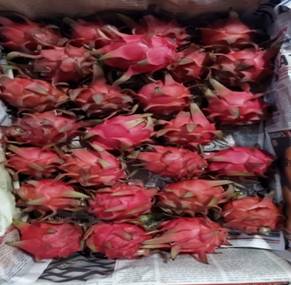

Earlier in June 2021, a consignment of ‘dragon fruit’ that was sourced from the farmers of Tadasar village, Sangli district, Maharashtra was exported to Dubai by APEDA recognized exporter.

Production of ‘dragon fruit’ commenced in India in early 1990s and it was grown as home gardens. Due to high export value, the exotic ‘dragon fruit’ has become increasingly popular in recent years in the country and it has been taken up for cultivation by farmers in different states. There are three main varieties of dragon fruit: white flesh with pink skin, red flesh with pink skin, and white flesh with yellow skin. However, the red and white flesh is typically being relished by the consumers.

At present, dragon fruit is grown mostly in Karnataka, Kerala, Tamil Nadu, Maharashtra, Gujarat, Odisha, Andhra Pradesh, and Andaman and Nicobar Islands. West Bengal is new to taking up cultivation of this exotic fruit.

Scientifically referred to as Hylocereusundatus, the ‘dragon fruit’ is grown in countries such as Malaysia, Thailand, the Philippines, the USA and Vietnam and these countries are the major competitors for Indian Dragon Fruit.

The cultivation of dragon fruit requires less water and can be grown in various kinds of soils. The fruit contains fiber, vitamins, minerals, and antioxidants. It can help in repairing the cell damage caused by oxidative stress and reduce inflammation, and also improve the digestive system. Since the fruit has spikes and petals resembling lotus, it is referred to as ‘Kamalam’.

Prime Minister Shri Narendra Modi in ‘Mann Ki Baat’ programme in July, 2020 on All India Radio had mentioned about the dragon fruit farming in the arid Kutch region of Gujarat. He had congratulated the farmers of Kutch for the cultivation of fruit for ensuring India’s self-sufficiency in the production. His dream has come true when the fruit is being exported to the UK and Kingdom of Bahrain.

APEDA is making efforts to export it to other European countries to get better price realisation to the farmers of their produce.

APEDA promotes exports of agricultural & processed food products by providing assistance to the exporters under various components such as Infrastructure Development, Quality Development and Market Development. Apart from this the Department of Commerce also supports exports through various schemes like Trade Infrastructure for Export Scheme, Market Access Initiative etc.

Ministry of Commerce & Industry Press Release dated 04 Aug 2021 ****
12,889 shell companies struck off in FY 2020-21

There is no definition of the term “Shell Company” in the Companies Act. It normally refers to a company without active business operation or significant assets, which in some cases are used for illegal purpose such as tax evasion, money laundering, obscuring ownership, benami properties etc. This was stated by Union Minister of State for Corporate Affairs Shri Rao Inderjit Singh in a written reply to a question in Rajya Sabha today.

On the identification shell companies, the Minister stated that the Special Task Force set up by the Government to look into the issue of “Shell Companies” has inter-alia recommended the use of certain red flag indicators as alerts for identification of Shell Companies.

Giving more details, the Minister stated that the Government has undertaken a Special Drive for identification and strike off of Companies by invoking the provisions of section 248 (1) of the Act by which the Registrar of Companies (RoC) struck off those companies after following the due process of law from the Register of companies when RoC has reasonable cause to believe that those companies are not carrying on any business or operation for a period of two immediately preceding financial years and has not made any application within such period for obtaining the status of a dormant company under section 455.

The Minister listed the total number of companies struck off u/s 248 State/Union Territory-wise as under:

Sate/ UT-wise

2018-19

2019-20

2020-21

Gujarat

6398

2494

257

Andaman

24

15

2

Karnataka

4171

5568

1038

UT of Chandigarh

3514

893

501

Tamil Nadu and Coimbatore

9107

3214

1322

Orissa

2907

719

78

NCT of Delhi and Haryana

30544

12653

2396

Kerala

2801

5339

977

Goa

250

311

36

Madhya Pradesh

3386

1168

111

Himachal Pradesh

481

176

201

Telangana

16364

2686

730

Rajasthan

4038

4466

507

Jammu and Kashmir

255

138

0

Jharkhand

1306

403

139

Uttar Pradesh

7589

5821

1936

West Bengal

8390

6627

5

Maharashtra (Mumbai and Pune)

47575

7824

2298

Bihar

2540

1956

185

UT of Puducherry

37

117

35

Assam, Tripura, Arunachal Pradesh, Nagaland, Mizoram, Meghalaya, Manipur, and Sikkim

372

796

88

Uttarakhand

476

79

0

Andhra Pradesh

3864

958

0

Chhattisgarh

539

347

47

Grand Total

156928

64768

12889

Ministry of Corporate Affairs Press Release dated 03 August 2021

CGST authorities bust input tax credit fraud of more than Rs 31,000 crore involving more than 7,200 cases in FY 2020-21

The Goods and Services Tax authorities have unearthed over Rs 31,000 crore of tax fraud committed by misuse of input tax credit (ITC) provision under the Goods and Services Tax (GST) regime during the financial year 2020-21 and booked more than 7,200 cases involving fake ITC. This was stated by Union Minister of State for Finance Shri Pankaj Chaudhary in a written reply to a question in Rajya Sabha today.

Giving details, the Minister stated Input Tax Credit (ITC) fraud detected by CGST formations under Central Board of Indirect Taxes & Customs (CBIC) as following:

S. No.

Period

No. of Cases

Quantum involved

(in Rs. crore)

1

2020-21

7,268

31,233.40

The Minister stated that the Government has taken many steps to prevent such frauds, such as:

  • Introduction of AADHAR authentication for processing of new registration application;
  • Facility to verify cancelled / existing registrations of the applicants seeking new registrations;
  • Provisions to suspend / cancel registration of taxpayers found to the adverse notice of the department;
  • Bulk suspension of registration by GSTN based on business intelligence and further follow up of the same by the CBIC;
  • Additional grounds for cancellation of registration have been introduced where there is mismatch between FORM GSTR1 and FORM GSTR 3B (Rule 21) of CGST Act, 2017, etc.;
  • To prevent fake dealers and shell companies to pass on fake credit, without filing their GSTR3B returns and paying taxes, a provision has been made to block furnishing of outward supply statement in FORM GSTR-1 by a taxpayer, if 2 or more GSTR 3B returns are not filed by the said taxpayer.
  • E-invoices have been made mandatory for all B2B transaction with turnover above Rs. 50 crore.
  • Generation of E-way bill by those taxpayers who have not furnished return for consecutive period of two month has been restricted.
  • Blocking of ITC Credit under Rule 86A of CGST Act, 2017, was introduced if the proper officer has reason to believe that ITC has been availed fraudulently.

****

Ministry of Finance Press Release dated 03 August 2021