320 foreign companies registered in India between 2018 and 2021

Ministry of Corporate Affairs Press Release dated 27 July 2021

A total of 320 foreign companies registered in the country during the last three years. This was stated by Union Minister of State for Corporate Affairs Shri Rao Inderjit Singh in a written reply to a question in Rajya Sabha today.

Giving more details, the Minister stated that “Foreign Company” is defined under section 2 (42) of the Companies Act, 2013 (the Act) as any company or body corporate incorporated outside India which (a) has a place of business in India by itself or through an agent, physically or thorough electronic mode and (b) conducts any business activity in India in any other manner.

The Minister tabled a state-wise breakup of details of the number of foreign companies registered in the country during each of the last three years as under:

Refer

https://pib.gov.in/PressReleaseIframePage.aspx?PRID=1739581&RegID=3&LID=1

Thought of the day- 28 July 2021 -Each is great in his own place (Part-2)

Karma-Yoga has specially to deal with these three factors (Goodness, passion & ignorance) . By teaching what they are and how to employ them, it helps us to do our work better.

Human society is a graded organisation. We all know about morality, and we all know about duty, but at the same time we find that in different countries the significance of morality varies greatly. What is regarded as moral in one country
may in another be considered perfectly immoral. For instance, in one country cousins may marry; in another, it is thought to be very immoral; in one, men may marry their sisters-in-law; in another, it is regarded as immoral; in one country people may marry only.

News update-Entrepreneurship, Taxation, Personal Finance & Succession planning-28 July 2021

1. *Tax on your gold and real estate investments*

https://www.livemint.com/money/personal-finance/tax-on-your-gold-and-real-estate-investments-11627411856287.html

2. *Real estate developers offer flexible designs to cater to the changing needs of homebuyers*

https://economictimes.indiatimes.com/wealth/real-estate/real-estate-developers-offer-flexible-designs-to-cater-to-the-changing-needs-of-homebuyers/articleshow/84781223.cms

3. *Tech-focussed funds have had a rich harvest. Will it continue?*

https://www.livemint.com/money/personal-finance/techfocussed-funds-have-had-a-rich-harvest-will-it-continue-11627413764402.html

4. *Adopted child alone gets property if adoption deed provides for it*

https://www.livemint.com/money/personal-finance/adopted-child-alone-gets-property-if-adoption-deed-provides-for-it-11627412662694.html

5. *Superannuation funds can be moved*

https://www.livemint.com/money/personal-finance/superannuation-funds-can-be-moved-11627413355990.html

6. *SBI adds a new feature to Yono Lite app for safe online banking, Details here*

https://www.livemint.com/money/personal-finance/sbi-adds-a-new-feature-to-yono-lite-app-for-safe-online-banking-details-here-11627433053631.html

7. *ICICI Bank service charges to change from next week: 10 things to know*

https://www.livemint.com/money/personal-finance/icici-bank-service-charges-to-change-from-next-week-10-things-to-know-11627440819066.html

8. *Gold price trade sideways. Should you buy on dips?*

https://www.livemint.com/money/personal-finance/gold-price-trade-sideways-should-you-buy-on-dips-11627446818953.html

9. *Your Queries: Loans – If PMAY subsidy loss less than gain on rate cut, go for balance transfer*

https://www.financialexpress.com/money/your-queries-loans-if-pmay-subsidy-loss-less-than-gain-on-rate-cut-go-for-balance-transfer/2298882/

10. *ICICI Lombard, Dr Reddy’s wellness arm tie up for cashless outpatient services to policyholders*

https://www.financialexpress.com/money/insurance/icici-lombard-dr-reddys-wellness-arm-tie-up-for-cashless-outpatient-services-to-policyholders/2298984/

11. *SEBI’s decision on common platform for Mutual Funds to help investors in service-related transactions: Experts*

https://www.financialexpress.com/money/mutual-funds/sebis-decision-on-common-platform-for-mutual-funds-to-help-investors-in-service-related-transactions-experts/2298726/

12. *Need a personal loan? Know how to avail one at a lower interest rate*

https://www.financialexpress.com/money/need-a-personal-loan-know-how-to-avail-one-at-a-lower-interest-rate/2298525/

*13.  गवर्नमेंट टॉक्स हेडलाइंस -28 जुलाई 2021*  https://www.youtube.com/watch?v=ICBe5H_UiaA

Direct tax collection doubled for first quarter of current fiscal

Direct tax collection for the first quarter of the current fiscal has doubled. This was stated by Union Minister of State for Finance Shri Pankaj Chaudhary in a written reply to a question in Rajya Sabha today.

The Minister stated that the net direct tax collection in the 1st quarter of FY 2021-2022 is Rs. 2,46,519.82 crore as against Rs. 1,17,783.87 crore during the same period of previous FY 2020-21.

Giving reasons for increase in the tax collections, the Minister stated that it includes revival of economic activities and positive sentiments among taxpayers during this current financial year leading to increased income estimates and higher advance tax payments in the first quarter of the FY 2021-22 as compared to the corresponding period of FY 2020-21.

To the question of direct tax collections in the second quarter of the current  fiscal, the Minister stated that the collection of taxes during second quarter cannot be ascertained for the present as the second quarter has just started

On details of indirect tax collections of the first two quarters of the current  fiscal, the Minister stated that the second quarter of the current fiscal has just started, however the details of Net Indirect Tax (GST and Non-GST) revenue collection in the 1st quarter of FY 2021- 2022 is Rs. 3,11,398 crore.

Stating about Vivad-se-Vishwas Scheme, the Minister said the Government has resolved significant number of pending direct tax disputes amicably with the taxpayers under Vivad-se-Vishwas Scheme, 2020. This was the primary objective of the Scheme as provided in the short title therein ‘An Act to provide for resolution of tax and for matters connected therewith or incidental thereto’. The declarations received under the Scheme cover around 28.73% of pending tax disputes. Additional tax revenue received is an additional positive outcome.

On the recovery of economy, the Minister stated that the increased tax collection (Direct & Indirect) as reported in the first quarter of the current financial year as compared to the same period previous financial year shows that the economy is on the recovery path. Higher tax collection would enable Government in increasing public expenditure which would have a positive impact on GDP, the Minister stated.

Ministry of Finance dated 27 July 2021

Measures taken to facilitate digital banking

Measures taken to facilitate digital banking


Nearly 72% of financial transactions of PSBs done through digital channels

Active customers doubled on digital channels from 3.4 crore in FY 2019-20 to 7.6 crore in FY 2020-21

Financial transactions undertaken through home and mobile channels increased from 29% in FY 2018-19 to 76% in FY 2020-21

The Government has taken a number of steps to facilitate digital banking, doorstep banking services and digital lending platforms. This was stated by Union Minister of State for Finance Dr Bhagwat Kisanrao Karad in a written reply to a question in Rajya Sabha today.

Giving details of the steps, the Minister stated that these include, inter-alia, the following:

  1. Initiation of digital lending has been made contactless through PSBloansin59 minutes.com, using triangulation of credit bureau, income-tax and goods and services tax (GST) data, to provide online in principle approval for MSME loans.
  2. Online bill discounting for MSMES has been enabled on a competitive basis through Public Sector Banks (PSBs) onboarding onto the Trade Receivables Discounting System (TReDS) platform and the proportion of online discounted bills has grown rapidly.
  3. Government’s Jeevan Pramaan’ initiative for pensioners has enabled senior citizen pensioners the facility to update their annual life certificate online.
  4. Under the Government-initiated PSB Reforms Agenda,-
  1. Enhanced access to Mobile and Internet banking has been enabled through an increase in the average number of services offered (43), customer-friendly features (135) and regional language customer-interface (8);
  2. End-to-end automated digital lending has been introduced in larger PSBs for unsecured personal loans (in five PSBs), loans to micro-enterprises (“Shishu Mudra”, in five PSBs) and renewals of loans to micro, small and medium enterprises (in three PSBs);
  3. Digital retail loan request initiation through digital channels has been enabled in all the seven large PSBs, with retail disbursements from loan requests so initiated in the financial year (FY)2020-21 amounting to Rs. 40,819 crore;
  4. Customer-need-driven, analytics-based credit offers have been given an impetus, resulting in Rs. 49,777 crore of fresh retail loan disbursements by the seven larger PSBS in the financial year (FY) 2020-21.

As a result, the Minister stated, nearly 72% of financial transactions of PSBs are now done through digital channels, with doubling of customers active on digital channels from 3.4 crore in FY2019-20 to 7.6 crore in FY2020-21, and the share of  financial transactions undertaken through home and mobile channels has increased from 29% in FY2018-19 to 76% in FY2020-21.

  1. PSB Alliance, an initiative of all PSBs and Indian Banks’ Association, has launched doorstep banking services for all customers, including senior citizens, through call centre (1800-121-3721 and 1800-103-7 188), web portal (https://psbdsb.in/ and https://doorstepbanks.com/) mobile app (Google Play Store). At present 13 services are being offered in 100 cities across the country, which include cash withdrawal or deposit, pick-up of cheque or demand draft or pay order etc., pickup of cheque-book requisition slip, pickup of income-tax forms no. 15G/15H, pick up of income-tax/GST challan, and delivery of tax deduction at source (TDS) and Form- 16 certificates for income-tax purposes.

The Minister further said that there is no proposal under consideration of the Government for setting up of a Digital Banking Infrastructure Corporation (DBI). As per inputs from banks, some PSBs have held discussions to set up a corporation to create a common digital infrastructure platform as a joint initiative of the banks, with a view to enable enhanced access to consumers and businesses for credit offerings.

Ministry of Finance Press Release dated 27 July 2021

India’s forex reserves position comfortable for import cover of more than 18 months & provide cushion against unforeseen external shocks

India’s foreign exchange reserves position is comfortable in terms of import cover of more than 18 months and provides cushion against unforeseen external shocks.  This was stated by Union Minister of State for Finance Shri Pankaj Chaudhary in a written reply to a question in Rajya Sabha today.

Weather the reserve funds are adequate to meet the international payment obligations, the Minister said that the ratio of forex reserves to total external debt stood at 101.2 per cent and short-term external debt to forex reserves stood at 17.5 per cent as at end-March 2021. The ratio of volatile capital flows (including cumulative portfolio inflows and outstanding short-term debt) to reserves was 67.0 per cent at end-December 2020. India is comfortable in most of the external sector vulnerability indicators.

Giving details of India’s foreign exchange reserves in last five years, the Minister tabled the following data:

India’s Foreign Exchange Reserves

Year

Foreign Exchange Reserves

(US$ Billion)

2016-17

370.0

2017-18

424.5

2018-19

412.9

2019-20

477.8

2020-21

577.0

9th July 2021

611.9

Source: RBI

Speaking on the international currencies in our forex reserve, the Minister said the foreign currency assets, constituting more than 90 per cent of India’s forex reserves, are maintained as a multi-currency portfolio comprising major currencies, such as, US dollar, Euro, Pound sterling, Japanese yen, etc.

Ministry of Finance Press Release dated 27 July 2021

Comprehensive measures taken to curb incidence of frauds in Banks

As per the information received from RBI, the number of cases of frauds of Rs 500 crore and above reported by Public Sector Banks/ Indian Banks (Except Foreign Banks) / Select Financial Institutions are 79 cases in 2019-20, 73 cases in 2020-21 and 13 cases in 2021-22 (up to 30th June 2021). This was stated by Union Minister of State for Finance Dr Bhagwat Kisnrao Karad in a written reply to a question in Rajya Sabha today.

The Minister further stated that the RBI Master Circular on Frauds, 2015, observes that frauds are committed by unscrupulous borrowers by various methods including, inter alia, fraudulent discount of instruments, fraudulent disposal of pledged /hypothecated stocks, fund diversion, criminal neglect and mala fide managerial failure on the part of borrowers. The Master Circular also refers to certain other methods, which include forged instruments, manipulated account books, fictitious accounts, unauthorized credit facilities, fraudulent foreign exchange transactions, exploitation of “multiple banking arrangement”, and deficiency on the part of third parties with role in credit sanction/disbursement.

Giving details of the steps the Government has taken comprehensive measures to curb the incidence of frauds in banks, the Minister said, they include, inter-alia, the following:

  1. Government has issued “Framework for timely detection, reporting, investigation etc. relating to large value bank frauds” to Public Sector Banks (PSBs), for systemic and comprehensive checking of legacy stock of their non-performing assets (NPAs), which provides, inter-alia, that-
  1. all accounts exceeding Rs. 50 crore, if classified as NPAs, be examined by banks from the angle of possible fraud, and a report placed before the bank’s Committee for Review of NPAs on the findings of this investigation;
  2. examination be initiated for wilful default immediately upon reporting fraud to RBI; and
  3. report on the borrower be sought from the Central Economic Intelligence Bureau in case an account turns NPA.
  4. Fugitive Economic Offenders Act, 2018 has been enacted to deter economic offenders from evading the process of Indian law by remaining outside the jurisdiction of Indian courts. The act provides for attachment of property of a fugitive economic offender, confiscation of such offender’s property and disentitlement of the offender from defending any civil claim.
  5. PSBs have been advised to obtain certified copy of the passport of the promoters/directors and other authorised signatories of companies availing loan facilities of more than Rs. 50 crore and, decide on publishing photographs of wilful defaulters, in terms of Reserve Bank of India (RBI)’s instructions and as per their Board- approved policy and to strictly ensure rotational transfer of officials/employees. The heads of PSBs have also been empowered to issue requests for issue of Look Out Circulars.
  6. For enforcement of auditing standards and ensuring the quality of audits, Government has established the National Financial Reporting Authority as an independent regulator.
  7. Instructions/advisories have been issued by Government to PSBs to decide on publishing photographs of wilful defaulters, in terms of RBI’s instructions and as per their Board-approved policy, and to obtain certified copy of the passport of the promoters/directors and other authorised signatories of companies availing loan facilities of more than Rs. 50 crore.

****

CAA RULES

Ministry of Home Affairs Press Release dated 27 July 2021

The Citizenship (Amendment) Act, 2019 (CAA) has been notified on 12.12.2019 and has come into force w.e.f. 10.01.2020. The Committees on Subordinate Legislation, Lok Sabha and Rajya Sabha have  been requested to grant further extension of time upto 09.01.2022 to frame the rules under the Citizenship (Amendment) Act, 2019.

This was stated by the Minister of State for Home Affairs, Shri Nityanand Rai in a written reply to question in the Lok Sabha today.

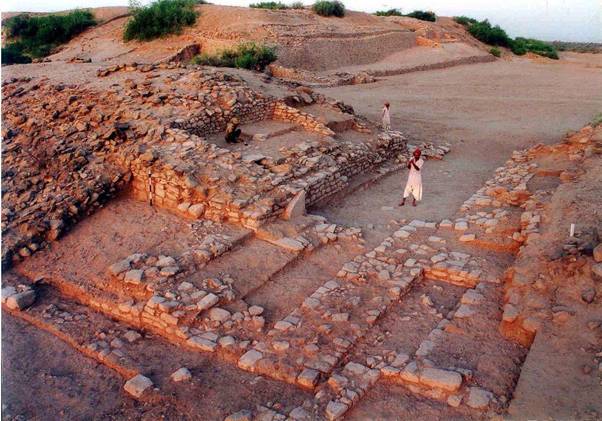
India gets its 40th World Heritage Site Dholavira, the Harappan City in the Rann of Kutch, Gujarat inscribed on UNESCO’s World Heritage List

India’s nomination of Dholavira, the Harappan City in the Rann of Kutch, Gujarat has been inscribed on UNESCO’s World Heritage list. India submitted the nomination dossier for Dholavira: A Harappan City to the World Heritage Centre in January, 2020. The site was on the UNESCO’s tentative list since 2014. Dholavira: a Harappan city, is one of the very few well preserved urban settlements in South Asia dating from the 3rd to mid-2nd millennium BCE.

Prime Minister Shri Narendra Modi tweeted, “Absolutely delighted by this news. Dholavira was an important urban centre and is one of our most important linkages with our past. It is a must visit, especially for those interested in history, culture and archaeology.”

Absolutely delighted by this news.

Dholavira was an important urban centre and is one of our most important linkages with our past. It is a must visit, especially for those interested in history, culture and archaeology. https://t.co/XkLK6NlmXx pic.twitter.com/4Jo6a3YVro— Narendra Modi (@narendramodi) July 27, 2021

The Union Minister of Culture, Tourism and Development of North Eastern Region (DoNER) Sri G Kishan Reddy shared this news on Twitter shortly after the announcement. This follows a few days after the Rudreswara Temple, (also known as the Ramappa Temple) at Palampet, Mulugu district, Telangana State becoming the 39th World Heritage Centre in India.

Shri G Kishan Reddy tweeted, “It gives immense pride to share with my fellow Indians that Dholavira is now the 40th treasure in India to be given @UNESCO World Heritage tag. Another feather in India’s cap as we now enter the Super-40 club for World Heritage Site inscriptions.”

It gives immense pride to share with my fellow Indians that #Dholavira is now the 40th treasure in India to be given @UNESCO’s World Heritage Inscription.

Another feather in India’s cap as we now enter the Super-40 club for World Heritage Site inscriptions. pic.twitter.com/yHyHnI6sug— G Kishan Reddy (@kishanreddybjp) July 27, 2021

With this successful nomination, India has 40 world heritage properties overall, which includes 32 cultural, 7 natural and one mixed property. The Union Minister for Culture was referring to the countries that have 40 or more World Heritage sites and apart from India, this now contains Italy, Spain, Germany, China and France. The Minister also observed in his tweet how India has added 10 new world Heritage sites since 2014, and this is testimony to the Prime Minister’s steadfast commitment in promoting Indian culture, heritage and the Indian way of life.
Image

Shri G Kishan Reddy tweeted, “Today is a proud day for India, especially for the people of Gujarat. Since 2014, India has added 10 new World Heritage sites – one fourth of our total sites. This shows PM @narendramodi’s steadfast commitment in promoting Indian culture, heritage and the Indian way of life.”

About the Harappan city of Dholavira

Dholavira: a Harappan city, is one of the very few well preserved urban settlements in South Asia dating from the 3rd to mid-2nd millennium BCE. Being the 6th largest of more than 1,000 Harappan sites discovered so far, and occupied for over 1,500 years, Dholavira not only witnesses the entire trajectory of the rise and fall of this early civilization of humankind, but also demonstrates its multifaceted achievements in terms of urban planning, construction techniques, water management, social governance and development, art, manufacturing, trading, and belief system. With extremely rich artefacts, the well preserved urban settlement of Dholavira depicts a vivid picture of a regional centre with its distinct characteristics that also contributes significantly to the existing knowledge of Harappan Civilization as a whole.

The property comprises two parts: a walled city and a cemetery to the west of the city. The walled city consists of a fortified Castle with attached fortified Bailey and Ceremonial Ground, and a fortified Middle Town and a Lower Town. A series of reservoirs are found to the east and south of the Citadel. The great majority of the burials in the Cemetery are memorial in nature.

The configuration of the city of Dholavira, during its heyday, is an outstanding example of planned city with planned and segregated urban residential areas based on possibly differential occupational activities, and a stratified society. Technological advancements in water harnessing systems, water drainage systems as well architecturally and technologically developed features are reflected in the design, execution, and effective harnessing of local materials. Unlike other Harappan antecedent towns normally located near to rivers and perennial sources of water, the location of Dholavira in the island of Khadir was strategic to harness different mineral and raw material sources (copper, shell, agate-carnelian, steatite, lead, banded limestone, among others) and to facilitate internal as well as external trade to the Magan (modern Oman peninsula) and Mesopotamian regions.

Dholavira is an exceptional example of a proto-historic Bronze Age urban settlement pertaining to the Harappan Civilization (early, mature and late Harappan phases) and bears evidence of a multi-cultural and stratified society during the 3rd and 2nd millennia BCE. The earliest evidence can be traced back to 3000 BCE during the early Harappan phase of the Harappan Civilization. This city flourished for nearly 1,500 years, representing a long continuous habitation. The excavated remains clearly indicate the origin of the settlement, its growth, zenith and the subsequent decline in the form of continuous changes in the configuration of the city, architectural elements and various other attributes.

Dholavira is an outstanding example of Harappan urban planning, with its preconceived city planning, multi-layered fortifications, sophisticated water reservoirs and drainage system, and the extensive use of stone as a building material. These characteristics reflect the unique position Dholavira held in the entire gamut of Harappan Civilization.

The expansive water management system designed to store every drop of water available shows the ingenuity of the people to survive against the rapid geo-climatic transformations. Water diverted from seasonal streams, scanty precipitation and available ground was sourced, stored, in large stone-cut reservoirs which are extant along the eastern and southern fortification. To further access water, few rock-cut wells, which date as one of the oldest examples, are evident in different parts of the city, the most impressive one being located in the citadel. Such elaborate water conservation methods of Dholavira is unique and measures as one of the most efficient systems of the ancient world.

Ministry of Culture Press Release dated 27 July 2021

Parliament passes the National Institutes of Food Technology, Entrepreneurship and Management Bill, 2021

Ministry of Food Processing Industries

Parliament passes the National Institutes of Food Technology, Entrepreneurship and Management Bill, 2021


With this NIFTEM in Haryana and IIFPT in Tamil Nadu became Institutions of National Importance.

Posted Date:- Jul 26, 2021

Parliament has passed the National Institutes of Food Technology, Entrepreneurship and Management Bill, 2021. The Bill was unanimously passed by the Loksabha today, which was earlier cleared by the Rajya Sabha on 15th March this year.

Briefing the media after the passage of the Bill in Parliament, Union Minister for Food Processing Industries Shri Pashupati Kumar Paras said this is a historic day as with the passing of this bill, our two educational institutes, National Institute of Food Technology Entrepreneurship and Management (NIFTEM)Kundali (Haryana) and Indian Institute of Food Processing Technology(IIFPT)Thanjabur (Tamil Nadu) under the Ministry of Food Processing Industries became Institutions of National Importance (INI).

Shri Parasexpressed his gratitude to Prime Minister Shri Narendra Modi, Parliamentary Affairs Minister Shri Pralhad Joshi and all the Members of Parliament and senior officials of the Ministry for this landmark step, which will provide these Institutes Greater Autonomy, so that they can start new and innovative courses, as well as help them to attract excellent faculty and students. He said, Global standards can also be adopted in academic and research work.

The Minister said, these institutes will have curricular provision related to food processing areas e.g. cold chain technology, food bio nanotechnology which can help in filling the technological gap. He said, now they can open new centres anywhere in the country and abroad. Along with this, giving them the status of Institute of National Importance (INI) will also pave the way for the creation of skilled manpower.

Speaking on the occasion, Vice Chancellor of NIFTEM, Dr ChindiVasudevappa said that hereafter all efforts will be made to upgrade infrastructure, Human Resources and lab facilities at par with IITs and IIMs. He said, our students can be trained internationally in Food Science and Technology, being the only stand-alone University.<><><><><>