Consolidated Circular on Opening of Current Accounts and CC/OD Accounts by Banks (RBI Circular dated 19th April 2022)

A. Purpose

This Circular consolidates earlier instructions issued by the Reserve Bank of India, on opening and operation of current accounts and CC/OD accounts with a view to enforce credit discipline amongst the borrowers as well as to facilitate better monitoring by the lenders.

B. Previous Instructions

This circular consolidates instructions contained in the following circulars issued on the above subject:

  1. DOR.No.BP.BC/7/21.04.048/2020-21 dated August 6, 2020
  2. DOR.No.BP.BC.27/21.04.048/2020-21 dated November 02, 2020
  3. DOR.No.BP.BC.30/21.04.048/2020-21 dated December 14, 2020
  4. DOR.CRE.REC.35/21.04.048/2021-22 dated August 4, 2021
  5. DOR.CRE.REC.63/21.04.048/2021-22 dated October 29, 2021

C. Applicability

The provisions of these instructions shall apply to current accounts and CC/OD accounts opened or maintained with the following Regulated Entities (REs):

All Scheduled Commercial Banks

All Payments Banks

D. Definitions

“Exposure” for the purpose of these instructions shall mean sum of sanctioned fund based and non-fund-based credit facilities availed by the borrower2. All such credit facilities carried in their Indian books shall be included for the purpose of exposure calculation.

“Banking System” for the purpose of these instructions, shall include Scheduled Commercial Banks and Payments Banks only.

1. Opening of Current Accounts for borrowers availing Cash Credit/ Overdraft Facilities from the Banking System

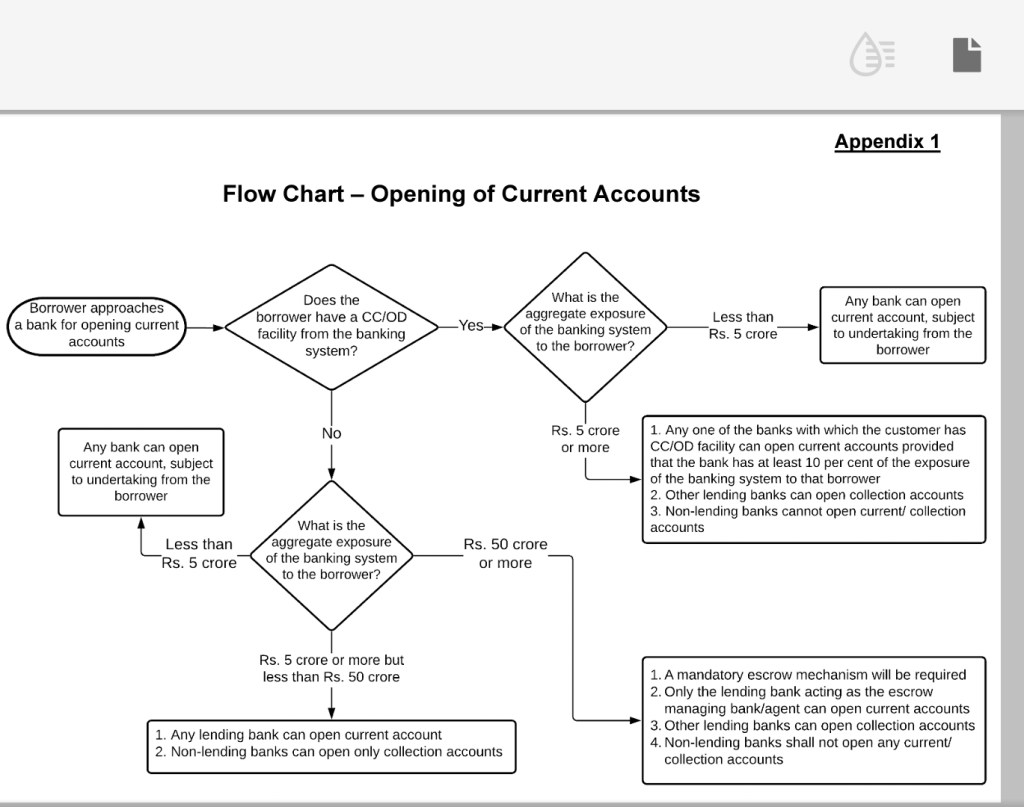
1.1 For borrowers, where the aggregate exposure3 of the banking system is less than ₹5 crore, banks can open current accounts without any restrictions placed vide this circular subject to obtaining an undertaking from such customers that they (the borrowers) shall inform the bank(s), if and when the credit facilities availed by them from the banking system becomes ₹5 crore or more.

1.2 Where the aggregate exposure of the banking system is ₹5 crore or more:

1.2.1 Borrowers can open current accounts with any one of the banks with which it has CC/OD facility, provided that the bank has at least 10 per cent of the aggregate exposure of the banking system to that borrower. In case none of the lenders has at least 10 per cent of the aggregate exposure, the bank having the highest exposure among CC/OD providing banks may open current accounts.

1.2.2 Other lending banks may open only collection accounts subject to the condition that funds deposited in such collection accounts will be remitted within two working days of receiving such funds, to the CC/OD account maintained with the above-mentioned bank (para 1.2.1) maintaining current accounts for the borrower. The balances in such collection accounts shall not be used for repayment of any credit facilities provided by the bank, or as collateral/ margin for availing any fund or non-fund based credit facilities. However, banks maintaining collection accounts are permitted to debit fees/ charges from such accounts before transferring funds to CC/OD account.

1.2.3 Non-lending banks are not permitted to open current/ collection accounts.

2. Opening of Current Accounts for borrowers not availing Cash Credit/ Overdraft Facilities from the banking system

2.1 In case of borrowers where aggregate exposure of the banking system is ₹50 crore or more:

2.1.1 Banks shall be required to put in place an escrow mechanism. Borrowers shall be free to choose any lending bank as their escrow managing bank. All lending banks should be part of the escrow agreement. The terms and conditions of the agreement may be decided mutually by lending banks and the borrower.

2.1.2 Current accounts of such borrowers can only be opened/ maintained by the escrow managing bank.

2.1.3 Other lending banks can open ‘collection accounts’ subject to the condition that funds will be remitted from these accounts to the said escrow account at the frequency agreed between the bank and the borrower. Further, balances in such collection accounts shall not be used for repayment of any credit facilities provided by the bank, or as collateral/ margin for availing any fund or non-fund based credit facilities. While there is no prohibition on amount or number of credits in ‘collection accounts’, debits in these accounts shall be limited to the purpose of remitting the proceeds to the said escrow account. However, banks maintaining collection accounts are permitted to debit fees/ charges from such accounts before transferring funds to the escrow account.

2.1.4 Non-lending banks shall not open any current account for such borrowers.

2.2 In case of borrowers where aggregate exposure of the banking system is ₹5 crore or more but less than ₹50 crore, there is no restriction on opening of current accounts by the lending banks. However, non-lending banks may open only collection accounts as detailed at para 2.1.3 above.

2.3 In case of borrowers where aggregate exposure of the banking system is less than ₹5 crore, banks may open current accounts subject to obtaining an undertaking from them that they (the customers) shall inform the bank(s), if and when the credit facilities availed by them from the banking system becomes ₹5 crore or more. The current account of such customers, as and when the aggregate exposure of the banking system becomes ₹5 crore or more, and ₹50 crore or more, will be governed by the provisions of para 2.2 and para 2.1 respectively.

2.4 Banks are free to open current accounts of prospective customers who have not availed any credit facilities from the banking system, subject to necessary due diligence as per their Board approved policies.

2.5 Banks are free to open current accounts, without

 any of the restrictions placed in this Circular, for borrowers having credit facilities only from NBFCs/ FIs/ co-operative banks/ non-bank institutions, etc. However, if such borrowers avail aggregate credit facilities of ₹5 crore or above from the banks covered under these guidelines, the provisions of the Circular shall be applicable.

3. Opening of Cash Credit/ Overdraft Facilities

3.1 When a borrower approaches a bank for availing CC/OD facility, the bank can provide such facilities without any restrictions placed vide this circular if the aggregate exposure of the banking system to that borrower is less than ₹5 crore. However, the bank must obtain an undertaking from such borrowers that they (the borrowers) shall inform the bank(s), if and when the credit facilities availed by them from the banking system becomes ₹5 crore or more.

3.2 For borrowers, where the aggregate exposure of the banking system is ₹5 crore or more:

3.2.1 Banks having a share of 10 per cent or more in the aggregate exposure of the banking system to such borrower can provide CC/OD facility without any restrictions placed vide this circular.

3.2.2 In case none of the banks has at least 10 per cent exposure, bank having the highest exposure among CC/OD providing banks can provide such facility without any restrictions.

3.2.3 Where a bank’s exposure to a borrower is less than 10 per cent of the aggregate exposure of the banking system to that borrower, while credits are freely permitted, debits to the CC/OD account can only be for credit to the CC/OD account of that borrower with a bank that has 10 per cent or more of aggregate exposure of the banking system to that borrower. Funds will be remitted from these accounts to the said transferee CC/OD account at the frequency agreed between the bank and the borrower. Further, the credit balances in such collection accounts shall not be used for repayment of any credit facilities provided by the bank, or as collateral/ margin for availing any fund or non-fund based credit facilities. However, banks are permitted to debit interest/ charges pertaining to the said CC/OD account and other fees/ charges before transferring the funds to the CC/OD account of the borrower with bank(s) having 10 per cent or more of the aggregate exposure. It may be noted that banks with exposure to the borrower of less than 10 per cent of the aggregate exposure of the banking system can offer working capital demand loan (WCDL)/ working capital term loan (WCTL) facility to the borrower.

3.2.4 In case there is more than one bank having 10 per cent or more of the aggregate exposure, the bank to which the funds are to be remitted may be decided mutually between the borrower and the banks.

4. Exemptions Regarding Specific Accounts

4.1 Banks are permitted to open and operate the following accounts without any of the restrictions placed in terms of paras 1, 2 and 3 of this Circular:

(a) Specific accounts which are stipulated under various statutes and specific instructions of other regulators/ regulatory departments/ Central and State Governments. An indicative list of such accounts is given below:

  1. Accounts for real estate projects mandated under Section 4 (2) l (D) of the Real Estate (Regulation and Development) Act, 2016 for the purpose of maintaining 70 per cent of advance payments collected from the home buyers
  2. Nodal or escrow accounts of payment aggregators/ prepaid payment instrument issuers for specific activities as permitted by Department of Payments and Settlement Systems (DPSS), Reserve Bank of India under Payment and Settlement Systems Act, 2007
  3. Accounts for the purpose of IPO/ NFO/ FPO/ share buyback/ dividend payment/ issuance of commercial papers/ allotment of debentures/ gratuity etc. which are mandated by respective statutes or by regulators and are meant for specific/ limited transactions only

(b) Accounts opened as per the provisions of Foreign Exchange Management Act, 1999 (FEMA) and notifications issued thereunder including any other current account if it is mandated for ensuring compliance under the FEMA framework


(c) Accounts for payment of taxes, duties, statutory dues, etc. opened with banks authorized to collect the same, for borrowers of such banks which are not authorized to collect such taxes, duties, statutory dues, etc.

(d) Accounts for settlement of dues related to debit card/ ATM card/ credit card issuers/ acquirers

(e) Accounts of White Label ATM Operators and their agents for sourcing of currency

(f) Accounts of Cash-in-Transit (CIT) Companies/ Cash Replenishment Agencies (CRAs) for providing cash management services

(g) Accounts opened by a bank funding a specific project for receiving/monitoring cash flows of that specific project, provided the borrower has not availed any CC/OD facility for that project

(h) Inter-bank accounts

(i) Accounts of All India Financial Institutions (AIFIs), viz., EXIM Bank, NABARD, NHB, and SIDBI

(j) Accounts attached by orders of Central or State governments/ regulatory body/ Courts/ investigating agencies etc. wherein the customer cannot undertake any discretionary debits

4.2 Banks maintaining accounts listed in para 4.1 shall ensure that these accounts are used for permitted/ specified transactions only. Further, banks shall flag these accounts in the CBS for easy monitoring. Lenders to such borrowers may also enter into agreements/ arrangements with the borrowers for monitoring of cash flows/ periodic transfer of funds (if permissible) in these accounts.

5. Other Instructions

5.1 In case of borrowers covered under guidelines on loan system for delivery of bank credit issued vide circular DBR.BP.BC.No.12/21.04.048/2018-19 dated December 5, 2018, bifurcation of working capital facility into loan component and cash credit component shall continue to be maintained at individual bank level in all cases, including consortium lending

5.2 All banks, whether lending banks or otherwise, shall monitor all accounts regularly, at least on a half-yearly basis, specifically with respect to the aggregate exposure of the banking system to the borrower, and the bank’s share in that exposure, to ensure compliance with these instructions. If there is a change in exposure of a particular bank or aggregate exposure of the banking system to the borrower which warrants implementation of new banking arrangements, such changes shall be implemented within a period of three months from the date of such monitoring.

5.3 Banks shall put in place a monitoring mechanism, both at head office and regional/ zonal office levels to monitor non-disruptive implementation of the circular and to ensure that customers are not put to undue inconvenience during the implementation process.

5.4 Banks should not route drawal from term loans through CC/ OD/ Current accounts of the borrower. Since term loans are meant for specific purposes, the funds should be remitted directly to the supplier of goods and services. In cases where term loans are meant for purposes other than for supply of goods and services and where the payment destination is identifiable, banks shall ensure that payment is made directly, without routing it through an account of the borrower. However, where the payment destination is unidentifiable, banks may route such term loans through an account of the borrower opened as per the provisions of the circular. Expenses incurred by the borrower for day-to-day operations may be routed through an account of the borrower.
Union MSME Minister Narayan Rane launches Union Bank MSME RuPay Credit Card (Press release 25th Feb 2022)

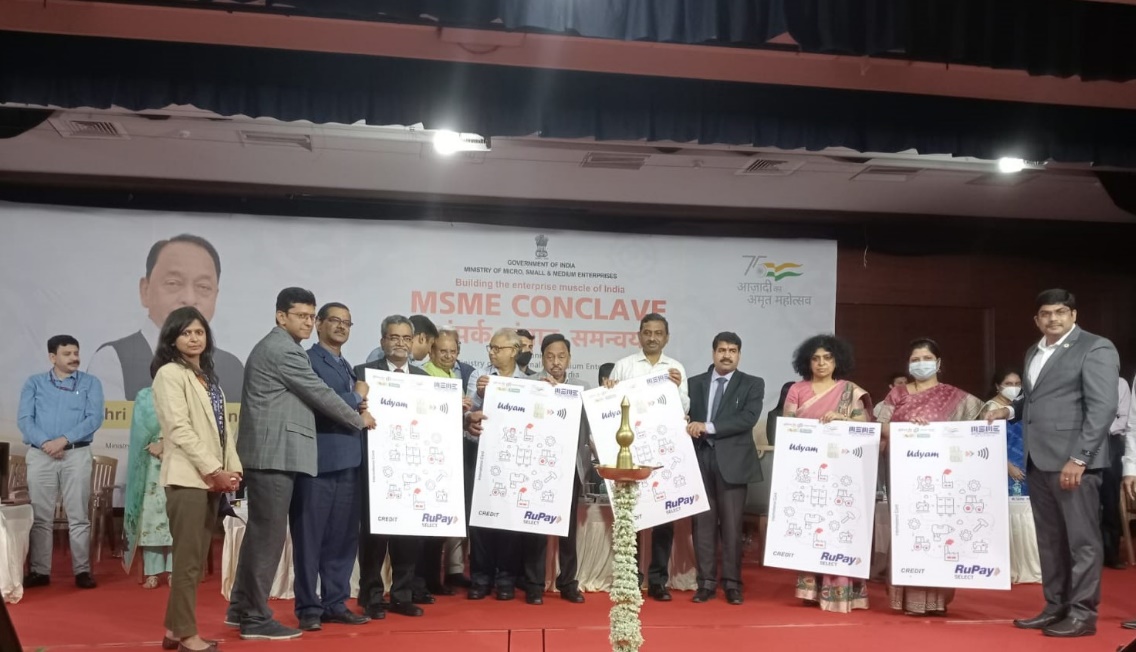
Union Minister for Micro, Small & Medium Enterprises, Shri Narayan Rane today launched the Union MSME RuPay Credit Card of Union Bank of India in Sindhudurg at the two day MSME Conclave being held in the district.  The card is being offered by Union Bank of India in association with National Payments Corporation of India (NPCI).  It provides a simplified payment mechanism to MSMEs to meet their business-related operational expenses.

The RuPay Card offers benefits like anytime digital payments, interest-free period and will carry interest rate similar to the rate charged for loans. MSME borrowers will be able to enjoy an interest-free credit period of up to 50 days on their business spends. The card also offers the EMI facility to the customers on their business-related purchases. MSMEs will also get specially curated efficient business services on this card which will help them in taking their business on most of the digital platforms.

The RuPay Credit card will simplify and expedite payment mechanism for MSMEs while enabling banks to monitor the transactions at granular level. The Credit card will also reduce the demand for cash withdrawal by the businesses due to availability of the digital payment tool.

Other benefits include accidental insurance coverage, lounge access, and other rewards being offered by NPCI on RuPay cards. Besides this, the card offers variety of additional features and business services for the MSMEs. 

During the MSME Conclave, the Union Minister distributed the first batch of RuPay cards to select MSME entrepreneurs.

***

PIB Mumbai 001 / DJM / JSP /DLakshmi/ PK

Also read PIB Release

Rs 200 crore MSME Technology Centre to be set up in Sindhudurg
https://pib.gov.in/PressReleasePage.aspx?PRID=1801096

Follow us on social media: @PIBMumbai  Image result for facebook icon /PIBMumbai    /pibmumbai  pibmumbai@gmail.com

Directors/ managers can’t be prosecuted and punished merely because the Company violated the law (SC)

Dayle De’souza Vs Government of India (Supreme Court of India) dated 29/10/2021

Facts- M/s. Writer Safeguard Pvt. Ltd. (Company) has entered into an agreement titled ‘Agreement for Servicing and Replenishment of ATM’ with M/s. NCR Corporation, the latter having earlier entered into an agreement with the SBI for maintenance and upkeep of SBI’s ATM.

A notice was issued by Labour Enforcement Officer to the appellant and one Vinod Singh, head of the company alleging non-compliance with the provisions of Minimum Wages Act, 1948 and Minimum Wages (Central) Rules, 1950 at the ATM.

Labour Enforcement Officer, on non-appearing, filed a criminal complain before the court of Chief Judicial Magistrate, under section 22A of the Act. Notably, the company is not enlisted as an accused in the complaint and has not been summoned to stand trial.

Conclusion- In absence of any specific averment, the prosecution in the present case doesn’t and cannot reply on section 22C(2) of the Act. Unless the company as a principal accused has committed the offence, the persons mentioned in sub-section (1) would not be liable and cannot be prosecuted. Section 141(1) of the Negotiable Instruments Act, extends vicarious criminal liability to the officers of a company by deeming fiction, which arises only when the offence is committed by the company itself and not otherwise.

All about RBI Retail Direct Scheme II FAQS on RBI Retail Direct Scheme

What is RBI Retail Direct Scheme?

Retail Direct scheme is a one-stop solution to facilitate investment in Government Securities by Individual Investors. Under this scheme Individual Retail investors can open Gilt Securities Account – “Retail Direct Gilt (RDG)” Account with the RBI.

Who can open Retail Direct Gilt Account?

Retail investors would mean all individuals (natural persons)

  • Retail investors, as defined under the RBI Retail Direct scheme, can register under the Scheme and maintain a RDG Account, if they have the following:
    • Rupee savings bank account maintained in India;
    • Permanent Account Number (PAN) issued by the Income Tax Department;
    • Any OVD for KYC purpose;
    • Valid email id; and
    • Registered mobile number.
  • Non-Resident retail investors eligible to invest in Government Securities under Foreign Exchange Management Act, 1999 are eligible under the scheme.
  • The RDG account can be opened singly or jointly with another retail investor who meets the eligibility criteria.

What are the benefits of the Scheme?

Retail investors (individuals) will have the facility to open and maintain the ‘Retail Direct Gilt Account’ (RDG Account) with RBI.

The investor can place non competitive bids in Primary issuance of all Central Government securities (including Treasury Bills and Sovereign Gold bonds) as well as securities issued by various State Governments.

Under this scheme, the individual can also access Secondary market through “NDS OM” – RBI’s trading system.

The investor will automatically receive any interest paid/maturity proceeds into his linked bank account on due dates.

What are the facilities available on the RBI Retail Direct Portal?

The RBI Retail Direct Online Portal will facilitate the following:

  • On-boarding of Retail Direct Investors,
  • Opening and management of RDG Accounts,
  • Facilitate participation in Non Competitive Bidding in Primary G-sec Auctions through the Clearing Corporation of India (CCIL)
  • Facilitate Investing in Sovereign Gold Bonds (SGBs) through CCIL
  • Facilitate NDS OM access to Retail Direct Investors for secondary market trading and settlement of such trades through CCIL.
  • Provide Investor Services such as:
    • Account Statement
    • Nomination Facility
    • Pledge/Lien
    • Gift Transactions
  • Facilitate Corporate Actions such as:
    • Coupon Payments
    • Coupon Payments

  • What are the documents requiredfor opening a Retail Direct Gilt Account?
  • The individual can login to RBI Retail Direct to open a Retail Direct Gilt Account. The account can be opened online with just PAN, Rupee Savings Account, email id and mobile number of the Individual. With these details, the individual needs to complete seamless online KYC procedure to do registration under this scheme. Investors will have to follow the RBI KYC Guidelines while opening the RDG Account.

What is the procedure for opening a Retail Direct Gilt Account?

  • Eligible Investors will be allowed to register online on the Retail Direct Portal;
  • The eligible retail clients can open RDG Account either singly or jointly;
  • To open an account, the investor will have to furnish details like Full Name, PAN, Mobile Number, Email Address, Residential Address, Bank Account number etc. The mobile number and email address will be authenticated using OTP as all further customer request and services will be OTP based;
  • The user will be provided with a tracking number to track application status;
  • Such Investors will be subject to Know your Customer Guidelines. CCIL will adhere to the RBI KYC Direction 2018 while onboarding the Investor;
  • In case of Joint Accounts, the KYC verification is proposed to be done for both the holders. In case of KYC failures, the individual can make new application or resubmit application after making necessary changes;
  • The Bank Account of the Customer will also be validated
  • Once the KYC is successful, a Retail Direct Gilt (RDG) Account will be opened in the name of the Investor(s);
  • Information related to account number, login id & password to access the Online Portal for participating in primary auctions and accessing other services will be made available to the Customer over mail.
  • It will be mandatory for the Investor to fill in the nomination details at the time of opening of the account. The nomination details will be displayed online to the Investor and the Investor will have to accept the same by uploading and attaching a scanned image of signature.
  • The RDG Account will be available for primary market participation and well as secondary market transactions on NDS-OM

What is permitted under Primary Issuances?

RDG Account holders have been allowed to participate in the primary issuance of CG/SG/T-bill/SGB. CCIL will act as the Aggregator for receiving bids for Primary Auctions from such Retail Direct (RD) Investors;

CCIL will also act as the Receiving Office for receiving bids for Sovereign Gold Bonds (SGB) from such RD Investors;

How will the bidding happen using the RBI Retail Direct Portal?

  • The participation of RDG Account holder, in CG/SG/T-bill Primary Auctions will be on non-competitive basis;
  • CCIL will submit a single aggregate bid (consisting of all RDG Account holders non-competitive bid in a particular security) to RBI on auction date;
  • In case of SGB, the individual bids of each RDG Account holder is proposed to be sent to RBI;
  • The RDG Account holders will be allowed to place bids and withdraw bids during the bidding interval or the period of subscription (for SGBs);
  • Only one active bid will be allowed per retail client in the non-competitive portion for respective Security. In case of CG/SG/T-bill, the bidding will be in minimum & multiple of FV 10,000, in case of SGB, FV unit of 1 gram;
  • The maximum limit per bid specified by RBI (presently Rs 2 crore for CG/T Bill and 1 percent for SG) will be validated;

How will the payment be made for the bids placed on the RBI Retail Direct Portal?

For the Primary Auction market, a Bid is required to be backed by funding based on indicative price and accrued interest alongwith a Markup (as non-competitive allotment price shall be known only after auction cut off) for protection against any adverse price movement till Auction Settlement Date. The Markup will be refunded to the Investor post allocation based on the Cut Off Price for the Auction;

In case of SGBs, the funding will be based on Issue Price declared for the particular Issue;

For making payment for the bids, the retail clients can use services like UPI (Transfer or Block) and Net Banking to transfer funds to a designated current account using Payment Gateways linked to the Online Portal;

The funding of the bids can be done either at the time of bidding or at a later time, but, before the closure of bidding/subscription window. Bids which are not funded as on the date of submission of bids to RBI will be cancelled.

When will the allotment be made and credited to the RDG Account?

Based on the allotment advice received as a part of the auction result, the allotments will be made to the Individual Investors;

In case of full allotment, each bidder will be allocated in full FV for which he/she had submitted the bid. In case of partial allotment, a pro-rata allotment will be made to the bidder based on the partial allocation percentage determined during the result declaration process;

Once the allotment is completed, the revised consideration for allotted bids shall be recomputed based on Weighted Average Price (WAP) declared by RBI in respective Security Auction;

On settlement date of Auction, post settlement at RBI, the RDG account shall be credited with the security to the extent of Face Value allotment;

In case of SGBs, post allotment of SGB units at RBI, the RDG account shall be credited with the SGB unit to the extent of allotment;

RDG account holders shall be provided with requisite queries to view the allotment on the portal. RDG account holders shall also be notified through a SMS message on their registered mobile and registered email;

When will the excess mark up collected at the time of bidding be refunded?

After the weighted average price is announced by RBI, the excess markup,will be refunded to the Retail Direct Investor on the settlement date.

Such refunds will be processed by the online portal and will be remitted to the retail client’s respective bank accounts;

The retail client can view such details on the portal. Email and SMS will also be sent to the client about such updates;

How can the NDS OM Secondary Market Portal be accessed?

The NDS OM Secondary Market Portal can be accessed through the RBI Retail Direct Portal. Each registered RD Investor opting for secondary market trading on NDS OM will be provided a CCIL ID. RDG will be permitted to access NDS-OM Order Matching Segment and Request for Quote (RFQ) Segment.

What is the procedure for carrying out secondary market trades on NDS OM?

RDG Account holders can trade in CG/SG/T-bill/SGB, in the Odd Lot segment. RDG available balances would be transferred to NDS OM at the beginning of the day;

RDG can place sell orders only to the extent of balances available. Other transfers would be permitted in the RDG Account only after end of trading day;

RDG can place buy orders only after remittance of funds using service like UPI(Transfer/Block) and Net Baking through Payment Gateways linked to the NDS OM Retail Portal. Funds remitted by RDG shall be received in the designated current account with the Bank providing Payment Gateway;

How does the secondary market settlement happen?

Trades executed by Retail Direct Investors will flow to CCIL for settlement. Settlement would happen on T+1 day;

Securities credit to RDG in respect of their purchases shall be made post completion of settlement on settlement date;

Fund credit to RDG in respect of their sale shall be made after completion of settlement on settlement date to their registered Bank Accounts;

In case the funds remitted by the Retail Direct Investor using the Payment Gateway is not received by CCIL, the securities purchased by the Retail Direct Investor may not be credited to the RDG Account, till the time the funds are received by CCIL from the Payment Gateway.

In case of a failure by a seller from whom the Retail Direct Investor has purchased a security, to deliver the concerned security, the funds remitted by the Retail Direct Investor will be refunded to the Retail Direct Investor on the settlement day.


  • When will the excess money transferred for secondary market purchase be refunded?
  • The excess funds received from Retail Direct Investor after adjusted the trade consideration shall be refunded back to Retail Direct Investor on the date of receipt/settlement date;

How will the corporate actions (coupon and redemption) on the RDG holdings serviced?

On receipt of coupon/ redemption proceeds from RBI, the exact entitlement of each RDG account holder will be computed based on their holdings;

The exact amount to be paid will be computed and remitted to the respective bank account of each RDG Account holder holding concerned security on the day of receipt from RBI;

The RDG account holders can view such Corporate Action details on the online portal;

How can the Holding Statement of RDG Accounts be viewed?

The RDG Account holder will have access to information about his/her holding balances on a daily basis. Such information can be viewed on the portal by the RDG Account holder. Period Account Statements will also be mailed to the RDG Account Holder;

What are the other services available under the Retail Direct scheme?

The following additional services are proposed to be made available to the Retail Direct Investor on the RBI Retail Direct Portal:

  • Nomination
  • Gifting
  • Pledge/Lein/Transfer

  • What are the charges/fees payable?
  • No fee will be charged for opening and maintaining ‘Retail Direct Gilt account’ with RBI. No fee will be charged by the aggregator for submitting bids in the primary auctions. Fee for payment gateway etc., as applicable, will be borne by the registered investor.

What is the Role of Clearing Corporation of India Ltd (CCIL)?

CCIL is authorized by the Reserve Bank of India to act as an aggregator for Primary Issuances and as Receiving Office for Sovereign Gold Bondsfor the Retail Direct Investors. CCIL is also authorized by RBI to operate the NDS OM platform.

Judiciary updates-27th Oct 2021 (Income tax, GST & Corporate Laws)

GST

SC: Nature of levy cannot be determined with nomenclature ascribed to Tax

Jalkal Vibhag Nagar Nigam dated SC 22 Oct 2021

Opinion under Section 83 of CGST Act should be strictly based upon material facts

Mutharamman & Co. (Madras HC dated 05/10/2021)

Income Tax

Section 12AA registration cannot be denied without examining the activities

ICRW Group Gratuity Trust Vs CIT (Exemption) (ITAT Delhi) dated 21/10/2021

ITAT explains basic conditions for Satisfaction of reimbursement Claim

Rieter Machine Works Limited Vs ACIT (ITAT Pune) dated 21/10/2021

No attribution of profit in absence of permanent establishment

ESPN Star Sports Mauritius Vs DCIT (ITAT Delhi) dated 20/10/2021

HC dismisses writ petition as petitioner is having alternative statutory remedy of appeal

Ankit Gupta Vs National Faceless Assessment Centre (Rajasthan High Court) dated 21/10/2021

Corporate Laws

Sec 138 NI Act: Complaint comes to an end Once Accused & Complainant Enter into a Settlement Agreement: SC

Gimpex Private Limited Vs Manoj Goel (Supreme Court of India)  dated 08/10/2021

Authorities shall provide opportunity of hearing before arriving at any figure in demand Notice

Golden Trees Plantation Limited Vs Securities And Exchange Board of India (Gujarat High Court) dated 06/09/2021

Calculating limitation period for proceedings under IBC?

V Nagarajan Vs SKS Ispat and Power Ltd.& Ors. (Supreme Court of India) dated 21/10/2021

HC asks govt to keep vigil on ‘Rising Frauds in Aadhaar Enrollment

Naresh Kumar R.P. Vs State of Karnataka (Karnataka High Court) dated 30/09/2021

Benami Act, 1988, would not extend to properties purchased by the company

Kalyan Buildmart Pvt. Ltd. Vs Initiating Officer (Rajasthan High Court) dated 06/10/2021

Regards

Bipul Kumar

ED has filed prosecution complaint against Deep Ram Thakur & his associates under the provisions of PMLA, 2002, Press Release 25.10.2021

Enforcement Directorate has filed prosecution complaint against Deep Ram Thakur & his associates under the provisions of Prevention of Money Laundering Act, 2002.

ED initiated money laundering investigation on the basis of FIR registered by the Himachal Pradesh Police, Shimla under NDPS Act,1985.

Investigation by ED revealed that Deep Ram Thakur & Others were indulged in illegal drug business for long time and invested proceeds of crime mostly in construction business.

Part of the proceeds of crime was also routed through banking channels to purchase prosperities in the name of relatives.

Earlier in this case, assets worth Rs. 4.48 Crore were provisionally attached by ED under PMLA, which were later confirmed by the Adjudicating Authority and accordingly prosecution complaint under PMLA has been filed against Deep Ram & his associates for punishing the accused for the offence of Money Laundering.

Further investigation is in progress.

Sovereign Gold Bond Scheme – Procedural Guidelines – Consolidated (RBI Notification RBI/2021-2022/114 dated 22 Oct 2021)

RBI/2021-2022/114
IDMD.CDD.1100/14.04.050/2021-22

October 22, 2021

All Scheduled Commercial Banks (Excluding RRBs)
Designated Post Offices
Stock Holding Corporation of India Ltd. (SHCIL)
BSE & NSE
Depositories
Clearing Corporation of India Limited

Dear Sir/Madam,

Sovereign Gold Bond Scheme of the Government of India (GoI) – Procedural Guidelines – Consolidated

The Sovereign Gold Bond (SGB) Scheme was first launched by Government of India (GOI) on October 30, 2015. As the “Receiving Offices” (RO), are entrusted with the responsibility of performing certain functions relating to receipt of applications and servicing of the bonds, RBI has also issued operational guidelines from time to time and Procedural Guidelines vide circular IDMD.CDD.No.1569/14.04.050/2016-17 dated December 23, 2016 for guidance to the Receiving Offices.

2. With a view to facilitate availability of all the current operative instructions on the above subject at one place, it has been decided to issue consolidated procedural guidelines. The rules and regulations applicable for servicing of these bonds have been updated with instructions issued till date and are given in Annex I. The same will be updated suitably and simultaneously whenever there is a change in the rules/regulations governing the operation of the Scheme.

3. This circular supersedes all operational/procedural guidelines issued till date. With the issuance of these instructions, no separate procedural/operational instructions will be issued henceforth. All the Receiving Offices shall be guided by these instructions while dealing with servicing of these bonds.

4. These Guidelines are issued in exercise of the powers conferred under Section 29(2) of the GS Act 2006, to the Receiving Offices, BSE/NSE and depositories.

Yours faithfully,

(Rajendra Kumar)
Chief General Manager

Encl: as above

I: Introduction

The Sovereign Gold Bonds (henceforth referred to as bonds) are issued by Government of India (GOI) as Government of India Stock in accordance with Section 3 of the Government Securities Act, 2006 (GS Act 2006). The eligibility condition and other terms and condition are specified in the relevant notifications of Government of India issued from time to time.

2. In the interest of operational flexibility and ease in servicing the customers, it has been decided to entrust Receiving Offices (ROs) and Depositories along with Depository Participants (in case of dematerialized bonds), with the responsibility of performing certain functions relating to servicing of the bonds. The updated list of ROs notified by GOI and authorized to receive the subscriptions is given in Appendix I. The ROs shall sensitize its officials regarding terms and condition of issuance and are required to strictly adhere to the same.

II. Definitions

In these guidelines, unless the context otherwise requires,

  1. “Depository Participant” means an entity which has been granted a certificate of registration by Securities and Exchange Board of India under Chapter IV of SEBI (Depositories and Participants) Regulations 1996.
  2. “Receiving Offices” means Scheduled Commercial Banks (excluding RRBs), SCHIL, designated Post Offices (as notified by GOI), Clearing Corporation of India Limited and recognized stock exchanges viz., National Stock Exchange of India Limited and Bombay Stock Exchange Limited as per details given in Appendix I.
  3. “Depository” means a company formed and registered under the Companies Act, 1956 (1 of 1956) and which has been granted a certificate of registration under sub-section (1A) of section 12 of the Securities and Exchange Board of India Act, 1992 (15 of 1992)
  4. Bond ledger Account or BLA means the bond held to the credit of the holder in the electronic form with Reserve Bank of India. Dematerialised Form means bonds held in the constituents’ subsidiary general ledger (CSGL) Account with RBI. CSGL Account means a subsidiary general ledger account opened and maintained with the Bank by an agent on behalf of the constituents in terms of Government Securities Act, 2006
  5. Retail Direct Gilt Account (RDG Account) means gilt account maintained in the books of RBI under RBI Retail Direct Scheme

III. Procedural Guidelines for servicing the bonds:

The ROs shall be guided by procedural/operational guidelines in connection with issue/ servicing of these bonds as under:

1. Nodal Branches/Offices

The Receiving Offices (ROs) and the other entities entrusted with the responsibility of issue/ servicing the bonds may identify a nodal office/branch for the purpose. The applications received at the various branches or offices may be forwarded to the nodal branch/office for further processing after preliminary scrutiny. Processing of the requests may be made part of the Citizen’s Charter of the ROs and other entities and the time line may be strictly adhered to. Details of the contact persons in these offices/branches may be given due publicity and effective customer grievance redressal mechanisms may be put in place and the same should be communicated to Reserve Bank of India. In addition, the contact details of a senior level functionary, not below the rank of Chief General Manager may also be advised to RBI. The ROs shall also keep us informed of the change in contact details from time to time.

2. Application

(i) ROs are authorized to receive Application forms from eligible investors at the branches either directly or through agents. Applications shall be received at branches during normal banking hours on the weeks of subscription as notified by GOI/RBI from time to time. Subscription of the from shall be made in prescribed application Form A.

(ii) Every application must be accompanied by the ‘PAN details’ issued by the Income Tax Department to the investor(s). Relevant additional details may be obtained from the applicants, where necessary.

(ii) The Investor ID generated from RBI’s E-Kuber is a unique id which is created while applying for SGB or Inflation Indexed National Savings Securities- Cumulative, 2013 (IINSC-C). In case the applicant already has an investor ID issued by RBI’s E-Kuber portal for above investment in any of the earlier tranches, the same should invariably be quoted by investor while making any subsequent applications.

(iii) While accepting applications, ROs may ascertain from the applicant the details of existing investor ID if any. In case of failure to quote the same, the E-Kuber portal shall reject the application, while uploading the same.

(iv) All payments for subscription to SGB shall be accepted in Indian Rupees through cash up to a maximum of Rs.20,000/- or cheque/ demand drafts/electronic banking. The cheque/ demand drafts shall be drawn in favour of the RO. The payments for applications received for SGBs to be held in RDG Account shall be made through electronic banking only.

(v) ROs need to ensure that the application is complete in all respects as incomplete applications are liable to be rejected.

(vi) The ROs may make arrangements to enable the investors to apply online, in the interest of better customer service. While providing online services, it is the responsibility of ROs to ensure that all relevant fields for capturing details of applicant, mode of holding and other details as per the terms and conditions specified in Notification are duly provided for. All online applications should be accompanied by email Id of the investor/s which should be uploaded on the Ekuber portal along with the subscription details.

(vii) On receipt of complete application as above, the ROs shall issue an acknowledgement receipt in Form B.

(vii) An incomplete application is liable to be rejected if all the requirements of the application are not fulfilled within the period specified for subscription.

(viii) The cancellation of bonds is permitted till the closure of issue. However, no part cancellation of the application is permitted. No request for cancellation of the bond after closure of the issue shall be entertained under any circumstances.

(ix) The ROs are required to enter the data or carry out bulk upload for the subscriptions received by them in RBI’s E-Kuber portal. They shall ensure accuracy of data to prevent occurrence of any inadvertent errors. An immediate confirmation will be provided to them for receipt of application. In addition, a confirmation scroll will be provided for file uploads to enable the ROs to update their database.

(x) The applicants are eligible for payment of interest on the subscription amount at savings bank rate from the date of application/realisation of fund up to the date of allotment i.e. the period for which the investor is out of funds. No interest is payable, in case the application is rejected for any reason attributable to the investor.

(xi) The status of application rejected by RBI’s E-Kuber system should be notified by ROs and subscription amount refunded without any delay to the customer.

(xii) Any delay on the part of ROs to refund the amount to any applicant, whose application is rejected will attract penalty @ Repo rate +2% for each day of delay.

3. Allotment of Bonds and Generation of “Certificates of Holding (COH)”:

(i) On the date of allotment, the “Certificates of Holding” are generated for all the successful subscriptions by RBI. These are sent to the customers who have provided their e-mail Ids. The ROs can also download the certificates from RBI’s E-Kuber portal and are required to provide the same to their customers. The Certificate of Holding may be printed in colour on A4 size 100 GSM paper in the prescribed Form C.

(ii) ROs may note that as SGB is transferable/tradable and mere possession of Certificate of Holding should not be construed as proof of title.

4. Nomination

(i) Nomination and its cancellation shall be governed by Section 9 of the Government Securities Act, 2006 read with Chapter III of the Government Securities Regulations, 2007. The nominations can be indicated by the customer at the time of subscribing to the bonds (in the prescribed Form ‘D’ or at a later date. It is permissible to designate more than one person as nominees (maximum two) to a bond. Nomination facility is not available in case the investment is on behalf of minor.

(ii) Cancellation of Nomination: The holder of a Sovereign Gold Bond may apply for cancellation of an existing nomination in the prescribed Form ‘E’ and while examining the application it may be ensured that – (i) correct particulars of the Sovereign Gold Bond have been stated in the form; and (ii) the name/s of the nominee/s has/have been correctly mentioned in the form

(iii) Additions to existing nomination: The holder can nominate second person, in addition to the existing one. On submission of a fresh nomination in Form ‘D’, it may be examined and dealt with in the same way as the original nomination. In case of bonds held as stock certificates, the RO shall input such requests (cancellation/addition) into the E-Kuber system subject to its satisfaction that the details provided are correct and in order, using the facility provided in the E-Kuber portal. Acknowledgement may also be issued.

(iv) Claims of nominee/s: On the death of the holder, nominee’s/nominees’ claim may be recognized in terms of the provisions of Section 9 of the Government Securities Act 2006 read with Chapter III of the Government Securities Regulations 2007. Once a claim is received by the RO/Depository, as the case may be, it may recognize the claim in terms of Section 9 of the GS Act 2006 and Chapter III of the Government Securities Regulation 2007, subject to its satisfaction with respect to the legality, genuineness, and finality thereof, subject to its satisfaction that there is no rival claim in respect of such bond and on production of all documents required to substantiate the claim. For that purpose it may call for any other document or declaration, as it may consider necessary. It may also require the claimant to furnish a bond of indemnity for such amount as it may think fit, if found necessary. If the claim is found to be in order, the name/s of the nominee/s will be substituted as the bond holder/s in place of the deceased holder – and a fresh Certificate of Holding will be issued under proper authentication. In the event of doubt the case may be referred to PDO, Mumbai by the RO/Depository.

5. Forms of holding and dematerialisation

(i) SGBs are issued as Government of India stock by RBI and are eligible to be held in Bond Ledger Account (BLA) or RDG Account with Reserve Bank of India or in demat account with Depositories viz NSDL/CDSL.

(ii) The applicant can make a specific request either at the time of subscribing to the bond or at a subsequent occasion for crediting of the bond to demat account or holding the bond in gilt account under the Retail Direct Scheme. The process of conversion to demat will be subject to the correctness of details supplied by the applicant, such as name, DP ID, Client ID and acceptance of the record by the Depositories. Care may be taken by ROs to ensure that the name of the investor entered by them in RBI’s portal corresponds with that in the Depositories’ records. Confirmation may be taken from the customer in this regard before uploading the details.

(iii) If the holder desires to convert the SGB held in BLA with RBI into de-materialised form subsequent to allotment, the ROs may accept the request along with details viz., name of the Depository, DP ID, Client ID, PAN of the first holder etc. The ROs shall enter the details in the E-Kuber portal. Such requests will be processed by Mumbai PDO, RBI on a consolidated basis every week and the details will be sent to the Depository as the case may be, for validation. Once the details are validated by the Depository, the bonds will be transferred by PDO Mumbai to Depository for onward credit to the demat accounts of the beneficiaries. Cases of rejection or acceptance as communicated by the Depository will be communicated to the ROs by Mumbai PDO, RBI. In cases of rejection, the ROs are free to resubmit the request after making the necessary corrections.

(iv) The holder of SGB may subsequently convert the bonds from BLA to the gilt account under Retail Direct Scheme. The request for the same may be made by the gilt account holder on the Retail Direct Online Portal

(v) Timely servicing of all the SGB held in dematerialised form is the responsibility of the respective Depository viz NSDL/CDSL. They shall ensure timely credit of interest and repayment and render customer service to the demat account holders of SGB.

(vi) Servicing of SGBs held under RBI Retail Direct Gilt Account shall be done by RBI. Accordingly all customer service requests may be uploaded on the Retail Direct Online Portal.

6. Re-materialisation

The customer may approach the Depository Participant, with a request for re-materialisation of the bonds with details of his holding. They may also specify the RO and bank account details (name of bank, branch, account number, IFSC and type of account) through which the bonds will be serviced pursuant to re-materialisation. The re-materialisation request may be prepared by the Depository Participant based on the application and may be forwarded to the Depository. The request may be submitted by depository through E-Kuber Portal. No trading will be permitted for the securities sent for re-materialisation. Post conversion, the bonds will be held in BLA with RBI and servicing of the rematerialized bonds shall be done by the RO specified by the investor.

7. Transfer of Bonds

(i) The Bonds are issued in the form of Stock Certificate and are therefore transferable before maturity to eligible transferees either wholly or in part by execution of an instrument of transfer in Form ‘F’, in case of bond held in the Bond Ledger Account in accordance with the provisions of the Government Securities Act, 2006 and the Government Securities Regulations, 2007.

(ii) In case of bond held in demat account with the NSDL/CDSL, the Beneficial ownership of dematerialised bonds can change either through trading in exchanges /off market transactions as per the extant practice.

8. Procedure for recording transfer of bonds

(i) Investors holding bonds in BLA may approach the RO for effecting transfer of bonds before maturity from one eligible holder to another, through sale or by way of gift.

(ii) The RO may obtain the Transfer Form duly executed as per Form ‘F’ along with a copy of the Certificate of Holding.

(iii) The RO shall cross check the correctness of details given, with the data available on the E-Kuber portal/ their records.

(iv) The KYC details of both the transferor and transferee may be verified by the RO.

(v) The transfer request may then be processed through the E-Kuber Portal

(vi) It may be noted that in terms of sub-section (4) of section 9 of the GS Act, the existing nomination, if any, shall stand cancelled on transfer. If the transferee wants to add a nominee, the RO may do the needful as per procedure prescribed at paragraph 5 of these guidelines.

(vii) A revised Certificate of Holding may be generated from the E-Kuber Portal and issued to the transferee. The transfer of accounts will not disrupt interest payment schedule and the transferee/ holder will continue to earn interest on the relevant due dates.

9. Partial transfer of bonds held in stock certificate form:

In case of part transfer, the original Certificate of Holding shall stand cancelled and new Certificates of Holding may be generated and issued to the transferor and transferee reflecting the changed holding.

10. Recognition of title to SGB of deceased sole holder or joint holders and right of survivors of joint holders or several payees (when no valid nomination exists)

(i) Recognition of title to a bond of deceased sole holder or joint holders and right of survivors of joint holders or several payees, shall be subject to the provisions of Sections 7 and 8 of the Government Securities Act 2006 read with Regulation 6 of the Government Securities Regulations 2007.

(ii) Once a claim is received by the RO/Depository, as the case may be, it may recognize the claim in terms of Section 7 of the GS Act 2006 and Regulation 6 of the Government Securities Regulation 2007, subject to its satisfaction with respect to the legality, genuineness, and finality thereof, provided there is no rival claim in respect of such bond and on production of all documents required to substantiate the claim. For that purpose, it may call for any other document or declaration, as it may consider necessary. It may also require the claimant to furnish a bond of indemnity for such amount as it may think fit, if found necessary.

(iii) In the event of doubt, the case may be referred to PDO, Mumbai by the ROs/Depository.

11. Loan against the bonds and creation of pledge, hypothecation or lien.

(i) The bonds may be used as collateral security for any loan. The creation of pledge, hypothecation or lien on the bonds shall be governed by Section 28 of the Government Securities Act, 2006 and Chapter VII of the Government Securities Regulations, 2007.

(ii) The Loan to Value ratio as applicable to any ordinary gold loan mandated by the Reserve Bank of India shall also apply to the bonds.

(iii) The pledge/hypothecation/lien on the bond held in stock certificate form shall be recorded and revoked by the banks providing the loan, in accordance with the provisions of section 28 of GS Act and Chapter VII of GS Regulations, using the facility provided in the E-Kuber portal. The lien marking rights in case of bonds held in BLA is provided to the ROs, who can do the same through E-Kuber portal of RBI.

(iv) In case of bonds held with the depositories and in RDG account under RBI Retail Direct Scheme, the lien is marked by the CSGL holder in line with the practice followed for other stocks and shares which are accepted as collateral by the banks. The detailed procedure for marking of lien is provided in the user manual on our website.

(v) In the event of the bank invoking the pledge/hypothecation/lien, after initiating the necessary entry In E-Kuber, the authorisation request for transfer of the bonds to the bank may be submitted to PDO, Mumbai through E-mail in accordance with the provisions of Chapter VII, Regulation 21 of the Government Securities Regulation 2007, with additional supporting documents including court order, if any.

12. Payment of Interest

(i) The interest on the bonds, as applicable, shall be paid on a half yearly basis. The amount will be credited by RBI to the bank account of the holder of bonds in case of bond held in BLA and RDG Acount through electronic means on the date on which the interest is payable. Where the bonds are held with the depositories, the interest amount will be disbursed through depositories, who will arrange to credit the amount to the bank accounts of the holders (as available in their records) through electronic means on the due date.

(ii) In case, it is not possible to accord credit to the account of the beneficiary due to closure of bank account or otherwise, destination banks shall return the transaction to PDO Mumbai/RBI within two hours of completion of the batch in which the transaction was processed along with details of UTR number.

13. Repayment of Bonds

RO/depository shall inform the investor about the date of maturity of the Bond one month before its maturity. The Bond shall be repayable on the expiration of eight years from the date of issue of the bond. No claim needs to be submitted to RBI for the purpose by the investors. Premature redemption of the bonds is permitted after five year from the date of issue of such bond, on the date on which the next interest is payable. The request for pre-mature redemption shall be submitted to the RO or Depository through DP (in case of dematerialized securities) at least 10 days before the next interest payment date. If the RO/Depository Participant/Depository so desires it can call for additional documents, KYC proof, declaration etc. The request shall be scrutinized to verify the correctness of the particulars and may be submitted to RBI through the E-Kuber Portal at least four days before the due date of interest. On maturity and in case of premature redemption, the Bonds shall be redeemed in Indian Rupees and the redemption price shall be based on simple average of closing price of gold of 999 purity of previous week (Monday to Friday) for SGBs issued under tranche 1 to 9 and previous three working days for tranches issued thereafter at the rate published by the India Bullion and Jewellers Association Limited. The redemption proceeds shall be credited to the bank account of the customer.

14. Payment of brokerage

ROs may by their own, appoint agents for increasing subscription of Sovereign Gold Bonds. Commission for distribution to such agents shall be paid at the rate of rupee one per hundred of the total subscription received by the ROs on the applications received and ROs shall share at least 50% of the commission so received with the agents or sub-agents for the business procured through them.

15. Change of address, correction of name, change of account number and other miscellaneous requests in case of bonds held in the form of stock certificates.

The requests of the customer (in plain paper) in case of bonds held in the form of BLA with RBI supported by the Certificate of Holding may be processed by the ROs through the E-Kuber portal after verification of the particulars and subject to their satisfaction. The ROs may call for additional documents if deemed necessary. The requests may be entered by ROs in the RBI portal for giving effect to the changes.

16. Preservation of Records

The application forms and other requests may be preserved by the ROs/ Depositories till the maturity of the bond. Premature redemption request may be preserved for three years from the date of payment of proceeds.

17. Links

The link to various user manual related to various modules in E-Kuber is as under:

For subscription – SGB USER FLOW- INTIATION.

For Subscription Cancellation – SGB CANCELLATION.

For nomination – Nominee details modification.

For Transfer and lien marking – For Lien Marking and Transfer

For dematerialisation & re-materialisation – Demat and Remat Flow.

18. Contact Details

The process for redressal of customer complaints of investors of Sovereign Gold Bond shall be as follows:

a) the nodal officer/s of the Receiving office (RO) shall be the first point of contact for attending to the queries/complaints of their customers.

b) In case the issue is unresolved, escalation matrix at the ROs shall be used to provide redressal of customer grievance. List of concerned officers at ROs is given in Annex III.

c) The investor may approach Reserve Bank of India at sgb@rbi.org.in if the reply is not received from the RO within a period of one month of lodging the complaint or the investor is not satisfied with the response of the RO.

Any queries/clarifications may be e-mailed to the following:

(a) Sovereign Gold Bond related: Please click here to send email.

(b) IT related: Please click here to send email.

19. These procedural guidelines are issued by RBI in exercise of the powers conferred by sub-section (2) of Section 29 of the Government Securities Act, 2006 and of all the powers enabling it in this behalf and any non-compliance shall invite penal provisions under Section 30 of the Act, ibid.

20. With the issue of these instructions / guidelines contained in the following circulars issued by the Reserve Bank of India stand repealed:

A. List of circulars on Operational/Procedural Guidelines that stands subsumed

https://m.rbi.org.in/Scripts/NotificationUser.aspx?Id=12181&Mode=0

Judiciary updates (Finance) – 15 Oct 2021

Sec 138 NI Act: Complaint comes to an end Once Accused & Complainant Enter into a Settlement Agreement: SC
Gimpex Private Limited Vs Manoj Goel (Supreme Court of India)

Sec 138 NI Act- Complainant to prove the existence of a debt

V.P. Zacharia Vs State of Kerala (Kerala High Court) 

Section 138 NI Act Directors responsible if they were in charge of & responsible for conduct of business of company: SC

Ashutosh Ashok Parasrampuriya Vs Gharrkul Industries Pvt. Ltd. (Supreme Court of India) 

Sec 138 NI Act- Salutation Like Mr./M/s. while Drawing Cheque are Irrelevant
N. Raveendran Vs Shajahan (Kerala High Court)

Preventive detention order unsustainable on stale or illusory grounds having no real nexus with past prejudicial activity

Naveen Kasera Alias Naveen Agrawal Vs. Union of India (Delhi High Court)

NI Act | Section 139 Presumption if signature on cheque is admitted

Triyambak S. Hegde Vs Sripad (Supreme Court of India) 

Regards,
Bipul Kumar

India needs 4 -5 more banks like SBI to meet changing requirements of the Indian Economy

India needs 4 -5 more banks like SBI to meet changing requirements of the Indian Economy: Nirmala Sitharaman


FM says Long Term Future of Indian Banking would be driven by digital processes;

Asks IBA to carry out nation-wide digitized mapping of bank branches

Sitharaman commends banks for smooth amalgamation
Posted Date:- Sep 26, 2021

: Mumbai, September 26, 2021

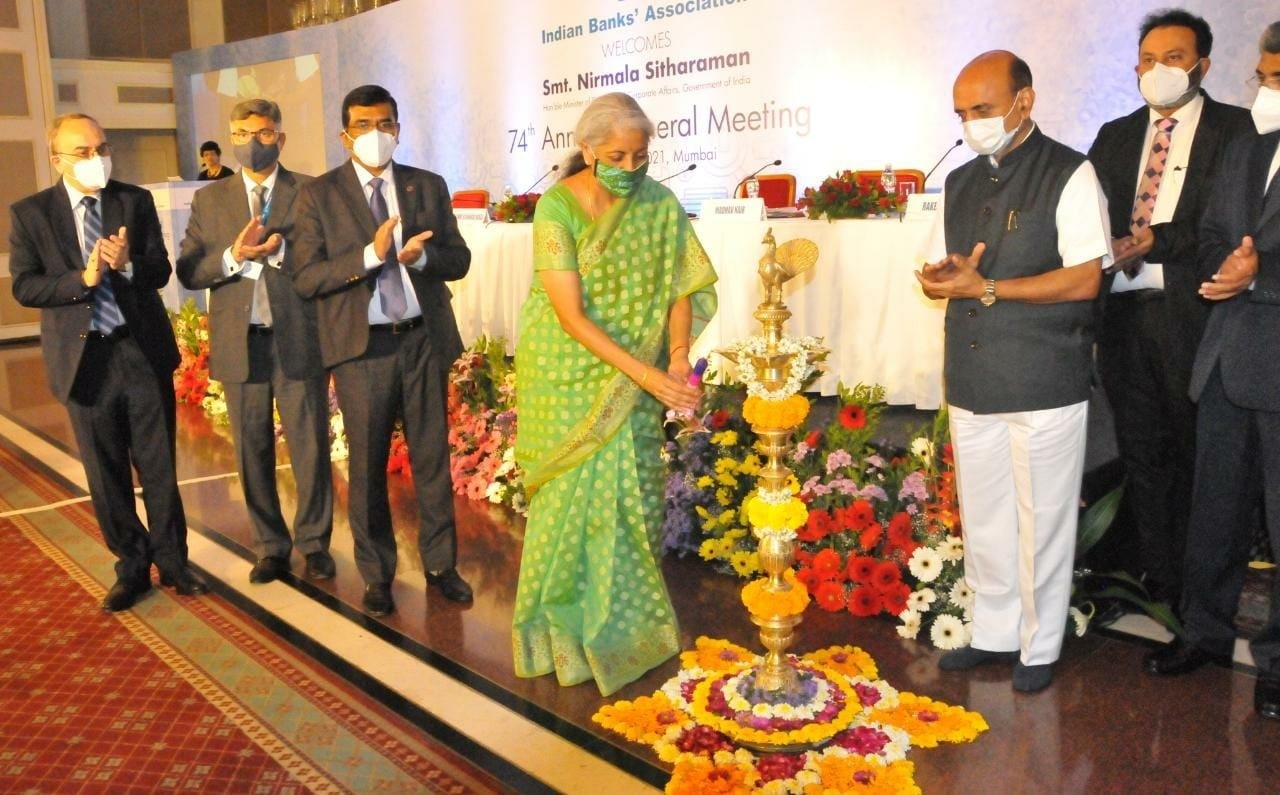
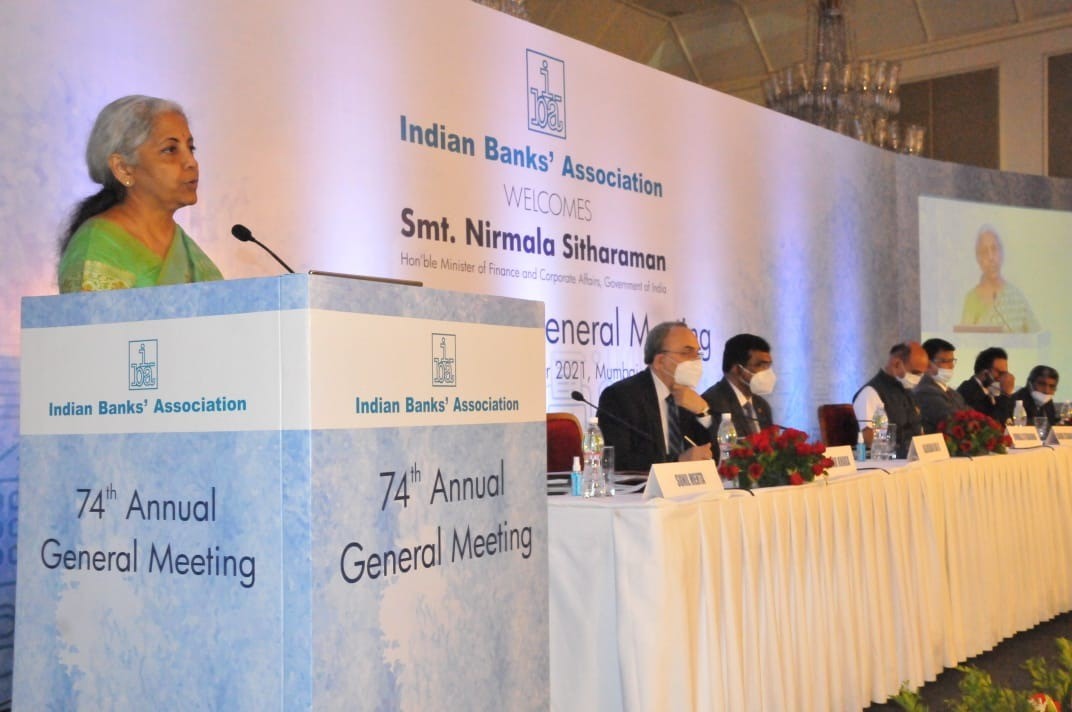
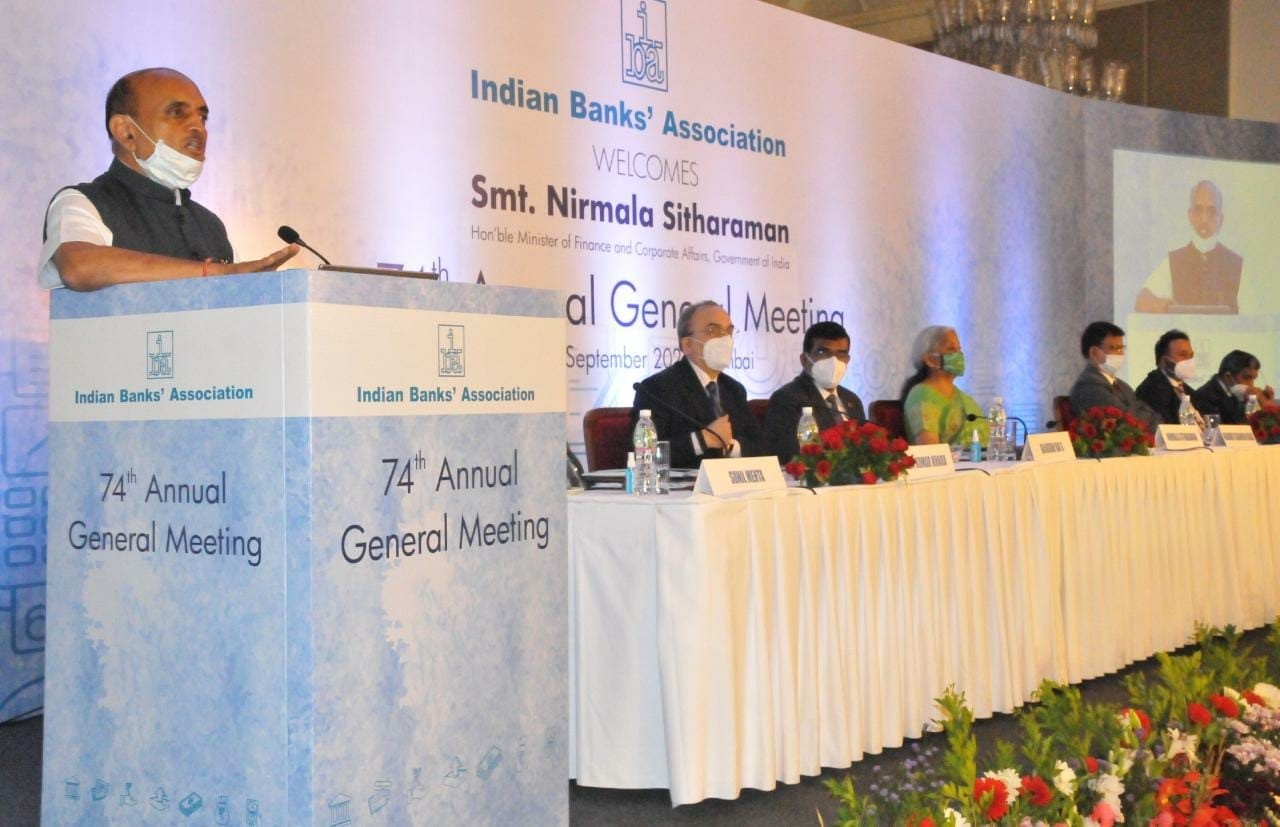
Union Finance and Corporate Affairs Minister Smt. Nirmala Sitharaman has said that India needs four or five more banks like SBI. She said that we need to scale up banking to meet the changing requirements in light of shifting recent realities of economy and industry. “The way in which the economy is shifting to a different plane altogether, the way in which industry is adapting, so many new challenges keep arising. To address these challenges, we need not just more, but bigger banks.” The Union Minister shared this point of view with the banking community, during her keynote address at the 74th Annual General Meeting of the Indian Banks’ Association (IBA) in Mumbai today.

FM asks IBA to improve access to financial services pan India through scientific digitized mapping

The Finance Minister exhorted the industry to imagine how Indian banking has to be in the immediate and long-term future. “If we look at post-COVID scenario, India’s banking contour will have to be very unique to India, where there has been an extremely successful adoption of digitization. While banks in many countries could not reach out to their clients during the pandemic, the level of digitization of Indian banks helped us to transfer money to small, medium and big account holders through DBT and digital mechanisms.”

The Union Minister underlined the importance of seamless and interconnected digital systems in creating a sustainable future for Indian banking industry. “Long-term future of Indian banking is going to be largely driven by digitized processes.”

The benefits of digitization notwithstanding, the Finance Minister observed that there are wide disparities as well in access to financial services.  She said there are parts of our country where brick-and-mortar banks are necessary. The FM asked IBA to improve access of banking in every district through a rationalized approach and optimal utilization of digital technologies.

To achieve this, the Union Minister advised IBA to carry out digitized location-wise mapping of all bank branches for every district of the nation. “Almost two-thirds of nearly 7.5 lakh panchayats have optical fibre connection, IBA should consider this and conduct an exercise and decide where banks should have a physical presence and where we are able to serve customers even without physical branch. IBA should take the initiative and complement government’s efforts for financial inclusion and enhancing access to financial services, especially in unserved and under-served areas.”

 “Be nimble, agile, adaptive, it is a must for attaining 1 trillion dollar export target for 2030”

The Finance Minister reminded bankers of the need to adapt in line with fast changes in technology. “What we think is latest today will be outdated in a year or so, we have to thus acquire resources to constantly update ourselves.”

Such nimbleness and agility are especially important in India’s being able to achieve the ambitious export targets we have set for ourselves, she said. “We have given ourselves an export target of $ 2 trillion by 2030, $ 1 trillion in merchandise exports and $ 1 trillion in service exports. In an age of rapid change post the pandemic, there are going to be a lot of challenges in how we look at customers. These challenges cannot be addressed unless banks are going to be nimble, with sound understanding of various businesses and sectors. Hence, the banking industry needs specialists to understand the unique business requirements of diverse sectors and the many businesses who are rapidly relocating to India.”

The Finance Minister also  spoke of the benefits of the recently formed Account Aggregator Framework. “If the framework is put to good use, we would not need specialized credit outreach. Govt. together with RBI has been helping with protocols and frameworks, helping banks attain more through the digital systems in the industry.”

The Finance Minister also spoke of the high potential for banking outreach in the eastern region of the country. “The eastern region of this country has more than adequate CASA (Current Account Saving Account), but there are no takers for credit; you need to address this issue and see how you can lend in those regions, in states such as Bihar.”

“Strengthen UPI”

The Finance Minister said that UPI needs to be strengthened. “In the payment world today, Indian UPI has actually made a very big impression. A RuPay card which was not as glamorous as a foreign card is now accepted in so many different parts of the world, symbolic of India’s futuristic digital payment intentions.” FinTech understands that UPI is its backbone, you have to give it its flesh and blood, you have to strengthen UPI, the Minister advised bankers.

 “You ensured that bank amalgamation happened without friction”

The Finance Minister appreciated banks for executing amalgamation of banks even during the COVID-19 pandemic, without causing disruption in services to customers. “I commend that you ensured that amalgamation did not inconvenience customers, you ensured that systems of different banks spoke to each other, you have kept yourselves available during the pandemic in serving customers, while also ensuring that banks’ amalgamation happened without friction, without aberrations”, the Minister said.

“NARCL is not a bad bank”

Smt. Sitharaman thanked IBA for having come together in establishing the National Asset Reconstruction Company Ltd. and India Debt Resolution Company Ltd. “Working together, NARCL and IDRCL would be able to restructure and sell the NPAs.”

The Minister asserted that NARCL is not a bad bank. “It is a formulation which is intended to clean up banks’ assets and dispose of NPAs in a speedy manner. Banks are now able to raise money from the market, hence the burden on govt. to recapitalize banks will be less, this is how we want banks to function – a lot more professional, with a changed mindset.” The Finance Minister said that this is absolutely the right time to become professional. Bank valuations should be razor-sharp, enabling you to raise the right kinds of amount at the right cost, she said.

“Private sector DFIs needed to finance development needs”

The Minister underlined the importance and need for Development Finance Institutions, even in the private sector. ”Govt. is coming up with a Development Finance Institution, at the same time, we have made enough provisions for DFIs to come up in the private sector as well. We hope there is going to be good competition between public and private sector DFIs, so that money is available at competitive prices.”

The FM recalled that the Prime Minister has said that there needs to be a change and reset in our mindset and ways of living and hoped that IBA lives up to this invocation. “We are at a very critical stage of the Indian economy, you are the backbone for it, I wish IBA rises to this occasion and provides India the best of financial services.”

The Minister called for a reimagination and sprucing up of banks’ corporate communications, in line with changing realities of the new digital and connected age.  Smt. Sitharaman, at the beginning of her address, paid homage to all members of the banking industry who lost their lives serving the nation through the COVID-19 pandemic.

MoS Bhagwat Karad commends banks for taking benefits of financial packages to people

Minister of State for Finance Dr. Bhagwat Kishanrao Karad commended banks for taking to the public the benefits of various financial stimulus packages including Aatma Nirbhar Bharat package, announced by the government in view of COVID-19 pandemic. The Minister said that all banks have to take special efforts in implementing EASE 3.0 and 4.0 Reforms and modernize banks.  He also underlined the role of JAM Trinity, which is playing an important role in Direct Benefits Transfer, in taking govt. benefits directly to the people.

Earlier, Chairman of Indian Banks’ Association (IBA) Shri Rajkiran Rai G. welcomed the gathering, while Chief Executive, IBA, Shri Sunil Mehta gave a presentation on the 75-year journey of the Association. A detailed snapshot of this journey can be found in this IBA document here.

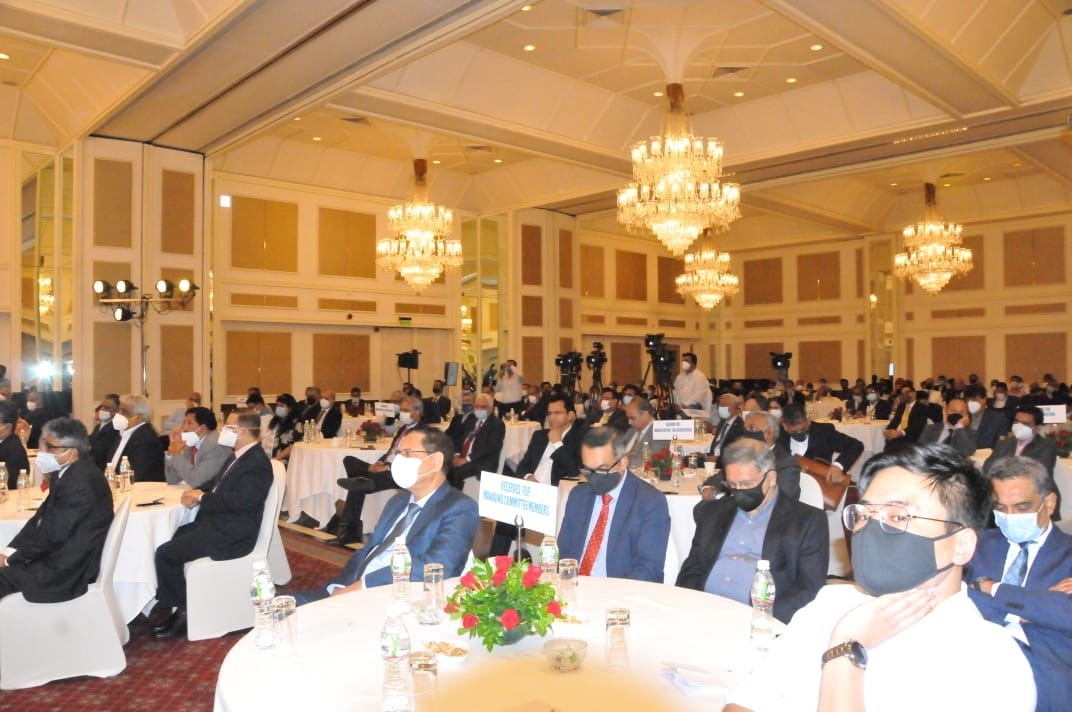
Secretary and Managing Committee Members of IBA; Managing Directors, CEOs and Executive Directors of the member banks of the Association too were present at the meeting. The programme can be watched here.

PIB Mum | 001 / DJM / PC / MC/PM

Follow us on social media: @PIBMumbai  Image result for facebook icon /PIBMumbai    /pibmumbai  pibmumbai@gmail.comRelease Id :-1758243

FAQs regarding Central Government guarantee to back Security Receipts issued by NARCL for acquiring of stressed loan assets (MOF Press Release dated 16 Sept 2021)

  1. What isNational Asset Reconstruction Company Limited (NARCL)? Who has set it up?

NARCL has been incorporated under the Companies Act and has applied to Reserve Bank of India for license as an Asset Reconstruction Company (ARC). NARCL has been set up by banks to aggregate and consolidate stressed assets for their subsequent resolution. PSBs will maintain51% ownership inNARCL.

2. What is India Debt Resolution Company Ltd. (IDRCL)? Who has set it up?

IDRCL is a service company/operational entity which will manage the asset and engage market professionals and turnaround experts. Public Sector Banks (PSBs) and Public FIs will hold a maximum of 49% stake and the rest will be with private sector lenders.

3 Why is NARCL-IDRCL type structure needed when there are 28 existing ARCs?

Existing ARCs have been helpful in resolution of stressed assets especially for smaller value loans. Various available resolution mechanisms, including IBC have proved to be useful. However,considering the large stock of legacy NPAs, additional options/alternatives are needed and the NARCL-IRDCL structure announced in the Union Budget is this initiative.

4. Why is a Government Guarantee needed?

Resolution mechanisms of this nature which deal with a backlog of NPAs typically require a backstop from Government. This imparts credibility and provides for contingency buffers. Hence, GoI Guarantee of up to Rs 30,600 crore will back Security Receipts (SRs) issued by NARCL. The guarantee will be valid for 5 years. The condition precedent for invocation of guarantee would be resolution or liquidation. The guarantee shall cover the shortfall between the face value of the SR and the actual realisation. GoI’s guarantee will also enhance liquidity of SRs as such SRs are tradable.

5 How will NARCL and IDRCL work?

The NARCL will acquire assets by making an offer to the lead bank. Once NARCL’s offer is accepted, then, IDRCL will be engaged for management and value addition.

6 What benefit do banks get from this new structure?

It will incentivize quicker action on resolving stressed assets thereby helping in better value realization. This approach will also permit freeing up of personnel in banks to focus on increasing business and credit growth. As the holders of these stressed assets and SRs, banks will receive the gains. Further, it will bring about improvement in bank’s valuation and enhance their ability to raise market capital.

7 Why is it being set up now?

Insolvency and Bankruptcy Code (IBC), strengthening of Securitization and Reconstruction of Financial Assets and Enforcement of Securities Interest (SARFAESI Act) and Debt Recovery Tribunals, as well as setting up of dedicated Stressed Asset Management Verticals (SAMVs) in banks for large-value NPA accounts have brought sharper focus on recovery. In spite of these efforts, substantial amount of NPAs continue on balance sheets of banks primarily because the stock of bad loans as revealed by the Asset Quality Review is not only large but fragmented across various lenders. High levels of provisioning by banks against legacy NPAs has presented a unique opportunity for faster resolution.

8. Is the guarantee likely to be invoked?

Government guarantee will be invoked to cover the shortfall between the amount realised from the underlying assets and the face value of SRs issued for that asset, subject to overall ceiling of ₹30,600 crore, valid for 5 years. Since there shall be a pool of assets, it is reasonable to expect that realisation in many of them will be more than the acquisition cost.

9. How will Government ensure faster and timely resolution?

The GoI guarantee will be valid for five years and condition precedent for invocation of guarantee will be resolution or liquidation.Further, to disincentivize delay in resolution, NARCL has to pay a Guarantee fee which increase with passage of time.

10. What will be the capital structure of NARCL and how much will Government contribute?

Capitalization of NARCL would be through equity from banks and Non-Banking Financial Companies (NBFCs). it will also raise debt as required.The GoI guarantee will reduce upfront capitalization requirements.

11. What will be NARCL’s strategy for resolution of stressed assets?

NARCL is intended to resolve stressed loan assets above ₹500 crore each amounting to about ₹ 2 lakh crore. In phase I, fully provisioned assets of about Rs. 90,000 crores are expected to be transferred to NARCL, while the remaining assets with lower provisionswould be transferred in phase II.