Awareness Building and Guidance on using the PPP Toolkits

The Toolkits available on www.pppinindia.gov.in  are for use by PPP practitioners across India in both the public and private sectors.

A public-private partnership (PPP) is a funding model for public infrastructure projects and initiatives such as a new telecommunications system, public transportation system, airport or power plant. Government agencies represent the public partner at a local, state and/or national level.

A two day -workshop on Awareness Building and Guidance on using the PPP Toolkits was organized by the Department of Economic Affairs (DEA), Ministry of Finance, in collaboration with Foreign, Commonwealth and Development Office, UK with an objective to sensitize and train government officials in using PPP toolkits for decision making in PPP projects. The Training programme was inaugurated by Joint Secretary, DEA, Shri. Baldeo Purushartha. Special addressees included Mr. Shantanu Mitra, Head- Infrastructure and Urban Development, FCDO, Ms. Sangeeta Mehta, Senior Programme officer (FCDO), Mr. Shoubhik Ganguly, Senior Infrastructure Advisor (FCDO). A vote of thanks was delivered by Dr. Molishree, Deputy Secretary, DEA.

For reaching out to maximum stakeholders involved in decision making process, the workshop was organized on hybrid mode. The workshop witnessed active participation of 155 participants (35 participants from 16 Central Infrastructure Line Ministries and Departments including NITI Aayog (M/o Housing Affairs, Civil Aviation, Steel, Road Transport and Highways, New and Renewable energy, Power, Railways, Shipping, Food Processing Industries and D/o Telecom, Rural Development, Expenditure, Food and Public Distribution, Water Resources, Promotion of Industry and Internal Trade; and 120 participants from 15 states and 2 UTs (Gujarat, Kerala, Rajasthan, Nagaland, Manipur, Chandigarh, Uttarakhand, Tamil Nadu, Haryana, Madhya Pradesh, Chhattisgarh, Karnataka, Odisha, Andhra Pradesh, Punjab, Jammu and Kashmir and Pondicherry).

The workshop broadly covered introduction and walkthrough of PPP structuring Toolkit, Value-for Money Toolkit, Framework for recognition, valuation and reporting of contingent liabilities Toolkit, Post Award Contract Management (PACM) toolkit. The sessions were delivered by Industry experts including Ms. Mehali Patel, Director CRISIL, Mr. RNK Prasad, Consultant Price Waterhouse Coopers and Mr. Kushal Kumar Singh, Partner, Deloitte Touche Tohmatsu India LLP.

PPP structuring Toolkits developed by DEA are a web-based resource that has been designed to help improve decision-making for infrastructure PPPs in India and to improve the quality of the infrastructure PPPs that are implemented in India. The Toolkits available on http://www.pppinindia.gov.in are for use by PPP practitioners across India in both the public and private sectors. The toolkit covers five infrastructure sectors- State highways, Water and sanitation, Ports, Solid waste management, Urban Transport. Other toolkits such as PPP Post-Award Contract Management Toolkit, Value for Money (VfM) toolkit, and Framework for recognition, valuation and reporting of contingent liabilities have also been developed to assist in the PPP decision-making process.

Sources: Press Release 25 May 2022
Foreign Investment Facilitation Portal (FIF) completes 5 years since Union Cabinet decision to abolish FIPB. 853 FDI proposals disposed off in the last 5 years; FDI jumped by 39% since FIF came into being

853 FDI proposals have been disposed off through the Foreign Investment Facilitation Portal (FIF) since abolishment of Foreign Investment Promotion Board (FIPB). The proposal for abolition of FIPB was approved by the Union Cabinet in its meeting on 24th May, 2017. Subsequent to abolition of the Foreign Investment Promotion Board (FIPB), granting of government approval for foreign investment under the extant FDI Policy and FEMA Regulations was entrusted to the concerned Administrative Ministries/Departments and Department for Promotion of Industry and Internal Trade (DPIIT), Ministry of Commerce & Industry, was made the nodal Department.

The FDI proposals were, thereafter, required to be filed only on Foreign Investment Facilitation Portal (FIF Portal) at https://fifp.gov.in, which is managed by DPIIT. The proposals filed on FIF Portal are forwarded to the concerned Administrative Ministry and are also simultaneously marked to Ministry of External Affairs (MEA) and Reserve Bank of India (RBI) for comments and to Ministry of Home Affairs (MHA) for necessary security clearance, wherever required as per the FDI Policy/ FEM Regulations.

A Standard Operating Procedure (SOP) for processing of FDI proposals, including documents to be filed, through FIF Portal was framed and laid down by DPIIT on 29th June, 2017 with amendment on 09th Jan, 2020.

Since then, not only the FDI has increased so have the number of countries bringing in FDI into India.  In FY 2014-15, FDI inflow in India stood at mere USD 45.15 billion, which increased to USD 60.22 billion in 2016-17 and further to the highest ever annual FDI inflow of USD 83.57 billion reported during the FY 2021-22 despite COVID-19 pandemic and recent Russia-Ukraine conflict. During FY 2021-22 FDI has been reported from 101 countries, whereas, it was reported from 97 countries during previous financial year (2020-21).

Automated alerts through SMS and emails to concerned ministries/ departments are being used to regulate pendency of FDI proposals. Secretary, DPIIT reviews the pendency of FDI proposals across all ministries / departments on monthly basis. This has expedited the disposal of FDI proposals. Regular training sessions are also being conducted to educate ministries/departments regarding judicious and expeditious processing of FDI proposal. 

Regular round table conferences are conducted with investors and law firms alike to keep abreast of the practical issues and problems being faced at the ground level. The FDI proposal form on FIF Portal is regularly reviewed to reduce compliance burden on applicants. FAQs have been updated and placed on DPIIT website and on FIF Portal for ease of access. Hence, continuous effort is made by DPIIT to ensure that India remains an investor friendly destination.

Press Release dated 24 May 2022

ONGC first Indian Exploration & Production company to trade domestic gas on Indian Gas Exchange

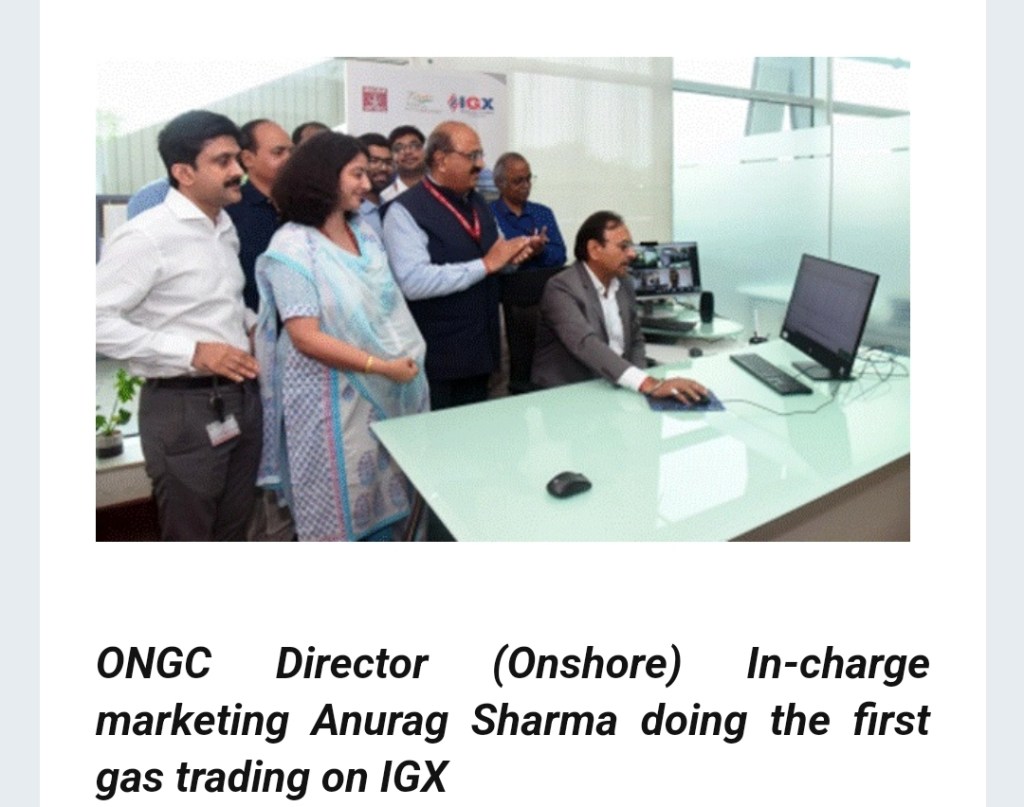
Oil and Natural Gas Corporation Ltd. (ONGC) has become the first Exploration and Production (E&P) company in India to trade domestic gas on Indian Gas Exchange. The first online trade was made on 23 May 2022 by ONGC Director (Onshore) In-charge Marketing Anurag Sharma on India’s first automated national level Gas Exchange, IGX. The gas traded is from ONGC Krishna Godavari 98/2 block.


After the deregulation in gas pricing ecosystem in 2000-21, ONGC has prepared itself to reap the benefits. The quantity sold by ONGC through the Gas Exchange will be enhanced slowly.

Press Release dated 23rd May 2022

Investment Incentive Agreement between the Government of the United States of America and the Government of India

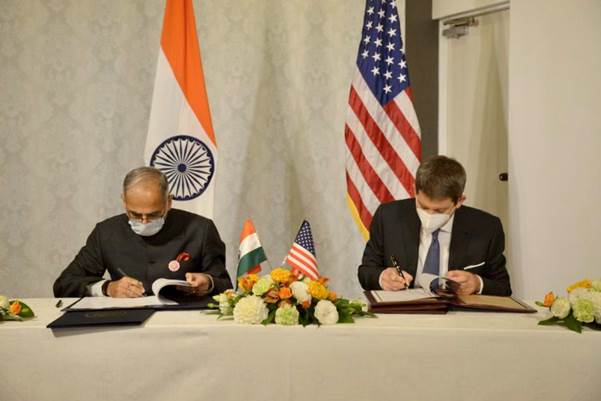
The Government of India and the Government of the United States of America has signed an Investment Incentive Agreement (IIA) today at Tokyo, Japan. The IIA was signed by Shri Vinay Kwatra, Foreign Secretary, Government of India, and Mr. Scott Nathan, Chief Executive Officer, U.S. International Development Finance Corporation (DFC).

This IIA supersedes the Investment Incentive Agreement signed between the Government of India and the Government of the United States of America in the year 1997. Significant developments have taken place since the signing of the earlier IIA in 1997 including the creation of a new agency called DFC, a development finance agency of Government of USA, as a successor agency of the erstwhile Overseas Private Investment Corporation (OPIC) after the enactment of a recent legislation of USA, the BUILD Act 2018. IIA has been signed, to keep pace with the additional investment support programmes, offered by the DFC, such as debt, equity investment, investment guaranty, investment insurance or reinsurance, feasibility studies for potential projects and grants.

The Agreement is the legal requirement for DFC, to continue providing investment support in India. DFC or their predecessor agencies are active in India since 1974 and have so far provided investment support worth $5.8 billion of which $2.9 billion is still outstanding. Proposals worth $4 billion are under consideration by DFC for providing investment support in India. DFC has provided investment support in sectors that matter for development such as COVID-19 vaccine manufacturing, healthcare financing, renewable energy, SME financing, financial inclusion, infrastructure etc.

It is expected that signing of IIA would lead to enhanced Investment support provided by DFC in India, which shall further help in India’s development.

Press Release dated 23 May 2022

India gets the highest annual FDI inflow of USD 83.57 billion in FY21-22

India gets the highest annual FDI inflow of USD 83.57 billion in FY21-22


India rapidly emerges as a preferred investment destination; FDI inflows have increased 20-fold in last 20 years.

FDI equity inflows in Manufacturing rise by 76% in FY 2021-22

FDI inflows rise by 23% post-Covid

Karnataka emerges as the top FDI equity inflow recipient state in India

Top FDI equity inflows from Singapore (27%) followed by U.S.A (18%)

Computer Software and Hardware becomes the top recipient sector of FDI Equity inflow with a share of around 25%

India has recorded highest ever annual FDI inflow of USD 83.57 billion in the Financial Year 2021-22. In 2014-2015, FDI inflow in India stood at mere 45.15 USD billion as compared to the highest ever annual FDI inflow of USD 83.57 billion reported during the financial year 2021-22 overtaking last year’s FDI by USD 1.60 billion despite military operation in Ukraine and COVID-19 pandemic. India’s FDI inflows have increased 20-fold since FY03-04, when the inflows were USD 4.3 billion only.

The details of total FDI inflows reported during the last four financial years are as under:

Further, India is rapidly emerging as a preferred country for foreign investments in the manufacturing sector. FDI Equity inflow in Manufacturing Sectors have increased by 76% in FY 2021-22 (USD 21.34 billion) compared to previous FY 2020-21 (USD 12.09 billion).

The following trends in India’s Foreign Direct Investment inflow are an endorsement of its status as a preferred investment destination amongst global investors.

It may be noted that FDI inflow has increased by 23% post-Covid (March, 2020 to March 2022: USD 171.84 billion) in comparison to FDI inflow reported pre-Covid (February, 2018 to February, 2020: USD 141.10 billion) in India.

In terms of top investor countries of FDI Equity inflow, ‘Singapore’ is at the apex with 27%, followed by U.S.A (18%) and Mauritius (16%) for the FY 2021-22.‘Computer Software & Hardware’ has emerged as the top recipient sector of FDI Equity inflow during FY 2021-22 with around 25% share followed by Services Sector (12%) and Automobile Industry (12%) respectively.

Under the sector `Computer Software & Hardware’, the major recipient states of FDI Equity inflow are Karnataka (53%), Delhi (17%) and Maharashtra (17%) during FY 2021-22. Karnataka is the top recipient state with 38% share of the total FDI Equity inflow reported during the FY 2021-22 followed by Maharashtra (26%) and Delhi (14%). Majority of the equity inflow of Karnataka has been reported in the sectors `Computer Software & Hardware’ (35%), Automobile Industry (20%) and `Education’ (12%) during the FY 2021-22.

The steps taken by the Government during the last eight years have borne fruit as is evident from the ever-increasing volumes of FDI inflow being received into the country, setting new records. The Government reviews the FDI policy on an ongoing basis and makes significant changes from time to time, to ensure that India remains attractive and investor friendly destination. Government has put in place a liberal and transparent policy for FDI, wherein most of the sectors are open to FDI under the automatic route. To further liberalise and simplify FDI policy for providing Ease of doing business and attract investments, reforms have been undertaken recently across sectors such as Coal Mining, Contract Manufacturing, Digital Media, Single Brand Retail Trading, Civil Aviation, Defence, Insurance and Telecom.

Press Release dated 20 May 2022

Common Guidelines on Pharmaceutical Innovation and Entrepreneurship

Department of Pharmaceuticals releases “Common Guidelines on Pharmaceutical Innovation and Entrepreneurship” for academic institutions

Press Release dated May 06, 2022

The Vision of the Department of Pharmaceuticals is to promote Indian pharma sector as the global leader for quality medicines and to ensure availability, accessibility and affordability of drugs and medical devices in the country. One of the measures to achieve the vision is to concentrate on Research & Development and innovation. In order to achieve the same, the Department, amongst various other measures, has set up seven National Institutes of Pharmaceutical Education and Research (NIPERs) as institutes of national importance all across the country for imparting quality education and conducting high-end research.

NIPERs have recently launched a common Research portal for industry and researchers and have also prepared a Common Research Programme based on the national needs and their own expertise and facilities. The department is also soon coming up with a ‘Policy to catalyze Research & Development and Innovation in the Pharma- MedTech Sector in India’.

In order to encourage innovation and research and to facilitate the entrepreneurship in NIPERs, the Department of Pharmaceuticals, after considering the National Innovation &Startup Policy 2019, National IPR Policy 2016 and similar policies of other institutes/ departments has prepared ‘Common Guidelines on Pharmaceutical Innovation and Entrepreneurship’ for academic institutions under its control. The policy aims to transform the academic research into innovative and commercially applicable technologies/products; build strong ecosystem for nurturing creativity and entrepreneurial activities and contribute to self-reliant India mission (Atmanirbhar Bharat).

The Policy Guidelines aims to:

  • Encourages the faculty/staff members and students to pursue entrepreneurship;
  • Formulate policies & foster an ecosystem to generate ideas across disciplines that can be transformed into successful technologies, products, and services;
  • Establish a mechanism for technology development and technology transfer;
  • Create institutional framework for effective implementation, monitoring, and evaluation of the policy; and
  • Promote pharmaceutical innovation and entrepreneurship to foster the unmet therapeutic, socially impactful technologies delivering benefits to mankind

These Policy Guidelines, finalized with approval of the Minister for Chemicals and Fertilizers have been forwarded to all NIPERs for taking up further steps for their speedy and effective implementation.

Draft notification issued pertaining to ease of doing business – Trade Certificate. (07 May 2022)

Ministry of Road Transport & Highways  has published a draft notification dated 5.5.2022 regarding amendments in certain provisions of the Central Motor Vehicles Rules 1989  pertaining to the Trade Certificate.

A Trade Certificate is required only in case of vehicles which are neither registered nor temporarily registered. Such vehicles can only be in the possession of a dealer/ manufacturer/importer of motor vehicles, or a test agency specified in rule 126 or any entity specified by the Central Government.

In an endeavour to promote “Ease of doing business”, it is proposed that such agency  can  apply for a Trade Certificate and Trade Registration Marks electronically for multiple types of vehicles in a single application on the Vahan portal, without the need to visit the RTO. Streamlining of fees  is also proposed, on the basis of the  number of trade registration marks being applied for. Further, as the Trade certificate and registration marks are proposed to be allotted online i.e. electronically on the portal, therefore compliance burden regarding Intimation of loss or destruction of a trade certificate and application for duplicate has been removed. The validity of the Trade Certificate has been increased from 12 months to 5 years.

Click here to see the Gazette Notification

Ministry of Road Transport & Highways Press Release 07 May 2022

India sees the emergence of the 100th unicorn (Press release 06 May 2022)

India sees the emergence of the 100th unicorn


The 100 unicorns of India valued at USD 332.7 billion.

In the first four months of 2022, India sees the rise of 14 unicorns

The wave of Unicorns in India has soared to new heights as the country witnessed the birth of its 100th Unicorn on 2nd May 2022. Today, 1 out of every 10 unicorns globally have been born in India.

Union Minister of Commerce and Industry, Consumer Affairs, Food and Public Distribution and Textiles, Shri Piyush Goyal highlighted the achievement in a tweet. 

India Hits A Century In Style! 💯

Bengaluru-based startup become country’s 100th Unicorn.🦄

India = Ideas + Innovation + Investmentshttps://t.co/KcNQMIEokA— Piyush Goyal (@PiyushGoyal) May 2, 2022

The term ‘Unicorn’ refers to the rarest of the rare startups who become Unicorns attaining a valuation of more than USD 1 billion. The Indian Startup Ecosystem, the third-largest in the world in number of Unicorns, as of 5th May 2022, is home to 100 unicorns with a total valuation of USD 332.7 billion. 

2021 experienced a huge surge in the number of unicorns, registering a total of 44 startups entering the Unicorn club through the year with a total valuation of USD 93 billion. 

In the first four months of 2022, India has given birth to 14 unicorns with a total valuation of USD 18.9 billion.

The entrepreneurial spirit exists throughout the length and breadth of the country and is evident by the spread of the Department for Promotion of Industry and Internal Trade (DPIIT) recognized startups across 647 Indian districts encompassing all 36 States and Union Territories. 

Since the launch of the Startup India initiative on 16th January 2016, more than 69,000 startups have been recognized in the country till 2nd May 2022.  Innovation in India is not just limited to certain sectors; we have recognized startups solving problems in 56 diverse sectors with 13% from IT services, 9% healthcare and life sciences, 7% education, 5% professional and commercial services, 5% agriculture, and 5% food & beverages.

While every startup has its unique journey to becoming a unicorn, the minimum and maximum time taken by a startup to become a unicorn in India are 6 months and 26 years, respectively. Till FY 2016-17, approximately one unicorn was being added every year. Over the past four years (since FY 2017-18), this number has been increasing exponentially, with a whopping 66% Year-on-Year growth in the number of additional unicorns being added every year.

As we hit the milestone of a century in Indian unicorns, the homegrown startup ecosystem continues to work effectively towards the mission of self-reliance and self-sustainability as they have been in the past. The vision of Atmanirbhar Bharat is rooted deeply in the Startup Ecosystem and shall continue to prevail in the coming years.

First registration certificate issued for providing services as M2M Service Provider and WLAN/WPAN Connectivity Provider (Press release 28 April 2022)

First registration certificate issued for providing services as M2M Service Provider and WLAN/WPAN Connectivity Provider, informs DoT


Registration certificate issued to M/s Cloud7 Technologies Private Limited by AP-LSA Vijayawada

Government of India has identified that M2M/ Internet of Things (IoT) is one of the fastest emerging technologies across the globe, providing enormous beneficial opportunities for society, industry, and consumers. It is being used to create smart infrastructure in various verticals such as Power, Automotive, Safety & Surveillance, Remote Health Management, Agriculture, Smart Homes, Industry 4.0, Smart Cities, etc. using connected devices. Machine to Machine communication is going to play a major role and will contribute significantly towards the government of India initiative of Digital India and Make in India.

In order to strengthen the M2M eco-system and to facilitate wider proliferation and innovation in the sector, DoT has recently issued guidelines for registration of M2M Service Providers and WPAN/WLAN Connectivity Providers and commenced the process of on-boarding the M2M Service Providers through a simple online registration process, at a nominal cost of Rs. 5000, within 15 days timeframe, through the DoT’s existing Saral Sanchar portal, to aid in ease of doing business. It has been envisaged that entities which are offering/providing the M2M services based on SIM/ LAN shall register as M2M Service Provider and entities which use WPANWLAN technologies for providing M2M connectivity, spectrum shall register as WPAN/WLAN Connectivity Providers. This registration shall help in addressing concerns like connectivity with TSPs, KYC, traceability and encryption for the M2M service providers.

In this regard, DoT is delighted to share that the first registration certificate for providing services as M2M Service Provider and WLAN/WPAN Connectivity Provider, has been issued to M/s Cloud7 Technologies Private Limited on 26.04.22 by AP-LSA Vijayawada. The company is engaged in the planning, installation and management of wireless/RF networks in the unlicensed bands in India.

With the rapid acceptability of all sectors to digitalize and automate processes, and the advent of new manufacturing techniques and Industry 4.0, DoT expect a quantum jump in the use of IoT and M2M services all across the country, which would generate massive employment opportunities even in the far-flung areas. It would present a host of opportunities to entrepreneurs and startups to participate and develop innovative applications and solutions for the benefit of the citizens. This will lead to a plethora of citizen centric services across different verticals like Power, Automotive, Safety & Surveillance, Remote Health Management, Agriculture, Smart Cities & Homes, Industry 4.0, etc. The resultant explosion in IoT based services would further cultivate the digital ecosystem in the country.

IFSCA Issues Framework for FinTech Entity in International Financial Services Centers (IFSCs) (27 April 2022)  

The International Financial Services Centres Authority (IFSCA), in furtherance of its mandate to develop and regulate financial products, financial services and financial institutions in the International Financial Services Centres (IFSC) and to encourage promotion of financial technologies (‘FinTech’) across the spectrum of banking, insurance, securities, and fund management in IFSC has issued a detailed “Framework for FinTech Entity in the IFSCs”.

The “Framework for FinTech Entity in the IFSCs” is aimed at giving boost to the establishment of a world class FinTech Hub at GIFT IFSC comparable with other International Financial Centers (IFCs). The framework proposes to cover (i) financial technology (FinTech) solutions resulting in new business models, applications, process or products in areas/activities linked to financial services regulated by IFSCA and (ii) advanced/innovative technological solutions which aid and assist activities in relation to financial products, financial services and financial institutions (TechFin).

The framework provides for a dedicated Regulatory Sandbox for FinTech products or solutions namely IFSCA FinTech Regulatory Sandbox and empowers IFSCA to grant Limited Use Authorization within FinTech Regulatory Sandbox to the eligible financial technology entities in IFSC. This would enable them to apply and avail Grants under the IFSCA FinTech Incentive Scheme 2022.

Further, it also enables some class/categories of technology companies having (i) a deployable advanced/innovative technology solution which aids and assists activities in relation to financial products, financial services, financial institutions and, (ii) credible  track record including financial performance, to obtain Direct Entry (Authorization by IFSCA) by IFSCA without entering into the Regulatory Sandbox.

The framework also incorporates the Inter Operable Regulatory Sandbox (IoRS) mechanism.  IoRS is a proposed mechanism to facilitate testing of innovative hybrid financial products / services falling within the regulatory ambit of more than one financial sector regulators. IFSCA will facilitate Indian FinTech’s seeking access to foreign markets and foreign FinTech’s seeking entry into India.   

The framework proposes a Regulatory Referral mechanism which shall be governed as per the provisions of the Memorandum of Understanding (MoU) or collaboration or special arrangement between IFSCA and corresponding overseas Regulator(s)

IFSCA endeavors to support FinTech firms for proof of concept (PoC), minimum viable product (MVP), prototype development, product trials, commercialization, and global market access etc.

The GIFT-IFSC offers the unique advantage of being a separate financial jurisdiction within India which is treated like an offshore jurisdiction from FEMA angle with no restriction on currency convertibility. The framework issued by IFSCA, a unified regulator for Banking, Capital Markets, Insurance and Funds Management in IFSC, would enable FinTech firms having innovative ideas or solutions across the banking, capital or insurance sector to have seamless interaction with a single regulator.

The detailed framework may be accessed at https://ifsca.gov.in/Viewer/Index/292