The case is M/s Sahil Enterprises vs. Union of India (Tripura High Court, January 2026).
The purchaser (Sahil Enterprises) bought goods and paid GST to the supplier between July 2017 and Jan 2019.
The supplier reflected sales in GSTR-1 but filed ‘Nil’ GSTR-3B returns, thus not depositing the tax collected with the government.
Tax authorities denied Input Tax Credit (ITC) to the purchaser, blocked its credit ledger, and issued demands for tax, interest, and penalty.
Core Legal Issue
Whether a bona fide purchaser (one acting in good faith and without fraud/collusion) can be denied ITC solely because the supplier failed to remit the GST collected to the government under Section 16(2)(c) of the CGST Act, 2017.
Court’s Key Findings
Unrealistic Burden: The court observed that a purchaser has no control or statutory method to verify whether the supplier actually deposited the tax. Imposing such a burden would be impossible and unfair.
Reading Down Section 16(2)(c): The court applied the legal principle of “reading down” to interpret Section 16(2)(c) in a way that protects bona fide transactions. This means the provision should not be used to deny ITC to honest buyers, but only to situations involving fraud, collusion, or non-genuine transactions.
Precedent Support: The decision relied on prior judicial interpretations, particularly a Delhi High Court ruling in On Quest Merchandising India Pvt. Ltd., which was implicitly approved by the Supreme Court, as authority for protecting bona fide purchasers.
No Constitutional Invalidity Held: The court did not strike down Section 16(2)(c) as unconstitutional per se, but clarified its limited application so as not to penalize honest taxpayers.
Outcome
The Tripura High Court set aside the demand and denial of ITC against the petitioner.
It directed authorities to allow the claimed ITC that had previously been denied.
Practical Impact
This judgment ensures that:
A genuine purchaser who paid GST cannot be penalized for a supplier’s subsequent non-deposit of tax — provided there is no fraud or collusion.
Section 16(2)(c) must be interpreted in a manner that doesn’t place an impossible compliance burden on honest businesses.
As per the Finance Act,2023 (8 of 2023), dt. 31-03-2023, implemented w.e.f 01-10-2023 vide Notification No. 28/2023 – Central Tax dated 31th July, 2023, the taxpayers shall not be allowed file their GST returns after the expiry of a period of three years from the due date of furnishing the said return under Section 37 ( Outward Supply), Section 39 (payment of liability), Section 44 ( Annual Return) and Section 52 (Tax Collected at Source). These Sections cover GSTR-1, GSR-1A, GSTR 3B, GSTR-4, GSTR-5, GSTR-5A, GSTR-6, GSTR 7, GSTR 8 and GSTR 9 or 9C.
Hence, above mentioned returns will be barred for filing after expiry of three years. The said restriction will be implemented on the GST portal from September 2025 Tax period. Which means any return for which due date was three years back or more and hasn’t been filed till September Tax period will be barred from Filling. In this regard an advisory was already issued by GSTN on 29th October, 2024
Illustration : For ease of reference and better clarity, the latest GST returns that will be barred from filing w.e.f 1st October 2025 are detailed in the table below:
GST Forms
Barred Period (w.e.f. 1st October,2025)
GSTR-1/IFF
August-2022
GSTR-1Q
April-June 2022
GSTR-3B/M
August-2022
GSTR-3BQ
April-June 2022
GSTR-4
FY 2021-22
GSTR-5
August-2022
GSTR-6
August-2022
GSTR-7
August-2022
GSTR-8
August-2022
GSTR-9/9C
FY 2020-21
Hence, the taxpayers are once again advised to reconcile their records and file their GST Returns as soon as possible if not filed till now.
Lean System is a management philosophy focused on creating the most value for customers while minimizing waste—a principle that originated from the renowned Toyota Production System123. Imagine organizing your kitchen: you remove unused gadgets, keep essential tools handy, and arrange items to cook faster without any unnecessary steps. That’s Lean in action—eliminate what’s not needed and focus energy where it counts.
The core idea is simple: identify and remove anything that doesn’t directly contribute value to the customer. By doing so, businesses become more efficient, flexible, and responsive—embracing continuous improvement as a way of working145.
Types of Lean Systems
Modern Lean combines time-tested practices with practical tools. Here are the most widely recognized types:
Just-in-Time (JIT)
Key Idea: Produce and deliver products exactly when needed, in the amount needed—no more, no less.
Application: Used in production lines and supply chains to cut excess inventory and improve flow.
Tool Example: Kanban cards/signals.
Kanban System
Key Idea: A visual workflow management tool that signals what, when, and how much to produce or move6.
Application: Widely used to manage inventory, manufacturing, software development, and project tasks.
Tool Example: Kanban boards.
Kaizen (Continuous Improvement)
Key Idea: Small improvements every day—by everyone.
Application: From factory floors to customer service desks, encouraging teams to suggest and implement changes.
Tool Example: Kaizen events, suggestion systems.
5S System
Key Idea: Sort, Set in Order, Shine, Standardize, and Sustain for a clean, organized, efficient workplace7.
Application: Any environment—offices, plants, hospitals—to reduce waste and increase safety.
Value Stream Mapping
Key Idea: Diagramming every step in a process to spot and eliminate steps that don’t add value.
Application: Used to identify bottlenecks or waste in manufacturing, logistics, or administrative workflow.
Lean Six Sigma
Key Idea: Integrates Lean’s waste reduction with Six Sigma’s defect and variability control.
Application: Used for process improvement and problem-solving, often in quality management.
Comparison: Lean focuses on “speed and flow” (waste), while Six Sigma tackles “consistency and quality” (variability); together, they maximize efficiency and reliability6.
Comparison of Major Types of Lean Systems
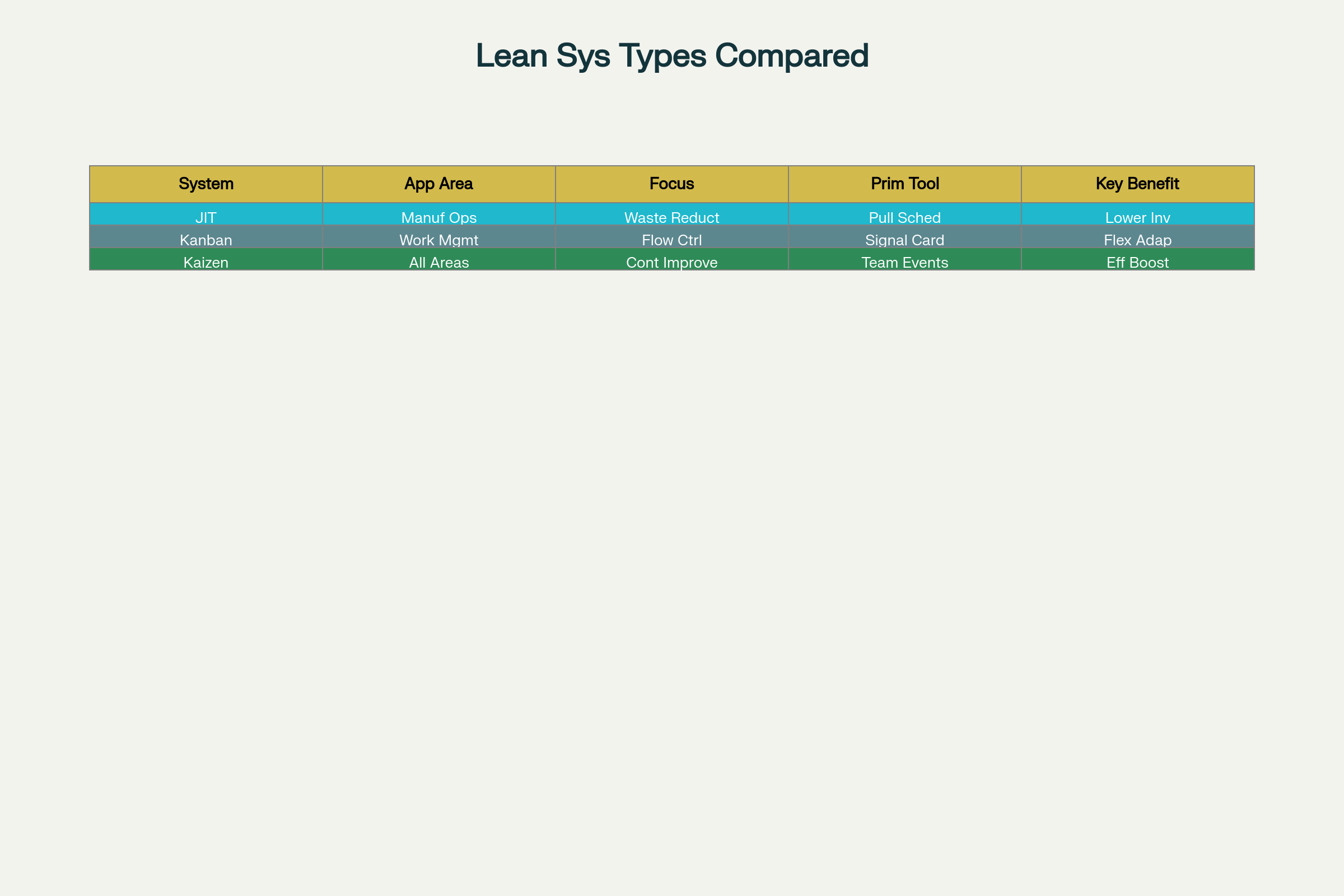
Comparative Table: Major Types of Lean Systems
Type
Major Application
Focus
Key Tools
Key Benefits
JIT
Manufacturing, Pharma
Inventory Reduction
Kanban, JIT
Low inventory, cost
Kanban
Production, Services
Workflow Management
Kanban board
Visual control, flow
Kaizen
All departments
Continuous Improvement
Suggestion box
Team empowerment
Benefits of Lean Systems
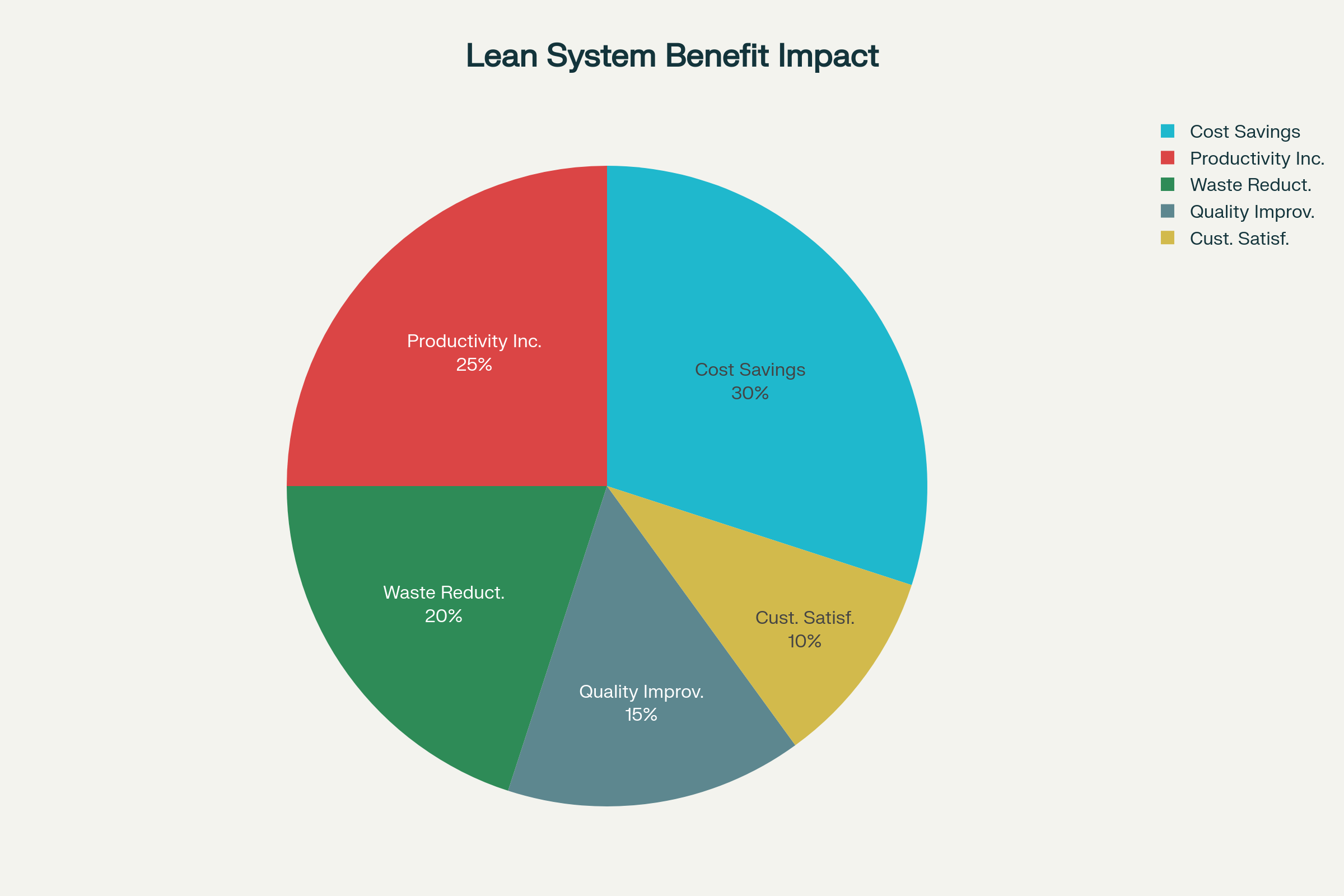
Implementing Lean doesn’t just cut costs—it transforms performance across the board58910:
Reduction in operational costs: Less inventory, fewer errors, less rework bring major savings.
Faster production cycle time: Shorter lead times and faster responses to customer demand.
Improved product quality: Quality is built into each step, reducing defects.
Higher customer satisfaction: Consistent quality and prompt delivery strengthen loyalty.
Better team collaboration: Lean empowers employees to find and solve problems.
Impact Distribution of Key Benefits of Lean System Implementation
Problems Addressed by Lean Systems
Lean tackles many of the root causes of inefficiency and frustration in organizations today, including1112:
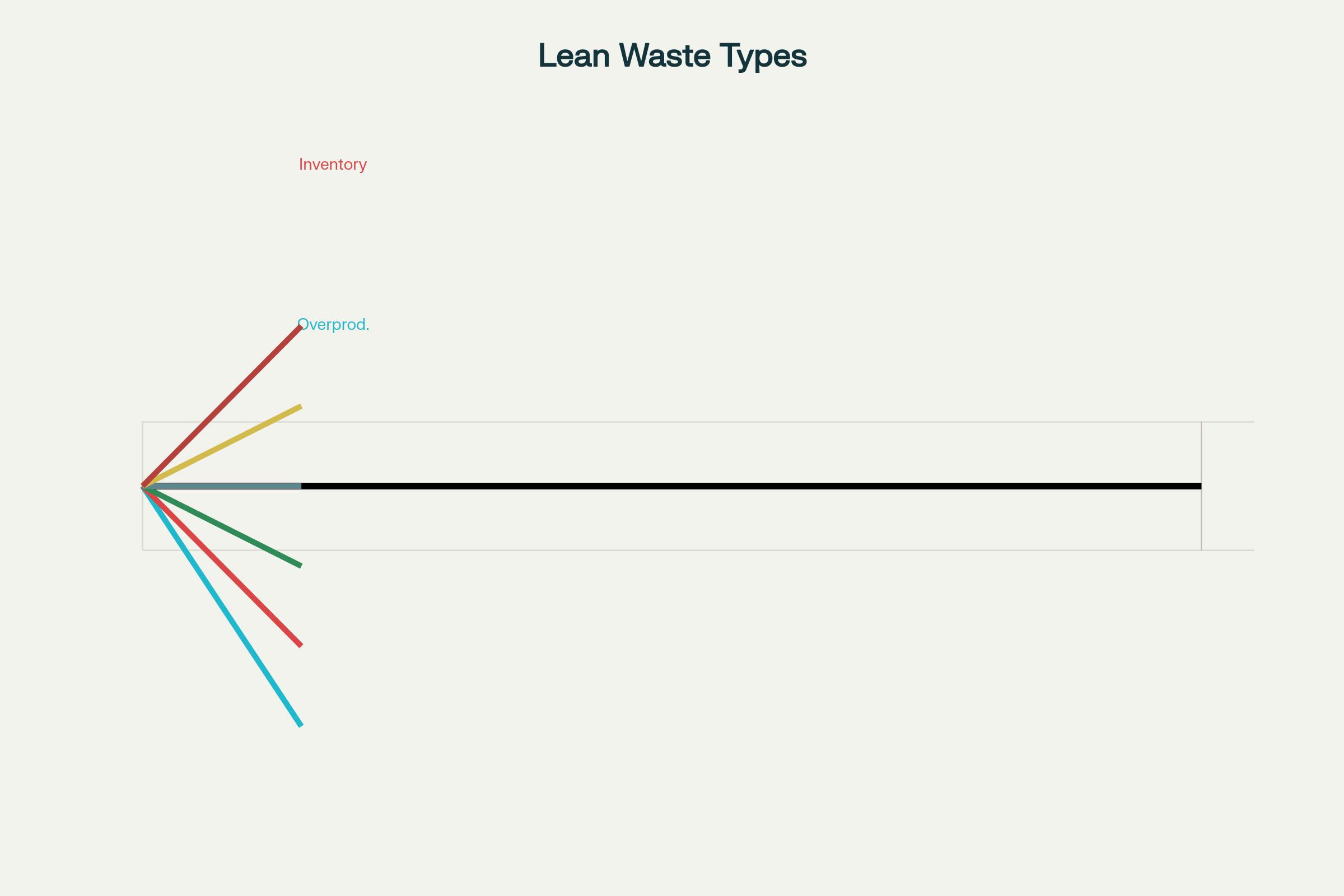
Overproduction: Making more than what’s needed.
Inventory waste: Excess material or products waiting around.
Motion waste: Unnecessary moving of people or equipment.
Defects/rework: Errors or mistakes that require fixing.
Waiting time: Idle time while people or machines wait for work.
Underutilized talent: Not making the most of employees’ skills.
Ishikawa Diagram of Wastes Tackled by Lean Systems
Today’s most competitive organizations rely on Lean to reduce waste, improve quality, and delight customers. The best part? Lean principles are not just for big manufacturers—even small businesses can get started by decluttering, standardizing, and making tiny daily improvements in their workflow.
What’s slowing you down or wasting effort? Apply the Lean mindset—start small, but start now!
Question 1: How can a recipient avail ITC of wrongly rejected Invoices/ Debit notes/ECO-Documents in IMS as corresponding GSTR-3B of same tax period was also filed by recipient?
Answer: In such cases recipient can request to the corresponding supplier to report the same record (without any change) in same return period’s GSTR-1A or respective amendment table of subsequent GSTR-1/IFF. Thus, recipient can avail the ITC basis on amended record by accepting such record on IMS and recomputing GSTR-2B on IMS. Here the recipient will get ITC of complete amended value as original record was rejected by the recipient.
However, recipient will be able to take ITC for the again furnished document by the supplier, as stated above, only in the GSTR-2B of the concerned tax-period.
Question 2: If any original record is rejected by the recipient and supplier furnishes the same record in GSTR-1A of same tax period or in the amendment table of GSTR-1/IFF of subsequent period, till the specified time limit, then what impact it will have on supplier’s liability?
Answer: In case supplier had furnished an original record in GSTR-1/IFF but the same record was rejected wrongly by the recipient in IMS. In such cases supplier on noticing the same in the supplier’s view of IMS dashboard or on request of recipient, may furnish the same record again (without any change) in GSTR-1A of same tax period or in the amendment table of GSTR-1/IFF in any subsequent period, till the specified time limit, then the liability of supplier will not increase. As amendment table take delta value only. Thus, in present case of same values, differential liability increase will be zero.
Question 3: As a recipient taxpayer, how to reverse ITC of wrongly rejected Credit note in IMS as the corresponding GSTR-3B has already been filed?
Answer: In such cases recipient can request the concerned supplier to furnish the same Credit note (CN) without any change in the same return period’s GSTR-1A or in amendment table of subsequent period’s GSTR-1/IFF. Now recipient can reverse the availed ITC based on the amended CN by accepting the CN on IMS. Hence, the recipient’s ITC will get reduced with complete amended value, as soon as the recipient recomputes GSTR-2B on IMS. The reduced value is same as that of the value of original CN as in this case the complete original CN was rejected by the recipient.
Question 4: If any original Credit note was rejected by the recipient and supplier furnishes the same credit note in GSTR-1A of same tax period or in the amendment table of GSTR-1/IFF of any future tax-period, till the specified time limit, then what impact it will have on supplier’s liability?
Answer: At first instant the supplier’s liability will be added back in the open GSTR-3B return, because of original credit note rejection by the recipient. However, as the supplier furnishes the same credit note in GSTR-1A of same tax period or in amendment table of GSTR-1/IFF in any subsequent period, supplier’s liability for this amendment will get reduced again corresponding to the value of amended CN (which in this case is same as original). Thus, net effect on liability of supplier will be only once.
आज के डिजिटल युग में, हमारी डिजिटल संपत्तियाँ – जैसे सोशल मीडिया अकाउंट्स, ईमेल, क्लाउड स्टोरेज में तस्वीरें और दस्तावेज़ – हमारे जीवन का अहम हिस्सा बन चुकी हैं। इस लेख में बताया गया है कि इन संपत्तियों की उत्तराधिकार योजना बनाना क्यों ज़रूरी है और इसके लिए क्या कदम उठाने चाहिए।
मुख्य बिंदु:
डिजिटल संपत्तियाँ केवल डेटा नहीं, भावनात्मक धरोहर भी हैं जैसे प्रसिद्ध फ़ोटोजर्नलिस्ट रघु राय की इंदिरा गांधी की तस्वीरें आज ऐतिहासिक महत्व रखती हैं, उसी तरह आम लोगों की डिजिटल फोटोज, ब्लॉग्स या वीडियोज़ भी आने वाली पीढ़ियों के लिए मूल्यवान हो सकते हैं।
‘पासवर्ड की पहेली’ अधिकतर लोगों के डिजिटल अकाउंट्स पासवर्ड से सुरक्षित होते हैं, लेकिन मृत्यु के बाद यदि किसी को पासवर्ड नहीं पता, तो उनकी महत्वपूर्ण जानकारी खो सकती है। सलाह: एक विश्वसनीय व्यक्ति को पासवर्ड की जानकारी (या उसका स्थान) बताकर रखें, या किसी पासवर्ड मैनेजर का उपयोग करें।
Legacy Contact की सुविधा का उपयोग करें Facebook और Google जैसे प्लेटफ़ॉर्म आपको “Legacy Contact” या “Trusted Contact” जोड़ने की सुविधा देते हैं, जो आपकी मृत्यु के बाद आपके अकाउंट को मैनेज कर सकते हैं। यह एक प्रभावी तरीका है अपनी डिजिटल पहचान को नियंत्रित करने का।
भारत में डिजिटल संपत्ति के लिए स्पष्ट कानून नहीं हैं भारत में फिलहाल ऐसा कोई विशेष कानून नहीं है जो डिजिटल संपत्ति के उत्तराधिकार को नियमित करता हो। हालांकि, आप एक अनौपचारिक “डिजिटल वसीयत” (Digital Will) बना सकते हैं जिसमें आप तय करें कि कौन-कौन सी डिजिटल संपत्ति किसे मिलेगी।
पहले से योजना बनाना है अत्यंत आवश्यक डिजिटल संपत्ति के लिए कोई कानूनी विवाद न हो, इसके लिए:
अकाउंट्स की सूची बनाएं
पासवर्ड मैनेजर का उपयोग करें
भरोसेमंद व्यक्ति को जानकारी दें
डिजिटल वसीयत या निर्देश तैयार करें
निष्कर्ष:
जैसे हम भौतिक संपत्तियों (जमीन-जायदाद) की वसीयत बनाते हैं, वैसे ही डिजिटल संपत्तियों की उत्तराधिकार योजना बनाना भी आज के समय में बेहद जरूरी है। इससे न केवल भविष्य की उलझनों से बचा जा सकता है, बल्कि आपकी भावनात्मक और रचनात्मक डिजिटल विरासत भी सुरक्षित रहती है।
Gujarat High Court Rules on Deloitte’s Challenge to Income Tax Reassessment Notice
Key Highlights:
Petitioner: M/s. Deloitte Haskins & Sells
Issue: Challenge to Section 148 notice under Income Tax Act, 1961
Allegation: Escaped income from foreign entities (Spain & Japan)
Claim: Reassessment initiated without new tangible material
Court’s View: Reassessment cannot be based on a mere “change of opinion”
Gujarat High Court is reviewing whether the Income Tax Department’s actions violated principles of natural justice.
The Gujarat High Court recently addressed a *writ petition filed under Article 226 of the Constitution by “M/s. Deloitte Haskins & Sells,”* a partnership firm practicing as chartered accountants. The firm challenged a notice issued under Section 148 of the Income Tax Act, 1961, seeking its quashing and an injunction against further proceedings by the Income Tax Department. The case centered on alleged escaped income from foreign entities, including payments received from Spain and Japan, and the department’s failure to address the petitioner’s objections before proceeding with reassessment.
*Key Points:*
*1. Challenge to Section 148 Notice:*
The petitioner contested the validity of the notice issued under Section 148, arguing that the reassessment was initiated based on a mere “change of opinion” without any new tangible material. The Gujarat High Court has previously held that reassessment cannot be initiated on a mere change of opinion for material already scrutinized in previous assessments.
*2. Alleged Escaped Income:*
The reassessment pertained to alleged escaped income from foreign entities, including payments received from Spain and Japan. The petitioner maintained that all relevant details were furnished during the original assessment, and no new information had surfaced to justify the reassessment.
*3. Non-Consideration of Objections:*
The petitioner asserted that the Income Tax Department proceeded with the reassessment without addressing the objections raised, violating principles of natural justice. The Gujarat High Court has previously invalidated assessment orders due to violations of procedural requirements under Section 144B, emphasizing the necessity of considering taxpayers’ objections.
*Court’s Decision:*
While the specific outcome of this particular case is not detailed in the available sources, the Gujarat High Court has consistently ruled that:
*Reassessment notices under Section 148 cannot be issued based on a mere change of opinion for material already scrutinized in previous assessments.*
*Procedural lapses, such as failing to consider taxpayers’ objections, can render assessment orders invalid.*
*These precedents suggest that the court may favor the petitioner’s stance if similar circumstances apply.*
Q1. What are the major changes brought about in the taxation of capital gains by the Finance (No.2) Bill, 2024?
Ans. The taxation of capital gains has been rationalised and simplified. There are 5 broad parameters to this rationalisation and simplification, namely:-
-Holding period has been simplified. There are only two holding periods now, viz. 1 year and 2 year.
-Rates have been rationalised and made uniform for majority of assets.
-Indexation has been done away with for ease of computation with simultaneous reduction of rate from 20% to 12.5%.
-Parity between Resident and Non-resident.
-No change in roll over benefits.
Q2. What is the date when the new taxation provisions comes into force?
Ans. The new provisions for taxation of capital gains come into force from 23.7.2024 and shall apply to any transfer made on or after 23.7.2024.
Q3. How has the holding period been simplified?
Ans. Earlier there were three holding period for considering an asset to be a long- term capital asset. Now the holding period has been simplified. There are only two holding periods,- for listed securities, it is one year, for all other assets, it is two years.
Q4. Who will benefit from the change in holding period?
Ans. The holding period of all listed assets will be now one year. Therefore, for listed units of business trusts (ReITs, InVITs) holding period is reduced from 36 months to 12 months. The holding period of gold, unlisted securities (other than unlisted shares) is also reduced from 36 months to 24 months.
Q5. What about the holding period of immovable property and unlisted shares?
Ans. The holding period of immovable property and unlisted shares remains the same as earlier i.e. 24 months.
Q6. Please elaborate on change in the rate structure for STT paid capital assets?
Ans. Rate for short-term STT paid listed equity, Equity oriented mutual fund and units of business trust (Section 111A) has increased from 15 to 20%. Similarly the rate for these assets for long-term (S. 112A) has increased from 10 to 12.5%.
Q7. Is there any change in the exemption limit for long-term capital gains under section 112A which was earlier one lakh Rs.?
Ans. Yes. The exemption limit of 1 lakh for LTCG on these assets has also increased to 1.25 lakh Rs. This increased exemption limit will apply for FY 2024-25 and subsequent years.
Q8. Please elaborate on change in the rate structure for other long-term capital gains?
Ans. The rate for other long-term capital gains on all assets has been rationalized to 12.5% without indexation (Section 112). This rate was earlier 20% with indexation. This will ease in simplifying the taxation of capital gains and their easy computation.
Q9. Who will benefit by change in rate from 20% (with indexation) to 12.5% (without indexation)?
Ans. The reduction in the rate will benefit all category of assets. In most of the cases, the taxpayers will benefit substantially. But where the gain is limited vis-a vis inflation, the benefit will also be limited or absent in a few cases.
Q10. Can the taxpayer continue to avail the roll over benefits on capital gains?
Ans. Yes. The roll over benefits remain the same as earlier. There is no change in roll over benefits already available under the IT Act. Therefore, taxpayers who want to save on LTCG tax even with low rates, can continue to avail the roll over benefits on fulfillment of conditions as applicable.
Q11. In which assets, can the long-term capital gains be invested for roll over benefits?
Ans. For roll over benefits, taxpayers can invest their gains in house under section 54 or section 54F or in certain bonds under section 54EC. For complete details of all roll over benefits, please refer section 54, 54B, 54D, 54EC 54F, 54G of the IT Act.
Q12. What is amount upto which roll over benefit is available?
Ans. Investment of capital gain in 54EC bonds (up to Rs. 50 lakh) and in other cases, the capital gain is exempt from tax, subject to certain specified conditions.
Q13. What is the overall rationale for changes?
Ans. Simplification of any tax structure has benefits of ease of compliance viz computation, filing, maintenance of records. This also removes the differential rates for various classes of assets.
Press Release dated 24 July 2024 Release Id :-2036604
In our continuous endeavour to serve you better, the Ministry of Corporate Affairs is launching third set of Company Forms covering 9 forms [MSME, BEN-2, MGT-6, IEPF-1, IEPF-1A, IEPF-2, IEPF-4, IEPF-5, IEPF-5 e-verification report] on 15th July 2024 at 12:00 AM. To facilitate implementation of these forms in V3 MCA21 portal, stakeholders are advised to note the following points:
(1) Company e-Filings on V2 portal will be disabled from 04th July 2024 12:00AM.
(2) All stakeholders are advised to ensure that there are no SRNs in pending payment/pending for investor details upload/Resubmission status.
(3) Offline payments for the above 9 forms in V2 using Pay later option would be stopped from 01st July 2024 12:00 AM. You are requested to make payments for these forms in V2 through online mode (Credit/Debit Card and Net Banking).
(4) In view of the upcoming launch of 9 Company forms, V3 portal will not be available from 13th July 20204 12:00 AM to 14th July 2024 11:59 pm.
(5) V2 Portal for company filing will remain available for all the V2 forms excluding above mentioned 9 forms.
GST Council recommends waiving interest and penalties for demand notices issued under Section 73 of the CGST Act (i.e. the cases not involving fraud, suppression or wilful misstatement, etc.) for the fiscal years 2017-18, 2018-19 and 2019-20, if the full tax demanded is paid upto 31.03.2025.
GST Council recommends the time limit to avail input tax credit w.r.t. any invoice or debit note under Section 16(4) of CGST Act, through any GSTR 3B return filed upto 30.11.2021 for FY 2017-18, 2018-19, 2019-20 and 2020-21, may be deemed to be 30.11.2021
Council has recommends monetary limit of Rs. 20 lakh for GST Appellate Tribunal, Rs. 1 crore for High Court and Rs. 2 crore for Supreme Court, for filing of appeals by the Department, to reduce litigation
GST Council recommends reduction of the quantum of pre-deposit required to be paid for filing of appeals under GST
GST Council recommends amending provisions of CGST Act to provide that the three-month period for filing appeals in GST Appellate Tribunal will start from a date to be notified by the Government
To ease the interest burden of the taxpayers, GST Council recommends to not levy interest u/s 50 of CGST Act in case of delayed filing of return, on the amount which is available in Electronic Cash Ledger (ECL) on the due date of filing of the said return
GST Council recommends sunset clause from April 1st, 2025 for receipt of any new application for Anti-profiteering
GST Council recommends exemption from Compensation Cess leviable on the imports in SEZ by SEZ Unit/developer for authorised operations from 1st July, 2017
GST Council recommends 12% GST on milk cans (steel, iron, aluminum) irrespective of use; Carton, Boxes And Cases of both corrugated and non-corrugated paper or paper-board; Solar cookers whether single or dual energy source; and sprinklers including fire water sprinklers.
GST Council recommends exemption of certain services provided by Indian Railways to common man and also intra railway supplies
GST Council recommends certain exemptions related to accommodation services, providing relief to students and working professionals
GST Council recommends to roll-out the biometric-based Aadhaar authentication of registration applicants on pan-India basis in a phased manner
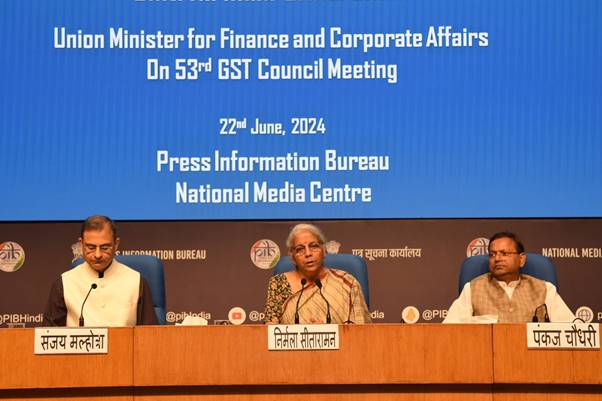
The 53rd GST Council met under the Chairpersonship of Union Minister for Finance & Corporate Affairs Smt. Nirmala Sitharaman in New Delhi today. The meeting was also attended by Union Minister of State for Finance Shri Pankaj Chaudhary, Chief Ministers of Goa and Meghalaya; Deputy Chief Ministers of Bihar, Haryana, Madhya Pradesh, and Odisha; besides Finance Ministers of States & UTs (with legislature) and senior officers of the Ministry of Finance & States/ UTs.
The GST Council inter alia made the following recommendations relating to changes in GST tax rates, measures for facilitation of trade and measures for streamlining compliances in GST.
Changes in GST Tax Rates:
I. Recommendations relating to GST rates on Goods
A. Changes in GST rates of goods
A uniform rate of 5% IGST will apply to imports of ‘Parts, components, testing equipment, tools and tool-kits of aircrafts, irrespective of their HS classification to provide a fillip to MRO activities subject to specified conditions.
All milk cans (of steel, iron and aluminium) irrespective of their use will attract 12% GST.
GST rate on ‘carton, boxes and cases of both corrugated and non-corrugated paper or paper-board’ (HS 4819 10; 4819 20) to be reduced from 18% to 12%.
All solar cookers whether single or dual energy source, will attract 12% GST.
To amend existing entry covering Poultry keeping Machinery attracting 12% GST to specifically incorporate “parts of Poultry keeping Machinery” and to regularise past practice on ‘as is where is’ basis in view of genuine interpretational issues.
To clarify that all types of sprinklers including fire water sprinklers will attract 12% GST and to regularise the past practice on ‘as is where is’ basis in view of genuine interpretational issues.
To extend IGST exemption on imports of specified items for defence forces for a further period of five years till 30th June, 2029.
To extend IGST exemption on imports of research equipment/buoys imported under the Research Moored Array for African-Asian-Australian Monsoon Analysis and Prediction (RAMA) programme subject to specified conditions.
To exempt Compensation Cess on the imports in SEZ by SEZ Unit/developers for authorised operations w.e.f. 01.07.2017.
Other Miscellaneous Changes
To exempt Compensation cess on supply of aerated beverages and energy drinks to authorised customers by Unit Run Canteens under Ministry of Defence.
To provide Adhoc IGST exemption on imports of technical documentation for AK-203 rifle kits imported for Indian Defence forces.
II. Recommendations relating to GST rates on services
To exempt the services provided by Indian Railways to general public, namely, sale of platform tickets, facility of retiring rooms/waiting rooms, cloak room services and battery-operated car services and to also exempt the Intra-Railway transactions. The issue for the past period will be regularized from 20.10.2023 to the date of issue of exemption notification in this regard.
To exempt GST on the services provided by Special Purpose Vehicles (SPV) to Indian Railway by way of allowing Indian Railway to use infrastructure built & owned by SPV during the concession period and maintenance services supplied by Indian Railways to SPV. The issue for the past will be regularized on ‘as is where is’ basis for the period from 01.07.2017 till the date of issue of exemption notification in this regard.
To create a separate entry in notification No. 12/2017- CTR 28.06.2017 under heading 9963 to exempt accommodation services having value of supply of accommodation up to Rs. 20,000/- per month per person subject to the condition that the accommodation service is supplied for a minimum continuous period of 90 days. To extend similar benefit for past cases.
Other changes relating to Services
Co-insurance premium apportioned by lead insurer to the co-insurer for the supply of insurance service by lead and co-insurer to the insured in coinsurance agreements, may be declared as no supply under Schedule III of the CGST Act, 2017 and past cases may be regularized on ‘as is where is’ basis.
Transaction of ceding commission/re-insurance commission between insurer and re-insurer may be declared as no supply under Schedule III of CGST Act, 2017 and past cases may be regularized on ‘as is where is’ basis.
GST liability on reinsurance services of specified insurance schemes covered by Sr. Nos. 35 & 36 of notification No. 12/2017-CT (Rate) dated 28.06.2017 may be regularized on ‘as is where is’ basis for the period from 01.07.2017 to 24.01.2018.
GST liability on reinsurance services of the insurance schemes for which total premium is paid by the Government that are covered under Sr. No. 40 of notification No. 12/2017-CTR dated 28.06.2017 may be regularized on ‘as is where is’ basis for the period from 01.07.2017 to 26.07.2018.
To issue clarification that retrocession is ‘re-insurance of re-insurance’ and therefore, eligible for the exemption under Sl. No. 36A of the notification No. 12/2017-CTR dated 28.06.2017.
To issue clarification that statutory collections made by Real Estate Regulatory Authority (RERA) are exempt from GST as they fall within the scope of entry 4 of No.12/2017-CTR dated 28.06.2017.
To issue clarification that further sharing of the incentive by acquiring bank with other stakeholders, where the sharing of such incentive is clearly defined under Incentive scheme for promotion of RuPay Debit Cards and low value BHIM-UPI transactions and is decided in the proportion and manner by NPCI in consultation with the participating banks is not taxable.
B. Measures for facilitation of trade:
Insertion of Section 128A in CGST Act, to provide for conditional waiver of interest or penalty or both, relating to demands raised under Section 73, for FY 2017-18 to FY 2019-20 : Considering the difficulties faced by the taxpayers, during the initial years of implementation of GST, the GST Council recommended, waiving interest and penalties for demand notices issued under Section 73 of the CGST Act for the fiscal years 2017-18, 2018-19 and 2019-20, in cases where the taxpayer pays the full amount of tax demanded in the notice upto 31.03.2025. The waiver does not cover demand of erroneous refunds. To implement this, the GST Council has recommended insertion of Section 128A in CGST Act, 2017.
2.Reduction of Government Litigation by Fixing monetary limits for filing appeals under GST: The Council recommended to prescribe monetary limits, subject to certain exclusions, for filing of appeals in GST by the department before GST Appellate Tribunal, High Court, and Supreme Court, to reduce government litigation. The following monetary limits have been recommended by the Council:
GSTAT: Rs. 20 lakhs
High Court: Rs. 1 crore
Supreme Court: Rs. 2 crores
3.Amendment in Section 107 and Section 112 of CGST Act for reducing the amount of pre-deposit required to be paid for filing of appeals under GST: The GST Council recommended reducing the amount of pre-deposit for filing of appeals under GST to ease cash flow and working capital blockage for the taxpayers. The maximum amount for filing appeal with the appellate authority has been reduced from Rs. 25 crores CGST and Rs. 25 crores SGST to Rs. 20 crores CGST and Rs. 20 crores SGST. Further, the amount of pre-deposit for filing appeal with the Appellate Tribunal has been reduced from 20% with a maximum amount of Rs. 50 crores CGST and Rs. 50 crores SGST to 10 % with a maximum of Rs. 20 crores CGST and Rs. 20 crores SGST.
4.Applicability of Goods and Services Tax on Extra Neutral Alcohol (ENA) Taxation of ENA under GST: The GST Council, in its 52nd meeting, had recommended to amend GST Law to explicitly exclude rectified spirit/Extra Neutral Alcohol (ENA) from the scope of GST when supplied for manufacturing alcoholic liquors for human consumption. The GST Council now recommended amendment in sub-section (1) of Section 9 of the CGST Act, 2017 for not levying GST on Extra Neutral Alcohol used for manufacture of alcoholic liquor for human consumption.
5.Reduction in rate of TCS to be collected by the ECOs for supplies being made through them: Electronic Commerce Operators (ECOs) are required to collect Tax Collected at Source (TCS) on net taxable supplies under Section 52(1) of the CGST Act. The GST Council has recommended to reduce the TCS rate from present 1% (0.5% CGST + 0.5% SGST/ UTGST, or 1% IGST) to 0.5 % (0.25% CGST + 0.25% SGST/UTGST, or 0.5% IGST), to ease the financial burden on the suppliers making supplies through such ECOs.
6. Time for filing appeals in GST Appellate Tribunal: The GST Council recommended amending Section 112 of the CGST Act, 2017 to allow the three-month period for filing appeals before the Appellate Tribunal to start from a date to be notified by the Government in respect of appeal/ revision orders passed before the date of said notification. This will give sufficient time to the taxpayers to file appeal before the Appellate Tribunal in the pending cases.
7.Relaxation in condition of section 16(4) of the CGST Act:
a) In respect of initial years of implementation of GST, i.e., financial years 2017-18, 2018-19, 2019-20 and 2020-21:
The GST Councilrecommended that the time limit to avail input tax credit in respect of any invoice or debit note under Section 16(4) of CGST Act, through any return in FORM GSTR 3B filed upto 30.11.2021 for the financial years 2017-18, 2018-19, 2019-20 and 2020-21, may be deemed to be 30.11.2021. For the same, requisite amendment in section 16(4) of CGST Act, retrospectively, w.e.f. 01.07.2017, has been recommended by the Council.
b) with respect to cases where returns have been filed after revocation:
The GST Councilrecommended retrospective amendment in Section 16(4) of CGST Act, to be made effective from July 1st, 2017, to conditionally relax the provisions of section 16(4) of CGST Act in cases where returns for the period from the date of cancellation of registration/ effective date of cancellation of registration till the date of revocation of cancellation of the registration, are filed by the registered person within thirty days of the order of revocation.
8.Change in due date for filing of return in FORM GSTR-4 for composition taxpayers from 30th April to 30th June: The GST Council recommended an amendment in clause (ii) of sub-rule (1) of Rule 62 of CGST Rules, 2017 and FORM GSTR-4 to extend the due date for filing of return in FORM GSTR-4 for composition taxpayers from 30th April to 30th June following the end of the financial year. This will apply for returns for the financial year 2024-25 onwards. The same would give more time to the taxpayers who opt to pay tax under composition levy to furnish the said return.
9.Amendment of Rule 88B of CGST Rules, 2017 in respect of interest under Section 50 of CGST Act on delayed filing of returns, in cases where the credit is available in Electronic Cash Ledger (ECL) on the due date of filing the said return: The GST Council recommended amendment in rule 88B of CGST Rules to provide that an amount, which is available in the Electronic Cash Ledger on the due date of filing of return in FORM GSTR-3B, and is debited while filing the said return, shall not be included while calculating interest under section 50 of the CGST Act in respect of delayed filing of the said return.
10.Insertion of Section 11A in CGST Act for granting power not to recover duties not levied or short-levied as a result of general practice under GST Acts: The GST Council recommended inserting a new Section 11A in CGST Act to give powers to the Government, on the recommendations of the Council, to allow regularization of non-levy or short levy of GST, where tax was being short paid or not paid due to common trade practices.
11. Refund of additional Integrated Tax (IGST) paid on account of upward revision in price of the goods subsequent to export: The GST Council recommended to prescribe a mechanism for claiming refund of additional IGST paid on account of upward revision in price of the goods subsequent to their export. This will facilitate a large number of taxpayers, who are required to pay additional IGST on account of upward revision in price of the goods subsequent to export, in claiming refund of such additional IGST.
Clarification regarding valuation of supply of import of services by a related person where recipient is eligible to full input tax credit: The Council recommended to clarify that in cases where the foreign affiliate is providing certain services to the related domestic entity, for which full input tax credit is available to the said related domestic entity, the value of such supply of services declared in the invoice by the said related domestic entity may be deemed as open market value in terms of second proviso to rule 28(1) of CGST Rules. Further, in cases where full input tax credit is available to the recipient, if the invoice is not issued by the related domestic entity with respect to any service provided by the foreign affiliate to it, the value of such services may be deemed to be declared as Nil, and may be deemed as open market value in terms of second proviso to rule 28(1) of CGST Rules.
Clarification regarding availability of Input Tax Credit (ITC) on ducts and manholes used in the network of Optical Fiber Cables (OFCs): The Council recommended to clarify that input tax credit is not restricted in respect of ducts and manhole used in network of optical fiber cables (OFCs), under clause (c) or under clause (d) of sub-section (5) of section 17 of CGST Act.
Clarification on the place of supply applicable for custodial services provided by banks: The Council recommended to clarify that place of supply of Custodial services supplied by Indian Banks to Foreign Portfolio Investors is determinable as per Section 13(2) of the IGST Act, 2017.
Clarification on valuation of corporate guarantee provided between related persons after insertion of Rule 28(2) of CGST Rules, 2017: GST Council recommended amendment of rule 28(2) of CGST Rules retrospectively with effect from 26.10.2023 and issuance of a circular to clarify various issues regarding valuation of services of providing corporate guarantees between related parties. It is inter alia being clarified that valuation under rule 28(2) of CGST Rules would not be applicable in case of export of such services and also where the recipient is eligible for full input tax credit.
Clarification regarding applicability of provisions of Section 16 (4) of CGST Act, 2017, in respect of invoices issued by the recipient under Reverse Charge Mechanism (RCM): The Council recommended to clarify that in cases of supplies received from unregistered suppliers, where tax has to be paid by the recipient under reverse charge mechanism (RCM) and invoice is to be issued by the recipient only, the relevant financial year for calculation of time limit for availment of input tax credit under the provisions of section 16(4) of CGST Act is the financial year in which the invoice has been issued by the recipient.
17.Clarification on following issues to provide clarity to trade and tax officers and to reduce litigation:
Clarification on taxability of re-imbursement of securities/shares as ESOP/ESPP/RSU provided by a company to its employees
Clarification on requirement of reversal of input tax credit in respect of amount of premium in Life Insurance services, which is not included in the taxable value as per Rule 32(4) of CGST Rules.
Clarification on taxability of wreck and salvage values in motor insurance claims
Clarification in respect of Warranty/ Extended Warranty provided by Manufacturers to the end customers
Clarification regarding availability of input tax credit on repair expenses incurred by the insurance companies in case of reimbursement mode of settlement of motor vehicle insurance claims.
Clarification on taxability of loans granted between related person or between group companies.
Clarification on time of supply on Annuity Payments under HAM Projects.
Clarification regarding time of supply in respect of allotment of Spectrum to Telecom companies in cases where payment of licence fee and Spectrum usage charges is to be made in instalments.
Clarification relating to place of supply of goods supplied to unregistered persons, where delivery address is different from the billing address
Clarification on mechanism for providing evidence by the suppliers for compliance of the conditions of Section 15(3)(b)(ii) of CGST Act, 2017 in respect of post-sale discounts, to the effect that input tax credit has been reversed by the recipient on the said amount.
Clarifications on various issues pertaining to special procedure for the manufacturers of the specified commodities, like pan masala, tobacco etc.
18. The Council recommended amendment in section 140(7) of CGST Act retrospectively w.e.f. 01.07.2017 to provide for transitional credit in respect of invoices pertaining to services provided before appointed date, and where invoices were received by Input Service Distributor (ISD) before the appointed date.
19. The Council recommended providing a new optional facility by way of FORM GSTR-1A to facilitate the taxpayers to amend the details in FORM GSTR-1 for a tax period and/ or to declare additional details, if any, before filing of return in FORM GSTR-3B for the said tax period. This will facilitate taxpayer to add any particulars of supply of the current tax period missed out in reporting in FORM GSTR-1 of the said tax period or to amend any particulars already declared in FORM GSTR-1 of the current tax period (including those declared in IFF, for the first and second months of a quarter, if any, for quarterly taxpayers), to ensure that correct liability is auto-populated in FORM GSTR-3B.
20. The Council recommended that filing of annual return in FORM GSTR-9/9A for the FY 2023-24 may be exempted for taxpayers having aggregate annual turnover upto two crore rupees.
21. Amendment was recommended to be made in section 122(1B) of CGST Act retrospectively w.e.f. 01.10.2023, so as to clarify that the said penal provision is applicable only for those e-commerce operators, who are required to collect tax under section 52 of CGST Act, and not for other e-commerce operators.
22. The Council recommended amendment in rule 142 of CGST Rules and issuance of a circular to prescribe a mechanism for adjustment of an amount paid in respect of a demand through FORM GST DRC-03 against the amount to be paid as pre-deposit for filing appeal.
Other measures pertaining to Law and Procedures
23.Rolling out of bio-metric based Aadhaar authentication on All-India basis: The GST Council recommended to roll-out the biometric-based Aadhaar authentication of registration applicants on pan-India basis in a phased manner. This will strengthen the registration process in GST and will help in combating fraudulent input tax credit (ITC) claims made through fake invoices.
24.Amendments in Section 73 and Section 74 of CGST Act, 2017 and insertion of a new Section 74A in CGST Act, to provide for common time limit for issuance of demand notices and orders irrespective of whether case involves fraud, suppression, willful misstatement etc., or not: Presently, there is a different time limit for issuing demand notices and demand orders, in cases where charges of fraud, suppression, willful misstatement etc., are not involved, and in cases where those charges are involved. In order to simplify the implementation of those provisions, the GST Council recommended to provide for a common time limit for issuance of demand notices and orders in respect of demands for FY 2024-25 onwards, in cases involving charges of fraud or willful misstatement and not involving the charges of fraud or willful misstatement etc. Also, the time limit for the taxpayers to avail the benefit of reduced penalty, by paying the tax demanded along with interest, has been recommended to be increased from 30 days to 60 days.
25. The Council recommended amendment in section 171 and section 109 of CGST Act, 2017 to provide asunset clause for anti-profiteering under GST and to provide for handling of anti-profiteering cases by Principal bench of GST Appellate Tribunal (GSTAT). Council has also recommended the sun-set date of 01.04.2025 for receipt of any new application regarding anti-profiteering.
26.Amendment in Section 16 of IGST Act and section 54 of CGST Act to curtail refund of IGST in cases where export duty is payable: The Council recommended amendments in section 16 of IGST Act and section 54 of CGST Act to provide that the refund in respect of goods, which are subjected to export duty, is restricted, irrespective of whether the said goods are exported without payment of taxes or with payment of taxes, and such restrictions should also be applicable, if such goods are supplied to a SEZ developer or a SEZ unit for authorized operations.
27. The threshold for reporting of B2C inter-State supplies invoice-wise in Table 5 of FORM GSTR-1 was recommended to be reduced from Rs 2.5 Lakh to Rs 1 Lakh.
28. The Council recommended that return in FORM GSTR-7, to be filed by the registered persons who are required to deduct tax at source under section 51 of CGST Act, is to be filed every month irrespective of whether any tax has been deducted during the said month or not. It has also been recommended that no late fee may be payable for delayed filing of Nil FORM GSTR-7 return. Further, it has been recommended that invoice-wise details may be required to be furnished in the said FORM GSTR-7 return.
Note: The recommendations of the GST Council have been presented in this release containing major item of decisions in simple language for information of the stakeholders. The same would be given effect through the relevant circulars/ notifications/ law amendments which alone shall have the force of law.


 Business So Simple