Bhagavad Gita: Yada te moha-kalilam buddhir vyatitarisyati (Test 52, Contents of the Gita Summarized)

Yada te moha-kalilam buddhir vyatitarisyati
Tada gantasi nirvedam srotavyasya srutasya ca
(Text 52, Contents of the Gita Summarized)

Meaning: When your intelligence has passed out of the dense forest of delusion, you shall become indifferent  to all that has been heard and all that is to be heard.

Yada: when, te: your, moha: of illusion, kalilam: dense forest, buddhih: transcendental service with intelligence, vyatitarisyati :surpasses,tada: at that time, gantaasi: you shall go, nirvedam:callousness, srotavyasya: towards all that is to be heard, srutasya: all that is already heard, ca: also.

Sunday Special: Preparation for the flight

Preparation for the flight


Desirelessness

Desirelessness is the main condition for progress in spirituality. Any enjoyment of worldly objects leaves some scar, an  impression on the mind which induces desires for repletion of the experience and also for enjoyments not experienced so far. He is rare Sadhaka who abstain from such desires not only for enjoyment but for liberation too. Detachment from sense objects is salvation while attachment for sense objects is bondage. Repetition of necessity for desirelessness again and again as the main preparation required for the flight into the Absolute.
Witness  attitude: 

Bhogi who is after more and more of enjoyment and Yogi who is bent on renouncing all enjoyments, are both qualitatively on the same plan. The minds of both are on ‘enjoyment’one for grasping it and the other for leaving it. One has to go beyond both by adopting the attitude of a witness(Sakshi),i.e. by neither accepting nor rejecting.
Effortlessness and inaction

The Jivanmukta (liberated while alive) is a master idler (who deems it too much of an exertion even to go on shutting and opening his eyelids) . He remains awake in eternal vigilance and remains drowned in the unique happiness of the Self. He is just doing those actions which are forced on him by destiny without judging whether they are good or bad. His actions are just like those of a child. One should realize that nothing whatsoever is ever done by the Self which is actionless. One has nothing to gain by striving (as one is already ever liberated) nor does one sustain any loss by inaction.  All happiness and misery as also birth and death are pre-destined by the effects of past actions (Prarabdha). There is nothing to be accomplished.
Control of mind

When a person is established in Self knowledge by leaving off the body consciousness, the control of mind becomes a natural by-product. One has to divorce oneself thoroughly from the sense of doership and being an experience. All the modifications of the mind, including the ego, get dissolved-this is essential for Self Realisation. A sadhak who practices control of the mind may succeed temporarily, but the moment he stops the practice all desires and fancies take control of him. The complete stillness of the mind results without any effort or practice through mere Self–Knowledge.


(Notes prepared from “ASHTAVAKRA SAMHITA“)


Bhagavad Gita: Buddhi-yukta hi Phalam tyaktva manisinah (Text 51, Ch2, Contents of Gita Summarized)


Karma-jam buddhi-yukta hi
Phalam tyaktva manisinah
Janma-bandha-vinirmuktah
Padam gacchanty anamayam
 (Text 51, Ch2, Contents of Gita Summarized)
Meaning:By thus engaging in devotional service to the Lord. Great sages or devotees free themselves from the results of work in the material world. In this way they become free from the cycle of birth and death and attain the state beyond all miseries [ by going back to Godhead].
Karma-jam: due to fruitive activities,  buddhi-yukta: being engaged in devotional service,  hi: certainly, Phalam: results,  tyaktva: giving up,  manisinah: great sages or devotees, Janma-bandha: from the  bondage of birth and death, vinirmuktah: liberated, Padam: position,  gacchanti: they reach,  anamayam: without miseries.

ITAT allowed sec. 54F relief to trust created for sole beneficiary of individual


Assessee, a private non-discretionary trust, created for sole beneficiary, was entitled to deduction under section 54F in respect of sale of flat and said deduction could not be denied merely on ground that assessee was not an individual or HUF.

In favour of assessee.


Refer full judgement:


[2017] 81 taxmann.com 367 (Mumbai – Trib.)
IN THE ITAT MUMBAI BENCH ‘B’
Balgopal Trust
v.
Assistant Commissioner of Income-tax, 18(1), Mumbai
SHAMIN YAHYA, ACCOUNTANT MEMBER
AND PAWAN SINGH, JUDICIAL MEMBER
IT APPEAL NO. 5661 (MUM.) OF 2016
[ASSESSMENT YEAR 2012-13]
MAY  3, 2017 
Section 54F, read with section 161, of the Income-tax Act, 1961 – Capital gains – Exemption of in case of investment in residential house (Claim for exemption) – Assessment year 2012-13 – Assessee was a private non-discretionary trust created for a sole beneficiary ‘V’ – During relevant year, it earned capital gain on sale of flat – Assessee’s claim for deduction under section 54F was rejected on ground that said deduction was allowable only to individual or HUF – Whether in terms of section 161, representative assessee is subject to same duties, responsibilities and liabilities as if income was received by his beneficiary, and whatever benefits beneficiary will get in said assessment must be made available to trustee while assessing him under section 161 – Held, yes – Whether since it was only by virtue of section 161 that assessee trust had been assessed for income that was for benefit of sole beneficiary, assessee was entitled to deduction under section 54F and same could not be denied on ground that it was an AOP and not an individual or HUF – Held, yes [Para 9][In favour of assessee]
FACTS
  The assessee was a private non-discretionary Trust. ‘VS’ and ‘S’ were the trustees of the said trust and their daughter, ‘V’ was the sole beneficiary of the said Trust. The said trust sold 1000 unquoted equity shares of ‘SC’ Ltd. to ‘SCS’ at Rs. 91,000 per share totalling to Rs. 9.10 crores.
  ‘SCS’ agreed to give a further consideration of Rs. 8.16 crores to the assessee by way of a flat valued at Rs. 15.63 crores. The difference of Rs. 7.46 crores was to be paid by the assessee to ‘SCS’.
  The cost of the flat was arrived at Rs. 15.63 crores and adding Rs. 86.01 lakhs towards stamp duty and registration charges, the assessee claimed exemption under section 54F for Rs. 16.50 crores.
  The Assessing Officer held that deduction under section 54F was allowable only to individual or HUF and not to any other person. The assessee being specific trust, the Assessing Officer held that it was not eligible for deduction under section 54F and disallowed the same. The Assessing Officer further went on to discuss that the possession of the flat was not taken within 3 years from the date of transfer and therefore the assessee was not eligible for deduction under section 54F.
  The Commissioner (Appeals) confirmed the action of the Assessing Officer as regard holding that assessee being a AOP could not be granted benefit of section 54F.
  On second appeal :
HELD
  The issue arises for consideration is as to whether the assessee trust, which is for the sole benefit of an individual, will be entitled to deduction under section 54F or not, when its status is that of AOP. As per section 54F the benefits of this section is available to individual or Hindu undivided family (HUF). The jurisdictional High Court in the case of Mrs. Amy F. Cama v. CIT [1994] 237 ITR 82 (Bom.) has elaborately considered the same issue. The jurisdictional High Court was dealing with assessee trust’s claim for deduction for purchase price of the flat from capital gain as per section 54. The jurisdictional High Court has held that the assessee trust was entitled for the same. The Court had expounded that section 161, makes a representative assessee subject to the same duties, responsibilities and liabilities as if the income was received by him beneficially. The fiction is created as it was never the object or intention of the Act to charge tax upon persons other than the beneficial owner of the income. Whatever benefits the beneficiary will get in the said assessment must be made available to the trustee while assessing him under section 161. [Para 7]
  The above decision of the High Court squarely applies on the present case, when one is concerned with the issue of exemption/deduction under section 54F. Section 54 is also applicable to individuals and HUF. However jurisdictional High Court had expounded that as per the mandate of section 161, the act doesn’t intend to charge tax upon persons other than the beneficial owner of the income. Whatever benefits the beneficiary will get in a particular assessment must be made available to the trustee while assessing him under section 161. In the present case, the issue is benefit of investment made in purchase of flat for deduction under section 54F by the trustees and the sole beneficiary of the trust is the individual ‘V’. Hence the ratio emanating from the above jurisdictional High court decision is squarely applicable on the facts of the case. [Para 8]
  From the above case law it is amply clear that by virtue of section 161 of the IT Act, the representative assessee is subject to the same duties, responsibilities and liabilities as if the income was received by his beneficiary, and whatever benefits the beneficiary will get in the said assessment must be made available to the trustee while assessing him under section 161. It is clear that it is only by virtue of section 161 that assessee trust had been assessed for the income that was for benefit of sole beneficiary. According following the precedent it is held that the assessee was principally entitled to deduction under section 54F and it cannot be said that since it is an AOP and not a individual or HUF the said exemption/deduction should be denied. [Para 9]
  Comings to the merits of claim of deduction under section 54F. This has been denied by the Assessing Officer. However the Commissioner (Appeals) has not adjudicated the same since she has held that assessee being an AOP is not entitled to benefit under section 54F. As already held in the earlier part of this order that assessee is legally entitled to claim deduction under section 54F, the issue of allowance of deduction under section 54F on merits needs adjudication by the Commissioner (Appeals). Accordingly, this issue is remitted to the file of the Commissioner (Appeals). [Para 10]
  In the result this appeal filed by the assessee stands allowed for statistical purposes.
CASE REVIEW
Mrs. Amy F. Cama v. CIT [1994] 237 ITR 82 (Bom.) (para 8) followed.
CASES REFERRED TO
Raghunath Dass Sethi v. CIT [2005] 277 ITR 341/[2004] 141 Taxman 319 (Punj. & Har.) (para 4), Mrs. Amy F. Cama v. CIT [1994] 237 ITR 82 (Bom.) (para 5), Niti Trust v. CIT [1996] 221 ITR 435/[1997] 90 Taxman 169 (Guj.) (para 5), CIT v. Deepak Family Trust (No. 1) [1995] 211 ITR 575/[1994] 72 Taxman 406 (Guj.) (para 5) and CIT v. Shri Krishna Bandar Trust [1993] 201 ITR 989 (para 8).
Prakash K. Jotwani for the Appellant. N.P. Singh for the Respondent.
ORDER
Shamim Yahya, Accountant Member – This appeal by the assessee is directed against order of Ld. CIT-A dated 28.07.2016 and pertains to assessment year 2012-13.
2. The grounds of appeal read as under:
1. Ground No: Denial of deduction of Rs. 16,50,00,000/- u/s 54F
  (a) The learned CIT (A) erred in confirming the denial of deduction u/s. 54F of Rs. 16,50,00,000/-, on the ground that the status of the Appellant is Association of Persons (AOP) and the deduction u/s 54F is applicable only to ‘Individual’ or ‘HUF’.
  (b) The learned CIT(A) failed to take into consideration that the Appellant is a Specific Trust which was incorporated for the benefit of a sole Beneficiary (Ms. Vidushi Somani), who is an ‘Individual’ and therefore the Trust/Trustee are merely Representative Assessees u/s. 161, whose status is dependent on the status of the ultimate Beneficiary.
2.   Without prejudice, the learned CIT (A) erred in not adjudicating the other grounds of appeal on merits by stating that the other grounds, being consequential, are dismissed. While the appellant had a case on merits and the same was argued before CIT (A) and submissions filed thereon.
3.   The Appellant craves leave to add, alter or amend the Grounds of Appeal at or before the hearing of the appeal.
3. The assessee is a private non discretionary Trust. Mr. Vinay Somani and Mrs. Shrilekha Somani are the trustees of the said trust and their daughter, Ms. Vidushi Somani is the sole beneficiary of the said trust. The said trust has sold 1000 unquoted equity shares of M/s. Somani and Compnay Pvt. Ltd to Satguru Corporate Services P. Ltd. at Rs.91,000/- per share totalling to Rs.9,10,00,000/-, Satguru Corporate Services P. Ltd agreed to give a further consideration of Rs.8,16,49,219/- to the assessee by way of a flat valued at Rs.15,63,98,521/-. The difference of Rs.7,46,59,302/- was to be paid by the assessee to M/s. Sadguru Corporate Services Pvt. Ltd. The said residential flat is located at 301, Signia Isles, BKC, Mumbai. Thus the total consideration received by the assessee for selling 1000 unquoted shares of M/s. Somani and Co. Pvt. Ltd. is Rs17,26,49,2019/- (by cheque Rs.9,10,00,000/- and Rs.8,16,49,219/- in kind by way of flat.) The cost of the flat was arrived at Rs.15,63,98,521/- and adding Rs.86,01,476/- towards stamp duty and registration charges, the appellant has claimed exemption u/s.54F for Rs.16,50,00,000/-. An amount of Rs.7,46,59,302/- which was to be paid by the assessee to Sadguru Corporate Services Pvt. Ltd. was kept in the capital gains fixed deposits. The AO held that deduction u/s. 54F is allowable only to individual or HUF and not to any other person. The present assessee being specific trust, it was held by the AO that it is not eligible for deduction u/s. 54F and disallowed the same. The AO further went on to discuss that the possession of the flat was not taken within 3 years from the date of transfer and therefore the appellant was not eligible for deduction u/s. 54F.
4. Upon assessee’s appeal Ld. CIT-A confirmed the action of the A.O as regard holding that assessee being a AOP cannot be granted benefit of section 54F. She distinguished the decision relied upon by the assessee’s counsel. She placed reliance upon the order of Hon’ble Punjab & Haryana High Court in the case of Raghunath Dass Sethi v. CIT [2005] 277 ITR 341/[2004] 141 Taxman 319 (Punj. & Har.). She held that being AOP assessee cannot be entitled to deduction u/s. 54. As regards the issue regarding disallowance of deduction of u/s. 54F on other aspect as held against the assessee by the A.O Ld. CIT-A did not adjudicate those grounds in view of the decision on the first issue. Against this order assessee is in appeal before us.
5. Ld. Counsel of the assessee submitted that the issue is squarely covered in favour of the assessee by the decision of Hon’ble jurisdictional High Court in the case of Mrs. Amy F. Cama v. CIT [1994] 237 ITR 82 (Bom.). He further submitted that decision by other High Courts also support the assessee’s case. For this proposition Ld. Counsel placed reliance upon the decision of Hon’ble Gujarat High Court in the case of Niti Trust v. CIT [1996] 221 ITR 435/[1997] 90 Taxman 169. Ld. Counsel further reliance upon CBDT direction dated 01.08.2012
6. Per contra Ld. D.R submitted that these cases are not applicable. He submitted that these case laws are with reference to the applicability of Section 161 of the Income Tax Act. However the issue before us is regarding special provisions relating to Section 54F of the I.T Act. He submitted that it is clearly prescribed in the Act that Section 54F exemption will be applicable to individual or HUF. Assessee being AOP is not entitled to the said exemption. As regards the CBDT circular referred by the Ld. Counsel of the assessee he submitted that firstly CBDT circulars are not binding on ITAT and secondly the said circular is mere direction of accepting of returns. He submitted that the same cannot be treated as direction to make assessment in a particular manner.
7. Upon careful consideration we find that the issue before us is as to whether the assessee trust, which is for the sole benefit of an individual, will be entitled to deduction u/s. 54F or not, when its status is that of A.O.P. As per Section 54F the benefits of this section is available to individual or Hindu undivided family (HUF). Hon’ble jurisdictional High Court in the case of Mrs. Amy F. Cama (Supra) has elaborately considered the same issue. The jurisdictional High Court was dealing with assessee trust’s claim for deduction for purchase price of the flat from capital gain as per Section 54 of the Act. The Hon’ble jurisdictional High Court has held that the assessee trust was entitled for the same. The Hon’ble Court had expounded that Section 161 of the I.T Act, 1961, makes a representative assessee subject to the same duties, responsibilities and liabilities as if the income was received by him beneficially. The fiction is created as it was never the object or intention of the Act to charge tax upon persons other than the beneficial owner of the income. Whatever benefits the beneficiary will get in the said assessment must be made available to the trustee while assessing him under section 161.
8. We find that above decision of Hon’ble High Court squarely applies on the present case, when we are concerned with the issue of exemption/deduction u/s. 54F. Section 54 is also applicable to individuals and HUF. However Hon’ble jurisdictional High court had expounded that on per the mandate of Section 161, the I.T. Act doesn’t intend to charge tax upon persons other than the beneficial owner of the income. Whatever benefits the beneficiary will get in a particular assessment must be made available to the trustee while assessing him u/s. 161. In the present case before us also the issue is benefit of investment made in purchase of flat for deduction u/s. 54F of the Act by the trustees and the sole beneficiary of the trust is the individual Ms. Vidushi Somani. Hence the ratio emanating from the above jurisdictional High court decision is squarely applicable on the facts of the case. The distinction referred by the Ld. D.R is devoid of cogency. Furthermore, Hon’ble Gujarat High court in the case of Niti Trust (Supra) has similarly granted benefit of assessment of a trust in the capacity of a individual. For this proposition Hon’ble High Court had relied upon the decision of Hon’ble Gujarat High Court in the case of CIT v. Deepak Family Trust (No. 1) [1995] 211 ITR 575/[1994] 72 Taxman 406 (Guj.) and Calcutta High Court decision in the case of CIT v. Shri Krishna Bandar Trust [1993] 201 ITR 989.
9. From the above case laws it is amply clear that by virtue of Section 161 of the I.T. Act the representative assessee is subject to the same duties, responsibilities and liabilities as if the income was received by him beneficiary, and whatever benefits the beneficiary will get in the said assessment must be made available to the trustee while assessing him u/s. 161. It is clear that it is only by virtue of u/s. 161 that the trust has been assessed for the income that is for benefit of sole beneficiary. According respectfully following the precedent we hold that the assessee is principally entitled to deduction u/s. 54F and it cannot be said that since it is a AOP and not a individual or HUF the said exemption/deduction should be denied.
10. Now we come to the merits of claim of deduction u/s. 54F. This has been denied by the A.O. However the Ld. CIT-A has not adjudicated the same since she has held that assessee being an AOP is not entitled to benefit u/s. 54F. Since we have already held in the earlier part of this order that assessee is legally entitled to claim deduction u/s. 54F, the issue of allowance of deduction u/s. 54F on merits needs adjudication by the CIT-A. Accordingly, we remit this issue to the file of the Ld. CIT-A. Ld. CIT-A is directed to consider the issue of merits of deduction claim u/s. 54F and decide accordingly. Needles to add assessee should be granted adequate opportunity of being heard.
In the result this appeal filed by the assessee stands allowed for statistical purposes.

GST: FAQs Series 21 : Returns Process and matching of Input Tax Credit (Updated Statutory provisions & Rules 03 June 2017)

Returns Process and matching of Input Tax Credit
(Updated Statutory provisions & Rules 03 June 2017)


Q 1. What is the purpose of returns?

Ans.

a) Mode for transfer of information to tax administration;
b) Compliance verification program of taxadministration;
c) Finalization of the tax liabilities of the taxpayer within stipulated period of limitation; to declare tax liability for a given period;
d) Providing necessary inputs for taking policy decision;
e) Management of audit and anti-evasion programs of tax administration.

Q 2. Who needs to file Return in GST regime?

Ans. Every person registered under GST will have to file returns in some form or other. A registered person will have to file returns either monthly (normal supplier) or quarterly basis (Supplier opting for composition scheme). An ISD will have to file monthly returns showing details of credit distributed during the particular month. A person required to deduct tax (TDS) and persons required to collect tax (TCS) will also have to file monthly returns
showing the amount deducted/collected and other details as may be prescribed. A non-resident taxable person will also have to file returns for the period of activity undertaken.

Q 3. What type of outward supply details are to be filed in the return?

Ans. A normal registered taxpayer has to file the outward supply details in GSTR-1 in relation to various types of supplies made in a month, namely outward supplies to registered persons, outward supplies to unregistered persons (consumers), details of Credit/Debit Notes, zero rated, exempted and non-GST supplies, exports, and advances received in relation to future supply.

Q 4. Is the scanned copy of invoices to be uploaded along with GSTR-1?

Ans. No scanned copy of invoices is to be uploaded. Only certain prescribed fields of information from invoices need to be uploaded.

Q 5. Whether all invoices will have to be uploaded?

Ans. No. It depends on whether B2B or B2C plus whether Intra-state or Inter-state supplies.

For B2B supplies, all invoices, whether Intra-state or Interstate supplies, will have to be uploaded. Why So? Because ITC will be taken by the recipients, invoice matching is
required to be done.

In B2C supplies, uploading in general may not be required as the buyer will not be taking ITC. However still in order to implement the destination based principle, invoices of
value more than Rs.2.5 lacs in inter-state B2C supplies will have to be uploaded. For inter-state invoices below Rs. 2.5 lacs and all intra-state invoices, state wise summary will
be sufficient.

Q 6. Whether description of each item in the invoice will have to be uploaded?

Ans. No. In fact, description will not have to be uploaded. Only HSN code in respect of supply of goods and Accounting code in respect of supply of services will have to be fed. The minimum number of digits that the filer will have to upload would depend on his turnover in the last year.

Q 7. Whether value for each transaction will have to be fed? What if no consideration?

Ans. Yes. Not only value but taxable value will also have to be fed. In some cases, both may be different. In case there is no consideration, but it is supply by virtue of schedule 1, the taxable value will have to be worked out as prescribed and uploaded.

Q 8. Can a recipient feed information in his GSTR-2 which has been missed by the supplier?

Ans. Yes, the recipient can himself feed the invoices not uploaded by his supplier. The credit on such invoices will also be given provisionally but will be subject to matching.
On matching, if the invoice is not uploaded by the supplier, both of them will be intimated. If the mismatch is rectified, provisional credit will be confirmed. But if the mismatch continues, the amount will be added to the output tax liability of the recipient in the returns for the month subsequent to the month in which such discrepancy was
communicated.

Q 9. Does the taxable person have to feed anything in the GSTR-2 or everything is autopopulated from GSTR-1?

Ans. While a large part of GSTR-2 will be auto-populated, there are some details that only recipient can fill like details of imports, details of purchases from non-registered or composition suppliers and exempt/non-GST/nil GST supplies etc.

Q 10. What if the invoices do not match? Whether ITC is to be given or denied? If denied, what action is taken against supplier?

Ans. If invoices in GSTR-2 do not match with invoices in counter-party GSTR-1, then such mismatch shall be intimated to the supplier. If the mismatch continues even after it is made known to both and still it is not rectified.

Mismatch can be because of two reasons. First, it could be due to mistake at the side of the recipient, and in such a case, no further action is required. Secondly, it could be possible that the said invoice was issued by supplier but he did not upload it and pay tax on it. In such a case, the ITC availed by the recipient would be added to his output tax liability, in short, all mismatches will lead to proceedings if the supplier has made a supply but not paid tax on it.


Refer extract of  Chapter IX (Sec 37 to 48) of CGST Act (Return provisions) on following link: GST RETURNS: CHAPTER IX (SEC 37 TO 48) OF CGST ACT & UPDATED RULES 03 JUNE 2017

http://gstindia1.blogspot.in/p/37.html

Refer Income tax, GST & Company Law daily updates on link

   http://knowledgedailyrefresher.blogspot.in

Disclaimer:

This FAQ on GST compiled by NACEN and vetted by the Source Trainers is based on the CGST/SGST/UTGST/IGSTAct(s). This FAQ is for training and academic purposes only.

The information in this blogger is reproduced from FAQ on GST publised by CBEC updated on 31 March 2017 and is not intended to be treated as legal ad vice or opinion. For greater details, you are requested to refer to the respective CGST/SGST/UTGST/IGST Acts.

The FAQs refer to CGST and SGST Acts as CGST/SGST as CGST Act and SGST Act are identical in most of the provisions. CGST Act has been introduced in the Parliament. The SGST Acts will be passed by respective state legislatures. A few provisions may be specific to state and may not be in CGST Act.

Bhagavad Gita: Yogah karmasu kausalam (Text 50, Ch2, Contents of Gita Summarized)

Buddhi-yukto jahatiha
Ubhe sukrta-duskrte
Tasmad yogaya yujyasva
Yogah karmasu kausalam 
(Text 50, Ch2, Contents of Gita Summarized)

Meaning: A man engaged in devotional service rids himself of both good and bad actions even in this life. Therefore strive for yoga, which is the art of all work.


Buddhi-yukto : one who is engaged in devotional service, jahati: can get ride of, iha: in this life, Ubhe: both,  sukrta-duskrte: good and bad results; Tasmat: therefore,  yogaya : for the sake of devotional service, yujyasva: be so engaged, Yogah : Krisna consciouseness (purifying process of resultant action); karmasu: in all activities,  kausalam: art

Restriction on cash transactions (Section 269ST) w.e.f. 1-4-2017

Restriction on cash transactions [Section 269ST]

1. Restriction on cash transactions

Section 269ST has been inserted, with effect from 1-4-2017, to provide for restriction on undertaking cash transactions. It provides that no person shall receive an amount of two lakh rupees or more,

(a) in aggregate from a person in a day; or
(b) in respect of a single transaction; or
(c) in respect of transactions relating to one event or occasion from a person,
otherwise than by an account payee cheque or an account payee bank draft or use of electronic clearing system through a bank account. (“permissible modes”)

The aforesaid restriction shall not apply to the following:
(a) Government,
(b) any banking company,
(c) post office savings bank or co-operative bank,
(d) transactions of the nature referred to in section 269SS;
(e) such other persons or class of persons or receipts, as may be specified by the Central Government by notification in the Official Gazette.
For the aforesaid purposes,
(a) banking company shall have the meaning assigned to it in Explanation (i) to section 269SS.
(b) co-operative bank shall have the meaning assigned to it in Explanation (ii) to section 269SS.
Explanations (i)/(ii) of section 269SS read as follows:
“(i) “banking company” means a company to which the provisions of the Banking Regulation Act, 1949 (10 of 1949) applies and includes any bank or banking institution referred to in section 51 of that Act;
(ii) “co-operative bank” shall have the same meaning as assigned to it in Part V of the Banking Regulation Act, 1949 (10 of 1949);”
The objective behind insertion of section 269ST as spelt out in Memorandum explaining the provision of the Finance Bill is as follows:
Restriction on cash transactions
In India, the quantum of domestic black money is huge which adversely affects the revenue of the Government creating a resource crunch for its various welfare programmes. Black money is generally transacted in cash and large amount of unaccounted wealth is stored and used in form of cash.
In order to achieve the mission of the Government to move towards a less cash economy to reduce generation and circulation of black money, it is proposed to insert section 269ST in the Act to provide that no person shall receive an amount of three lakh rupees or more,—
(a) in aggregate from a person in a day;
(b) in respect of a single transaction; or
(c) in respect of transactions relating to one event or occasion from a person,
otherwise than by an account payee cheque or account payee bank draft or use of electronic clearing system through a bank account.
The restriction is on the recipient and not on the payer.

The Notes on Clauses mention that the restriction under section 269ST shall not apply to “any receipt from sale of agricultural produce by any person being an individual or HUF in whose hands such receipts constitute agricultural income“. No such exception is found in the text of the provision.

2. Meaning of word “Receive”

The section applies if a person “receives” an amount. The term receipt has been judicially explained as follows:
(a) “The word “receive” has been interpreted:
“To receive means to get by a transfer, as to receive a gift, to receive a letter, to receive money.”
Ballentine’s Law Dictionary, 1093.
Webster’s New International Dictionary (2d ed.), 2076, gives the following definition:
“To come into possession of, get, acquire, or the like, from any source outside of oneself.”
In other words, to “receive” seems to imply the taking into actual possession of some object which may be real or personal property.
As a matter of fact, the results obtained in the statutes, using the words “received” and “transferred,” are identical.”
[In re McCullough’s Estate, 193 Wash. 145, 74 P.2d 877 (1928)]
(b) “To receive means to get by a transfer, as, to receive a gift, to receive a letter, or to receive money and involves an actual receipt.”
(The Major Law Lexicon by P. Ramanatha Aiyar, 4th Edn., Vol. 5; College Law Dictionaries by Dr. Avtar Singh, 2nd Edn.)
(c) “Property is “received” when it is within the power of its receiver to appropriate it, even though some definitive understood and determined act is still to be done. Taxon Oil & Land Co. of Texas v. U. S., C.C.A.Tex., 115 F.2d 647, 650.”
(Permanent Edition of Words & Phrases)
(d) “The ‘receipt’ of income refers to the first occasion when the recipient gets the money under his own control.
[Keshav Mills Ltd. v. CIT [1953] 23 ITR 230 (SC)]
3. Meaning of word “Amount”

The restriction is on receipt of amount. The term “amount” has been explained as follows:
(a) “1. Aggregate sum; 2. Quantity; 3. To come up to, resulting; 4. Equalling in effect.”
[Legal Glossary published by the Government of India (1992 Edition)]
(b) “Aggregate sum; quantity; to come up to; resulting; equalling in effect.”
(College Law DictionarybyDr. Avtar Singh, 22nd Edn.)
(c) “The substance, or result of a thing; the total or aggregate sum. Quantity; to come up to, resulting; equalling in effect.”
(P. Ramanatha Aiyar’s The Law Lexicon, 3rd Edn., 2012)
(d) “1. The sum, total of two or more quantities or sums; aggregate. 2. the sum of the principal and interest of a loan. 3. quantity; measure a great amount of resistance.”
(Random House Compact Unabridged Dictionary, 2nd Edn.)
Further, the Explanatory Memorandum refers to cash transactions, suggesting that the emphasis is in respect of cash transactions.
In view of the above, receipt in kind may not be regarded as receipt of amount within the meaning of section 269ST.

4. Applicability on Charitable Trusts

Section 269ST applies to all persons, including charitable and religious trusts.

5. Search & seizure

It is not necessary that the restriction is to be based on the entries in books of account alone.
An entry or record found during search under section 132 or survey under section 133A may also show that the recipient has received more than the specified sum in non-permissible mode.

6. Receipts otherwise than by a specified form

Section 269ST refers to receipts otherwise than by a specified form. On a literal reading, it would cover receipts pursuant to
(a) takeover of business;
(b) demergers;
(c) amalgamations;
(d) conversion of sole proprietor firms into partnership firm;
(e) conversion of loans into equity shares.
This is because in all the above transactions, the transferee does not receive money by way of specified instruments. It appears that such literal reading is not warranted :
(i) The Explanatory Memorandum refers to restrictions on cash transaction. Obviously, there is no cash transaction in the aforesaid cases.
(ii) the Explanatory Memorandum also refers to a “less cash economy to reduce generation and circulation of black money”. It is obvious that the aforesaid transactions do not result in generation and circulation of black money.
(iii) It is now a well settled rule of construction that where the plain literal interpretation of a statutory provision produces a manifestly absurd and unjust result which could never have been intended by the legislature, the court may modify the language used by the legislature or even ‘do some violence’ to it, so as to achieve the obvious intention of the legislature and produce a rational construction, Vide: Luke Inland Revenue Commissioner. The Court may also in such a case read into the statutory provision a condition which, though not expressed, is implicit as constituting the basic assumption underlying the statutory provision. [K.P. Varghese v. ITO [1981] 7 Taxman 13 (SC)]
In view of the above, to avoid absurd consequences, the section should be regarded as applicable to cash transactions and not the transactions in aforesaid forms.
(iv) In CIT v. Bakhear Ahamed Co. [1996] 221 ITR 574 (Mad), the assessee borrowed certain amount by account payee cheque, but the repayments were made only by account payee crossed demand drafts. The ITO treated it as income of the assessee under section 69D. On the ground that section 69D covers only account payee cheque. On a reference the Court observed as follows :
. . . the two differences between the cheque and draft are not really germane to the object with which section 69D was enacted, viz., the unearthing of black money and preventing its proliferation.
. . . Further, even though the casus omissus cannot be readily inferred, it has to be inferred when a literal construction of a particular section leads to manifestly absurd results which could not have been intended by the Legislature.
. . . In the present case, admittedly the amount repaid represented the amount earlier borrowed and, therefore, it could never be treated as income. Such an absurd conclusion cannot be the intention of the Legislature when it introduced section 69D.
. . . The different phraseology used in the other abovereferred to sections, viz., section 40A(3), section 269T and section 269SS by itself will not lead to the conclusion that the Legislature, when it enacted section 69D, deliberately intended to exclude account payee crossed bank drafts.
Thus, the Court read account payee demand draft in section 69D. Applying the principle, the aforesaid modes of receipts should be read into section 269ST and regarded as permissible modes for the purpose of section 269ST.
So far as statutory conversion of firm or LLP into companies under section 366 of the Companies Act, 2013 is concerned, it may be argued that there is a statutory vesting not involving “receipt” and hence may not fall within clause 269ST.

7. Section 40A(3) vs. Section 269ST

The provision may be applicable to the receipt, although, the payer may not be covered by section 40A(3), which provides for disallowance of expenditure in excess of Rs. 10,000.

8. Irrelevant considerations

Section 269ST will apply even if the receipt is
(a) fully disclosed; or
(b) a personal receipt and not a business receipt.
(c) not a loan or deposit but other type of receipt, say, share application money.
(d) from a relative
(e) the money received is deposited into the bank on the same day.

There is no exception on the lines of Rule 6DD.

9. Take or accept vs. Receive

It is pertinent that section 269ST uses the expression “receive” as against the wider expression “take” or “accept” in section 269SS.

A person cannot “receive” Rs. 2 lakhs or more. For this purpose does the term “receive” cover an agent or person acting in a fiduciary capacity?

To illustrate, suppose, “A” an employee is given Rs. 2.5 lakhs by his employer for onwards distribution amongst the workers. Is “A” covered by section 269ST?

In Asstt. CIT v. Sahara India [2006] 100 ITD 93 (Luck. – Trib.), the Court had to decide whether penalty under section 271D for failure to comply with section 269SS was leviable or not. The assessee-firm was working as agent on behalf of various companies and was collecting deposits under various financing or mutual benefit schemes run by such companies. It had received certain cash deposits above Rs. 20,000 from various depositors on behalf of various companies.

The contention of the assessee was that it was only an agent and was taking loans and deposits on behalf of its principals and not in its own account and as such the entire deposits collected by the assessee were in fiduciary capacity and hence the same did not belong to the assessee-firm as the assessee-firm was not carrying on any business of para banking in its own account but was carrying the business of an agent on behalf of other companies. The Assessing Officer rejected this contention and levied penalty under section 271D.

The Court observed as follows:
“A close examination of the provisions shows that the prohibition postulated in this provision applies to a person who accepts from another person any loan or deposit otherwise than by an account-payee cheque or account-payee bank draft. The provisions are not absolute. Whereas the first proviso, attached to the section, excludes government, banking companies, post office savings bank; corporations established by a Central or State Governments; the second proviso exempts persons having agricultural income, whose income is not chargeable to Income-tax Act. The category of exemptions is also not exhaustive. By implication there may be certain cases in which the provision may not apply. For example, if a servant or agent accepts the deposits or receives the loan on behalf of his master or principal then such agent or servant cannot be treated to be a person receiving the deposit because such agent or servant is working only in fiduciary capacity or intermediary. The amount is actually deposited on behalf of the master or the principal as the case may be and thus the violation of section 269SS is to be considered in the case of the master or the principal for whom and on whose behalf of the deposit was received. There may be other similar circumstances.
Thus, applying the above analogy we can say that the liability on account of the violation of section 269SS cannot be fastened on the servant or the agent.”
Further, the section is applicable only if an amount is “received”. A sum could be said to be received when it is transferred and it is within the power of the receiver to appropriate it. In this case, the employee does not have any power to appropriate it.

Finally, it is a common practice for banks to engage external agencies to transfer money from one location to another. If the other view is accepted as correct, then, all these agencies would be regarded as having contravened section 269ST! Obviously, such an interpretation is not warranted.

In view of the above, it appears that a sum received by an agent or a person acting in a fiduciary capacity may not be covered by section 269ST.

10.  Receipt by journal entries

Whether receipts through journal entries are restricted by section 269ST?

Section 269ST restricts receipts otherwise than through specified modes. Does this mean that receipts through journal entries say, settlement of debt by book entry are also restricted?

A similar provision regarding loans and deposits exists in section 269SS/section 269T. In this connection, Courts are divided as to whether receiving loans and repayments through journal entry is hit by section 269SS/section 269T.

In CIT v. Triumph International Finance (I) Ltd. [2012] 22 taxmann.com 138 (Bom.) (followed in Lodha Builders (P.) Ltd. v. Asstt. CIT [2014] 163 TTJ 778 (Mum. – Trib.)), it was held that where loan/deposit has been repaid by merely debiting account through journal entries, it must be held that assessee has contravened provisions of section 269T.

On the other hand, the High Court/Tribunal has held as follows:

(a) CIT v. Worldwide Township Projects Ltd. [2014] 48 taxmann.com 118 (Delhi)
Object of section 269SS is to prevent transaction in currency; it is not intended to affect cases where a debt or a liability arises on account of book entries.
(b) Asstt. CIT v. Vardaan Fashion [2015] 60 taxmann.com 407 (Delhi – Trib.)
Where there was no monetary transaction between assessee and creditor, rather by mere journal entry liability was created, it could not be said that loan or deposit accepted by assessee from creditor was in violation of section 269SS.
(c) Asstt. CIT v. Gujarat Ambuja Proteins Ltd. [2004] 3 SOT 811 (Ahd. – Trib.)
Further, as mentioned above the objective of the section is to discourage “cash receipts” and not “journal entries”. Hence, it may be argued that receipts through journal entries are not covered by section 269ST. However, such receipts may result in protracted litigation.

11.  Receipt not pursuant to a ‘transaction’

This restriction applies even if the receipt is not pursuant to a “transaction”. On this basis, a person cannot receive gift exceeding Rs. 2 lakh although a gift may not be a transaction.
On a literal interpretation, it also applies to donations received by temples. So far as receipts in donations boxes of temples are concerned, generally speaking, it would be virtually impossible for the temple to ascertain whether a particular person has given Rs. 2 lakhs or more on a single day. It may be contended by revenue that the trust has received an amount of Rs. 2 lakh or more from a person in a day. However, based on facts, the Trust may be able to counter it. Further, since this is a penal provision, it has to be strictly construed and the onus of proving a violation is on the officer who alleges that the receipt is from a person and that also in a day.

12. Cash withdrawal from bank

On a literal reading, cash withdrawal of Rs. 2 lakh or more from a bank is also covered by section 269ST.
It appears that such literal view does not reflect the correct interpretation:
(a) In common parlance, a person “withdraws” money from the bank and not “receives” money from the bank. In the absence of receipt, section 269ST cannot apply.
(b) To avoid absurd consequences, the section should not be regarded as applicable to cash withdrawals from bank.
A consequence of receipt in excess of Rs. 2 lakhs is exposure to penalty under section 271DA. Obviously, a person cannot be penalized for withdrawing his own money from the bank.


13.  Bona fide situations

Suppose, “B” has in the past issued cheque which has bounced. “A” therefore does not trust him anymore. In such an event, if “B” is willing to pay cash, should “A” accept the cash or not? On a literal reading, “A” would be violating the provision of 269ST. However, if “A” is able to establish that there are “good and sufficient reasons” for the violation, he may not be penalized under section 271DA.

14. Scope of restrictions under section 269ST

As mentioned above, section 269ST provides for restriction in three situations. Each of these are discussed in the subsequent paragraphs.

a. Restriction relating to aggregate receipt in a day (Situation 1) : A person shall not receive an amount of Rs. 2 lakhs or more in aggregate from a person in a day by impermissible modes.
DAY
The receipts should not exceed the limit in a “day”. A legal day commences at 12 o’clock midnight and continues until the same hour the following night [see Prabhu Dayal Sesma v. State of Rajasthan, AIR 1986 SC 1948].
The restriction is applicable even if the different receipts are in relation to distinct transactions entered into on same day or different days. To illustrate, “A” sells to “B” product “C” for Rs. 1.0 lakh and subsequently, during the same day or another day sells product “D” for Rs.1.5 lakhs. The aggregate of receipts from “B” on a single day against both transactions cannot exceed Rs. 2 lakhs.

b.  Restriction on receipt in respect of a single transaction (Situation 2) – A person cannot receive Rs. 2 lakh or more in respect of a single transaction by impermissible modes.

TRANSACTION

For the purposes of section 2(xxiv) of the Gift-tax Act, 1958, it has been held that the term transaction refers to a bilateral transaction but not to a unilateral transaction. [Dr. A. R. Shukla v. CGT [1969] 74 ITR 167 (Guj.); CGT v. Jer Mavis Lubimoff [1978] 114 ITR 90 (Bom.), CGT v. Ebrahim Haji Usuf Botawala [1980] 122 ITR 62 (Bom.)] . Hence, a gift may not be covered under this limb.

Even if the receipt by impermissible modes is not made in a day and is made over a number of days, it would still be a tainted receipt. To illustrate, suppose “A” has sold goods worth Rs. 2.5 lakhs to “B” who has paid in cash as follows:

Rs.
April 2017 1 lakh
May 2017 .5 lakhs

If subsequently “B” approaches “A” for making further payment in cash, “A” cannot accept any amount in excess of Rs. 49,999.

Since the aggregate of receipts over a period has to be considered, the recipient will have to maintain proper records.

It appears that the restriction applies to transaction already effected before 1-4-2017. Suppose, “A” has sold goods of Rs. 2.5 lakhs to “B” in March, 2017 against which “B” has not made any payment till 31-3-2017. It appears that this transaction is covered by section 269ST and “A” cannot receive Rs. 2 lakhs or more by impermissible modes.

Further, suppose “B” has already paid Rs. 1.5 lakhs in cheque up to 31-3-2017. In this situation, it is not clear whether “A” can receive a sum of Rs. 50,000 or more from “B” after 31-3-2017.

The said clause does not refer to “from a person”. Hence, even if the receipt is from different persons, so long as it is in respect of a single transaction, the recipient ought not receive Rs. 2 lakhs or more. To illustrate, suppose “A” has sold goods to “B”. If “C” offers to make payment to “A” on behalf of “B”, then this payment would also be covered by the restriction.

c.  Restriction in respect of transaction relating to one event or occasion from a person (Situation 3) – This restriction refers to transactions in plural. Hence, even if there are multiple transactions, relating to one event or occasion from a person they would be covered under the restriction.
EVENT
The term “event” has been defined as follows:
“Something that occurs in a certain place during a particular interval of time”
(Random House Compact Unabridged Dictionary, 2nd Edn.)
Occasion:
The term “occasion” has been explained as follows:
(a) “A special or important time, event, ceremony, celebration, etc.”
(Random House Compact Unabridged Dictionary, 2nd Edn.)
(b) “An opportunity; the time at which something happens; a particular time marked by some occurrence or by its special character [section 56 of Indian Contract Act] “
[Legal Glossary published by the Government of India (1992 Edition)]
To illustrate, suppose, “A” is the event manager in respect of a marriage in “B” family. Suppose, “B” has agreed to hold multiple functions on the occasion of marriage. It may be argued that each function is a separate event or occasion.

However, if in respect of the same function, suppose “B” has to be make payment to say, decorator, caterer and music party, and if all payments are routed through “A”, the aggregate should not exceed Rs. 2 lakhs otherwise than by permissible modes.

Receipts by banking company, post office saving bank or co-operative bank are not covered. Hence, the aforesaid banks may accept cash deposit of Rs. 2 lakh or more

15.  Transaction of the nature referred to in section 269SS

Any transaction of a nature referred to in section 269SS is not covered. Section 269SS prohibits a person from taking or accepting any loan or deposit of Rs. 20,000 or more. However, no such exception is made in respect of transactions referred to in section 269T. Hence, in case of cash of repayment of loan or deposit, the borrower could be penalized under section 269T and the recipient could be penalized under section 269ST.

16.  Penalty for failure to comply with provisions of section 269ST [Section 271DA]

Section 271DA provides for levy of penalty. If a person receives any sum in contravention of the provisions of section 269ST, he shall be liable to pay, by way of penalty, a sum equal to the amount of such receipt. However, penalty shall not be imposable if such person proves that there were good and sufficient reasons for the contravention. Penalty under this section shall be imposed by the Joint Commissioner.
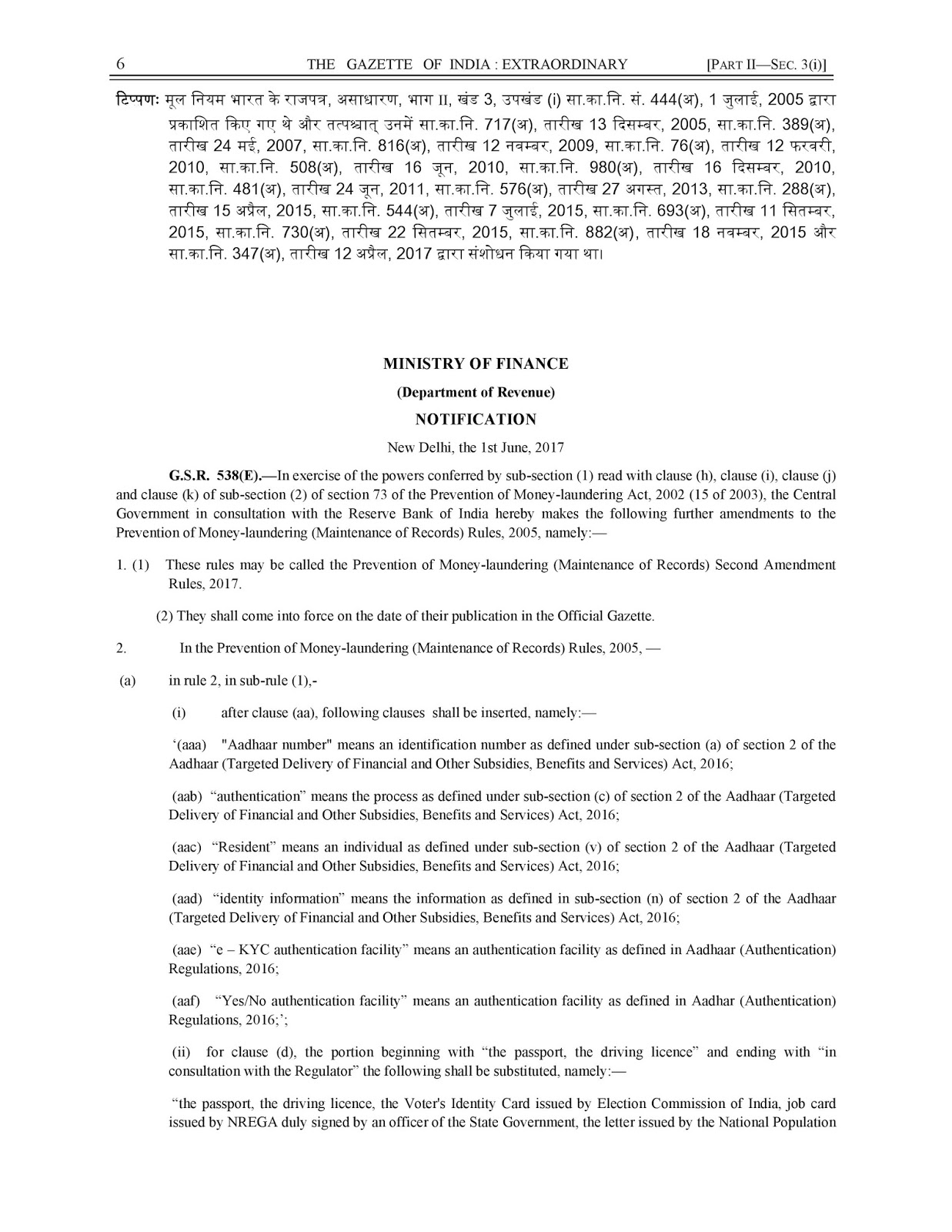
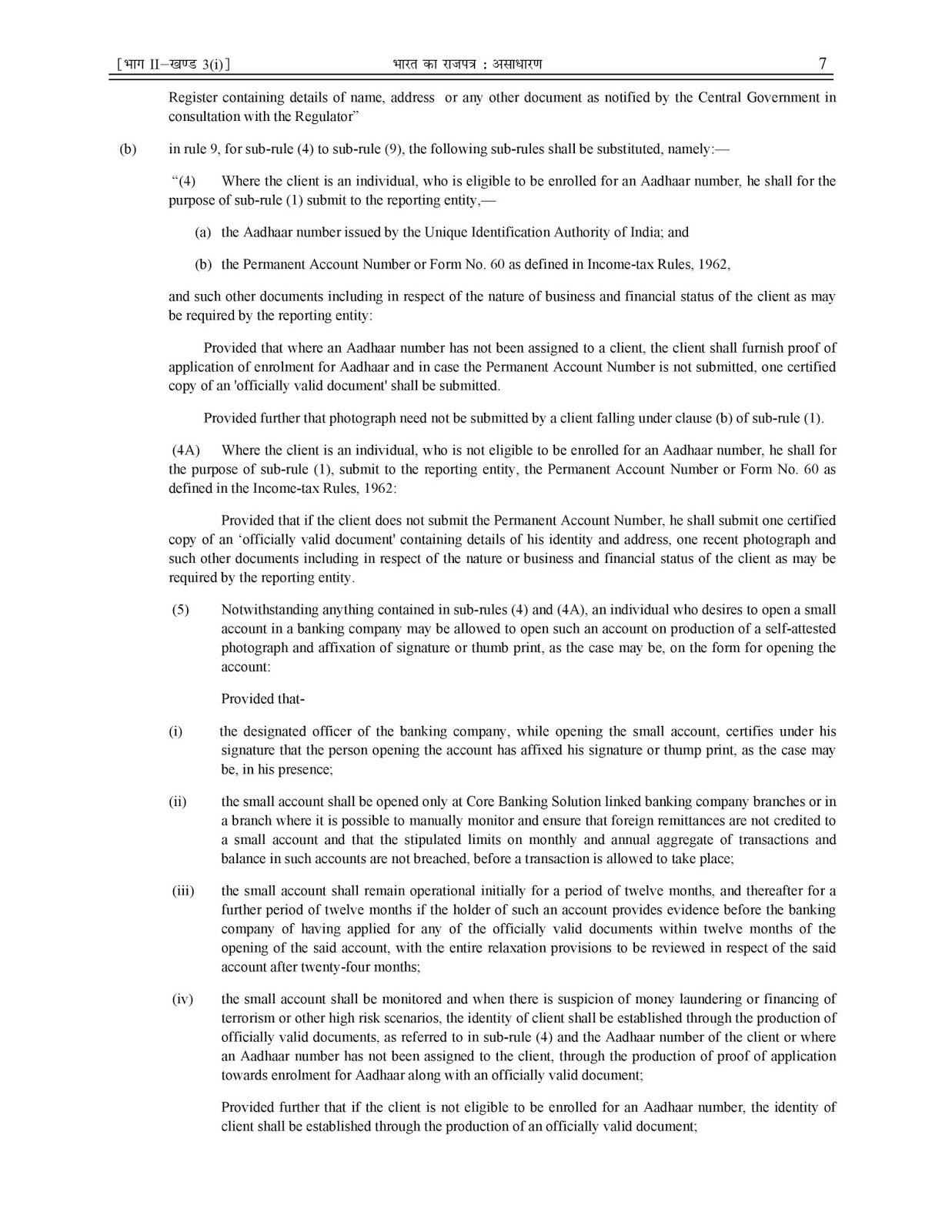
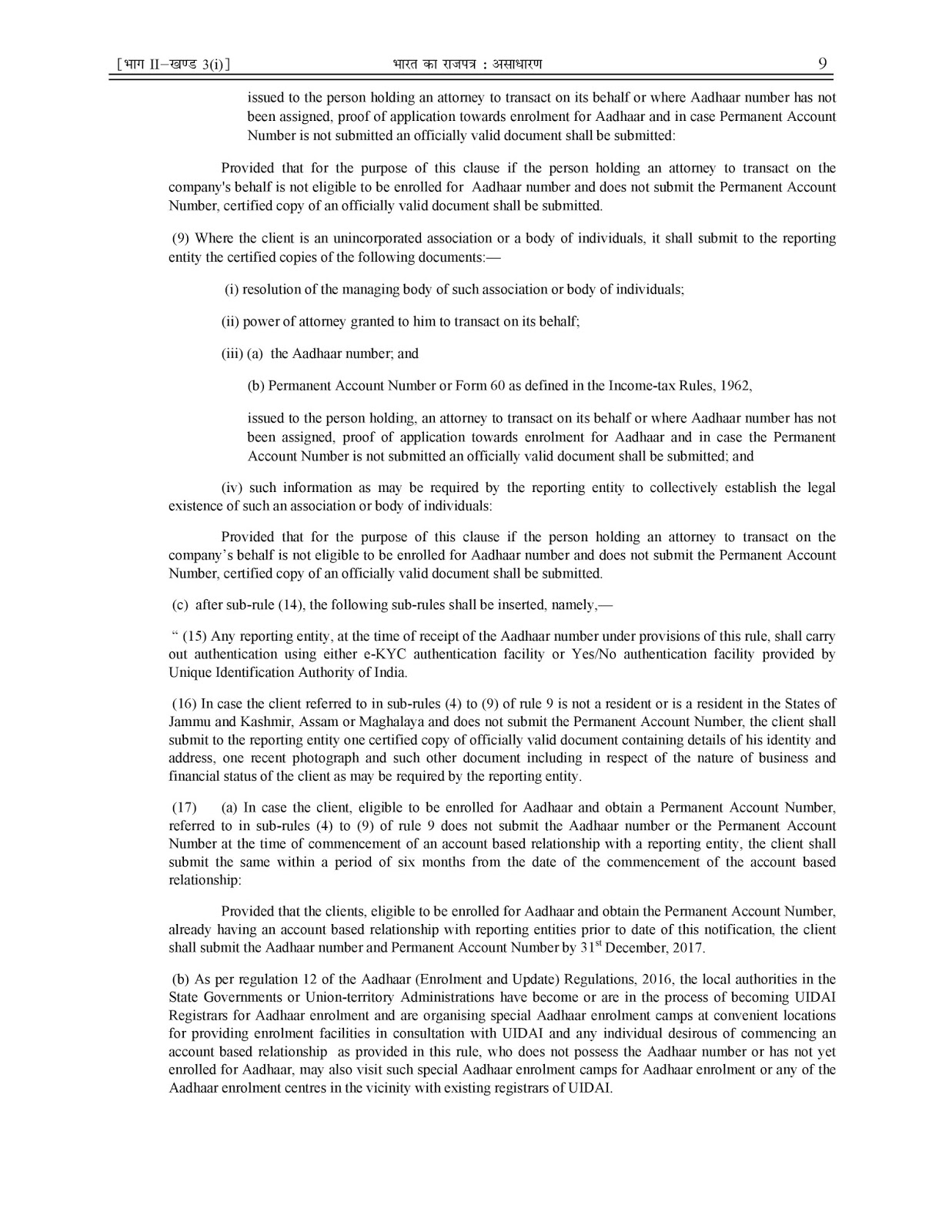
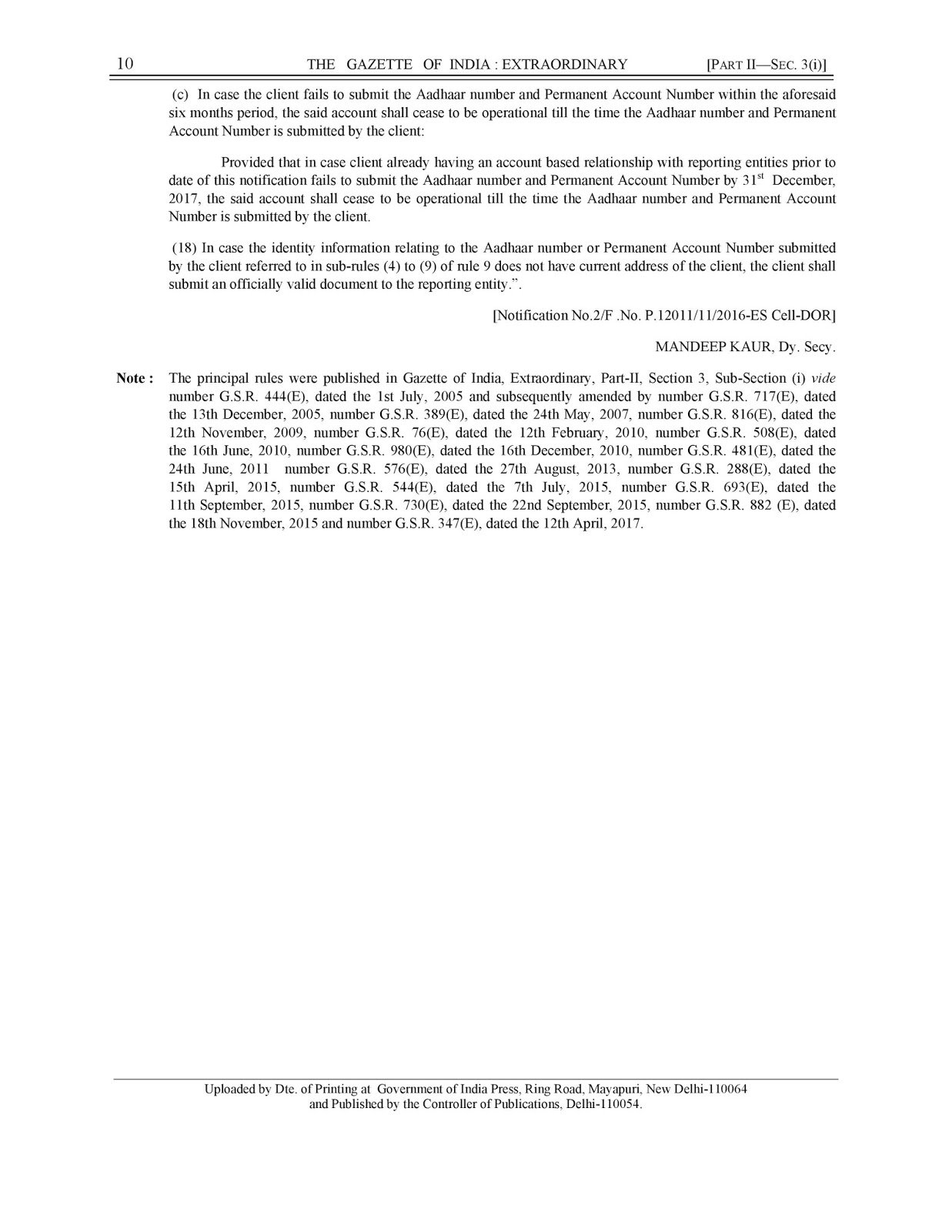
Refer extract of section 269ST on link https://incometaxindia1.blogspot.in/p/blog-page_1.html

Refer Income tax daily updates on link  http://knowledgedailyrefresher.blogspot.in


Bhagavad Gita: Buddhi-yogad dhananjaya Buddau saranam (Text 49, Ch2, Contents of Gita Summarized)

Durena hy avaram karma
Buddhi-yogad dhananjaya
Buddau saranam anviccha
Krpanah phala-hetavah 

(Text 49, Ch2, Contents of Gita Summarized)
                                  
Meaning:  O Dhananjaya, keep all abominable activities far distant by devotional service and in that consciousness surrender unto the Lord. Those who want to enjoy the fruits of their work are misers.

Durena: discard it at a long distance; hi: certainly,   avaram: abominable,  karma: activity, Buddhi-yogat: on the strength of Krsna consciousness(Supreme consciousness) dhananjaya: O conqueror of wealth, Buddhau: in such consciousness;  saranam: full surrender,  anviccha: try for,Krpanah: misers,  phala-hetavah: those desiring furtive results.

GST: FAQs Series 20 : GST Payment of Taxes (Supported with Statutory provisions & Rules)

GST Payment of Taxes


Payment of Taxes : 

Electronic Liability Register shall be maintained for each person liable to pay tax on the GST Portal.

Electronic Credit Ledger and Electronic Cash Ledger shall also be maintained on the GST Portal for the person eligible for input tax credit and for person liable to pay tax respectively.

Tax will be paid only through internet banking, RTGS, NEFT or Debit and Credit Cards. However, over the counter payment is allowed through authorized banks for the amount up to Rs.10,000 per challan per tax period.

Series Continue…..


Q 21. What does the expression “Other dues” referred to above mean?

Ans. The expression “other dues” means interest, penalty, fee or any other amount payable under the Act or the rules made thereunder.

Q 22. What is an E-FPB?

Ans. E-FPB stands for Electronic Focal Point Branch. These are branches of authorized banks which are authorized to collect payment of GST. Each authorized bank will nominate only one branch as its E-FPB for pan India Transactions. The E-FPB will have to open accounts under each major head for all governments.

Total 38 accounts (one each for CGST, IGST and one each for SGST for each State/UT Govt.) will have to be opened.

Any amount received by such E-FPB towards GST will be credited to the appropriate account held by such EFPB.

For NEFT/RTGS Transactions, RBI will act as E-FPB.

Q 23. What is TDS?

Ans. TDS stands for Tax Deducted at Source (TDS). As per section 51, this provision is meant for Government and Government undertakings and other notified entities making contractual payments where total value  of such supply under a contract exceeds Rs. 2.5 Lakhs to suppliers. While making any payments under such contracts, the concerned Government/authority shall deduct 1% of the total payment made and remit it into the appropriate GST account.

Q 24. How will the Supplier account for this TDS? while filing his return?

Ans. Any amount shown as TDS will be reflected in the electronic cash ledger of the concernedsupplier. He can utilize this amount towards discharging his liability towards tax, interest fees and any other amount.

Q 25. How will the TDS Deductor account for such TDS?

Ans. TDS Deductor will account for such TDS in the following ways:

1. Such deductors needs to get compulsorily registered under section 24 of the CGST/SGST Act.

2. They need to remit such TDS collected by the 10th day of the month succeeding the month in which TDS was collected and reported in GSTR 7.

3. The amount deposited as TDS will be reflected in the electronic cash ledger of the supplier.

4. They need to issue certificate of such TDS to the deductee within 5 days of deducting TDS failing
which fees of Rs. 100 per day subject to maximum of Rs. 5000/- will be payable by such deductor.


Q 26. What is Tax Collected at Source (TCS)?

Ans. This provision is applicable only for E-Commerce Operator under section 52 of CGST/SGST Act. Every ECommerce Operator, not being an agent, needs to withhold an amount calculated at the rate not exceeding one percent of the “net value of taxable supplies” made through it where the consideration with respect to such supplies is to be collected by the operator. Such withheld amount is to be deposited by such E-Commerce Operator to the appropriate GST account by the 10th of the next month. The amount deposited as TCS will be reflected in the electronic cash ledger of the supplier.


Q 27. What does the expression “Net value of taxable supplies” mean?

Ans. The expression “net value of taxable supplies” means the aggregate value of taxable supplies of goods or services, other than services notified under Section 9(5), made during any month by all registered taxable persons through the operator reduced by the aggregate value of taxable supplies returned to the suppliers during the said month.

Q 28. Is the pre-registration of credit card necessary in the GSTN portal for the GST payment?

Ans. Yes. The taxpayer would be required to pre-register his credit card, from which the tax payment is intended, with the Common Portal maintained on GSTN. GSTN may also attempt to put in a system with banks in getting the credit card verified by taking a confirmation from the credit card service provider. The payments using credit cards can therefore be allowed without any monetary limit to facilitate ease of doing business.

Refer extract of 

Section 49 of CGST Act, 2017 (Payment of tax, interest, penalty and other amounts) of CGST Act, 2017 on following link:

http://gstindia1.blogspot.in/p/extract-of-section-49-central-goods-and.html

Payment Rules updated by 18th May 2017

http://gstindia1.blogspot.in/p/payment-rules.html

Disclaimer:

This FAQ on GST compiled by NACEN and vetted by the Source Trainers is based on the CGST/SGST/UTGST/IGSTAct(s). This FAQ is for training and academic purposes only.

The information in this blogger is reproduced from FAQ on GST publised by CBEC updated on 31 March 2017 and is not intended to be treated as legal ad vice or opinion. For greater details, you are requested to refer to the respective CGST/SGST/UTGST/IGST Acts.

The FAQs refer to CGST and SGST Acts as CGST/SGST as CGST Act and SGST Act are identical in most of the provisions. CGST Act has been introduced in the Parliament. The SGST Acts will be passed by respective state legislatures. A few provisions may be specific to state and may not be in CGST Act.