शिव ताण्डव स्तोत्रम्

रावण कृत शिव ताण्डव स्तोत्रम्

जटाटवी–गलज्जल–प्रवाह–पावित–स्थले
गलेऽव–लम्ब्य–लम्बितां–भुजङ्ग–तुङ्ग–मालिकाम्
डमड्डमड्डमड्डम–न्निनादव–ड्डमर्वयं
चकार–चण्ड्ताण्डवं–तनोतु–नः शिवः शिवम् .. १..

जिन शिव जी की सघन जटारूप वन से प्रवाहित हो गंगा जी की धारायं उनके कंठ को प्रक्षालित क होती हैं, जिनके गले में बडे एवं लम्बे सर्पों की मालाएं लटक रहीं हैं, तथा जो शिव जी डम-डम डमरू बजा कर प्रचण्ड ताण्डव करते हैं, वे शिवजी हमारा कल्यान करें

जटा–कटा–हसं–भ्रमभ्रमन्नि–लिम्प–निर्झरी-
–विलोलवी–चिवल्लरी–विराजमान–मूर्धनि .
धगद्धगद्धग–ज्ज्वल–ल्ललाट–पट्ट–पावके
किशोरचन्द्रशेखरे रतिः प्रतिक्षणं मम .. २..

जिन शिव जी के जटाओं में अतिवेग से विलास पुर्वक भ्रमण कर रही देवी गंगा की लहरे उनके शिश पर लहरा रहीं हैं, जिनके मस्तक पर अग्नि की प्रचण्ड ज्वालायें धधक-धधक करके प्रज्वलित हो रहीं हैं, उन बाल चंद्रमा से विभूषित शिवजी में मेरा अंनुराग प्रतिक्षण बढता रहे।

धरा–धरेन्द्र–नंदिनीविलास–बन्धु–बन्धुर
स्फुर–द्दिगन्त–सन्ततिप्रमोद–मान–मानसे .
कृपा–कटाक्ष–धोरणी–निरुद्ध–दुर्धरापदि
क्वचि–द्दिगम्बरे–मनो विनोदमेतु वस्तुनि .. ३..

जो पर्वतराजसुता(पार्वती जी) केअ विलासमय रमणिय कटाक्षों में परम आनन्दित चित्त रहते हैं, जिनके मस्तक में सम्पूर्ण सृष्टि एवं प्राणीगण वास करते हैं, तथा जिनके कृपादृष्टि मात्र से भक्तों की समस्त विपत्तियां दूर हो जाती हैं, ऐसे दिगम्बर (आकाश को वस्त्र सामान धारण करने वाले) शिवजी की आराधना से मेरा चित्त सर्वदा आन्दित रहे।

जटा–भुजङ्ग–पिङ्गल–स्फुरत्फणा–मणिप्रभा
कदम्ब–कुङ्कुम–द्रवप्रलिप्त–दिग्व–धूमुखे
मदान्ध–सिन्धुर–स्फुरत्त्व–गुत्तरी–यमे–दुरे
मनो विनोदमद्भुतं–बिभर्तु–भूतभर्तरि .. ४..

मैं उन शिवजी की भक्ति में आन्दित रहूँ जो सभी प्राणियों की के आधार एवं रक्षक हैं, जिनके जाटाओं में लिपटे सर्पों के फण की मणियों के प्रकाश पीले वर्ण प्रभा-समुहरूपकेसर के कातिं से दिशाओं को प्रकाशित करते हैं और जो गजचर्म से विभुषित हैं।

सहस्रलोचनप्रभृत्य–शेष–लेख–शेखर
प्रसून–धूलि–धोरणी–विधू–सराङ्घ्रि–पीठभूः
भुजङ्गराज–मालया–निबद्ध–जाटजूटक:
श्रियै–चिराय–जायतां चकोर–बन्धु–शेखरः .. ५..

जिन शिव जी का चरण इन्द्र-विष्णु आदि देवताओं के मस्तक के पुष्पों के धूल से रंजित हैं (जिन्हे देवतागण अपने सर के पुष्प अर्पन करते हैं), जिनकी जटा पर लाल सर्प विराजमान है, वो चन्द्रशेखर हमें चिरकाल के लिए सम्पदा दें।

ललाट–चत्वर–ज्वलद्धनञ्जय–स्फुलिङ्गभा-
निपीत–पञ्च–सायकं–नमन्नि–लिम्प–नायकम्
सुधा–मयूख–लेखया–विराजमान–शेखरं
महाकपालि–सम्पदे–शिरो–जटाल–मस्तुनः.. ६..

जिन शिव जी ने इन्द्रादि देवताओं का गर्व दहन करते हुए, कामदेव को अपने विशाल मस्तक की अग्नि ज्वाला से भस्म कर दिया, तथा जो सभि देवों द्वारा पुज्य हैं, तथा चन्द्रमा और गंगा द्वारा सुशोभित हैं, वे मुझे सिद्दी प्रदान करें।

कराल–भाल–पट्टिका–धगद्धगद्धग–ज्ज्वल
द्धनञ्ज–याहुतीकृत–प्रचण्डपञ्च–सायके
धरा–धरेन्द्र–नन्दिनी–कुचाग्रचित्र–पत्रक
–प्रकल्प–नैकशिल्पिनि–त्रिलोचने–रतिर्मम … ७..

जिनके मस्तक से धक-धक करती प्रचण्ड ज्वाला ने कामदेव को भस्म कर दिया तथा जो शिव पार्वती जी के स्तन के अग्र भाग पर चित्रकारी करने में अति चतुर है ( यहाँ पार्वती प्रकृति हैं, तथा चित्रकारी सृजन है), उन शिव जी में मेरी प्रीति अटल हो।

नवीन–मेघ–मण्डली–निरुद्ध–दुर्धर–स्फुरत्
कुहू–निशी–थिनी–तमः प्रबन्ध–बद्ध–कन्धरः
निलिम्प–निर्झरी–धरस्त–नोतु कृत्ति–सिन्धुरः
कला–निधान–बन्धुरः श्रियं जगद्धुरंधरः .. ८..

जिनका कण्ठ नवीन मेंघों की घटाओं से परिपूर्ण आमवस्या की रात्रि के सामान काला है, जो कि गज-चर्म, गंगा एवं बाल-चन्द्र द्वारा शोभायमान हैं तथा जो कि जगत का बोझ धारण करने वाले हैं, वे शिव जी हमे सभि प्रकार की सम्पनता प्रदान करें।

प्रफुल्ल–नीलपङ्कज–प्रपञ्च–कालिमप्रभा-
–वलम्बि–कण्ठ–कन्दली–रुचिप्रबद्ध–कन्धरम् .
स्मरच्छिदं पुरच्छिदं भवच्छिदं मखच्छिदं
गजच्छिदांधकछिदं तमंतक–च्छिदं भजे .. ९..

जिनका कण्ठ और कन्धा पूर्ण खिले हुए नीलकमल की फैली हुई सुन्दर श्याम प्रभा से विभुषित है, जो कामदेव और त्रिपुरासुर के विनाशक, संसार के दु:खो6 के काटने वाले, दक्षयज्ञ विनाशक, गजासुर एवं अन्धकासुर के संहारक हैं तथा जो मृत्यू को वश में करने वाले हैं, मैं उन शिव जी को भजता हूँ

अखर्वसर्व–मङ्ग–लाकला–कदंबमञ्जरी
रस–प्रवाह–माधुरी विजृंभणा–मधुव्रतम् .
स्मरान्तकं पुरान्तकं भवान्तकं मखान्तकं
गजान्त–कान्ध–कान्तकं तमन्तकान्तकं भजे .. १०..

जो कल्यानमय, अविनाशि, समस्त कलाओं के रस का अस्वादन करने वाले हैं, जो कामदेव को भस्म करने वाले हैं, त्रिपुरासुर, गजासुर, अन्धकासुर के सहांरक, दक्षयज्ञविध्वसंक तथा स्वयं यमराज के लिए भी यमस्वरूप हैं, मैं उन शिव जी को भजता हूँ।

जयत्व–दभ्र–विभ्र–म–भ्रमद्भुजङ्ग–मश्वस-
द्विनिर्गमत्क्रम–स्फुरत्कराल–भाल–हव्यवाट्
धिमिद्धिमिद्धिमिध्वनन्मृदङ्ग–तुङ्ग–मङ्गल
ध्वनि–क्रम–प्रवर्तित प्रचण्डताण्डवः शिवः .. ११..

अतयंत वेग से भ्रमण कर रहे सर्पों के फूफकार से क्रमश: ललाट में बढी हूई प्रचंण अग्नि के मध्य मृदंग की मंगलकारी उच्च धिम-धिम की ध्वनि के साथ ताण्डव नृत्य में लीन शिव जी सर्व प्रकार सुशोभित हो रहे हैं।

दृष–द्विचित्र–तल्पयोर्भुजङ्ग–मौक्ति–कस्रजोर्
–गरिष्ठरत्नलोष्ठयोः सुहृद्वि–पक्षपक्षयोः .
तृष्णार–विन्द–चक्षुषोः प्रजा–मही–महेन्द्रयोः
समप्रवृतिकः कदा सदाशिवं भजे .. १२..

कठोर पत्थर एवं कोमल शय्या, सर्प एवं मोतियों की मालाओं, बहुमूल्य रत्न एवं मिट्टी के टूकडों, शत्रू एवं मित्रों, राजाओं तथा प्रजाओं, तिनकों तथा कमलों पर सामान दृष्टि रखने वाले शिव को मैं भजता हूँ।

कदा निलिम्प–निर्झरीनिकुञ्ज–कोटरे वसन्
विमुक्त–दुर्मतिः सदा शिरःस्थ–मञ्जलिं वहन् .
विमुक्त–लोल–लोचनो ललाम–भाललग्नकः
शिवेति मंत्र–मुच्चरन् कदा सुखी भवाम्यहम् .. १३..

कब मैं गंगा जी के कछारगुञ में निवास करता हुआ, निष्कपट हो, सिर पर अंजली धारण कर चंचल नेत्रों तथा ललाट वाले शिव जी का मंत्रोच्चार करते हुए अक्षय सुख को प्राप्त करूंगा।

निलिम्प नाथनागरी कदम्ब मौलमल्लिका-
निगुम्फनिर्भक्षरन्म धूष्णिकामनोहरः ।
तनोतु नो मनोमुदं विनोदिनींमहनिशं
परिश्रय परं पदं तदंगजत्विषां चयः ॥१४ ॥

प्रचण्ड वाडवानल प्रभाशुभप्रचारणी
महाष्टसिद्धिकामिनी जनावहूत जल्पना ।
विमुक्त वाम लोचनो विवाहकालिकध्वनिः
शिवेति मन्त्रभूषगो जगज्जयाय जायताम्‌ ॥१५॥

इदम् हि नित्य–मेव–मुक्तमुत्तमोत्तमं स्तवं
पठन्स्मरन्ब्रुवन्नरो विशुद्धि–मेति–संततम् .
हरे गुरौ सुभक्तिमा शुयातिना न्यथा गतिं
विमोहनं हि देहिनां सुशङ्करस्य चिंतनम् .. १६..

इस उत्त्मोत्त्म शिव ताण्डव स्त्रोत को नित्य पढने या श्रवण करने मात्र से प्राणि पवित्र हो, परंगुरू शिव में स्थापित हो जाता है तथा सभी प्रकार के भ्रमों से मुक्त हो जाता है।

पूजावसानसमये दशवक्त्रगीतं
यः शंभुपूजनपरं पठति प्रदोषे .
तस्य स्थिरां रथ गजेन्द्र तुरङ्ग युक्तां
लक्ष्मीं सदैवसुमुखिं प्रददाति शंभुः .. १७..

प्रात: शिवपुजन के अंत में इस रावणकृत शिवताण्डवस्तोत्र के गान से लक्ष्मी स्थिर रहती हैं तथा भक्त रथ, गज, घोडा आदि सम्पदा से सर्वदा युक्त रहता है।

Happy Guru purnima

The Guru – Guide to the Spiritual World

On hearing the word guru, we tend to envision a caricature like image: a bizarre-looking old fellow with a long, stringy beard and flowing robes, meditating on distant, esoteric truths. Or we think of a cosmic con man cashing in on young seekers’ spiritual gullibility. But what really is a guru? What does he know that we don’t? How does he enlighten us? In a talk given in England in 1973, Srila Prabhupada provides some enlightening answers.

om anjnana-timirandhasya
jnananjana-salakaya
caksur unmilitam yena
tasmai sri-gurave namah

“I was born in the darkest ignorance, and my guru, my spiritual master, opened my eyes with the torch of knowledge. I offer my respectful obeisances unto him.”

The word ajnana means “ignorance” or “darkness”. If all the lights in this room immediately went out, we would not be able to tell where we or others are sitting. Everything would become confused. Similarly, we are all in darkness in this material world, which is a world of tamas. Tamas or timira means “darkness”. This material world is dark, and therefore it needs sunlight or moonlight for illumination. However, there is another world, a spiritual world, that is beyond this darkness. That world is described by Sri Krishna in the Bhagavad-gita(15.6):

na tad bhasayate suryo
na sasanko na pavakah
yad gatva na nivartante
tad dhama paramam mama

“That abode of Mine is not illumined by the sun or moon, nor by electricity. One who reaches it never returns to this material world.”

The guru’s business is to bring his disciples from darkness to light. At present everyone is suffering due to ignorance, just as one contracts a disease out of ignorance. If one does not know hygienic principles, he will not know what will contaminate him. Therefore, due to ignorance, there is infection, and we suffer from disease. A criminal may say, “I did not know the law,” but he will not be excused if he commits a crime. Ignorance is no excuse. Similarly, a child, not knowing that fire will burn, will touch the fire. The fire does not think, “This is a child, and he does not know I will burn.” No, there is no excuse. Just as there are state laws, there are also stringent laws of nature, and these laws will act despite our ignorance of them. If we do something wrong out of ignorance, we must suffer. This is the law. Whether the law is a state law or a law of nature, we risk suffering if we break it.

The guru’s business is to see that no human being suffers in this material world. No one can claim that he is not suffering. That is not possible. In this material world, there are three kinds of suffering; adhyatmika, adhibhautika, and adhidaivika. These are miseries arising from the material body and mind, from other living entities and from the forces of nature. We may suffer mental anguish, or we may suffer from other living entities-from ants or mosquitoes or flies-or we may suffer due to some superior power. There may be no rain, or there may be flood. There may be excessive heat or excessive cold. So many types of suffering are imposed by nature. Thus there are three types of miseries within the material world, and everyone is suffering from one, two, or three of them. No one can say that he is completely free from suffering.

We may then ask why the living entity is suffering. The answer is: out of ignorance. He does not think, “I am committing mistakes and am leading a sinful life; that is why I am suffering.” Therefore the guru’s first business is to rescue his disciple from this ignorance. We send our children to school to save them from suffering. If our children do not receive an education, we fear that they will suffer in the future. The guru sees that the suffering is due to ignorance, which is compared to darkness. How can one in darkness be saved? By light. The guru takes the torchlight of knowledge and presents it before the living entity enveloped in darkness. That knowledge relieves him from the sufferings of the darkness of ignorance.

One may ask whether the guru is absolutely necessary. The Vedas inform us that he is:

tad-vijnanartham sa gurum evabhigacchet
samit-panih arotriyam brahma-nistha

(Mundaka Upanisad 1.2.12)

The Vedas enjoin us to seek out a guru; actually they say to seek out the guru, not just a guru. The guru is one because he comes in disciplic succession. What Vyasadeva and Krishna taught five thousand years ago is also being taught now. There is no difference between the two instructions. Although hundred and thousands of acaryas have come and gone, the message is one. The real guru cannot be two, for the real guru does not speak differently from his predecessors. Some spiritual teachers say, “In my opinion you should do this,” but this is not a guru. Such so-called gurus are simply rascals. The genuine guru has only one opinion, and that is the opinion expressed by Krishna, Vyasadeva, Narada, Arjuna, Sri Caitanya Mahaprabhu, and the Gosvamis. Five thousand years ago Lord Sri Krishna spoke the Bhagavad-gita, and Vyasadeva recorded it. Srila Vyasadeva did not say, “This is my opinion.” Rather, he wrote, sri-bhagavan uvaca, that is, “The Supreme Personality of Godhead says.” Whatever Vyasadeva wrote was originally spoken by the Supreme Personality of Godhead. Srila Vyasadeva did not give his own opinion. Consequently, Srila Vyasadeva is a guru. He does not misinterpret the words of Krishna, but transmits them exactly as they were spoken. If we send a telegram, the person who delivers the telegram does not have to correct it, edit it, or add to it. He simply presents it. That is the guru’s business. The guru may be this person or that, but the message is the same; therefore it is said that guru is one.

In the disciplic succession we simply find repetition of the same subject. In the Bhagavad-gita(9.34), Sri Krishna says:

man-mana bhava mad-bhakto
mad-yaji mam namaskuru
mam-evaisyasi yuktvaivam
atmanam mat-parayanah

“Engage your mind always in thinking of Me, become My devotee, offer obeisances, and worship Me. Being completely absorbed in Me, surely you will come to Me.”

These very instructions were reiterated by all the acaryas, such as Ramanujacarya, Madhvacarya, and Caitanya Mahaprabhu. The six Gosvamis also transmitted the same message, and we are simply following in their footsteps. There is no difference. We do not interpret the words of Krishna by saying, “In my opinion, the battlefield of Kuruksetra represents the human body.” Such interpretations are set forth by rascals. In the world there are many rascal gurus who give their own opinion, but we can challenge any rascal. A rascal guru may say, “I am God,” or, “We are all God.” That is all right, but we should find out from the dictionary what the meaning of God is. Generally a dictionary will tell us that the word God indicates the Supreme Being. Thus we may ask such a guru, “Are you the Supreme Being?” If he cannot understand this, then we should give the meaning of supreme. Any dictionary will inform us that supreme means “the greatest authority.” We may then ask, “Are you the greatest authority?” Such a rascal guru, even though proclaiming himself to be God, cannot answer such a question. God is the Supreme Being and the highest authority. No one is equal to Him or greater than Him. Yet there are many guru-gods, many rascals who claim to be the Supreme. Such rascals cannot help us escape the darkness of material existence. They cannot illumine our darkness with the torchlight of spiritual knowledge.

The bona fide guru will simply present what the supreme guru, God, says in bona fide scripture. A guru cannot change the message of the disciplic succession.

We must understand that we cannot carry out research to find the Absolute Truth. Caitanya Mahaprabhu Himself said, “My Guru Maharaja, My spiritual master, considered Me a great fool.” He who remains a great fool before his guru is a guru himself. However, if one says, “I am so advanced that I can speak better than my guru,” he is simply a rascal. In the Bhagavad-gita(4.2) Sri Krishna says:

evam parampara-praptam
imam rajarsayo viduh
sa kaleneha mahata
yogo nastah parantapa

“This supreme science was thus received through the chain of disciplic succession, and the saintly kings understood it in that way. But in course of time the succession was broken, and therefore the science as it is appears to be lost.”

Taking on a guru is not simply a fashion. One who is serious about understanding spiritual life requires a guru. A guru is a question of necessity, for one must be very serious to understand spiritual life, God, proper action, and one’s relationship with God. When we are very serious about understanding these subjects, we need a guru. We shouldn’t go to a guru simply because a guru may be fashionable at the moment. Surrender must be there, for without surrender we cannot learn anything. If we go to a guru simply to challenge him, we will learn nothing. We must accept the guru just as Arjuna accepted his guru, Sri Krishna Himself:

karpanya-dosopahata-svabhavah
prcchami tvam dharma-sammudha-cetah
yac chreyah syan niscitam bruhi tan me
sisyas te ‘ham sadhi mam tvam prapannam

“Now I am confused about my duty and have lost all composure because of weakness. In this condition I am asking You to tell me clearly what is best for me. Now I am Your disciple and a soul surrendered unto You. Please instruct me.”(Bhagavad-gita 2.7)

This is the process for accepting a guru. The guru is Krishna’s representative. Krishna says that all acaryas are His representatives; therefore the guru should be offered the same respect one would offer to God. As Visvanatha Cakravarti Thakura says in his prayers to the spiritual master, yasya prasadad bhagavat-prasadah:”By the mercy of the spiritual master, one receives the benediction of Krishna.” This, if we surrender to the bona fide guru, we surrender to God. God accepts our surrender to the guru.

Someone may argue, “Where is Krishna? I shall surrender to Him.” But no, the process is that we first surrender to Krishna’s representative; then we surrender to Krishna. Therefore it is said, saksad-dharitvena samasta-sastraih: the guru is as good as God. When we offer respects to the guru, we are offering respects to God. Because we are trying to be God conscious, it is required that we learn how to offer respects to God through God’s representative. In all the sastras the guru is described to be as good as God, but the guru never says, “I am God.” The disciple’s duty is to offer respect to the guru just as he offers respect to God, but the guru never thinks, “My disciples are offering me the same respect they offer to God; therefore I have become God.” As soon as he thinks like this, he becomes a dog instead of God. Therefore Visvanatha Cakravarti says, kintu prabhor yah priya eva tasya. Because he is the most confidential servitor of God, the guru is offered the same respect that we offer God. God is always God, guru is always guru. As a matter of etiquette, God is the worshipable God, and guru is the worshiper God (sevaka-bhagavan). Therefore the guru is addressed as prabhupada. The word prabhu means “lord”, and pada means “position”. Thus prabhupada means “he who has taken the position of the Lord.” This is the same as saksad-dharitvena samasta-sastraih.

Only if we are very serious about understanding the science of God is a guru required. We should not try to keep a guru as a matter of fashion. One who has accepted a guru speaks intelligently. He never speaks nonsense. That is the sign of having accepted a bona fide guru. We should certainly offer all respect to the spiritual master, but we should also remember how to carry out his orders. In the Bhagavad-gita(4.34)Sri Krishna Himself tells us the method of seeking out and approaching the guru:

tad viddhi pranipatena
pariprasnena sevaya-
upadeksyanti te jnanam
janainas tattva-darsinah

“Just try to learn the truth by approaching a spiritual master. Inquire from him submissively and render service unto him. The self-realized soul can impart knowledge unto you because he has seen the truth.”

The first process is that of surrender. We have to find an exalted person and willingly surrender before him. The sastras enjoin that before we take a guru we should study him carefully to find out whether we can surrender to him. We should not accept a guru suddenly, out of fanaticism. That is very dangerous. The guru should also study the person who wants to become a disciple to see if he is fit. That is the way a relationship is established between the guru and disciple. Everything is provided, but we must take up the process seriously. Then we can be trained to become a bona fide disciple. First we must find a bona fide guru, establish our relationship with him, and act accordingly. Then our life will be successful, for the guru can enlighten the sincere disciple who is in darkness.

Everyone is born a rascal and a fool. If we are born learned, why do we need to go to school? If we do not cultivate knowledge, we are no better than animals. An animal may say that there is no need of books and that he has become a guru, but how can anyone obtain knowledge without the study of authoritative books on science and philosophy? Rascal gurus try to avoid these things. We must understand that we are all born rascals and fools and that we have to be enlightened. We have to receive knowledge to make our lives perfect. If we do not perfect our lives, we are defeated. What is this defeat? The struggle for existence. We are trying to obtain a better life, to attain a superior position, and for this we are struggling very hard. But we do not know what a superior position actually is.

Whatever position we have in this material world must be given up. We may have a good position or a bad position; in any case, we cannot remain here. We may earn millions of dollars and think, “Now I am in a good position,” but a little dysentery or cholera will finish our position. If the bank fails, our position is gone. So actually there is no good position in this material world. It is a farce. Those who try to attain a better position in the material world are ultimately defeated, because there is no better position. The Bhagavad-gita (14.26) says what the better position is:

mam ca you `vyabhicarena
bhakti-yogena sevate
sa gunan samatityaitan
brahma-bhuyaya kalpate

“One who engages in the spiritual activities of unalloyed devotional service at once transcends the modes of material nature and is elevated to the spiritual platform.”

Is there any science that gives us the knowledge by which we may become immortal? Yes, we may become immortal, but not in the material sense. We cannot receive this knowledge in so-called universities. However, there is knowledge contained in the Vedic scriptures by which we may become immortal. That immortality is our better position. No more birth, no more death, no more old age, no more disease. Thus the guru takes on a very great responsibility. He must guide his disciple and enable him to become an eligible candidate for the perfect position-immortality. The guru must be competent to lead his disciple back home, back to Godhead.

(Sources ISKCON)
Revised Tax Audit Report (Form -3CD) for FY 2017-18 (Summary of Amendments/Insertions)


Tax Audit 3CD Revised: 


(6 Amendments + 9 Insertions)

Summary of Amendments:
  1.  4 – GSTIN to be mentioned.
  2.  19 – Allowance under Section 32AD is to be reported.
  3. 24 – Deemed gains under Section 32AD to be reported.
  4.  26 – Clause (g) of Section 43B (sum payable to Indian Railways for use of assets) has to be reported.
  5.  31 – Cash receipts more than INR 2,00,000 under Section 269ST is to be reported.
  6.  34 – Details with respect to transactions not disclosed in TDS Return/ TCS Return is to be reported.

Summary of Insertions:

  1.  29A – Advance received on capital asset forfeited to be reported here {Section 56(2)(ix)}.
  2.  29B – Income of gifts exceeding INR 50,000 to be reported here {Section 56(2)(x)}.
  3.  30A – Details about “Primary Adjustments” in transfer pricing to be reported here as per Section 92CE.
  4.  30B – Limitation of Interest deductions for borrowings from a AE upto 30% of EBITDA is to be furnished here.
  5.  30C – Details of Impermissible Avoidance Agreement to be furnished as referred to in Section 96.
  6.  36A – Dividend received under Section 2(22)(e) is required to be reported here.
  7.  42 – Details w.r.t. Form 61 (details of no PAN Form 60 received), Form 61A (SFT) and Form 61B (SRA) is to be provided here.
  8.  43 – Details w.r.t. CbC Reporting as referred to in Section 286 is required to be reported.
  9.  44 – BREAK UP of total expenditure in respect of GST Registered and Unregistered Entities is required to be given.

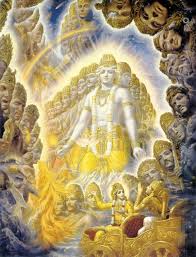
Bhagavad-gita: The Universal Form, Text 25, Chapter 11

Arjuna uvaca


damstra-karalani ca te mukhani

drstvaiva kalanala-sannibhani
diso na jane na labhe ca sarma
prasida devesa jagan-nivasa

(The Universal Form, Text 25 Chapter 11)

Meaning: O Lord of lords, O refuge of the worlds, please be gracious to me. I cannot keep my balance seeing thus your blazing deathlike faces and awful teeth. In all directions I am bewildered.

Bhagavad-gita: The Universal Form, Text 25, Chapter 11

Bhagavad-gita: The Universal Form, Text 24, Chapter 11

Arjuna uvaca


nabhah-sprsam diptam aneka-varnam

vyattananam dipta-visala-netram
drstva hi tvam pravyathitantar-atma
dhrtim na vindami samam ca visno

नभःस्पृशं दीप्तमनेकवर्णंव्यात्ताननं दीप्तविशालनेत्रम्‌ ।
दृष्टवा हि त्वां प्रव्यथितान्तरात्मा धृतिं न विन्दामि शमं च विष्णो ॥

(The Universal Form, Text 24 Chapter 11)

Meaning: O all -pervading Visnu, seeing You with Your many radiant colors touching the sky, Your gaping mouths, and your great glowing eyes, my mind is perturbed by fear. I can no longer maintain my steadiness or equilibrium of mind.

भावार्थ : क्योंकि हे विष्णो! आकाश को स्पर्श करने वाले, दैदीप्यमान, अनेक वर्णों से युक्त तथा फैलाए हुए मुख और प्रकाशमान विशाल नेत्रों से युक्त आपको देखकर भयभीत अन्तःकरण वाला मैं धीरज और शान्ति नहीं पाता हूँ॥24॥


Bhagavad-gita: 
The Universal Form, Text 24, Chapter 11

Tax & Loan eligibility benefits from home loan in Joint Names

One of the most attractive benefits of taking a home loan is that they help you save tax, while you prepare to invest in a fixed asset. Acquiring a home loan makes you eligible for tax rebates under Section 80C and Section 24 of the Income tax regulations.
Highlights
  • Tax benefits get divided among co-applicants in case of a joint loan
  • The division takes place in the same proportion in which the asset is owned by each co-applicant
  • Each co-applicant can claim a maximum tax rebate of up to Rs. 1.50 lakh (One Lakh up to AY 2014-15) for principal repayment and Rs. 2 lakh (1.50 Lakh up to AY 2014-15)) for interest payment.
  • The very first condition is the house property has to be bought by the individuals jointly, and this should be in their joint names.
  • The share of each holder should be clearly mentioned so that there is absolute clarity on the percentage ownership of each co-owner.
Tax benefits of Home Loan– Overall there are two types of tax benefits that are available on the repayment of a housing loan.
1. Interest paid on  loan is eligible for a deduction up to Rs. 2 lakh per annum from the  income of the individual under Sec 24 when the property is self-occupied or it is one ownership property lying vacant.
2. Repayment of Principal amount of Loan up to Rs. 1.50 lakh is eligible for deduction under Sec 80C.
The planning in the entire issue has to be done in such a manner that all the joint holders are able to take the tax benefit and no part of the total repayment goes waste.
Advantage for joint home loan takers
Tax benefit
Joint holders can claim the maximum tax benefits individually. This means each holder can get a tax rebate of Rs. 1.50 lakh for principal repayment under Sec 80C and Rs. 2 lakh for interest payment under Sec 24.
The tax benefits are applied according to the proportion of the loan taken by everyone involved in the joint loan. For e.g. if the ratio of ownership is 70%:30% then the loan amount of 50 L will be split as 35 L and 15 L respectively and interest/principal applicable to the respective amounts will be taken into account for each individual taking the loan. For claiming your tax, it is best to  procure  a home sharing agreement, detailing the ownership proportion in a stamp paper, as legal proof for ownership.
To get the best out of the tax savings, it is good to let the partner with the higher pay make a higher contribution towards the home loan resulting in a better tax benefit collectively. In the case of an earning couple, this would make most sense as other expenses can be manged with the income of the person making a lesser share towards the loan. This would help you optimize the benefits from the tax exemption on principal and interest repaid.
Increased Loan Amount Eligibility
If more than one person takes a home loan then income of all the co-owners will be considered by the lenders. This can help increase the size of the loan. In this case, the bank combines the incomes of both the applicants, and thus, can sanction a proportionately higher loan amount. Buying a house jointly facilitates a larger loan as income of all the co-owners would be considered by the lenders.
Additional benefits:
  • In many states, a lower property registration fee is levied in case the property is owned by women either individually or jointly.
  • If husband and wife jointly own a property reduces the succession issues.
So taking a joint home loan has the significant twin benefit of increasing your loan eligibility and maximizing your tax rebate. There is one rule banks insist on when you apply for a joint home loan, which is that all co-owners of the property should also be co-applicants but the reverse need not be true.
Under Construction house Another aspect that needs to be remembered is if you are buying a house under construction that you can claim tax benefits only after the construction of the house is completed.
Joint structure– The term ‘joint benefit’ in a housing loan refers to a situation where more than one person takes and repays a home loan. Here, the co-applicants are family members, which include husband and wife or father and son or father and daughter or mother and son or mother and daughter as the case may be. In such a situation, tax benefits have to be divided between all co-applicants and hence known as joint benefits.
Joint account – The repayment of a joint loan has to be made from a joint account owned by the co-applicants. Each of them needs to contribute his/her share to the account. But there are times when this is not possible and in case the payment is being made from just one person’s account then there has to be a method whereby the other individual is contributing his/her share. This will ensure that the benefits are also available in an adequate manner and that there are conditions that are being fulfilled in the process.
Disadvantage of a home loan in joint names
If you buy another house in future then as per Income Tax Act if a person has more than one house in his name, one of them will be treated as self-occupied, and another will be treated as let-out – even if it is not actually let out on rent. You would need to pay income tax on the rent received if this second house is actually rented out. But if it is not rented out, it is deemed as rented out, and you would have to pay income tax on an amount that you would have received as rent as per prevailing market rates.
When one should take Home Loan in Joint names:-  Take the home loan in joint names
  • If You need a higher loan amount then your eligibility in Individual capacity
  • The income tax savings by opting for a joint loan is significantly higher than a single-name loan
When one should take Home Loan in Joint names  –
  • You have enough loan eligibility as single applicant
  • The income tax savings by opting for a joint loan is not significantly higher than a single-name loan
  • You plan to purchase another house in near future
(Article from Taxguru-CA Sandeep Kanoi)

Bhagavad-gita: The Universal Form, Text 23, Chapter 11

Arjuna uvaca


rupam mahat te bahu-vaktra-netram

maa-baho bahu-bahuru-padam
bahudaram bahu-damstra-karalam
drstva lokah pravyathitas tathaham

रूपं महत्ते बहुवक्त्रनेत्रंमहाबाहो बहुबाहूरूपादम्‌ ।
बहूदरं बहुदंष्ट्राकरालंदृष्टवा लोकाः प्रव्यथितास्तथाहम्‌ ॥

(The Universal Form, Text 23 Chapter 11)

Meaning: O mighty-armed one, all the planets with their demigods are  disturbed at seeing Your great form, with its many faces, eyes, arms, thighs, legs and bellies and Your many terrible teeth; and as they are disturbed, so am I.

भावार्थ : हे महाबाहो! आपके बहुत मुख और नेत्रों वाले, बहुत हाथ, जंघा और पैरों वाले, बहुत उदरों वाले और बहुत-सी दाढ़ों के कारण अत्यन्त विकराल महान रूप को देखकर सब लोग व्याकुल हो रहे हैं तथा मैं भी व्याकुल हो रहा हूँ॥23॥


Bhagavad-gita: 
The Universal Form, Text 23, Chapter 11

Bhagavad-gita: All the various manifestations of Lord Siva, the Adityas, the Vasus etc. and perfected demigods are beholding you in wonder(The Universal Form, Text 22, Chapter 11)

Arjuna uvaca


rudraditya vasavo ye ca sadhya

visve svinau marutas cosmapas ca
gandharva-yaksasura-siddha-sangha
viksante tvam vismitas caiva sarve

रुद्रादित्या वसवो ये च साध्याविश्वेऽश्विनौ मरुतश्चोष्मपाश्च ।
गंधर्वयक्षासुरसिद्धसङ्‍घावीक्षन्ते त्वां विस्मिताश्चैव सर्वे ॥

(The Universal Form, Text 22 Chapter 11)

Meaning: All the various manifestations of Lord Siva, the Adityas, the Vasus, the Sadhyas, the Visvedevas, the two Asvis, the Maruts, the forefathers, the Gandharvas, the Yaksas, the Asuras and the perfected demigods are beholding You in wonder.

भावार्थ : जो ग्यारह रुद्र और बारह आदित्य तथा आठ वसु, साध्यगण, विश्वेदेव, अश्विनीकुमार तथा मरुद्गण और पितरों का समुदाय तथा गंधर्व, यक्ष, राक्षस और सिद्धों के समुदाय हैं- वे सब ही विस्मित होकर आपको देखते हैं॥22॥


Bhagavad-gita:  
All the various manifestations of Lord Siva, the Adityas, the Vasus etc. and perfected demigods are beholding you in wonder(The Universal Form, Text 22, Chapter 11)

Bhagavad-gita: All the hosts of demigods are surrendering before You and entering into You (The Universal Form, Text 21, Chapter 11)


Arjuna uvaca


ami hi tvam sura-sangha visanti

kecid bhitah pranjalayo grnanti
svastity uktva maharsi-siddha-sanghah
stuvanti tvam stutibhih puskalabhih

अमी हि त्वां सुरसङ्‍घा विशन्ति केचिद्भीताः प्राञ्जलयो गृणन्ति।
स्वस्तीत्युक्त्वा महर्षिसिद्धसङ्‍घा: स्तुवन्ति त्वां स्तुतिभिः पुष्कलाभिः ॥

(The Universal Form, Text 21 Chapter 11)

Meaning: All the hosts of demigods are surrendering before You and entering into You.Some of them, very much afraid, are offering prayers with folded hands. Hosts of great sages and perfected beings, crying ” All peace! are praying to You by singing the Vedic hymns.

भावार्थ : वे ही देवताओं के समूह आप में प्रवेश करते हैं और कुछ भयभीत होकर हाथ जोड़े आपके नाम और गुणों का उच्चारण करते हैं तथा महर्षि और सिद्धों के समुदाय ‘कल्याण हो’ ऐसा कहकर उत्तम-उत्तम स्तोत्रों द्वारा आपकी स्तुति करते हैं॥21॥


Bhagavad-gita: All the hosts of demigods are surrendering before You and entering into You 
(The Universal Form, Text 21, Chapter 11)

Bhagavad-gita: You spread throughout the sky and the planets and all space between (The Universal Form, Text 20, Chapter 11)


Arjuna uvaca


dyav a-prthivyor idam antaram hi

vyaptam tvayaikena disas ca sarvah
drstvadbhutam rupam ugram tavedam
loka-trayam pravyathitam mahatman

द्यावापृथिव्योरिदमन्तरं हि व्याप्तं त्वयैकेन दिशश्च सर्वाः ।
दृष्ट्वाद्भुतं रूपमुग्रं तवेदंलोकत्रयं प्रव्यथितं महात्मन्‌ ॥

(The Universal Form, Text 20 Chapter 11)

Meaning: Although You are one, You spread throughout  the sky and the planets and all space between. O great one, seeing this wondrous and terrible form, all the planetary systems are perturbed.

भावार्थ : हे महात्मन्‌! यह स्वर्ग और पृथ्वी के बीच का सम्पूर्ण आकाश तथा सब दिशाएँ एक आपसे ही परिपूर्ण हैं तथा आपके इस अलौकिक और भयंकर रूप को देखकर तीनों लोक अतिव्यथा को प्राप्त हो रहे हैं॥20॥


Bhagavad-gita: You spread throughout the sky and the planets and all space between 
(The Universal Form, Text 20, Chapter 11)