Major initiatives by Government & RBI took to mitigate hardship faced by farmers due to COVID-19

The Government and the Reserve Bank of India (RBI) have taken major initiatives to mitigate the hardship being faced by farmers due to COVID-19. This was stated by Union Minister of State for Finance Dr Bhagwat Kisanrao Karad in a written reply to a question in Lok Sabha today.

The Minister further stated the efforts made/being made by the Government for the remedy of the problems regarding agriculture loan being faced by the farmers in the country as under:

  • The moratorium for the total period of six months upto 31st August, 2020, was permitted in respect of all term loans (including agricultural term loans, retail and crop loans). This was aimed at providing temporary reprieve to borrowers affected by the pandemic, while attempting to preserve the resilience of the financial system. In order to ensure that farmers do not pay higher interest during the moratorium period, the benefit of 2% Interest Subvention and 3% Prompt Repayment Incentive was also extended to them for the moratorium period up to 31st August, 2020 or date of repayment, whichever is earlier. As advised by RBI, the moratorium has not been extended beyond August 31, 2020 taking into account the larger implications on the banking sector, credit culture and financial stability.
  • In respect of loans to allied activities viz., dairy, fishery, animal husbandry, poultry, bee-keeping and sericulture, RBI has also issued a clarification that these loans can be taken up for resolution under the Resolution Framework for Covid-19 related Stress issued on 6th August 2020 which, inter alia, provides for a moratorium upto two years.
  • Further, RBI’s extant directions on relief measures to be provided by respective lending institutions in areas affected by natural calamities, such as flood, cyclone, drought, hailstorm, cold wave/frost, etc., inter alia, include, restructuring/rescheduling of existing crop loans and term loans, extending fresh loans, relaxed security and margin norms, moratorium, etc. These directions have been so designed that the moment calamity is declared by the concerned State Governments/District Authorities they are automatically set in motion without any intervention, thus saving precious time. The benchmark for initiating relief measures by banks has also been reduced to 33% crop loss in line with the National Disaster Management Framework.
  • To meet the credit needs for post-harvest and kharif sowing requirements of farmers including small and marginal farmers, a front-loaded Special Liquidity Facility (SLF) of Rs. 55,000 crore under SLF–I and SLF-II has been extended by NABARD during COVID-19 pandemic for Regional Rural Banks, Cooperative Banks and Non Banking Financial Company (NBFCs)-Micro Finance Institutions (mFIs). This additional special liquidity facility to the rural financial institutions at concessional rate of interest will ensure enhanced credit flow to the agriculture and the allied sector. (MINISTRY OF FINANCE PRESS RELEASE DATED 02 Aug 2021)

Comprehensive measures taken to curb incidence of frauds in Banks

As per the information received from RBI, the number of cases of frauds of Rs 500 crore and above reported by Public Sector Banks/ Indian Banks (Except Foreign Banks) / Select Financial Institutions are 79 cases in 2019-20, 73 cases in 2020-21 and 13 cases in 2021-22 (up to 30th June 2021). This was stated by Union Minister of State for Finance Dr Bhagwat Kisnrao Karad in a written reply to a question in Rajya Sabha today.

The Minister further stated that the RBI Master Circular on Frauds, 2015, observes that frauds are committed by unscrupulous borrowers by various methods including, inter alia, fraudulent discount of instruments, fraudulent disposal of pledged /hypothecated stocks, fund diversion, criminal neglect and mala fide managerial failure on the part of borrowers. The Master Circular also refers to certain other methods, which include forged instruments, manipulated account books, fictitious accounts, unauthorized credit facilities, fraudulent foreign exchange transactions, exploitation of “multiple banking arrangement”, and deficiency on the part of third parties with role in credit sanction/disbursement.

Giving details of the steps the Government has taken comprehensive measures to curb the incidence of frauds in banks, the Minister said, they include, inter-alia, the following:

  1. Government has issued “Framework for timely detection, reporting, investigation etc. relating to large value bank frauds” to Public Sector Banks (PSBs), for systemic and comprehensive checking of legacy stock of their non-performing assets (NPAs), which provides, inter-alia, that-
  1. all accounts exceeding Rs. 50 crore, if classified as NPAs, be examined by banks from the angle of possible fraud, and a report placed before the bank’s Committee for Review of NPAs on the findings of this investigation;
  2. examination be initiated for wilful default immediately upon reporting fraud to RBI; and
  3. report on the borrower be sought from the Central Economic Intelligence Bureau in case an account turns NPA.
  4. Fugitive Economic Offenders Act, 2018 has been enacted to deter economic offenders from evading the process of Indian law by remaining outside the jurisdiction of Indian courts. The act provides for attachment of property of a fugitive economic offender, confiscation of such offender’s property and disentitlement of the offender from defending any civil claim.
  5. PSBs have been advised to obtain certified copy of the passport of the promoters/directors and other authorised signatories of companies availing loan facilities of more than Rs. 50 crore and, decide on publishing photographs of wilful defaulters, in terms of Reserve Bank of India (RBI)’s instructions and as per their Board- approved policy and to strictly ensure rotational transfer of officials/employees. The heads of PSBs have also been empowered to issue requests for issue of Look Out Circulars.
  6. For enforcement of auditing standards and ensuring the quality of audits, Government has established the National Financial Reporting Authority as an independent regulator.
  7. Instructions/advisories have been issued by Government to PSBs to decide on publishing photographs of wilful defaulters, in terms of RBI’s instructions and as per their Board-approved policy, and to obtain certified copy of the passport of the promoters/directors and other authorised signatories of companies availing loan facilities of more than Rs. 50 crore.

****

CAA RULES

Ministry of Home Affairs Press Release dated 27 July 2021

The Citizenship (Amendment) Act, 2019 (CAA) has been notified on 12.12.2019 and has come into force w.e.f. 10.01.2020. The Committees on Subordinate Legislation, Lok Sabha and Rajya Sabha have  been requested to grant further extension of time upto 09.01.2022 to frame the rules under the Citizenship (Amendment) Act, 2019.

This was stated by the Minister of State for Home Affairs, Shri Nityanand Rai in a written reply to question in the Lok Sabha today.

India gets its 40th World Heritage Site Dholavira, the Harappan City in the Rann of Kutch, Gujarat inscribed on UNESCO’s World Heritage List

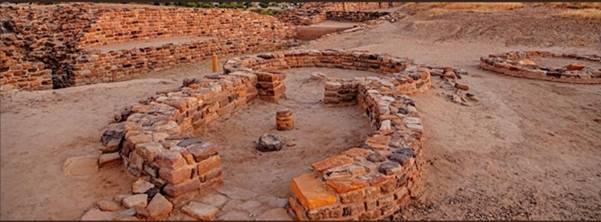
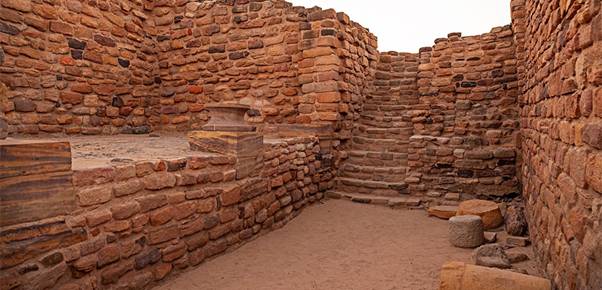
India’s nomination of Dholavira, the Harappan City in the Rann of Kutch, Gujarat has been inscribed on UNESCO’s World Heritage list. India submitted the nomination dossier for Dholavira: A Harappan City to the World Heritage Centre in January, 2020. The site was on the UNESCO’s tentative list since 2014. Dholavira: a Harappan city, is one of the very few well preserved urban settlements in South Asia dating from the 3rd to mid-2nd millennium BCE.
Prime Minister Shri Narendra Modi tweeted, “Absolutely delighted by this news. Dholavira was an important urban centre and is one of our most important linkages with our past. It is a must visit, especially for those interested in history, culture and archaeology.”

Absolutely delighted by this news.

Dholavira was an important urban centre and is one of our most important linkages with our past. It is a must visit, especially for those interested in history, culture and archaeology. https://t.co/XkLK6NlmXx pic.twitter.com/4Jo6a3YVro— Narendra Modi (@narendramodi) July 27, 2021

The Union Minister of Culture, Tourism and Development of North Eastern Region (DoNER) Sri G Kishan Reddy shared this news on Twitter shortly after the announcement. This follows a few days after the Rudreswara Temple, (also known as the Ramappa Temple) at Palampet, Mulugu district, Telangana State becoming the 39th World Heritage Centre in India.

Shri G Kishan Reddy tweeted, “It gives immense pride to share with my fellow Indians that Dholavira is now the 40th treasure in India to be given @UNESCO World Heritage tag. Another feather in India’s cap as we now enter the Super-40 club for World Heritage Site inscriptions.”

It gives immense pride to share with my fellow Indians that #Dholavira is now the 40th treasure in India to be given @UNESCO’s World Heritage Inscription.

Another feather in India’s cap as we now enter the Super-40 club for World Heritage Site inscriptions. pic.twitter.com/yHyHnI6sug— G Kishan Reddy (@kishanreddybjp) July 27, 2021
With this successful nomination, India has 40 world heritage properties overall, which includes 32 cultural, 7 natural and one mixed property. The Union Minister for Culture was referring to the countries that have 40 or more World Heritage sites and apart from India, this now contains Italy, Spain, Germany, China and France. The Minister also observed in his tweet how India has added 10 new world Heritage sites since 2014, and this is testimony to the Prime Minister’s steadfast commitment in promoting Indian culture, heritage and the Indian way of life.
Image

Shri G Kishan Reddy tweeted, “Today is a proud day for India, especially for the people of Gujarat. Since 2014, India has added 10 new World Heritage sites – one fourth of our total sites. This shows PM @narendramodi’s steadfast commitment in promoting Indian culture, heritage and the Indian way of life.”

About the Harappan city of Dholavira

Dholavira: a Harappan city, is one of the very few well preserved urban settlements in South Asia dating from the 3rd to mid-2nd millennium BCE. Being the 6th largest of more than 1,000 Harappan sites discovered so far, and occupied for over 1,500 years, Dholavira not only witnesses the entire trajectory of the rise and fall of this early civilization of humankind, but also demonstrates its multifaceted achievements in terms of urban planning, construction techniques, water management, social governance and development, art, manufacturing, trading, and belief system. With extremely rich artefacts, the well preserved urban settlement of Dholavira depicts a vivid picture of a regional centre with its distinct characteristics that also contributes significantly to the existing knowledge of Harappan Civilization as a whole.

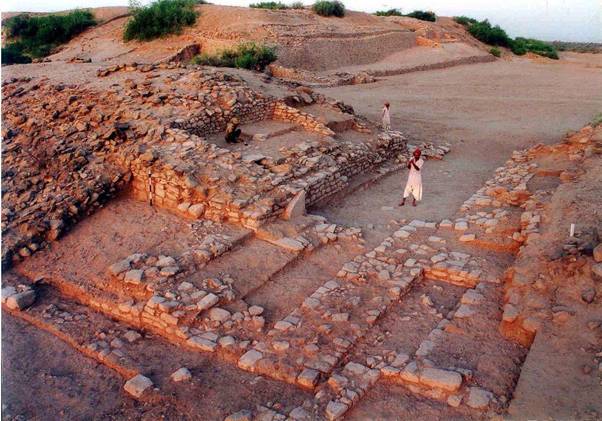
The property comprises two parts: a walled city and a cemetery to the west of the city. The walled city consists of a fortified Castle with attached fortified Bailey and Ceremonial Ground, and a fortified Middle Town and a Lower Town. A series of reservoirs are found to the east and south of the Citadel. The great majority of the burials in the Cemetery are memorial in nature.

The configuration of the city of Dholavira, during its heyday, is an outstanding example of planned city with planned and segregated urban residential areas based on possibly differential occupational activities, and a stratified society. Technological advancements in water harnessing systems, water drainage systems as well architecturally and technologically developed features are reflected in the design, execution, and effective harnessing of local materials. Unlike other Harappan antecedent towns normally located near to rivers and perennial sources of water, the location of Dholavira in the island of Khadir was strategic to harness different mineral and raw material sources (copper, shell, agate-carnelian, steatite, lead, banded limestone, among others) and to facilitate internal as well as external trade to the Magan (modern Oman peninsula) and Mesopotamian regions.

Dholavira is an exceptional example of a proto-historic Bronze Age urban settlement pertaining to the Harappan Civilization (early, mature and late Harappan phases) and bears evidence of a multi-cultural and stratified society during the 3rd and 2nd millennia BCE. The earliest evidence can be traced back to 3000 BCE during the early Harappan phase of the Harappan Civilization. This city flourished for nearly 1,500 years, representing a long continuous habitation. The excavated remains clearly indicate the origin of the settlement, its growth, zenith and the subsequent decline in the form of continuous changes in the configuration of the city, architectural elements and various other attributes.

Dholavira is an outstanding example of Harappan urban planning, with its preconceived city planning, multi-layered fortifications, sophisticated water reservoirs and drainage system, and the extensive use of stone as a building material. These characteristics reflect the unique position Dholavira held in the entire gamut of Harappan Civilization.

The expansive water management system designed to store every drop of water available shows the ingenuity of the people to survive against the rapid geo-climatic transformations. Water diverted from seasonal streams, scanty precipitation and available ground was sourced, stored, in large stone-cut reservoirs which are extant along the eastern and southern fortification. To further access water, few rock-cut wells, which date as one of the oldest examples, are evident in different parts of the city, the most impressive one being located in the citadel. Such elaborate water conservation methods of Dholavira is unique and measures as one of the most efficient systems of the ancient world.

Ministry of Culture Press Release dated 27 July 2021

‘Renewables Integration in India 2021’

A report on “Renewables Integration in India 2021” was jointly launched by Dr. Rakesh Sarwal, Additional Secretary, NITI Aayog & Mr. Keisuke Sadamori, Director of Energy Markets and Security, IEA on 22nd July, 2021. The report is based on the outcome of three states workshops held with the Governments of Maharashtra, Karnataka and Gujarat to understand the specific energy transition challenges faced by these renewable-rich states. The report uses IEA modelling results to show the effects of different flexibility options on the power system.

The report highlights that India’s power system can efficiently integrate renewables (175 GW by 2022 and 450 GW by 2030), but it would require identification of resources and proper planning, regulatory, policy and institutional support, energy storage and advance technology initiatives.

Indian states need to employ a wide range of flexibility options – such as demand response, more flexible operation of coal based power plants, storage, and grid improvements – to transition to cleaner electricity systems. Larger shares of renewables can be better managed by shifting time of use in agriculture. Time of Use (ToU) tariffs will be an effective tool to incentivise demand side management and encourage flexible consumption. 

Mr. Keisuke Sadamori, the IEA Director of Energy Markets and Security, indicated that the joint report underscores IEA’s commitment to provide support to India with its clean energy transition agenda.

Launching the report, Dr. Rakesh Sarwal, Additional Secretary, NITI Aayog, said that the joint report provides useful suggestions for the states to consider to best manage their integration challenge.

Mr. Amitesh Kumar Sinha mentioned that after 2023-24, RE integration will become an issue and could be addressed through supply and demand side measures. He also emphasized the role of distributed solar which will play a major role in reducing integration challenges. Mr. Vivek Kumar Dewangan, Additional Secretary, Ministry of Power said that the report on renewables integration will serve as repository of vast knowledge for stakeholders in India. He highlighted Government’s policies on thermal power plant flexibility and strengthening of transmission network through green corridors and stressed on the need for cost effective solutions for storage technologies.

Mr. Dinesh Waghmare, Principal Secretary (Energy), Government of Maharashtra, stated that Ministry of Power proposed Market Based Economic Dispatch (MBED) model for better optimization of scheduling and economic dispatch of generation capacities purely on economic principles which will replace the current practice of Self Scheduling by Discom.

Dr. N Manjula, Managing Director, Karnataka Power Transmission Corporation Limited emphasized that to absorb maximum RE power, State has shifted 70% -80% agriculture load to the day time, providing incentives to industrial consumers for consuming more electricity and increasing State share in the Green Energy Trading (now, approx. 50%). All these measures have helped to reduce the curtailments, which is almost zero now. Government of Karnataka is in the process of bringing in new RE policy. 

Mr. K V S Baba, Chairman and Managing Director, POSOCO stated that RE integration can start with proper resources planning and better implementation of technologies, such as Artificial Intelligence, base power system management and smart grid intervention.

Mr. Anand Kumar, Former Chairman, Gujarat Electricity Regulatory Commission was of the view that old regulations needs to be revised and regulatory commissions need to play more proactive role to implement the revised regulations. Smart meters, Time of the Day tariff and overall demand response program would be useful for RE load management.

Sh. Rajnath Ram, Adviser (Energy) concluded the meeting with remarks that the NITI Aayog looks forward to giving continuous support to the state governments in order to support their development plan for affordable, secure and clean power systems of the future.

*****

NITI Aayog Press Release 24 July 2021

Upgradation of Agriculture Technology

Indian Council of Agricultural Research (ICAR) is continuously working to upgrade technology and provide quality seeds to farmers. During this process the advancements made in the agricultural sciences both within India and outside are considered for their replication under the suitable farming situations. ICAR focuses on development/ adoption of new technologies such as- high yielding and multi-stress resistant/tolerant varieties/hybrids in major crops; multi-nutrients rich varieties of rice, wheat, maize, lentil and pearl millet and improved quality of mustard and soybean; blast resistant wheat varieties; transgenic varieties in cotton, pigeonpea and chickpea; exploitation of gene editing technology for improving desired traits in rice and wheat and development of extra-early/early maturing varieties of pulses especially mungbean and pigeonpea. During 2014 till January 2021, a total of 1575 varieties of 70 field crops have been developed which include 770 of cereals, 235 of oilseeds, 236 of pulses, 170 of fibre crops, 104 of forage crops, 52 of sugarcane and 8 of other crops. In addition, 288 varieties of horticultural crops have also been released and notified. Besides, 150 seed hubs in pulses and oilseeds have also been established in the country to produce and distribute quality seed of pulses and oilseeds. ICAR has developed several locations specific, cost effective, eco-friendly, socially acceptable scientific farming practices in farmers’ participatory mode addressing issues at ground level keeping in view the farmers’ resource availability, traditional indigenous technology. ICAR has developed several improved farm implements/machines, process protocols and value-added products to reduce input costs, drudgery and post-harvest losses in production post production agriculture.

For small holder farmers, ICAR has developed 60 Integrated Farming System (IFS) models including 8 Integrated Organic Farming System models for adoption in 22 states and 3 Union Territories. To promote organic farming in the country, 39 crops based 51 cropping systems have been developed, which are suitable for farming in 12 states. Government of India is promoting organic farming and zero budget natural farming under various schemes. These are traditional agricultural technologies which uses cattle and are beneficial for small farmers. Pramaparagat Krishi Vikas Yojana (PKVY) scheme provides an assistance of Rs. 50,000 per ha for three years to farmers to use organic inputs. Mission Organic Value Chain Development for North Eastern Region (MOVCDNER) provides Rs. 25,000 per ha for three years for farmers to use organic inputs. Also, this scheme has provision up to Rs. 2 crores for formation of FPOs, capacity building and post-harvest infrastructure.

Introduction of fuel driven farm equipment and tractors have ensured completing different farm operations within their timeliness and saved a lot of cost of operation with reduced drudgery. In order to prevent adverse effect of chemical fertilizers, the Council is advocating judicious use of chemical fertilizers through soil test based balanced and integrated nutrient management encompassing conjunctive use of both inorganic and organic sources of nutrients viz. FYM/Compost, biofertilizers, green manures etc. to the farmers.

This information was given in a written reply by the Union Minister of Agriculture and Farmers Welfare Shri Narendra Singh Tomar in Lok Sabha today.

****

Ministry of Agriculture & Farmers Welfare Press Release dated 20 July 2021

Improving Krishi Vigyan Kendras (KVKs)

Ministry of Agriculture & Farmers Welfare

Posted Date:- Jul 20, 2021

The following steps have been taken by the Indian Council of Agricultural Research to make Krishi Vigyan Kendras (KVKs) more effective in the interest of farmers:

  • Technical staff of the KVKs are regularly trained on latest agricultural technologies for upgrading their knowledge and skill.
  • Management Development Programme is organized for the newly recruited heads of the KVKs for better management of KVKs.
  • KVK Portal has been developed to integrate all the KVKs of the country for online monitoring and management of KVKs and to disseminate useful knowledge and technologies to farmers
  • The KVKs are provided with different demonstration units, farm machineries and vehicles. 
  • As per requirement, large number of KVKs have been strengthened with other infrastructure facilities like, Pulses seed hubs, soil testing kits, micro-irrigation systems, etc. during last five years.
  • Collaboration with different Departments have been made for different activities like establishment of District Agro-Met Units in KVKs in convergence with India Meteorological Department; and organization of Frontline Demonstrations on oilseeds and pulses and Skill Development Training Programmes in convergence with Department of Agriculture, Cooperation and Farmers’ Welfare.

This information was given in a written reply by the Union Minister of Agriculture and Farmers Welfare Shri Narendra Singh Tomar in Lok Sabha today.

****

One District One Focus Product Scheme

The One District One Focus Product (ODOFP) programme cover products of agriculture and allied sectors for 728 districts of the country. The Government has decided to converge resources from ongoing centrally sponsored schemes such as Mission for Integrated Development of Horticulture (MIDH), National Food Security Mission (NFSM), Rashtriya Krishi Vikas Yojana (RKVY), Paramparagat Krishi Vikas Yojana (PKVY), schemes of Ministry of Fisheries, Animal Husbandry and Dairying for ODOFP.

The Ministry of Food Processing Industries (MoFPI) provides financial support  under Centrally Sponsored Pradhan Mantri Formalisation of Micro Food Processing Enterprises Scheme (PM FME Scheme) for One District One Focus Product. PM FME provides financial, technical and business support for upgradation of existing micro food processing enterprises etc. The scheme adopts One District One Product (ODOP) approach to reap the benefits of scale in terms of procurement of inputs, availing common services and marketing of products.

The identified products have potential for both domestic demand and export. PM FME scheme envisages strengthening backward and forward linkages, provision of common facilities, incubation centres, training, research and development (R&D), marketing and branding. The enhanced capacity of processing and value addition in agriculture and allied sector products is for better price realization by the farmers. This scheme is being implemented for a period of five years from 2020-21 to 2024-25.

This information was given in a written reply by the Union Minister of Agriculture and Farmers Welfare Shri Narendra Singh Tomar in Lok Sabha today.

****

Ministry of Agriculture & Farmers Welfare Press Release dated 21 July 2021

National Project on Organic Farming

Under Capital investment Subsidy Scheme (CISS) of National Project on Organic Farming (NPOF), 100% assistance is provided to State Government / Government agencies for setting up of mechanized fruit/vegetable market Agro waste compost production unit  up to a maximum limit of Rs.190.00 lakh /unit (for 3000 Total Per Annum (TPA) capacity).  Similarly, for individuals/ private agencies assistance up to 33% of cost limit to Rs 63 lakh/unit as capital investment is provided. Under CISS until now, 12 Fruit and vegetable compost units have been established including 4 units in the State of Tamil Nadu and Rs. 148.332 lakh has been released to the State for this purpose.

Completed Projects of Production Units under CISS since 2012-13 till date (as per NABARD)

https://pib.gov.in/PressReleaseIframePage.aspx?PRID=1737286&RegID=3&LID=1

Ministry of Agriculture & Farmers Welfare Press Release dated 21 July 2021

Progress in Doubling Farmer Income

The strategy adopted by the Government for increasing the income is (i) higher volume of output through higher productivity (ii) lower cost of production and (iii) higher real remunerative returns on the farmers’ produce.

In case of production the farmers have been registering higher productivity across all segments of Agriculture. There has been record growth in total output of food grains, oilseeds, horticulture, milk and so on. The annual production under various sectors has increased appreciably as seen at the end of the year 2020-21. These include a food grains output of 303.34 MTs as against 252.23 MTs(2015-16); 326.58 MTs of fruits & vegetables as against 259.3 MTs (2015-16); 208 MTs of milk as against 155.49 MTs (2015-16).

Major emphasis has been on post-harvest management, which is  helping  farmers in getting better returns on their produce. These include e-NAM, new state marketing Act, direct trade, contract farming, FPOs, agri-logistics, food processing and so on besides healthier procurement operations.

Government’s emphasis on robust procurement of agricultural produce has also ensured better returns to farmers and served as an incentive. In addition to increases in procurement of paddy & wheat through FCI, the quantum of procurement of pulses & oilseeds has leap frogged since 2014-15. Under the new procurement scheme called PM-AASHA, NAFED has been procuring much more than before.

As of now, there is no latest estimate of annual income of farmers achieved and the percentage annual increase vis-a-vis the base year 2015-16. For the purpose of arriving at the average annual income for the year 2015-16, the DFI Committee extrapolated the NSSO survey based income estimates for the year 2012-13, and estimated that average farmers income stands at Rs. 96,703/- per year for the year 2015-16 at 2015-16 prices.

PM-KISAN is an ongoing and continuous Scheme. The entire responsibility of identification of beneficiaries rests with the State / UT Governments. An exclusive web-portal http://www.pmkisan.gov.in has been launched for the Scheme. The financial benefits are released to the beneficiaries on the basis of the data of farmers prepared and uploaded by them on the PM-KISAN web-portal. The data uploaded by the State/UT Governments undergoes three levels of validation. Data that passes all three levels of validation is then processed for the release of benefits. Any data that is found incorrect is sent back to the respective States/UTs for correction.

Budgetary allocations are made at the beginning of financial year based on the anticipated expenditure to be incurred in the financial year, however, any additional requirement of funds based on the actual expenditure is fulfilled by the Government by way of supplementary grants.

The Pradhan Mantri Kisan Samman Nidhi (PM-KISAN) Scheme is being implemented with a view to provide income support to all landholding farmer families across the country, to enable them to take care of expenses related to agriculture and allied activities as well as domestic needs.  The Scheme, effective from 1.12.2018, aims to provide a payment of Rs.6000/- per year for the farmers’ families with cultivable land holding, subject to certain exclusions.  The financial benefit of Rs.6000/- is being released by the Central Government in three 4-monthly instalments of Rs.2000/- over the year directly into the bank accounts of the eligible farmers under Direct Benefit Transfer mode. Any additional requirement of funds will be fulfilled by Government by way of supplementary grants. Central Government has been requesting State Governments from time to time so that all eligible farmers are covered under PM-KISSAN Scheme.

This information was given in a written reply by the Union Minister of Agriculture and Farmers Welfare Shri Narendra Singh Tomar in Lok Sabha today.

Ministry of Agriculture & Farmers Welfare Press Release dated 20 July 2021