In 2020-21, India exported fruits and vegetables valued at Rs 11,019 crore compared to Rs 10,114 crore worth of exports in 2019-20

In a big boost to AgriBusiness, First consignment of vegetables exported to UAE from Uttarakhand


In 2020-21, India exported fruits and vegetables valued at Rs 11,019 crore compared to Rs 10,114 crore worth of exports in 2019-20

In a major boost to agricultural produce exports from Uttarakhand, first consignment of vegetables including curry leaf, okra, pear and bitter gourd sourced from the farmers of Haridwar, was exported today to Dubai, United Arab Emirates.

The exports of vegetables come after a consignment of millets grown in Uttarakhand was exported to Denmark in May, 2021.

APEDA, in collaboration with Uttarakhand Agriculture Produce Marketing Board (UKAPMB) & Just Organik, an exporter, sourced & processed ragi (finger millet), and jhingora (barnyard millet) from farmers in Uttarakhand for exports, which meets the organic certification standards of the European Union.

The Uttarakhand government has been supporting organic farming. UKAPMB, through a unique initiative, has been supporting thousands of farmers for organic certification. These farmers produce mainly millets such as Ragi, Barnyard millet, Amaranthus etc.

Agricultural and Processed Food Products Export Development Authority (APEDA) has been carrying out promotional activities to bring Uttarakhand on the agricultural and processed food products export map of India. APEDA is planning to provide financial assistance for setting up a pack house in Uttarakhand which would fulfil the mandatory requirement or infrastructure for export of fresh fruits and vegetables to the international market.

APEDA would continue to focus on the Uttarakhand region both in terms of capacity building, quality upgradation, and infrastructure development by linking buyers to farmers through strengthening the entire supply chain of agricultural produce.

In 2020-21, India exported fruits and vegetables valued at Rs 11,019 crore compared to Rs 10,114 crore worth of exports in 2019-20, which is an increase of close to 9%.

APEDA undertakes market promotion activities for export of food products, market intelligence for making informed decisions, international exposure, skill development, capacity building and high-quality packaging. 

Ministry of Commerce & Industry 26 July 2021
Kandla becomes first Green SEZ

Achieves CII’s IGBC ( Indian Green Building Council) Green Cities Platinum Rating

IGBC Green Platinum rating awarded to Kandla SEZ

Government of India working towards ensuring environmentally sustainable development

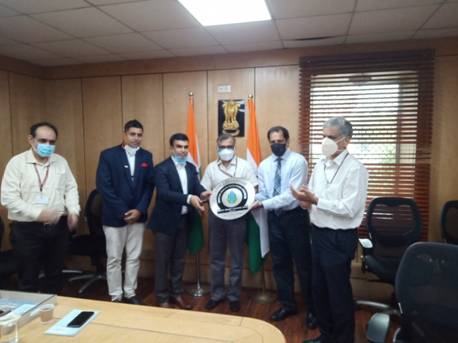
Kandla SEZ (KASEZ) was awarded IGBC Platinum Rating today. KASEZ is the First Green SEZ to achieve the IGBC Green Cities Platinum Rating for Existing Cities.

The plaque was presented to KASEZ team consisting of Shri Satyadeep Mahapatra, Joint Development Commissioner and Shri Chandan Singh, Appraiser in the presence of senior officials of the Department Commerce and DGFT.

The efforts of KASEZ team were applauded especially noting the fact that this was accomplished in Bhuj region where water conservation and afforestation are critical interventions. This was major achievement and is part of activities envisaged under the commitment of the Government to the Green SEZs Mission as part of celebrations marking India@75 – Azadi ka Amrut Mahotsav.  It may be noted that Government of India working towards ensuring environmentally sustainable development through a series of measures and efforts that encompass many Ministries.

IGBC Platinum rating has been awarded for ‘Green master planning, policy initiatives and implementation of green infrastructure’ by CII’s Indian Green Building Council (IGBC).

The recognition is set to pave way for all the other SEZs in the country to emulate the green initiative and efforts of Kandla SEZ.

***

Ministry of Commerce & Industry Press Release dated 26 July 2021

Upgradation of Agriculture Technology

Indian Council of Agricultural Research (ICAR) is continuously working to upgrade technology and provide quality seeds to farmers. During this process the advancements made in the agricultural sciences both within India and outside are considered for their replication under the suitable farming situations. ICAR focuses on development/ adoption of new technologies such as- high yielding and multi-stress resistant/tolerant varieties/hybrids in major crops; multi-nutrients rich varieties of rice, wheat, maize, lentil and pearl millet and improved quality of mustard and soybean; blast resistant wheat varieties; transgenic varieties in cotton, pigeonpea and chickpea; exploitation of gene editing technology for improving desired traits in rice and wheat and development of extra-early/early maturing varieties of pulses especially mungbean and pigeonpea. During 2014 till January 2021, a total of 1575 varieties of 70 field crops have been developed which include 770 of cereals, 235 of oilseeds, 236 of pulses, 170 of fibre crops, 104 of forage crops, 52 of sugarcane and 8 of other crops. In addition, 288 varieties of horticultural crops have also been released and notified. Besides, 150 seed hubs in pulses and oilseeds have also been established in the country to produce and distribute quality seed of pulses and oilseeds. ICAR has developed several locations specific, cost effective, eco-friendly, socially acceptable scientific farming practices in farmers’ participatory mode addressing issues at ground level keeping in view the farmers’ resource availability, traditional indigenous technology. ICAR has developed several improved farm implements/machines, process protocols and value-added products to reduce input costs, drudgery and post-harvest losses in production post production agriculture.

For small holder farmers, ICAR has developed 60 Integrated Farming System (IFS) models including 8 Integrated Organic Farming System models for adoption in 22 states and 3 Union Territories. To promote organic farming in the country, 39 crops based 51 cropping systems have been developed, which are suitable for farming in 12 states. Government of India is promoting organic farming and zero budget natural farming under various schemes. These are traditional agricultural technologies which uses cattle and are beneficial for small farmers. Pramaparagat Krishi Vikas Yojana (PKVY) scheme provides an assistance of Rs. 50,000 per ha for three years to farmers to use organic inputs. Mission Organic Value Chain Development for North Eastern Region (MOVCDNER) provides Rs. 25,000 per ha for three years for farmers to use organic inputs. Also, this scheme has provision up to Rs. 2 crores for formation of FPOs, capacity building and post-harvest infrastructure.

Introduction of fuel driven farm equipment and tractors have ensured completing different farm operations within their timeliness and saved a lot of cost of operation with reduced drudgery. In order to prevent adverse effect of chemical fertilizers, the Council is advocating judicious use of chemical fertilizers through soil test based balanced and integrated nutrient management encompassing conjunctive use of both inorganic and organic sources of nutrients viz. FYM/Compost, biofertilizers, green manures etc. to the farmers.

This information was given in a written reply by the Union Minister of Agriculture and Farmers Welfare Shri Narendra Singh Tomar in Lok Sabha today.

****

Ministry of Agriculture & Farmers Welfare Press Release dated 20 July 2021

APEDA inks MoU with NAFED for strengthening export linkage of Farmer Cooperatives & FPOs

For harnessing exports potential of agricultural and processed food products of cooperatives as well Farmer Producer Organizations (FPOs), the Agricultural and Processed Food Products Export Development Authority (APEDA) today signed Memorandum of Understanding (MoU) with National Agricultural Cooperative Marketing Federation of India Ltd (NAFED).

According to the MoU, the key areas of cooperation include facilitating APEDA registered exporters getting assistance under all the Govt. of India schemes implemented through NAFED. The MoU also envisages ensuring sustainability and growth of exports by Cooperatives by addressing issues such as technology, skill, quality products and market access.

The collaborations between APEDA, which functions under Ministry of Commerce & NAFED, registered under the Multi State Co-operative Societies Act, also support engaging Cooperatives involved in agricultural production for improving the quality of agri-produce and its consolidation for better price realization to the farmers.

APEDA would facilitate exports by the Cooperatives, FPO’s, partners and associates identified and promoted by NAFED.

APEDA and NAFED will also facilitate participation of Farmers’ Cooperatives in global trade including B2B & B2C fairs to be organized in India and abroad and also to mutually cooperate in international business development & promotions.

The MoU also entails providing assistance towards capacity building of Cooperative Societies, Self-Help Groups (SHGs) for their social & environmental compliances and skilling as per international standards. Both the organisations would organize awareness programs Skill Development Programmes and Workshops at Regional, State and National levels.

APEDA and NAFED have also agreed to work in close coordination towards sustainable Cluster development of the clusters in various States notified under Agri Export policy.

The MoU was signed by Dr. M. Angamuthu, Chairman APEDA and Mr. Sanjeev Kumar Chadha, Managing Director, NAFED. The MoU was signed for utilising both the organisations’ expertise by mutually working together to synergize the activities in the interest of agriculture and allied sectors for bringing better value to the stakeholders.

APEDA has been focusing on collaborative approach to bring synergy with number of organisations and institutions having inherent professional and specialised expertise in different areas for capacity building of various stakeholders and providing solutions for addressing some of the identified interventions for the development of Agriculture and its export enhancement in consonance with the objectives set under Agri Export Policy (AEP) announced by Government of India in 2018.

AEP was framed with a focus on agriculture export oriented production, export promotion, better price realization to farmer and synchronization within policies and programmes of Government of India. It focuses on “Farmers’ Centric Approach” for improved income through value addition at source itself to help minimize losses across the value chain.

The exports policy therefore suggests to adopt the approach of developing product specific clusters in different agro climatic zones of the country to help in dealing with various supply side issues viz., soil nutrients management, higher productivity, adoption of market oriented variety of crop, use of Good Agriculture Practices (GAP) etc.

APEDA has been engaged with State Governments for the implementation of AEP. The States of Maharashtra, U.P., Kerala, Nagaland, Tamil Nadu, Assam, Punjab, Karnataka, Gujarat, Rajasthan, Andhra Pradesh, Telangana, Manipur, Sikkim, Uttarakhand, M.P., Mizoram and Meghalaya have finalized the State specific Action Plan for exports while the action plans of other States are at different stages of finalization.

At present, NAFED is creating a network of honey FPOs across Jammu & Kashmir, Punjab, Haryana, Rajasthan, Madhya Pradesh and Uttar Pradesh. Around 65 FPOs will be part of honey corridor linking north-west to north-eastern regions. NAFED is aiming at bringing all the FPOs associated with honey production for creating requisite infrastructure under the National Beekeeping and Honey Mission, NAFED’s  subsidiary Federation of Indian FPOs and Aggregators (FIFA) is currently partnering with FPOs and private sector

******

Ministry of Commerce & Industry Press release dated 12th July 2021

Indian stem cell & developmental biologist part of WHO advisory committee on human genome editing

Posted Date:- Jul 12, 2021

Indian stem cell and developmental biologist Prof. Maneesha S Inamdar has been part of the WHO Expert Advisory Committee on Developing Global Standards for Governance and Oversight of Human Genome Editing, which released two new companion reports providing the first global recommendations to help ensure that human genome editing is used for public health, with an emphasis on safety, effectiveness, and ethics.

The reports, released on July 12, 2021, contained a forward-looking Governance Framework for oversight mechanisms for research into and potential application of human genome editing technology at institutional, national, regional and international levels.

Professor Maneesha S Inamdar, along with her group, is conducting research at the Jawaharlal Nehru Centre for Advanced Scientific Research, Bengaluru, an autonomous Institute of the Department of Science and Technology (DST) that uses gene-editing tools to manipulate stem cells in vitro. This can generate disease models for scientific insight into human development and devising therapeutic strategies. She pioneered human embryonic stem cell derivation and use in India and has contributed significantly to national and international stem cell guidance documents, ethics committees, and training programs.

As part of the WHO Committee, she contributed scientific knowledge and perspective to provide guidance, expertise and support throughout the project for the conceptualization and development of the WHO Governance Framework and Recommendations on Human Genome Editing. Representing the LMIC countries in Asia, she contributed with the Committee towards ensuring that in addition to scientific considerations, procedural and substantive values and principles such as inclusiveness, diversity, equity, and global health justice identified by the Committee, informed decisions. She is a member of the Education, Engagement, and Empowerment (3E) subgroup of the Committee, and as part of the committee, she was also involved in making recommendations to the Secretariat and WHO Director-General on global governance structures for human genome editing, considering the relevant broader issues associated with oversight and governance of emerging technologies.

https://www.who.int/publications/i/item/9789240030060

https://www.who.int/publications/i/item/9789240030381

https://www.who.int/publications/i/item/9789240030404

For further details, Prof Maneesha S Inamdar (Email: inamdar@jncasr.ac.in) may be contacted.

Ministry of Science & Technology Press Release dated 12th July 2021

India Aims to Target over 100 Billion “Blue Economy” Through Deep Ocean Mission and Ocean Resources

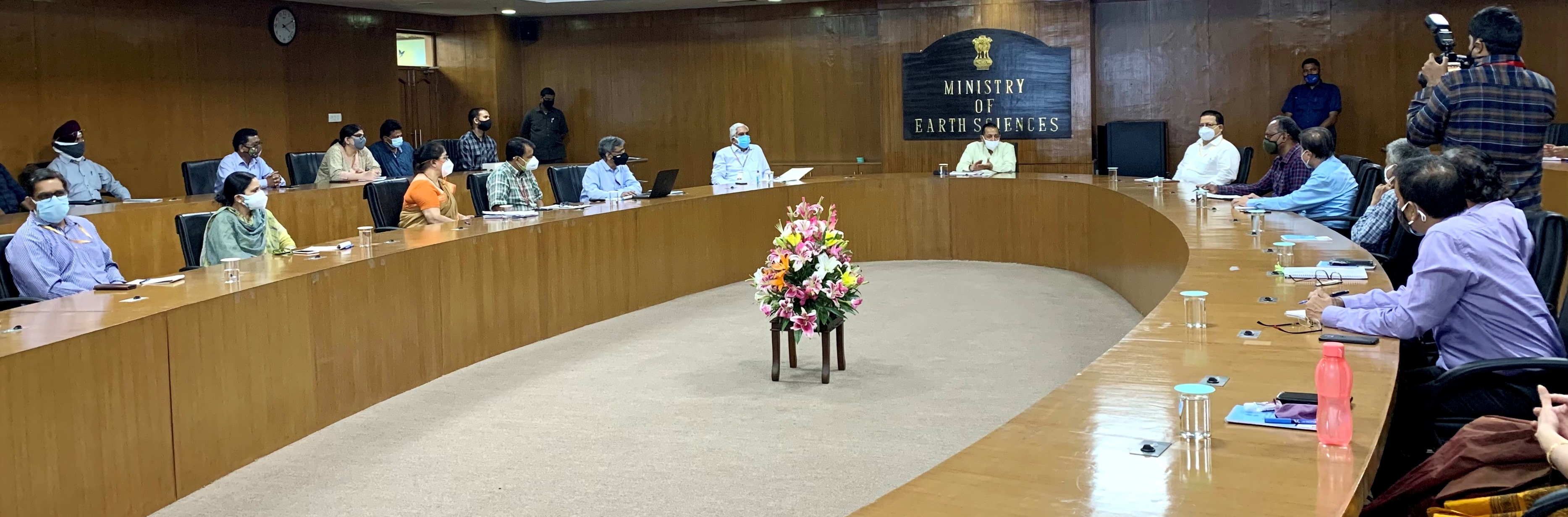
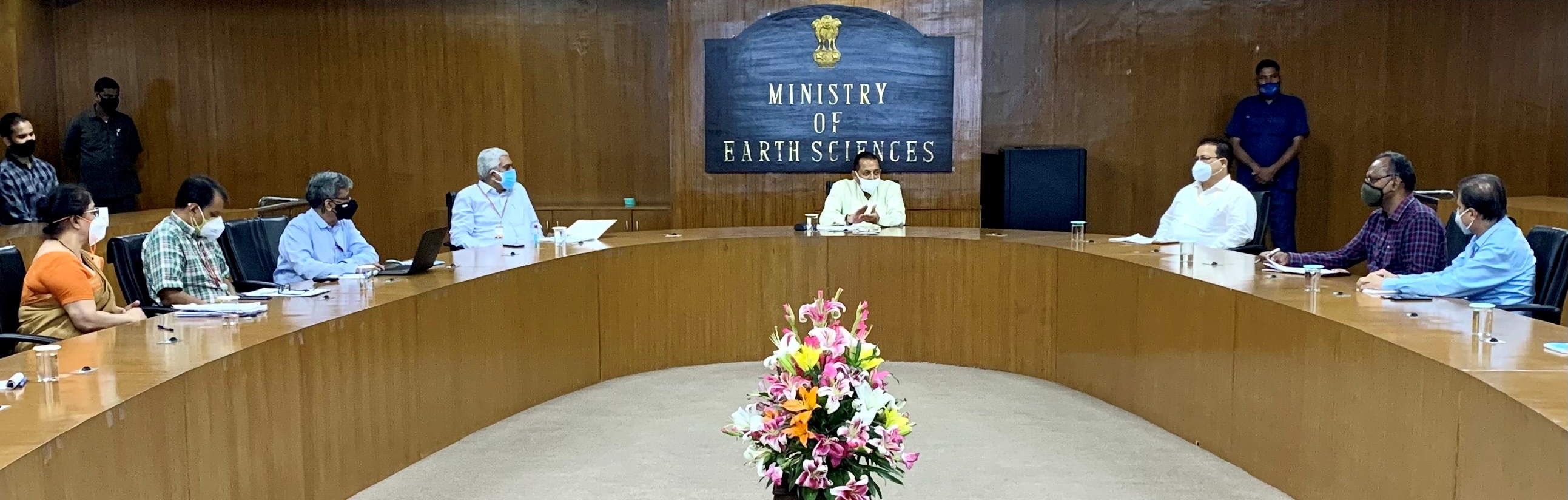
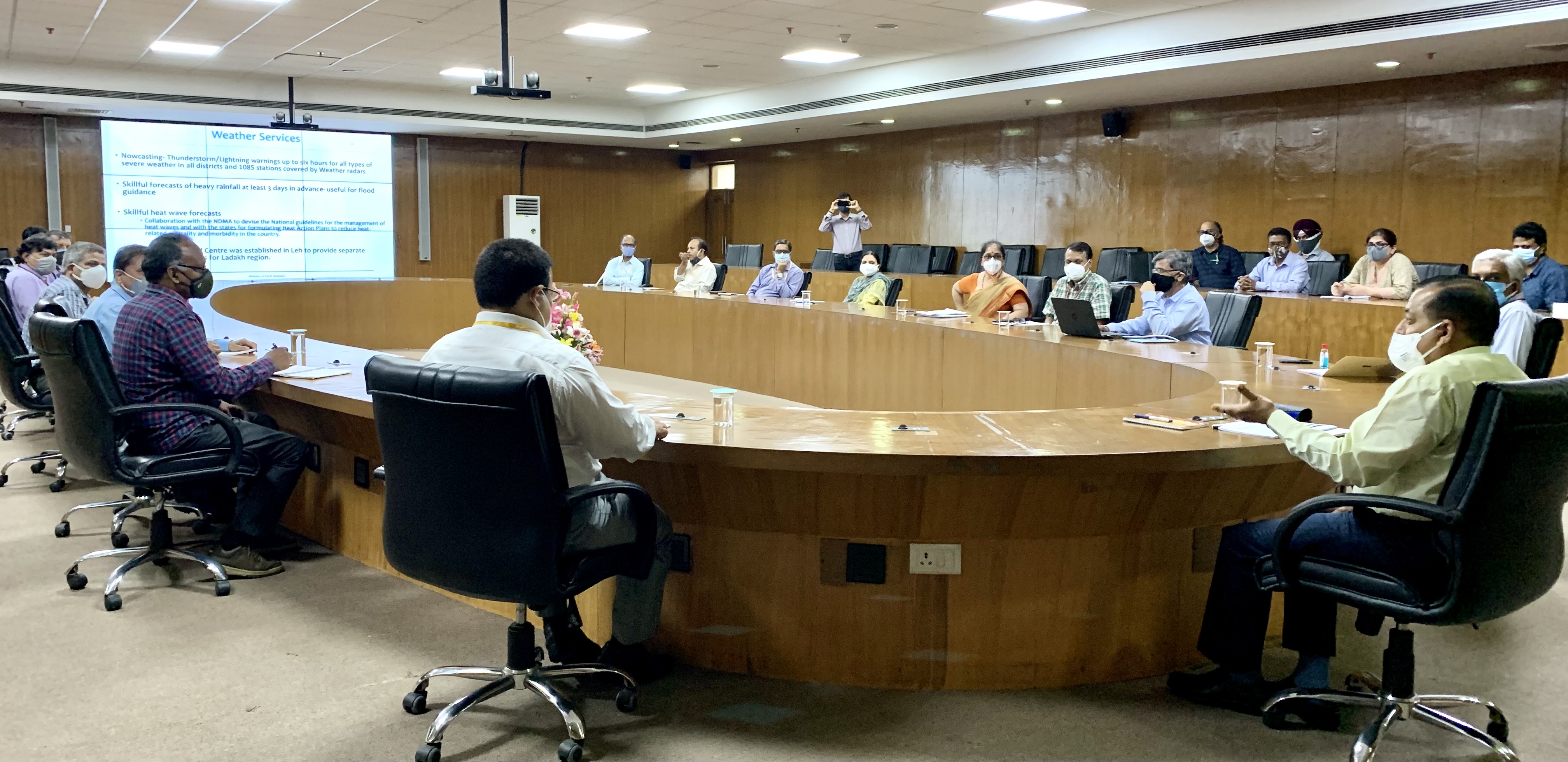
Union Minister of State (Independent Charge) Science & Technology; Minister of State (Independent Charge) Earth Sciences; MoS PMO, Personnel, Public Grievances, Pensions, Atomic Energy and Space, Dr Jitendra Singh today said that in the years to come, India aims to target over 100 billion “Blue Economy” through its Deep Ocean Mission (DOM) and ocean resources.

Addressing the scientists in the Ministry of Earth Sciences here today, the Minister reiterated the importance of exploring the ocean to give further fillip to the growth of country’s economy. He said, this could be a new avenue to supplement the country’s economy to the tune of an estimated Rs. 110 billion. “Deep Ocean Mission” planned by the Ministry of Earth Sciences will be carried out in collaboration with Indian Space Research Organisation(ISRO) and it will be a major step in the direction of integrating and bringing together the efforts of the different streams of science operating under different Ministries in the government, he said.

In addition, Dr Jitendra Singh said, the “Deep Ocean Mission” will also have far-reaching benefits for the common man. For example, it could help in providing clean drinking water and explore the avenues of desalination of water as well as extracting minerals from the ocean belt.

The Minister directed the officials of India Meteorological Department (IMD) to use social media platforms more effectively, so that accurate information can be disseminated quickly. Achievements of the Ministry, especially those benefiting the common man need to be highlighted through the Media, he said. He urged the officials to cut down on wasteful expenditure and explore the feasibility of merging autonomous bodies under the Ministry.

Director Generals, senior scientists and officials of the administrative wings of the Ministry attended the review meeting.

The Ministry of Earth Sciences has ten Institutes including five autonomous bodies under its ambit. The Ministry carries out its research & development and operational activities under five major umbrella schemes.

*****

Ministry of Science & Technology Press release dated 12th July 2021

Newly built Center of Excellence for Research & Analysis of Narcotics and Psychotropic Substances of the National Forensic Science University in Ahmedabad

The Union Home Minister Shri Amit Shah inaugurated the newly built Center of Excellence for Research & Analysis of Narcotics and Psychotropic Substances of the National Forensic Science University in Ahmedabad


Inauguration of virtual training on Investigation of Crimes Against Women

Keeping in view excellence and reputation of National Forensic Science University worldwide, it was decided to establish this Center

A small seed sown by Prime Minister Shri Narendra Modi in 2009 has grown into a huge banyan tree that will strengthen Criminal Justice

To make criminal justice system of the country more powerful and result-oriented, very important to take make this University the best in the country

The era of use of third degree is over and now the toughest of criminals can be brought to justice on the basis of scientific investigation

A lot of emphasis has been laid on scientific education in our New Education Policy, the Prime Minister also stresses that our Education Policy and system should be such that students receive the best knowledge in every field

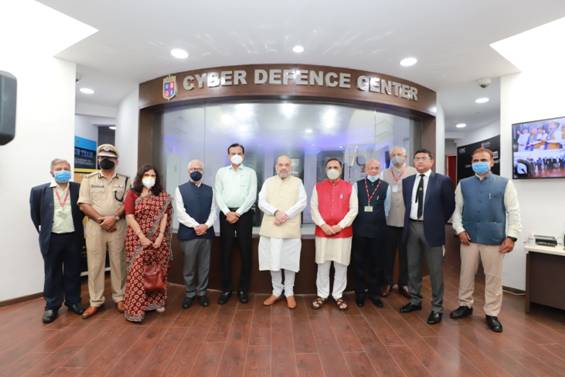
The Cyber Defence Center and Ballistic Research Centerset up in this Center are unique in the whole of Asia and the nation is on course to be self-reliant in this field

The fight against cyber war and cyber crime is very important for us, cyber security is very important for the security of India and to meet the goal of Prime Minister’s five trillion Dollar economy

There are many challenges ahead of India in the 21stCentury, to successfully deal with them we have to strengthen criminal justice, and forensic science is its integral aspect

The government is engaged in a comprehensive dialogue with police officers, judges, lawyers and law universities across the country to bring about radical amendments to the three major laws, – CrPC, IPC and Evidence Act, so that they can be modernized to serve the present day requirements

Our police is accused of either ‘No Action’or ‘Extreme Action’, what we need is ‘Just Action’and this can happen only if we proceed with the investigation based on scientific evidence

The whole country is worried about the bad effects that drugs are having on our society, security and economy

The Government of India, under the leadership of Shri Narendra Modi, has decided that we will not allow narcotics substances to be smuggled into India and will also not allow India to be a conduit, and towards this objective we have taken many steps in the last two years under the leadership of the Prime Minister

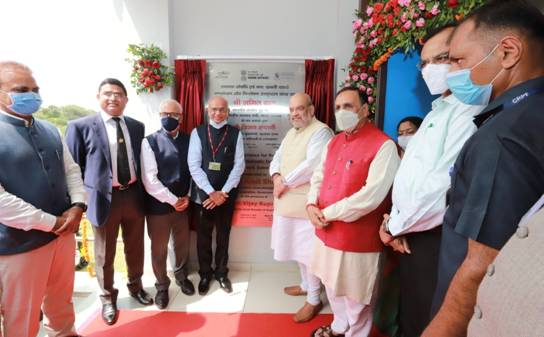
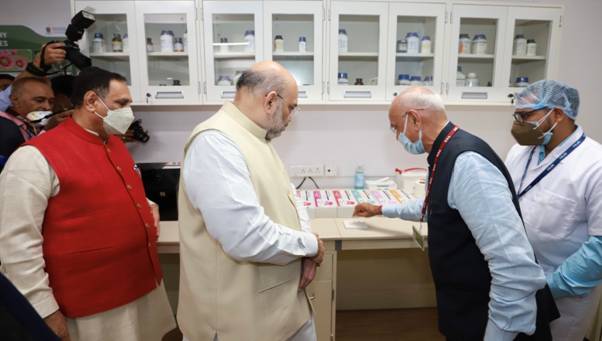
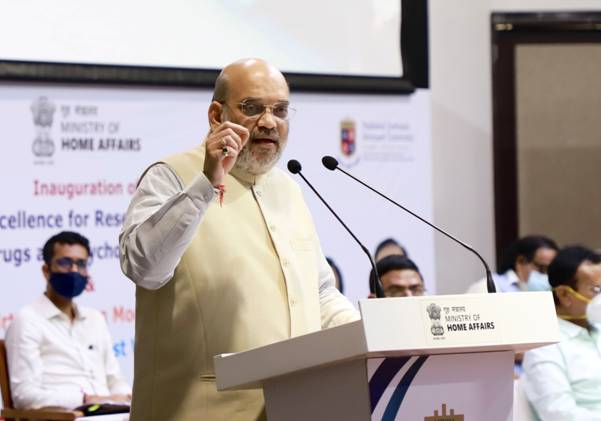
The Union Home Minister, Shri Amit Shah inaugurated the newly built Center of Excellence for Research & Analysis of Narcotics and Psychotropic Substances of the National Forensic Science University in Ahmedabad today. Shri Shah also inaugurated a virtual training on Investigation of Crimes Against Women. Gujarat Chief Minister Shri Vijay Rupani, State Home Minister Shri Pradeep Singh Jadeja, Union Home Secretary Shri Ajay Bhalla and many senior officers of Central and State Government were also present on this occasion.

In his address, Shri Amit Shah said that when the government was formed for the second time under the leadership of Prime Minister Shri Narendra Modi, it was decided to establish this Center in view of the excellence and prestige of the National Forensic Science University worldwide and it was the most appropriate decision. The Union Home Minister said that when the Gujarat Forensic Science University was formed, at that time Shri Narendra Modi was the Chief Minister of Gujarat and he was the Home Minister of the state and when the National Forensic Science University was formed, Shri Narendra Modi is the Prime Minister and he is the Union Home Minister. Shri Amit Shah said that a small seed sown here by Shri Narendra Modi in 2009 has become a huge banyan tree that will strengthen the criminal justice system.

The Union Home Minister said that to make the criminal justice system of the country more powerful and result-oriented, it is very important to make this University the best in the country. He said that the era of use of third degree is over and now the toughest of criminals can be brought to justice on the basis of scientific investigation. Our New Education Policy also lays great emphasis on varied and scientific education. The Prime Minister also stresses that our Education Policy and system should be such that the students get the best knowledge in every field and its biggest gainer will be the National Forensic Science University.

Shri Amit Shah said that 7 States of the country have expressed their desire to open Colleges and Centers of Excellence affiliated to the National Forensic Science University, Gujarat. Shri Shah said that he is confident that this University will set up its branches across the country and offer an opportunity to the youth to come forward in forensic science. The Cyber ​​Defence Center and Ballistic Research Center set up in this Center are unique in the whole of Asia and the nation is on course to be self-reliant in this field. The Union Home Minister said that the fight against cyber war and cyber crime is very important for us as India is an emerging economy. Cyber ​​security is also very important for India’s security and to meet the Prime Minister’s goal of a five trillion Dollar economy. Several new dimensions have been established in the Ballistic Research Center for the testing of bullet proof materials. The materials which were earlier tested in the United States and Europe are now being tested here, it will be of maximum benefit to the Police, Central Armed Police Forces and Army personnel across the country to protect themselves. Shri Amit Shah said that an indigenous kit will also be made in this university to conduct a lot of tests which will be made available to police forces across the country. Wherever narcotics are seized, investigation will be pursued by checking with this kit. The Union Home Minister said that in the last one-and-a-half years, maximum narcotics have been seized, which is a record till now.

The Union Home Minister said that there are many challenges before India in the 21st century and to successfully deal with them, we have to strengthen the Criminal Justice system. Forensic science is an important part of this. In view of the changing faceof crime due to 130 crore population and market, borders with difficult geographical location and neighboring countries, it is very necessary to strengthen forensic science and the criminal justice system. He said that the government is holding a dialogue with police officers, judges, lawyers and law universities across the country to bring about radical changes in the  CrPC, IPC and Evidence Act. We want to modernize them according to today’s requirements. We want to add new streams to meet today’s challenges by removing the things that have become obsolete. I, along with many, suggest that forensic science laboratory visits should be made mandatory for all offenses punishable by more than 6 years. For this it is very important to have mobile forensic labs and an extension in every district. In this, the help of the youth will be needed, for which the National Forensic Science University will have to open its colleges in every state. That is why it is very important to have mobile forensic labs and an extension in every district. We are going to work in this direction very quickly. Shri Amit Shah said that there is a sentence in the Upanishads that the value of Swaraj is justice and I believe that justice will be inculcated by it.

Shri Amit Shah said that our police are accused of no action and extreme action and the police are caught between these two. We need just action, natural action and this can happen only when scientists proceed with the investigation based on evidence. It is very important to move forward in this direction. The Union Home Minister said that the whole country is worried about the ill effects of drugs on our society, security and economy. The Government of India under the leadership of Shri Narendra Modi has decided that we will not allow narcotics substances to enter India. For this, in the last two years under the leadership of the Prime Minister, we have taken many steps. Narco Terror is another threat to India, the money it generates is used for terrorism. It is also very important to stop this. Shri Shah said that the Excellence Center which has been set up here is a complete unit in itself. A system equivalent to the world’s best laboratory has been created in this forensic university in Gujarat.

The Union Home Minister said that he is very happy that the dream conceived by Prime Minister Shri Narendra Modi is being inaugurated today. Shri Amit Shah said that he is confident that this Forensic University will further cement its outstanding identity across the world in the next 4-5 years. The Government of India under the leadership of Prime Minister Modi is committed to take this further. The Union Home Minister extended best wishes to all the officers, scientists and employees on the inauguration of this center on the auspicious occasion of JagannathRathYatra.

Ministry Home Affairs Press release dated 12th July 2021

Rare superluminous supernova shining with borrowed energy source spotted

Ministry of Science & Technology dated Jul 10, 2021

An extremely bright, hydrogen deficient, fast-evolving supernova that shines with the energy borrowed from an exotic type of neutron star with an ultra-powerful magnetic field has been spotted by Indian researchers. Deep study of such ancient spatial objects can help probe the mysteries of the early universe.

Such type of supernovae called SuperLuminous Supernova (SLSNe) is very rare. This is because they are generally originated from very massive stars (minimum mass limit is more than 25 times to that of the Sun), and the number distribution of such massive stars in our galaxy or in nearby galaxies is sparse. Among them, SLSNe-I has been counted to about 150 entities spectroscopically confirmed so far. These ancient objects are among the least understood SNe because their underlying sources are unclear, and their extremely high peak luminosity is unexplained using the conventional SN power-source model involving Ni56 – Co56 – Fe56 decay.

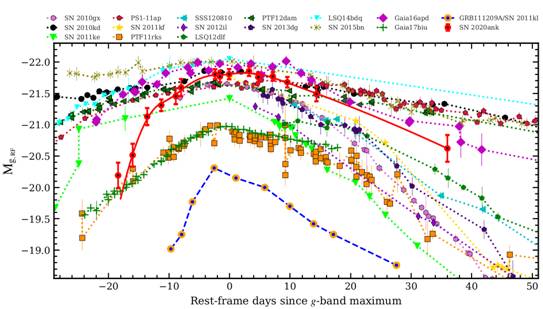
SN 2020ank, which was first discovered by the Zwicky Transient Facility on 2020 January 19, was studied by scientists from Aryabhatta Research Institute of Observational Sciences (ARIES) Nainital, an autonomous research institute under the Department of Science and Technology (DST) Govt. of India from February 2020 and then through the lockdown phase of March and April. The apparent look of the SN was very similar to other objects in the field. However, once the brightness was estimated, it turned out as a very blue object reflecting its brighter character.

The team observed it using special arrangements at India’s recently commissioned Devasthal Optical Telescope (DOT-3.6m) along with two other Indian telescopes: Sampurnanand Telescope-1.04m and Himalayan Chandra Telescope-2.0m. They found that the outer layers of the onion structured Supernovae had been peeled off, and the core was shining with a borrowed energy source. The study led by Amit Kumar, a Ph.D. student working under Dr. S. B. Pandey published in the Monthly Notices of the Royal Astronomical Society, suggested a possibly powering source from an exotic type of neutron star with an ultra-powerful magnetic field (magnetar) with a total ejected mass of ~ 3.6 一 7.2 times the mass of the sun.

The study established the role of 3.6. DOT in exploring very rare distant SLSNe in the future. Deeper investigations could explore the underlying physical mechanisms, possible progenitors, and environments hosting such rare explosions and their possible associations with other energetic explosions like Gamma-ray bursts (GRBs) and Fast Radio Bursts (FRBs).

https://static.pib.gov.in/WriteReadData/userfiles/image/image0014AFH.jpg

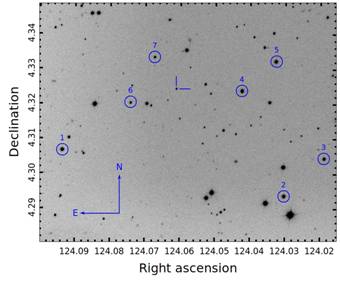
Fig.1: Finding chart of SN 2020ank (5×4 arcmin2 field) along with other local standard stars (marked in circles, IDs 1–7). The R-band image (exposure time = 5 min) observed on 2020 March 19 using the 4K×4K CCD Imager mounted at the axial port of the 3.6m DOT facility. The location of SN is marked with a blue crosshair. North and East directions are also indicated in the image (taken from Kumar Amit et al. (, 2021, MNRAS, 502, 1678K).

https://static.pib.gov.in/WriteReadData/userfiles/image/image002CS2M.jpg

Fig.2: Comparison of the rest-frame g-band light curve of SN 2020ank (in red) with other well-studied SLSNe-I (taken from Kumar Amit et al. (2021, MNRAS, 502, 1678K).

Publication details: https://academic.oup.com/mnras/article/502/2/1678/6103929

Amit Kumar et al., 2021, MNRAS, 502, 678

For more details, Amit Kumar and Dr. S. B. Pandey, 09557470888, shashi@aries.res.in can be

contacted.

*******

National hackathon organized by IIT Madras & Sony India encourages citizens to come up with solutions using IoT Sensor Board

Citizens across the country can now participate in solving India-specific problems of societal interest using IoT Sensor Board through a National hackathon called ‘SAMVEDAN 2021 – Sensing Solutions for Bharat’.

Registrations for this Grand Challenge Competition have commenced on July 1st, 2021, and are open to all Indian nationals residing in India. It is being organized jointly by IIT Madras Pravartak Technologies Foundation (IITM-PTF), along with Sony India Software Centre, and is based on the Sony Semiconductor Solutions Corporation’s SPRESENSE™ Board, which participants can use for this challenge. IITM-PTF is a Technology Innovation Hub (TIH) for Sensor, Networking, Actuators, and Control Systems (SNACS) area supported by the Department of Science and Technology (DST) under the National Mission on Interdisciplinary Cyber-Physical Systems (CPS). 

Calling upon Indians from all over the country to take part in this hackathon, Prof. Ashutosh Sharma, Secretary DST, Government of India, said, “The future is all about a tight convergence of physical systems with communication, computing, information and data gathering, machine sensing, autonomous decisions and actions and control. Thus sensors of all sorts will play a vital role in the Cyber-Physical Systems.”

A team with maximum of three members can register for the grand challenge, which will be held in three stages — quarterfinals, semi-finals and finals. A total of 75 ideas will be selected for the quarter-finals, and among them, 25 best ideas will be chosen for the semi-finals.

There will be seven finalists with prizes for every finalist. Prizes worth 3 Lakhs will be awarded to the best teams. Apart from the prize money, the winners will be eligible for an entrepreneurial support scheme by IIT Madras Pravartak Technologies Foundation. Further, each quarter finalist will be provided with a SPRESENSETM board free of cost by Sony Semiconductor Solutions Corporation through IITM Pravartak Technologies Foundation.

Highlighting the unique aspects of ‘SAMVEDAN 2021,’ Event Coordinator Prof. V. Kamakoti, Department of Computer Science and Engineering, IIT Madras, said, “IITM-PTF is committed not only to identify innovative solutions and talents across the country in the area of sensor-based solutions but also to provide a platform to successful start-ups that could solve societal problems of national importance. SAMVEDAN is one of the platforms to enable this. IITM-PTF plans to offer Entrepreneur-In-Residence scholarship for the top team for a year which will enable them to nurture it into a start-up.”

Speaking about this collaboration with IIT Madras, Mr. Masayuki Toriumi, Managing Director, Sony India Software Centre, said, “We are very pleased to be able to contribute to India’s problems and challenges by using Sony’s leading-edge technology, India’s excellent software engineering resources, and the ecosystem involving the public and private sectors. I hope that more and more people will take advantage of this unique opportunity to participate in the project and come up with innovative ideas that will represent Amazing India.”

For more details contact:

Sairam Radhakrishnan – IIT Madras Media Cell, Chennai

Cell: 9840108083/ Email: sairam.radhakrishnan@footprintglobal.com

Bhavani Giddu – Footprint Global Communications

Cell: 9999500262 / Email: bhavani.giddu@footprintglobal.com

Manmohan Negi – Footprint Global Communications

Cell: 96541 15779/ Email: manmohan.negi@footprintglobal.com

Ministry of Science & Technology Press release dated 09th July 2021*****

Rare superluminous supernova shining with borrowed energy source spotted

An extremely bright, hydrogen deficient, fast-evolving supernova that shines with the energy borrowed from an exotic type of neutron star with an ultra-powerful magnetic field has been spotted by Indian researchers. Deep study of such ancient spatial objects can help probe the mysteries of the early universe.

Such type of supernovae called SuperLuminous Supernova (SLSNe) is very rare. This is because they are generally originated from very massive stars (minimum mass limit is more than 25 times to that of the Sun), and the number distribution of such massive stars in our galaxy or in nearby galaxies is sparse. Among them, SLSNe-I has been counted to about 150 entities spectroscopically confirmed so far. These ancient objects are among the least understood SNe because their underlying sources are unclear, and their extremely high peak luminosity is unexplained using the conventional SN power-source model involving Ni56 – Co56 – Fe56 decay.

SN 2020ank, which was first discovered by the Zwicky Transient Facility on 2020 January 19, was studied by scientists from Aryabhatta Research Institute of Observational Sciences (ARIES) Nainital, an autonomous research institute under the Department of Science and Technology (DST) Govt. of India from February 2020 and then through the lockdown phase of March and April. The apparent look of the SN was very similar to other objects in the field. However, once the brightness was estimated, it turned out as a very blue object reflecting its brighter character.

The team observed it using special arrangements at India’s recently commissioned Devasthal Optical Telescope (DOT-3.6m) along with two other Indian telescopes: Sampurnanand Telescope-1.04m and Himalayan Chandra Telescope-2.0m. They found that the outer layers of the onion structured Supernovae had been peeled off, and the core was shining with a borrowed energy source. The study led by Amit Kumar, a Ph.D. student working under Dr. S. B. Pandey published in the Monthly Notices of the Royal Astronomical Society, suggested a possibly powering source from an exotic type of neutron star with an ultra-powerful magnetic field (magnetar) with a total ejected mass of ~ 3.6 一 7.2 times the mass of the sun.

The study established the role of 3.6. DOT in exploring very rare distant SLSNe in the future. Deeper investigations could explore the underlying physical mechanisms, possible progenitors, and environments hosting such rare explosions and their possible associations with other energetic explosions like Gamma-ray bursts (GRBs) and Fast Radio Bursts (FRBs).

https://static.pib.gov.in/WriteReadData/userfiles/image/image0014AFH.jpg

Fig.1: Finding chart of SN 2020ank (5×4 arcmin2 field) along with other local standard stars (marked in circles, IDs 1–7). The R-band image (exposure time = 5 min) observed on 2020 March 19 using the 4K×4K CCD Imager mounted at the axial port of the 3.6m DOT facility. The location of SN is marked with a blue crosshair. North and East directions are also indicated in the image (taken from Kumar Amit et al. (, 2021, MNRAS, 502, 1678K).

https://static.pib.gov.in/WriteReadData/userfiles/image/image002CS2M.jpg

Fig.2: Comparison of the rest-frame g-band light curve of SN 2020ank (in red) with other well-studied SLSNe-I (taken from Kumar Amit et al. (2021, MNRAS, 502, 1678K).

Publication details: https://academic.oup.com/mnras/article/502/2/1678/6103929

Amit Kumar et al., 2021, MNRAS, 502, 678

For more details, Amit Kumar and Dr. S. B. Pandey, 09557470888, shashi@aries.res.in can be

contacted.

*******

Ministry of Science & Technology Press release dated 09th July 2021