Electrically configured nanochannels eliminating unwanted energy can revolutionize on-chip data communication and processing in future

Scientists have developed electrically configured nanochannels that can eliminate unwanted energy waste and promise wave-based computing. This can revolutionize on-chip data communication and processing in future.       

Conventional electronics is composed of logic circuits having a large number of transistors interconnected by metallic wires. The data carried by electric charges suffer undesirable heating limiting its integration density.

Spintronics, also known as spin electronics, or the study of the intrinsic spin of the electron and its associated magnetic moment, in addition to its fundamental electronic charge, in solid-state devices offer to harness electron spins. Their collective precession can carry information encoded in its amplitude, phase, wavelength, and frequency without any physical motion of particles, eliminating unwanted energy waste and promising wave-based computing.

To this end, Professor Anjan Barman and coworkers from the S. N. Bose National Centre for Basic Sciences, an autonomous institute under the Department of Science and Technology (DST), Government of India, have developed electrically reconfigured parallel nanochannels that tune the behaviour of spin waves in nano-structure elements. They have done this by periodically tailoring the property that confers a preferred direction on the spin of a system, also called anisotropy using the electric field — technically called the principles of voltage-controlled magnetic anisotropy. This work has been published in the journal ‘Science Advances’.

In the recent research, spin-waves were efficiently transferred through these nanochannels, and this could be switched ‘ON’ and ‘OFF’ and its magnitude altered by a meagre voltage of few volts. The team believes that in future, these nanochannels can be engineered further to transfer specific bands of frequencies through designed parallel channels towards development of on-chip multiplexing devices.
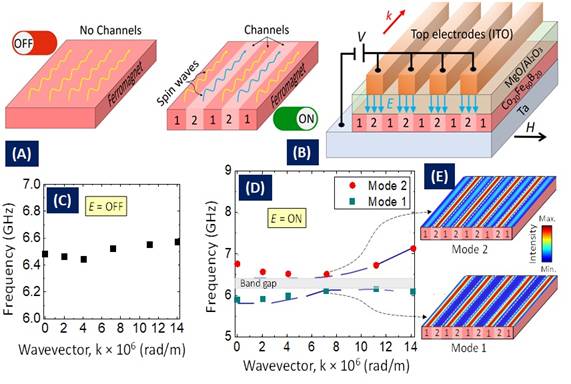
Figure: A. Schematic illustration shows the concept of spin-wave nanochannels. B. Schematic illustration shows the device structure and formation of nanochannels. Spin-wave frequencies versus wavevector when electric field, E is OFF (C) and ON (D). E. Heatmap plots show the spatial distribution of spin-wave intensity for spin-wave mode 2 and mode 1 at wavevector k = 7.1 × 106 rad/m.

Publication link:

DOI: 10.1126/sciadv.aba5457

For more details, Anjan Barman, Senior Professor (abarman@bose.res.in), can be contacted.

****

Ministry of Science & Technology dated 28 June 2021

SS/RP
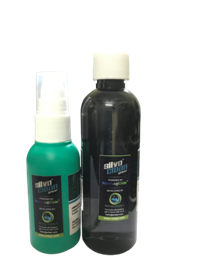
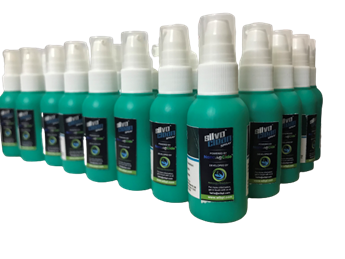
Pune based start-up all set to bring non-toxic, gentler, long lasting hand sanitiser to the market

Ministry of Science & Technology issued Press release today (17th June 2021)

An environment friendly hand sanitizer that is gentle on the hands and does not dry them, will soon be available in the market. The alcohol free, aqueous, non-inflammable and non-toxic hand sanitizer has been developed from Silver Nanoparticles by a Pune based start-up.

Recurrent drying up of hands due to repeated application of hand sanitizers is a challenge which people have faced during the COVID 19 pandemic.

The hand sanitizer developed by WeinnovateBiosolutions prolongs antimicrobial activity thus obviating the need for repeated applications.Silver nanoparticles give slow and sustained release of silver ions to kill microorganisms that come in contact. Besides, it can be stored in ambient conditions.

It has successfully completed Central Drugs Standards Control Organisation (CDSCO) approved clinical trial for the hand sanitizer and demonstrated high efficiency in killing viruses.

WeinnovateBiosolutionswas supported by CAWACH 2020 grant of National Science and Technology Entrepreneurship Development Board (NSTEDB) under the Department of Science and Technology (DST) and incubated at Entrepreneurship Development Centre (Venture Centre), Pune. They developed the colloidal silver solution-based hand sanitiser. The technologyoperates on the ability of the silver nanoparticles to prevent the synthesis of viral negative-strand RNA and viral budding.

“We are very confident of the study outcomes and waiting to get the license for our hand sanitiser formulation from CDSCO, India. We are sure that such innovation will push India towards its ‘Atmanirbhar Bharat’ mission and make India a self-sustained nation to face such pandemics in future”, said Dr. Anupama Engineer, Cofounder & COO WeinnovateBiosolutions.

Silver nanoparticles have been found to be an effective antiviral which act against many deadly viruses like HIV, Hepatitis B, Herpes simplex virus, Influenza virus, and so on. Recent reports have suggested the role of Glutathione capped-Ag2S NCs (Silver nanoclusters) in inhibiting the proliferation of Coronavirus by preventing the synthesis of viral negative-strand RNA and viral budding. Thecolloidal silver on which the technology of the sanitizers of WeinnovateBiosolutions is based can help arrest Covid -19 spread by blocking the RNA replication and infectivity by blocking the surface glycoproteins.

A study to evaluate the efficacy of hand sanitiser on different types of viruses is also currently underway by the group.

https://static.pib.gov.in/WriteReadData/userfiles/image/image001BK60.pnghttps://static.pib.gov.in/WriteReadData/userfiles/image/image0020JDB.png

****

SS/RP (DST Media Cell)