Reporting 6% rate in GSTR-1 (GST portal updates 10 May 2022)

A new tax rate of 6% IGST or 3% CGST+ 3% SGST has been introduced on certain goods vide Notification No. 02/2022 dated 31st March 2022. Changes are being made on the GST portal to include this rate in GSTR-1. As a temporary measure, taxpayers who have to report goods at this rate may do so by reporting the entries in the 5% heading and then manually increasing the system computed tax amount to 6%. This can be done by entering the value in the ‘Taxable value’ column next to 5% tax-rate and then increasing the system computed tax-amount to 6% IGST or 3% CGST + 3% SGST in the ‘Amount of Tax’ column under the relevant Table, namely B2B, B2C or Export, as applicable. This will ensure that correct tax amount is reported in GSTR-1.

Meanwhile, this rate will be made available on the GST portal shortly.

CBDT amends Income Tax rule 114 (PAN allotment) & Inserts new rule 114BA & 114BB in Income-tax rules,1962 (CBDT Notification dated 10 May 2022)

These rules may be called the Income–tax (Fifteenth Amendment) Rules, 2022.

In the Income-tax Rules, 1962,––

(a) in rule 114, in sub-rule (3), after clause (vi), the following clause shall be inserted, namely:—

“(vii) in the case of a person who intends to enter into the transaction prescribed under clause (vii) of sub-section (1) of section 139A, at least seven days before the date on which he intends to enter into the said transaction.”;

(b) after rule 114B, the following rule shall be inserted, namely:―

“114BA. Transactions for the purposes of clause (vii) of sub-section (1) of section 139A.––

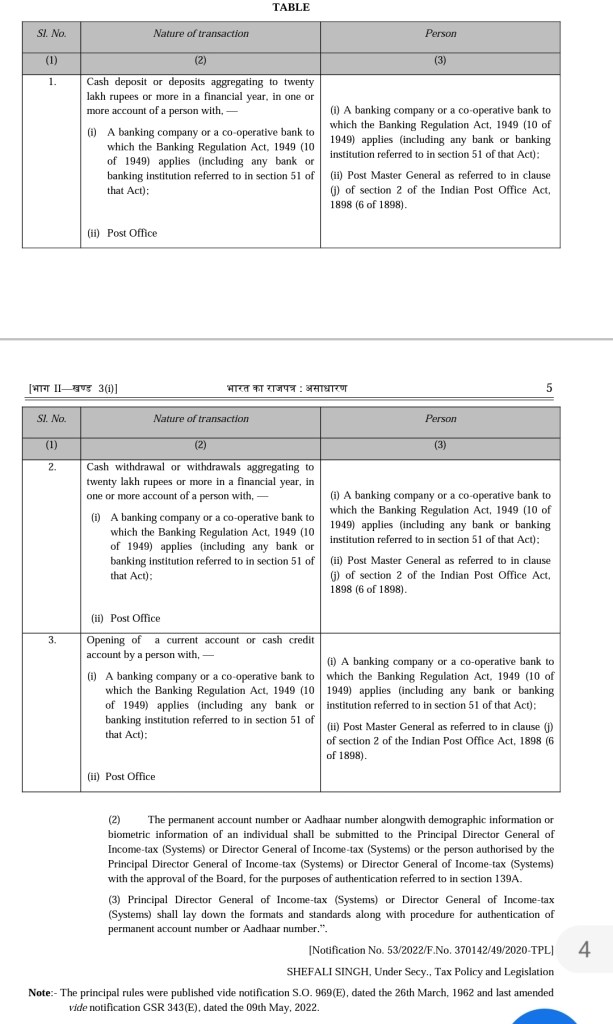
The following shall be the transactions for the purposes of clause (vii) of sub-section (1) of section 139A, namely:—

(a) cash deposit or deposits aggregating to twenty lakh rupees or more in a financial year, in one or more account of a person with a banking company or a co-operative bank to which the Banking Regulation Act, 1949 (10 of 1949) applies (including any bank or banking institution referred to in section 51 of that Act) or a Post Office;

(b) cash withdrawal or withdrawals aggregating to twenty lakh rupees or more in a financial year, in one or more account of a person with a banking company or a co-operative bank to which the Banking Regulation Act, 1949 (10 of 1949) applies (including any bank or banking institution referred to in section 51 of that Act) or a Post Office;

(c) opening of a current account or cash credit account by a person with a banking company or a co-operative bank to which the Banking Regulation Act, 1949 (10 of 1949) applies (including any bank or banking institution referred to in section 51 of that Act) or a Post Office.”;

(c) after rule 114BA, as so inserted by the Income-tax (Fifteenth Amendment) Rules, 2022, the following rule shall be inserted after the expiry of sixty days from the date on which this notification is published in the Official Gazette, namely:—

“114BB. Transactions for the purposes of sub-section (6A) of section 139A and prescribed person for the purposes of clause (ab) of Explanation to section 139A.–– (1) Every person shall, at the time of entering into a transaction specified in column (2) of the Table below, quote his permanent account number or Aadhaar number, as the case may be, in documents pertaining to such transaction, and every person specified in column (3) of the said Table, who receives such document, shall ensure that the said number has been duly quoted and authenticated—

NSDL blockchain platform for Debenture Covenant Monitoring (Press release 07 May 2022)

DLT Blockchain Technology

Chairperson, SEBI, Madhabi Puri Buch unveiled NSDL’s Distributed Ledger Technology (DLT) blockchain platform for Debenture Covenant Monitoring. “’Demat’ revolution was the very first step by which entire market adopted technology. This day ( Silver Jubilee Celebration of India’s largest depository, National Securities Depository Limited (NSDL) ) will also be remembered as an important day as we are taking the first step in terms of the use of DLT in the markets,” the Chairperson said. Aimed at ensuring total transparency, the DLT Blockchain is to bring issuers and debenture trustees on a common ground to record asset charges as well as monitor the asset cover ratio and various covenants of the issuance, transparency in the debenture market. NSDL claims that the Depository will move one step ahead in adopting new technologies and building the critical market infrastructure for the security and covenant monitoring of Bond issuances.

Fianance Minister appreciated the rapid progress being made by the Depository especially by adopting new technologes and also mentioned that NSDL stands true to its tagline ‘Technology, Trust and Reach’.

NSDL Managing Director & CEO, Padmaja Chundru said, “NSDL opened the first demat in India in 1996. NSDL has a pan-India presence through 57,000 service centres. There are more than 27 Million demat accounts and the value of securities is more than $4 Trillion; this will reach $5 trillion very soon.”

About the Debenture Covenant Monitoring

The information stored in the system will be cryptographically signed, time stamped and sequentially added to the ledger. It would provide a verifiable audit trail of transactions, thus strengthening the confidence in the market as these assets will be continuously monitored with a strong and unalterable transaction audit trail. NSDL recognizes the potential of blockchain solution which is a new emerging technology for decentralized distributed ledger to record real-time transactions across partner network.

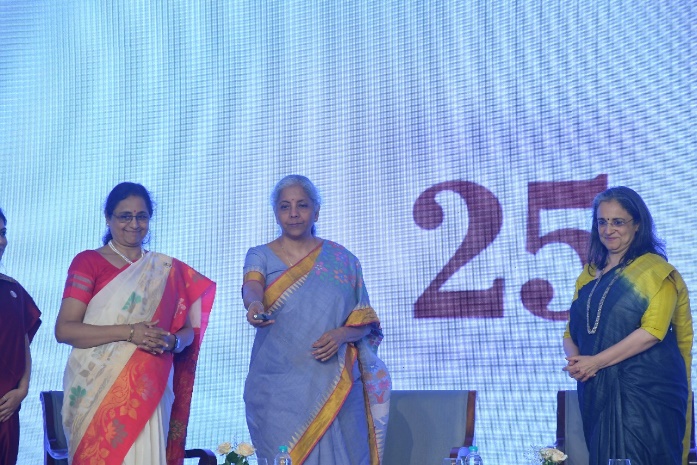
“Indian retail investors have played a key role especially during the last two years; they have shown the world what they can do by standing up and becoming shock absorbers unlike FPIs,” Union Finance Minister, Smt. Nirmala Sitharaman began her speech by appreciating the unbound trust shown by the country’s retail investors in the market. The Minister was addressing the Silver Jubilee Celebration of India’s largest depository, National Securities Depository Limited (NSDL), in Mumbai today, 07th May 2022.

“From an average of 4 lakh new demat accounts opened every month in 2019-20, it tripled to 12 lakh per month in 2020-21 and has further increased to around 26 lakh per month in 2021-22,” the Minister added by thanking the retail investors.
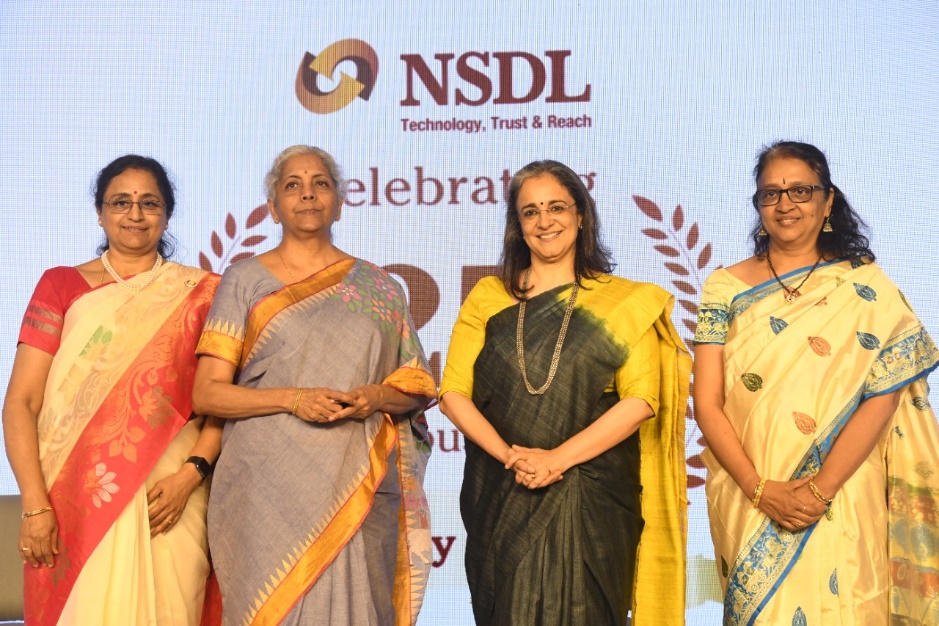
NSDL celebrated the completion of 25 years of its service to the Indian capital markets, today in the presence of the Union Finance Minister, Chairperson of the Securities and Exchange Board of India (SEBI), Smt. Madhabi Puri Buch and Chief Postmaster General, Maharashtra Circle, Smt. Veena Ramakrishna Srinivas.

Market Ka Eklavya

As part of the celebration theFinance Minister also launched ‘Market ka Eklavya,’ an online investor awareness program for students in Hindi and other regional languages. “Through ‘Market ka Eklavya’, you will be able to reach out to many who are in need of financial literacy. It is the right time when people have an inclination to know about the market and also the right approach taken by NSDL by educating the students,” she said about the launch. She also suggested that the NSDL make the initiative global by introducing the programme in world languages. “By this we can truly become the vishwaguru as envisioned by our Prime Minister. There are many youth across the world who will be benefited from this initiative if it is made avaialble in several languages,” she added.

‘Market ka Eklavya’ aims to introduce the basics of the securities market and also impart training on financial markets for students, in online mode.

Smt. Sitharaman spoke about the progress being made by FinTech companies in the country and how India has been playing a leading role in this sector. “Startups in fintech today are doing extraordinary work,” she lauded. She also mentioned how investors across the globe are paying attention to the success of our fintech companies.
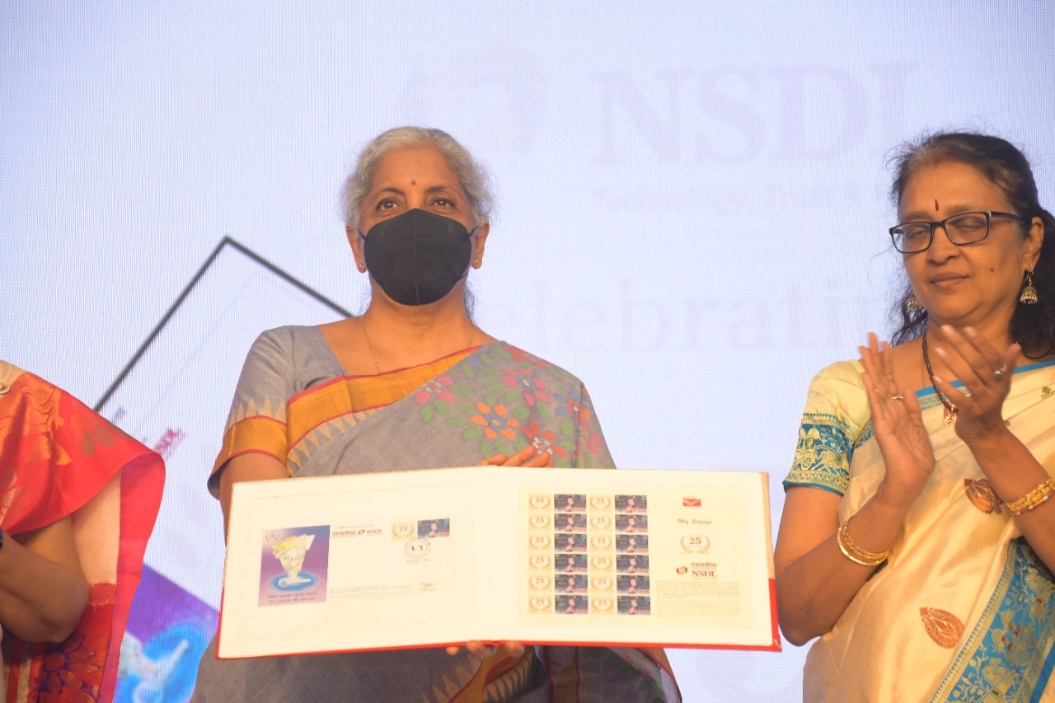
The Finance Minister also released the ‘My Stamp’ and special cover, honouring NSDL’s contribution to the development of Indian capital markets. The Chief Postmaster General, Smt Veena Ramakrishna Srinivas anchored the release.

An audio visual on NSDL’s journey over the last 25 years was played during the event. Students from several colleges participated in the event.

The event was live streamed https://youtu.be/0NWrkKoa1RM

About NSDL

NSDL (www.nsdl.co.in) is India’s first and one of the leading Central Securities Depositories in the world. It has played a key role in transforming the Indian securities market by facilitating holding and transfer of securities in dematerialised form. The market share of NSDL in value of demat assets is more than 89%. NSDL demat accounts are located in more than 99% of pin codes in the country and 167 countries across the globe, reflecting the wide reach of NSDL.
Gujarat ROC Adjudication order for violation of Section 92(4) & 137(1) of the CA 2013 in the matter of M/S HCBB Industry Private Limited

Gujarat ROC Adjudication order for violation of Section 92(4) & 137(1) of the CA 2013 in the matter of M/S HCBB Industry Private Limited

👉 Total penalty imposed for non filing of Annual return: Rs. 357,000/-

👉Total penalty imposed for non filing of financial statements: Rs. 364300/-

👉 ROC further directed to file overdue Annual Return & Financial statements with applicable/additional fees, failing which proceeded u/s 454A of CA 2013

Refer Section 454A. Penalty for repeated default.

Section 454A. Where a company or an officer of a company or any other person having already been subjected to penalty for default under any provisions of this Act, again commits such default within a period of three years from the date of order imposing such penalty passed by the adjudicating officer or the Regional Director, as the case may be, it or he shall be liable for the second or subsequent defaults for an amount equal to twice the amount of penalty provided for such default under the relevant provisions of this Act.

Common Guidelines on Pharmaceutical Innovation and Entrepreneurship

Department of Pharmaceuticals releases “Common Guidelines on Pharmaceutical Innovation and Entrepreneurship” for academic institutions

Press Release dated May 06, 2022

The Vision of the Department of Pharmaceuticals is to promote Indian pharma sector as the global leader for quality medicines and to ensure availability, accessibility and affordability of drugs and medical devices in the country. One of the measures to achieve the vision is to concentrate on Research & Development and innovation. In order to achieve the same, the Department, amongst various other measures, has set up seven National Institutes of Pharmaceutical Education and Research (NIPERs) as institutes of national importance all across the country for imparting quality education and conducting high-end research.

NIPERs have recently launched a common Research portal for industry and researchers and have also prepared a Common Research Programme based on the national needs and their own expertise and facilities. The department is also soon coming up with a ‘Policy to catalyze Research & Development and Innovation in the Pharma- MedTech Sector in India’.

In order to encourage innovation and research and to facilitate the entrepreneurship in NIPERs, the Department of Pharmaceuticals, after considering the National Innovation &Startup Policy 2019, National IPR Policy 2016 and similar policies of other institutes/ departments has prepared ‘Common Guidelines on Pharmaceutical Innovation and Entrepreneurship’ for academic institutions under its control. The policy aims to transform the academic research into innovative and commercially applicable technologies/products; build strong ecosystem for nurturing creativity and entrepreneurial activities and contribute to self-reliant India mission (Atmanirbhar Bharat).

The Policy Guidelines aims to:

  • Encourages the faculty/staff members and students to pursue entrepreneurship;
  • Formulate policies & foster an ecosystem to generate ideas across disciplines that can be transformed into successful technologies, products, and services;
  • Establish a mechanism for technology development and technology transfer;
  • Create institutional framework for effective implementation, monitoring, and evaluation of the policy; and
  • Promote pharmaceutical innovation and entrepreneurship to foster the unmet therapeutic, socially impactful technologies delivering benefits to mankind

These Policy Guidelines, finalized with approval of the Minister for Chemicals and Fertilizers have been forwarded to all NIPERs for taking up further steps for their speedy and effective implementation.

Draft notification issued pertaining to ease of doing business – Trade Certificate. (07 May 2022)

Ministry of Road Transport & Highways  has published a draft notification dated 5.5.2022 regarding amendments in certain provisions of the Central Motor Vehicles Rules 1989  pertaining to the Trade Certificate.

A Trade Certificate is required only in case of vehicles which are neither registered nor temporarily registered. Such vehicles can only be in the possession of a dealer/ manufacturer/importer of motor vehicles, or a test agency specified in rule 126 or any entity specified by the Central Government.

In an endeavour to promote “Ease of doing business”, it is proposed that such agency  can  apply for a Trade Certificate and Trade Registration Marks electronically for multiple types of vehicles in a single application on the Vahan portal, without the need to visit the RTO. Streamlining of fees  is also proposed, on the basis of the  number of trade registration marks being applied for. Further, as the Trade certificate and registration marks are proposed to be allotted online i.e. electronically on the portal, therefore compliance burden regarding Intimation of loss or destruction of a trade certificate and application for duplicate has been removed. The validity of the Trade Certificate has been increased from 12 months to 5 years.

Click here to see the Gazette Notification

Ministry of Road Transport & Highways Press Release 07 May 2022

India sees the emergence of the 100th unicorn (Press release 06 May 2022)

India sees the emergence of the 100th unicorn


The 100 unicorns of India valued at USD 332.7 billion.

In the first four months of 2022, India sees the rise of 14 unicorns

The wave of Unicorns in India has soared to new heights as the country witnessed the birth of its 100th Unicorn on 2nd May 2022. Today, 1 out of every 10 unicorns globally have been born in India.

Union Minister of Commerce and Industry, Consumer Affairs, Food and Public Distribution and Textiles, Shri Piyush Goyal highlighted the achievement in a tweet. 

India Hits A Century In Style! 💯

Bengaluru-based startup become country’s 100th Unicorn.🦄

India = Ideas + Innovation + Investmentshttps://t.co/KcNQMIEokA— Piyush Goyal (@PiyushGoyal) May 2, 2022

The term ‘Unicorn’ refers to the rarest of the rare startups who become Unicorns attaining a valuation of more than USD 1 billion. The Indian Startup Ecosystem, the third-largest in the world in number of Unicorns, as of 5th May 2022, is home to 100 unicorns with a total valuation of USD 332.7 billion. 

2021 experienced a huge surge in the number of unicorns, registering a total of 44 startups entering the Unicorn club through the year with a total valuation of USD 93 billion. 

In the first four months of 2022, India has given birth to 14 unicorns with a total valuation of USD 18.9 billion.

The entrepreneurial spirit exists throughout the length and breadth of the country and is evident by the spread of the Department for Promotion of Industry and Internal Trade (DPIIT) recognized startups across 647 Indian districts encompassing all 36 States and Union Territories. 

Since the launch of the Startup India initiative on 16th January 2016, more than 69,000 startups have been recognized in the country till 2nd May 2022.  Innovation in India is not just limited to certain sectors; we have recognized startups solving problems in 56 diverse sectors with 13% from IT services, 9% healthcare and life sciences, 7% education, 5% professional and commercial services, 5% agriculture, and 5% food & beverages.

While every startup has its unique journey to becoming a unicorn, the minimum and maximum time taken by a startup to become a unicorn in India are 6 months and 26 years, respectively. Till FY 2016-17, approximately one unicorn was being added every year. Over the past four years (since FY 2017-18), this number has been increasing exponentially, with a whopping 66% Year-on-Year growth in the number of additional unicorns being added every year.

As we hit the milestone of a century in Indian unicorns, the homegrown startup ecosystem continues to work effectively towards the mission of self-reliance and self-sustainability as they have been in the past. The vision of Atmanirbhar Bharat is rooted deeply in the Startup Ecosystem and shall continue to prevail in the coming years.

Amendment in Rule 44E of Income Tax Rules, 1962 (Advance Ruling) (CBDT Notification Dated May 5, 2022]

The Central Board of Direct Taxes (CBDT) has issued the Income-tax (Twelfth Amendment) Rules, 2022 to further amend the Income-tax Rules, 1962 as follow:

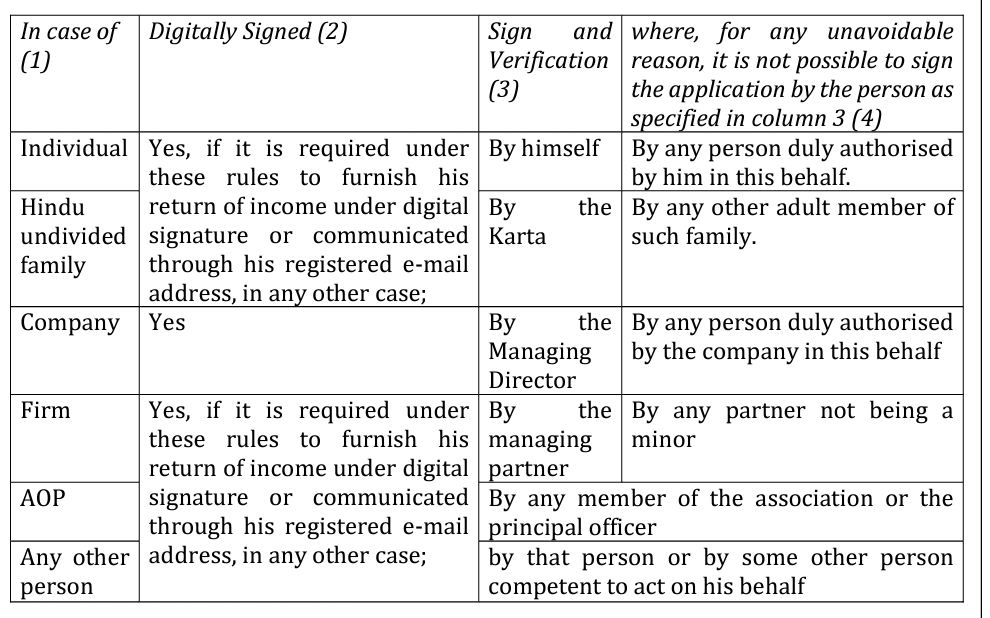
• In rule 44E which specifies Application for obtaining an advance ruling, sub-rule (2) has been substituted, as follow:

“(2) The application referred to in sub-rule (1), the verification, the annexures and the statements and documents accompanying the annexures of the application, shall be sign and verify as under:

The person signing the application as specified in column 4 of above table holds a valid power of attorney to do so, which shall be attached to the application;

Further, FORM No. 34C, 34D, 34DA, 34E, 34EA which specifies Form of application for obtaining an advance ruling under section 245Q(1) of the Income-tax Act, 1961 has been substituted.

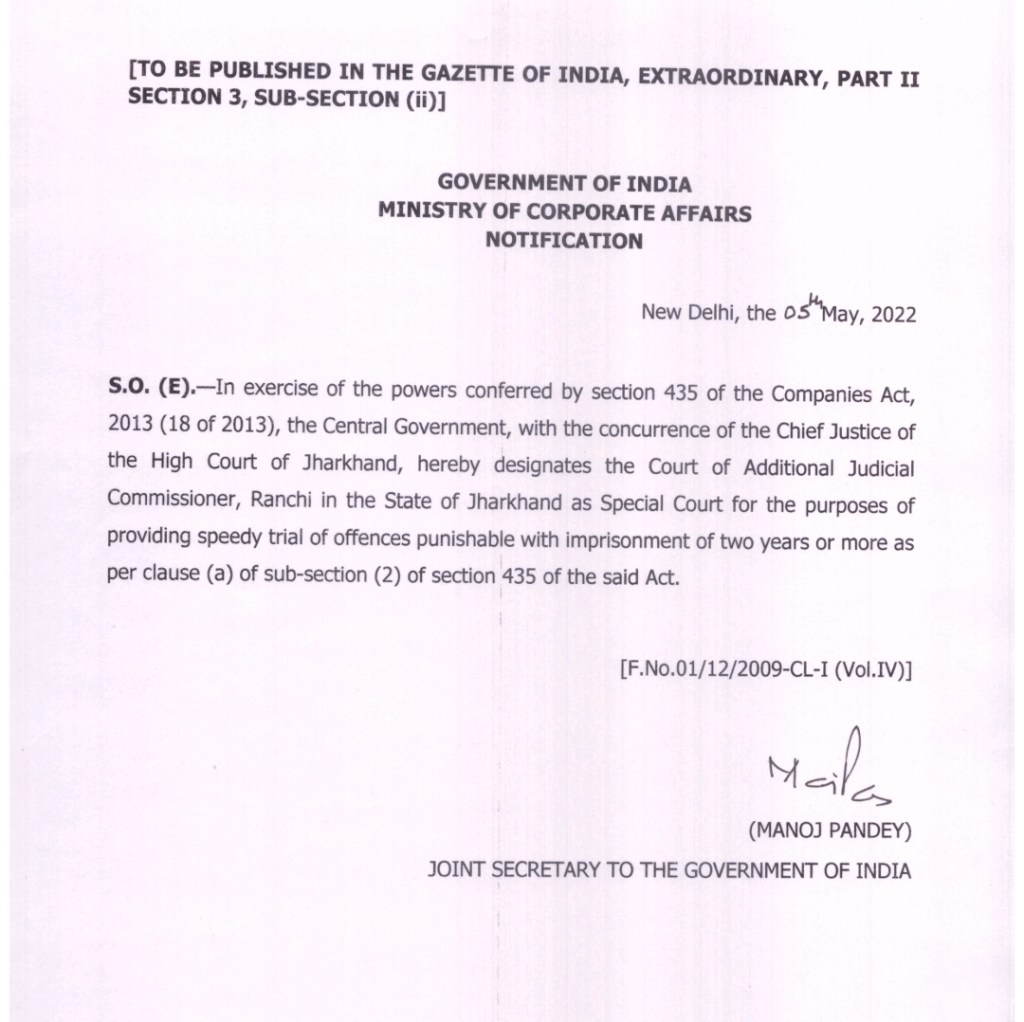
Special court in the State of Jharkhand u/s 435 of CA, 2013 – MCA Notification dated 05.05.2022

The Central Government, with the concurrence of the Chief Justice of the High Court of Jharkhand, designates the Court of Additional Judicial Commissioner, Ranchi in the State of Jharkhand as Special Court for the purposes of providing speedy trial of offences punishable with imprisonment of two years or more as per clause (a) of sub-section (2) of section 435 of the Companies Act, 2013.

Refer Notification