Consolidated Circular on Opening of Current Accounts and CC/OD Accounts by Banks (RBI Circular dated 19th April 2022)

A. Purpose

This Circular consolidates earlier instructions issued by the Reserve Bank of India, on opening and operation of current accounts and CC/OD accounts with a view to enforce credit discipline amongst the borrowers as well as to facilitate better monitoring by the lenders.

B. Previous Instructions

This circular consolidates instructions contained in the following circulars issued on the above subject:

  1. DOR.No.BP.BC/7/21.04.048/2020-21 dated August 6, 2020
  2. DOR.No.BP.BC.27/21.04.048/2020-21 dated November 02, 2020
  3. DOR.No.BP.BC.30/21.04.048/2020-21 dated December 14, 2020
  4. DOR.CRE.REC.35/21.04.048/2021-22 dated August 4, 2021
  5. DOR.CRE.REC.63/21.04.048/2021-22 dated October 29, 2021

C. Applicability

The provisions of these instructions shall apply to current accounts and CC/OD accounts opened or maintained with the following Regulated Entities (REs):

All Scheduled Commercial Banks

All Payments Banks

D. Definitions

“Exposure” for the purpose of these instructions shall mean sum of sanctioned fund based and non-fund-based credit facilities availed by the borrower2. All such credit facilities carried in their Indian books shall be included for the purpose of exposure calculation.

“Banking System” for the purpose of these instructions, shall include Scheduled Commercial Banks and Payments Banks only.

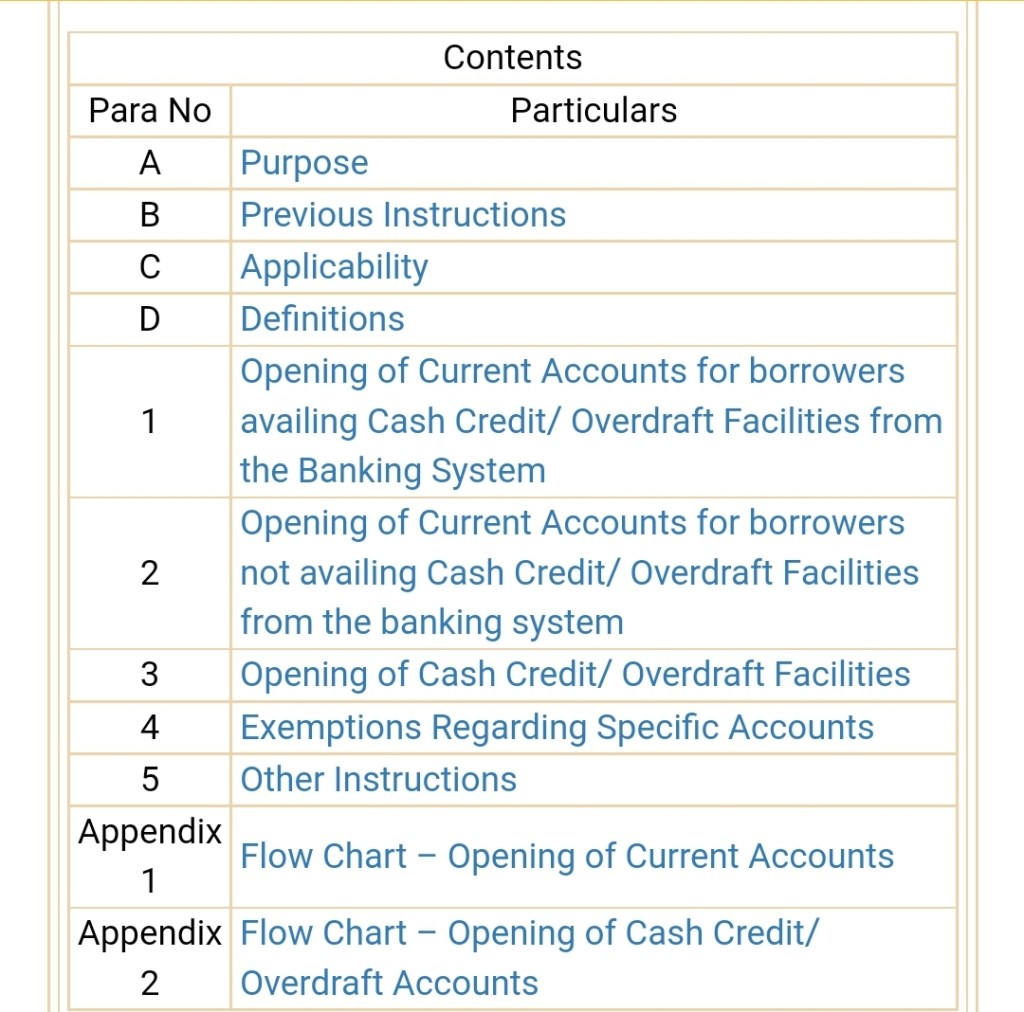
1. Opening of Current Accounts for borrowers availing Cash Credit/ Overdraft Facilities from the Banking System

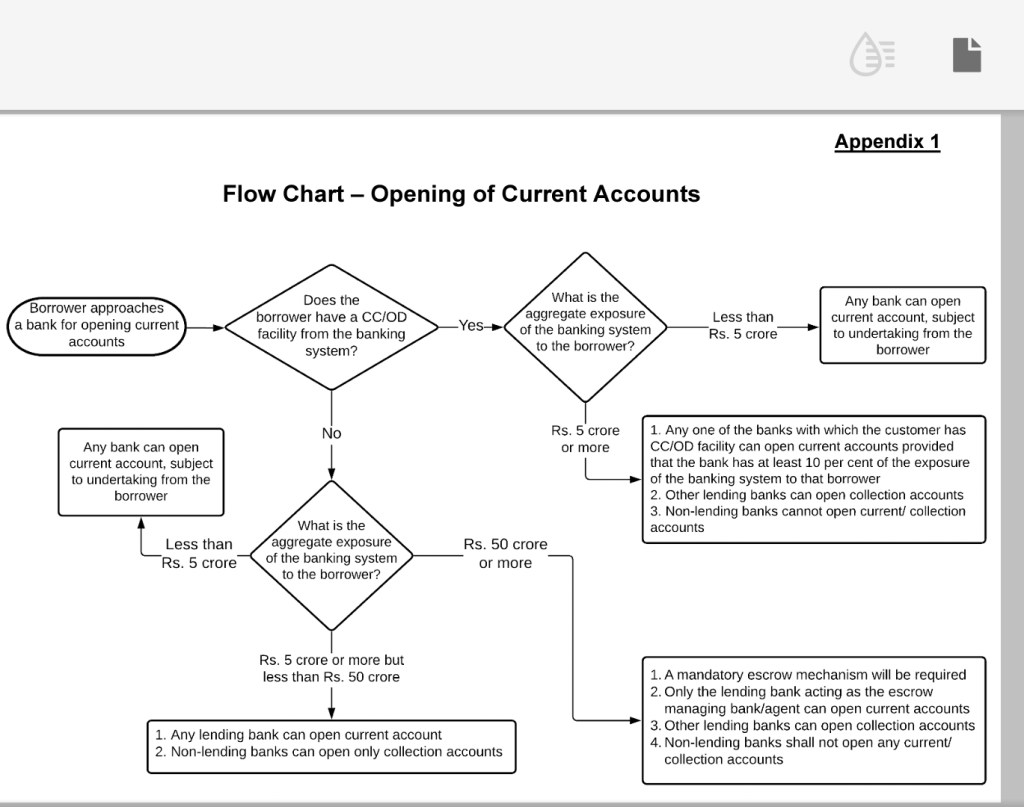
1.1 For borrowers, where the aggregate exposure3 of the banking system is less than ₹5 crore, banks can open current accounts without any restrictions placed vide this circular subject to obtaining an undertaking from such customers that they (the borrowers) shall inform the bank(s), if and when the credit facilities availed by them from the banking system becomes ₹5 crore or more.

1.2 Where the aggregate exposure of the banking system is ₹5 crore or more:

1.2.1 Borrowers can open current accounts with any one of the banks with which it has CC/OD facility, provided that the bank has at least 10 per cent of the aggregate exposure of the banking system to that borrower. In case none of the lenders has at least 10 per cent of the aggregate exposure, the bank having the highest exposure among CC/OD providing banks may open current accounts.

1.2.2 Other lending banks may open only collection accounts subject to the condition that funds deposited in such collection accounts will be remitted within two working days of receiving such funds, to the CC/OD account maintained with the above-mentioned bank (para 1.2.1) maintaining current accounts for the borrower. The balances in such collection accounts shall not be used for repayment of any credit facilities provided by the bank, or as collateral/ margin for availing any fund or non-fund based credit facilities. However, banks maintaining collection accounts are permitted to debit fees/ charges from such accounts before transferring funds to CC/OD account.

1.2.3 Non-lending banks are not permitted to open current/ collection accounts.

2. Opening of Current Accounts for borrowers not availing Cash Credit/ Overdraft Facilities from the banking system

2.1 In case of borrowers where aggregate exposure of the banking system is ₹50 crore or more:

2.1.1 Banks shall be required to put in place an escrow mechanism. Borrowers shall be free to choose any lending bank as their escrow managing bank. All lending banks should be part of the escrow agreement. The terms and conditions of the agreement may be decided mutually by lending banks and the borrower.

2.1.2 Current accounts of such borrowers can only be opened/ maintained by the escrow managing bank.

2.1.3 Other lending banks can open ‘collection accounts’ subject to the condition that funds will be remitted from these accounts to the said escrow account at the frequency agreed between the bank and the borrower. Further, balances in such collection accounts shall not be used for repayment of any credit facilities provided by the bank, or as collateral/ margin for availing any fund or non-fund based credit facilities. While there is no prohibition on amount or number of credits in ‘collection accounts’, debits in these accounts shall be limited to the purpose of remitting the proceeds to the said escrow account. However, banks maintaining collection accounts are permitted to debit fees/ charges from such accounts before transferring funds to the escrow account.

2.1.4 Non-lending banks shall not open any current account for such borrowers.

2.2 In case of borrowers where aggregate exposure of the banking system is ₹5 crore or more but less than ₹50 crore, there is no restriction on opening of current accounts by the lending banks. However, non-lending banks may open only collection accounts as detailed at para 2.1.3 above.

2.3 In case of borrowers where aggregate exposure of the banking system is less than ₹5 crore, banks may open current accounts subject to obtaining an undertaking from them that they (the customers) shall inform the bank(s), if and when the credit facilities availed by them from the banking system becomes ₹5 crore or more. The current account of such customers, as and when the aggregate exposure of the banking system becomes ₹5 crore or more, and ₹50 crore or more, will be governed by the provisions of para 2.2 and para 2.1 respectively.

2.4 Banks are free to open current accounts of prospective customers who have not availed any credit facilities from the banking system, subject to necessary due diligence as per their Board approved policies.

2.5 Banks are free to open current accounts, without

 any of the restrictions placed in this Circular, for borrowers having credit facilities only from NBFCs/ FIs/ co-operative banks/ non-bank institutions, etc. However, if such borrowers avail aggregate credit facilities of ₹5 crore or above from the banks covered under these guidelines, the provisions of the Circular shall be applicable.

3. Opening of Cash Credit/ Overdraft Facilities

3.1 When a borrower approaches a bank for availing CC/OD facility, the bank can provide such facilities without any restrictions placed vide this circular if the aggregate exposure of the banking system to that borrower is less than ₹5 crore. However, the bank must obtain an undertaking from such borrowers that they (the borrowers) shall inform the bank(s), if and when the credit facilities availed by them from the banking system becomes ₹5 crore or more.

3.2 For borrowers, where the aggregate exposure of the banking system is ₹5 crore or more:

3.2.1 Banks having a share of 10 per cent or more in the aggregate exposure of the banking system to such borrower can provide CC/OD facility without any restrictions placed vide this circular.

3.2.2 In case none of the banks has at least 10 per cent exposure, bank having the highest exposure among CC/OD providing banks can provide such facility without any restrictions.

3.2.3 Where a bank’s exposure to a borrower is less than 10 per cent of the aggregate exposure of the banking system to that borrower, while credits are freely permitted, debits to the CC/OD account can only be for credit to the CC/OD account of that borrower with a bank that has 10 per cent or more of aggregate exposure of the banking system to that borrower. Funds will be remitted from these accounts to the said transferee CC/OD account at the frequency agreed between the bank and the borrower. Further, the credit balances in such collection accounts shall not be used for repayment of any credit facilities provided by the bank, or as collateral/ margin for availing any fund or non-fund based credit facilities. However, banks are permitted to debit interest/ charges pertaining to the said CC/OD account and other fees/ charges before transferring the funds to the CC/OD account of the borrower with bank(s) having 10 per cent or more of the aggregate exposure. It may be noted that banks with exposure to the borrower of less than 10 per cent of the aggregate exposure of the banking system can offer working capital demand loan (WCDL)/ working capital term loan (WCTL) facility to the borrower.

3.2.4 In case there is more than one bank having 10 per cent or more of the aggregate exposure, the bank to which the funds are to be remitted may be decided mutually between the borrower and the banks.

4. Exemptions Regarding Specific Accounts

4.1 Banks are permitted to open and operate the following accounts without any of the restrictions placed in terms of paras 1, 2 and 3 of this Circular:

(a) Specific accounts which are stipulated under various statutes and specific instructions of other regulators/ regulatory departments/ Central and State Governments. An indicative list of such accounts is given below:

  1. Accounts for real estate projects mandated under Section 4 (2) l (D) of the Real Estate (Regulation and Development) Act, 2016 for the purpose of maintaining 70 per cent of advance payments collected from the home buyers
  2. Nodal or escrow accounts of payment aggregators/ prepaid payment instrument issuers for specific activities as permitted by Department of Payments and Settlement Systems (DPSS), Reserve Bank of India under Payment and Settlement Systems Act, 2007
  3. Accounts for the purpose of IPO/ NFO/ FPO/ share buyback/ dividend payment/ issuance of commercial papers/ allotment of debentures/ gratuity etc. which are mandated by respective statutes or by regulators and are meant for specific/ limited transactions only

(b) Accounts opened as per the provisions of Foreign Exchange Management Act, 1999 (FEMA) and notifications issued thereunder including any other current account if it is mandated for ensuring compliance under the FEMA framework


(c) Accounts for payment of taxes, duties, statutory dues, etc. opened with banks authorized to collect the same, for borrowers of such banks which are not authorized to collect such taxes, duties, statutory dues, etc.

(d) Accounts for settlement of dues related to debit card/ ATM card/ credit card issuers/ acquirers

(e) Accounts of White Label ATM Operators and their agents for sourcing of currency

(f) Accounts of Cash-in-Transit (CIT) Companies/ Cash Replenishment Agencies (CRAs) for providing cash management services

(g) Accounts opened by a bank funding a specific project for receiving/monitoring cash flows of that specific project, provided the borrower has not availed any CC/OD facility for that project

(h) Inter-bank accounts

(i) Accounts of All India Financial Institutions (AIFIs), viz., EXIM Bank, NABARD, NHB, and SIDBI

(j) Accounts attached by orders of Central or State governments/ regulatory body/ Courts/ investigating agencies etc. wherein the customer cannot undertake any discretionary debits

4.2 Banks maintaining accounts listed in para 4.1 shall ensure that these accounts are used for permitted/ specified transactions only. Further, banks shall flag these accounts in the CBS for easy monitoring. Lenders to such borrowers may also enter into agreements/ arrangements with the borrowers for monitoring of cash flows/ periodic transfer of funds (if permissible) in these accounts.

5. Other Instructions

5.1 In case of borrowers covered under guidelines on loan system for delivery of bank credit issued vide circular DBR.BP.BC.No.12/21.04.048/2018-19 dated December 5, 2018, bifurcation of working capital facility into loan component and cash credit component shall continue to be maintained at individual bank level in all cases, including consortium lending

5.2 All banks, whether lending banks or otherwise, shall monitor all accounts regularly, at least on a half-yearly basis, specifically with respect to the aggregate exposure of the banking system to the borrower, and the bank’s share in that exposure, to ensure compliance with these instructions. If there is a change in exposure of a particular bank or aggregate exposure of the banking system to the borrower which warrants implementation of new banking arrangements, such changes shall be implemented within a period of three months from the date of such monitoring.

5.3 Banks shall put in place a monitoring mechanism, both at head office and regional/ zonal office levels to monitor non-disruptive implementation of the circular and to ensure that customers are not put to undue inconvenience during the implementation process.

5.4 Banks should not route drawal from term loans through CC/ OD/ Current accounts of the borrower. Since term loans are meant for specific purposes, the funds should be remitted directly to the supplier of goods and services. In cases where term loans are meant for purposes other than for supply of goods and services and where the payment destination is identifiable, banks shall ensure that payment is made directly, without routing it through an account of the borrower. However, where the payment destination is unidentifiable, banks may route such term loans through an account of the borrower opened as per the provisions of the circular. Expenses incurred by the borrower for day-to-day operations may be routed through an account of the borrower.
Cabinet approves setting up of National Land Monetization Corporation (NLMC) (Press release 29th March 2022)

Cabinet approves setting up of National Land Monetization Corporation (NLMC)


NLMC to undertake monetization of surplus land and building assets of CPSEs and other Government agencies

The Union Cabinet on 9th March 2022 has approved setting up of National Land Monetization Corporation (NLMC) as a wholly owned Government of India company with an initial authorized share capital of Rs 5,000 crore and paid-up share capital of Rs 150 crore. This was stated by Union Minister of State for Finance Dr Bhagwat Kisanrao Karad in a written reply to a question in Rajya Sabha today.

The Minister stated that NLMC will undertake monetization of surplus land and building assets of Central Public Sector Enterprises (CPSEs) and other Government agencies. The proposal is in pursuance of the Budget Announcement for 2021-22, the Minister stated.

NLMC, the Minister listed out, has the following objectives:

  1. To undertake professional and orderly monetization of land and other non- core assets referred to it.
  2. To own, hold, manage and monetize land and building assets of CPSEs under closure and surplus land and buildings of 100% GoI owned CPSEs under strategic disinvestment.
  3. To advise and support monetization of surplus land assets of (i)Demerged companies holding surplus land (ii) Other CPSEs
  4. To advise and assist government departments, statutory bodies/ authorities, autonomous bodies, corporations, etc. on monetisation of surplus and under- utilized non-core assets.
  5. To identify surplus land and building assets to create an inventory for monetization in consultation with CPSEs/other government agencies.
  6. to build a capable organisation with skill and competencies to enable speedier and efficient monetisation which can generate maximum value from government assets.
  7. To act as a repository of best practices in land monetization, assist and provide expert technical advice to DPE / DIPAM /Government of India in implementation of asset monetisation program.

The Minister further stated that NLMC would be administered by a Board of Directors. The proposed Board structure envisages a mix of senior government officials and eminent professionals in the field of real estate, banking, investment banking, construction, legal and related fields. The Board is expected to have necessary experience and expertise to steer the functioning of the NLMC in a professional manner. An eminent professional would be appointed as the Chairman of the Board, the Minister stated.

Incorporation of NLMC is underway which is being steered by Department of Public Enterprises, Ministry of Finance, the Minister stated.

India’s aim is to become world’s largest Startup destination

India’s aim is to become world’s largest Startup destination: Shri Piyush Goyal


“India-UAE ties to be a defining partnership for the 21st century”

Ministry of Commerce & Industry Press Release Posted Dated Mar 28, 2022

Union Minister of Commerce & Industry, Consumer Affairs and Food & Public Distribution and Textiles, Shri Piyush Goyal today said that the country aspires to become the largest Startup ecosystem in the world.

Addressing a session on ‘Gateway to Growth – Roundtable on Indian Startup Ecosystem’ in Abu Dhabi, UAE, Shri Goyal said, “Today we are the third largest Startup ecosystem, but our aspiration is to be the world’s number one startup destination. The Startup bug has caught India’s imagination. The entire innovation ecosystem that the Startup industry represents is giving a new direction, new momentum to India.”

The session was co-chaired by the UAE Minister of State for Entrepreneurship & SMEs, Ahmad Belhoul Al Falasi (virtual), Dr Thani Zeyoudi, Minister for International Trade, Mohamed Al Sharaf, Chairman, Abu Dhabi Economic Development Department. Representatives of ADGM, ADQ, Mubadala, Masdar, ADIO, AD Residents Office, G42, Hub71, Ardent Advisory, Chimera Investment among others also participated in the session.

Shri Goyal said, “India offers one of the best ecosystems for Startups with a special ‘jugalbandi’ or blend between investors and entrepreneurs to get a balanced outcome and achieve a win-win solution for all. I have seen tremendous response from the Dubai Expo where our Startups have got the opportunity to raise finances, sign MoUs and get angel investments. All these aspects will help strengthen India’s strong bond of friendship with the UAE.”

The Minister appreciated the promotion of Indian Startups by the India Innovation Hub platform under the India Pavilion. “I do hope that the 700 Startups that have showcased their innovation at Expo2020 Dubai would have all gone back enriched with newer opportunities and ideas for the future. I am sure that this initiative between India and the UAE on innovation and future technologies will power growth of businesses and take wings as we go forward,” added the Minister.

He said that the Startups need to experiment, fail and learn from their experiences. “I would urge all of you from the Startup world to go extra mile and take the Startup story to all the remote places, villages, small towns, northeastern India and other regions,” added Shri Goyal.

On the Government’s role in promoting Startups, the Minister said that India aims to provide a level playing field and the best business ecosystem to the Startups.

“We have recently finalized the Comprehensive Economic Partnership Agreement (CEPA) with the UAE, which is expected to further enhance bilateral trade, B2B engagement and explore attractive investment opportunities. I can assure you that we will take this partnership to newer heights in the areas of sustainability, aerospace, space technology, connectivity, AI, data analytics, 5G, Metaverse, etc. We look forward to leveraging each other’s offerings and expertise,” added the Minister.

Shri Goyal said that the UAE-India partnership is destined to play an important role in the global economy and in ensuring a better future for billions of people around the world. “This will be a defining partnership for the 21st century,” added the Minister.

1060 hallmarking centres are operational in the country: Bureau of Indian Standards (Press release 25 March 2022)

The Union Minister of State for Consumer Affairs, Food and Public Distribution, Shri Ashwini Kumar Choubey in a written reply to a question in Rajya Sabha today informed that hallmarking has been made mandatory from 23 June, 2021 for 14, 18, & 22 carat of gold jewellery / artefacts in 256 districts of the country where there is at least one Assaying and Hallmarking Centre (AHC).

As on 20 March, 2022, 1060 hallmarking centres are functional in the country.

            The Hallmark Unique Identification (HUID)-based system of hallmarking has been introduced as it was felt necessary that with hallmarking becoming mandatory, the credibility of the hallmark put on every piece of jewellery had to be ensured along with a robust system of real-time monitoring of the entire process. Under HUID, a unique six-digit alphanumeric code is put on each gold jewellery / artifacts item along with Bureau of Indian Standards (BIS) logo and purity grade mark.

BIS has developed the provision to verify HUID through the BIS CARE App- the official mobile application of BIS. The “Verify HUID” feature can be utilized to verify the purity of the gold jewellery items bearing a HUID number before purchase. Thus, the consumers can be assured of the authenticity of the HUID marked gold jewellery / artifacts items using the BIS Care Mobile App.

Also, regular audit of assaying and hallmarking centres and market surveillance of BIS registered jewellers is undertaken to ensure that they comply to the requirement of BIS hallmarking scheme. Testing of random market samples drawn from registered jewellers is carried out to ensure the purity of hallmarked gold jewellery / artifacts is as per the marked purity on the article. In case of failure, action is taken both against the AHC who has hallmarked the article and the jeweler who has got the article hallmarked.

Government e-Market portal touches an annual procurement of INR 1 Lakh crore within FY 2021-22

Government e-Market portal touches an annual procurement of INR 1 Lakh crore within FY 2021-22


The number of orders surpasses 31.5 Lakh in the current financial year with a growth rate of 22%

In a short span of 5 years, GeM becomes one of the largest government e-procurement platforms in the world

GeM endeavours to make government procurement more inclusive by promoting women entrepreneurs and MSMEs

States continue to be an important stakeholder with 30% contribution to Gross Merchandise Value (GMV)

The portal successfully transforms public procurement in India by driving inclusion, usability, transparency, efficiency and cost saving

Government e Marketplace (GeM) has attained an annual procurement of INR 1 Lakh crore within FY 2021-22. This represents a 160% growth compared to last FY. Addressing media on the occasion, Shri Prashant Kumar Singh, CEO, GeM said that since inception the cumulative Gross Merchandize Value (GMV) reached INR 1 Lakh crore over 4 and half years, on 23rd March 2021, whereas the GMV of GeM in the current Financial Year surpassed Rs. 1 lakh crore (Ts. 1 trillion) in less than a year. This represents a 160% growth compared to last FY. Earlier in the day, the Prime Minister, Shri Narendra Modi had tweeted about this accomplishment.

Shri Singh added that the portal had transformed public procurement in India by driving its three pillars viz. inclusion, usability and transparency and efficiency and cost saving. The number of orders has also surpassed 31.5 Lakh in the current financial year with a growth at the rate of 22%. In a short span of 5 years, GeM has become one of the biggest government e-procurement platforms in the world.

Referring to the share of Central Public Sector Enterprises (CPSEs), Shri Singh said that approximately Rs. 43,000 Crore worth procurement was done by CPSEs (~43% of total GMV) on GeM, showing an approximate growth of 508% as compared to last FY. He also asserted that States continued to be an important stakeholder with approx. 30% contribution to total GMV.

Highlighting the role played by GeM in ushering in inclusion in government procurement, Shri Singh said that GeM has taken a host of steps to onboard products of Self-Help Groups (SHGs), tribal communities, craftsmen, weavers, and MSMEs. 57% of the total business on GeM has come through the MSME units and over 6% has been contributed by female entrepreneurs. It may be noted that the number of women sellers and entrepreneurs on GeM has grown 6 times in a year. 

It may be noted that procurement from MSEs is at 57% of the total GMV currently with a growth of 143% compared to last FY. There is a 15% increase in Buyer onboarding compared to last FY and there is a 187% increase in Seller onboarding compared to last FY. There is also a 44% increase in the number of Services compared to last FY with a 25% contribution in the total GMV (Rs. 25,000 Crore)

GeM is an online platform for public procurement in India which was envisaged by the Hon’ble Prime Minister of India, Shri Narendra Modi ji. The initiative was launched on August 9, 2016 by Ministry of Commerce and Industry, GoI, with an objective to create an open and transparent procurement platform for government buyers. Created in a record time of 5 months, GeM facilitates online procurement of common use Goods and Services.

According to an independent assessment made by the World Bank, average savings for buyers in Government e Marketplace portal is about 9.75% on the median price. Since inception GeM has shown impressive growth year on year with better prices, thus helping the state exchequer save substantial money. In an analysis in the Economic Survey 2021-22, cost comparison of various commodities on GeM with those of popular online platforms such as Amazon and Flipkart showed that GeM prices were 9.5% lower. 10 out of 22 commodities in the sample were cheaper on the GeM portal as compared to other platforms.

New features and initiatives launched in GeM Covid 19 Oxygen drive was carried out during the Covid crisis to onboard suppliers of compressed medical oxygen gas cylinders on GeM. Total 250 Covid-19 medical categories are available on GeM; over 4.73 Lakh orders were placed through the same since March 2020.

GeM is integrating with Panchayati Raj Institutions to allow online buying and selling by the Panchayats at the grassroot level. The pilot in Gurgaon district panchayats has been successfully completed. Gem is in an advanced stage of integration with IndiaPost for extending logistics services at the grassroot level.

GeM SAHAY is an initiative to facilitate small sellers to avail credit financing from various integrated Lenders for the Orders received on GeM Portal.The Forward auction module has been launched facilitating government Auctioneers to auction assets using multiple auction modes and monitor the complete selling life cycle of their assets.

GeM platform supports advanced analytics framework to identify anomalous behaviour and transactions, market intelligence, demand/price forecasting and procurement planning/monitoring. GeM now has integration with 24 CPSEs ERP systems for post order information exchange. In total over 3 Lakh orders worth Rs. 42,000 Crore were exchanged via the integration.

GeM has Implemented Natural Language Processing based search to understand the users’ intent thereby allowing the display of relevant and more accurate search results when they search for products or services on GeM.

GeM has enabled the Buyback mechanism through which the buyer will be able to float a bid to replace old products with new ones and get some additional discount/buyback on the old products. GeM has enabled schedule wise evaluation for BoQ bids. The Buyers can now publish and evaluate item-wise, group-wise, consignee-wise for the BoQ Bids.

To ensure that business growth is supported by the platform with reliability and performance, GeM has implemented various improvements like efficient caching, optimizing active storages, improving technology currency across the layers of programming languages to databases and implemented enhanced security measures. The Platform is supporting ~13,500 concurrent users with some DB loads reaching ~35K QPS (Queries per Second).

GeM has also engaged external security consultants for exhaustive audits and has implemented ~75 additional security directives. It is also going through an STQC certification audit planned to complete by March 2022.While load on the platform increased by 70%, the page response time has seen an improvement of 40%. On an average, the number of bids per day has also increased from 1,100 in April 2021 to 2,800 in March 2022. Corresponding seller participation per day has also increased to 15,000 from 10,000 in the same period.

GeM was adjudged as the winner in the “Best Use of Digital Technology” category at the CIPS Excellence in Procurement Awards 2021 held at London. GeM emerged the winner in this category after competing with some of the biggest and best names in procurement across the public and private sector globally, including GEP, Jaguar Land Rover, Royal Dutch Shell, VenDigital and Shell.

GeM was also shortlisted as a finalist in two additional categories as well, i.e. ‘Public Procurement Project of the Year’ and ‘Best Initiative to Build a Diverse Supply Base’ where it was in the august company of some path-breaking organizations with great initiatives.

Press Release 24th March 2022

Steps by Government to promote Renewable Energy (Press release 22 March 2022)

The Government has taken several steps to promote renewable energy, including wind energy, in the country. These include:

  • permitting Foreign Direct Investment (FDI) up to 100 percent under the automatic route,
  • waiver of Inter State Transmission System (ISTS) charges for inter-state sale of solar and wind power for projects to be commissioned by 30th June 2025,
  • declaration of trajectory for Renewable Purchase Obligation (RPO) up to the year 2022,
  • setting up of Ultra Mega Renewable Energy Parks to provide land and transmission to RE developers on a plug and play basis,
  • laying of new transmission lines and creating new sub-station capacity for evacuation of renewable power,
  • setting up of Project Development Cell for attracting and facilitating investments,
  • Standard Bidding Guidelines for tariff based competitive bidding process for procurement of Power from Grid Connected Solar PV and Wind Projects.
  • Government has issued orders that power shall be dispatched against Letter of Credit (LC) or advance payment to ensure timely payment by distribution licensees to RE generators.
  • Conducting skill development programmes to create a pool of skilled manpower for implementation, operation and maintenance of RE projects.

In addition to the above, the following steps have been taken specifically for promoting wind energy:

  • Concessional custom duty exemption on certain components required for manufacturing of wind electric generators.
  • Generation Based Incentive (GBI) is being provided to the wind projects commissioned on or before 31 March 2017.
  • Technical support including wind resource assessment and identification of potential sites through the National Institute of Wind Energy, Chennai.

This information was given by Shri R.K Singh, Union Minister for Power and New and Renewable Energy in a written reply in Rajya Sabha today.

DATA OF REGISTERED Farmer Producer Organizations(FPOs) (Press release 15th March 2022)

The State wise details of Farmer Producer Organizations(FPOs) registered through various agencies including those under the Central Sector Scheme(CSS) for Formation and Promotion of 10,000 FPOs are at Annexure – I. Further under the new FPO scheme, 421 FPOs have been registered by different Implementing Agencies(IAs) in Aspirational Districts as on 09.03.2022. The details are at Annexure-II.

Under the said Central Sector Scheme (CSS), an amount of Rs. 14.05 Crores has been transferred to 352 FPOs towards matching equity grant. The state-wise details are enclosed at Annexure – III. Furthermore, the FPO Management Cost is also disbursed by the Department to the concerned Implementing Agencies for onward transferring to the respective FPOs. So far, a total of Rs. 108.82 Crores has been released as FPO Management Cost under 10,000 FPOs scheme.

As per operational guidelines of the aforesaid Central Sector Schemes (CSS), women farmers’ participation as shareholders of FPOs is preferred and in the Board of Directors (BoD) and Governing Body (GB), as the case may be, there shall be adequate representation of women farmer member(s) and there should be minimum one woman member.

So far, 225 women FPOs have been promoted by different Implementing Agencies as on 09.03.2022.

Refer list

DATA OF REGISTERED FPOs

https://pib.gov.in/PressReleaseIframePage.aspx?PRID=1806232&RegID=3&LID=1

Global Entrepreneurship Monitor (GEM) (Press release 14th March 2022)

The Global Pandemic is once in a life-time disruption that has created serious adverse impacts on lives and livelihood in economies all around the world. Almost every major economy in the world was impacted and each country including India had to bear the cost of economic contractions, livelihood loss and increased healthcare expenditure. However, India has responded with great resilience and has emerged as one of the fastest rebounding economies in the World. As per the Economic Survey 2021-22, Covid-19 pandemic has had an adverse impact on most sectors of the economy. Government of India responded with a series of calibrated measures aimed at protecting the lives and livelihoods of most vulnerable and small businesses like the Micro, Small and Medium Enterprise (MSME) segment. India has become third largest start-up ecosystem in the world after US and China with over 60,000 start-ups. India created 42 Unicorn in the year 2021 alone.

The Global Entrepreneurship Monitor (GEM) is an international project which seeks to provide information on the entrepreneurial landscape of countries. GEM carries out survey-based research on entrepreneurship and entrepreneurship ecosystems around the world and is being led by Entrepreneurship Development Institute of India, Ahmedabad.

As per Global Entrepreneurship Monitor (GEM) India Report (21-22), India’s entrepreneurial activity expanded in 2021, with its Total Entrepreneurial Activity rate(percentage of adults (aged 18–64) who are starting or running a new business) increased to 14.4% in 2021, up from 5.3% in 2020.

Further, Established Business Ownership rate (percentage of adults (aged 18–64) who are currently the owner-manager of an established business, i.e. owning and managing a business that has paid salaries, wages or any other payments to the owners, for more than 42 months)increased to 8.5%, from 5.9% in 2020. Boom in early-stage entrepreneurial activity for India in 2021 may be due to the pent-up demand and subsequent opportunities generated by the reduction in COVID-19 risk that damaged the Indian economy in 2020.

Ministry of Skill Development and Entrepreneurship (MSDE) is implementing various programmes to encourage entrepreneurship in the country as mentioned below:-

  1. Pilot project, ‘Economic Empowerment of Women Entrepreneurs and Startups by Women (WEE)’ is being implemented in collaboration with Deutsche Gesellschaftfür Internationale Zusammenarbeit (GIZ) Germany to pilot incubation and acceleration programmes for women micro entrepreneurs, enabling them to start new businesses and scale up existing enterprises in Maharashtra and other States, viz.Rajasthan, Telangana, Uttar Pradesh and North Eastern region of the country.
  2. Pilot Project on Entrepreneurship Development (PM YUVA) has been launched in November, 2019 for creating an enabling ecosystem through entrepreneurship education, training, advocacy and easy access to entrepreneurship network, for students and alumni of skill training institutes viz. Industrial Training Institutes (ITIs), Polytechnics, Pradhan Mantri Kaushal Kendra (PMKK) and Jan Shikshan Sansthan (JSS). The scheme covers 10 States including Maharashtra and 2 Union Territories.
  3. Entrepreneurship Promotion and Mentoring of Micro and Small Businesses in Six Holy Cities: The project seeks to catalyse local entrepreneurial activities through involvement of potential and existing entrepreneurs, through entrepreneurship awareness, education and mentoring in Pandharpur, Puri, Varanasi, Haridwar, Kollur and Bodh Gaya.
  4. Apart from above, in order to enhance the employability of female workers, the Government is providing training to them through a network of Women Industrial Training Institutes, National Skill Training Institutes, PMKVY Centers and Pradhan Mantri Kaushal Kendras.

This information was given by the Minister of State for Skill Development and Entrepreneurship, Shri Rajeev Chandrasekhar in a written reply in the Lok Sabha today.

Venture capitalists play a pivotal role in the Startup ecosystem and in economic growth of the country

Venture capitalists play a pivotal role in the Startup ecosystem and in economic growth of the country, says Shri Piyush Goyal


IVCA can act as a Golden bridge between the Government, Startups, market and consumers – Shri Piyush Goyal

“Venture capitalists can play a role in fast tracking self-reliance, creating an AatmaNirbhar Bharat”: Shri Goyal

Shri Goyal urges venture capitalists to focus on Tier 2, Tier 3 & Tier 4 cities and towns

Press Release posted Date:- Mar 09, 2022

Union Minister of Commerce & Industry, Consumer Affairs, Food & Public Distribution and Textiles, Shri Piyush Goyal today said the Venture capitalists have played a pivotal role in India’s Startup story and in economic growth of the country. Addressing the Indian Venture and Alternate Capital Association’s (IVCA) Conclave, he said they have been driving innovation and bringing new ideas to the fore that is legendary.

“Venture capitalists and Angel investors have a very important role to play in the Startup ecosystem. I remember the Prime Minister had once said that the current decade is going to be the ‘Tech-ade’ of India. And this will be a decade where technology & innovation will drive the future of Indian economy, whether it is UPI or Covin. Today we are showing to the whole world what Indian capabilities are and how we can leverage digital platforms from mass transformation of the lives of a billion plus people,” said Shri Goyal, in his Keynote Address delivered through video conference.

Shri Goyal said the IVCA can act as a Golden bridge between the Government, Startups, market and consumers and promote innovation.

“India has carved a distinct niche for itself in the Startup map of the world. We have over 60,000 Startups and I see it as the DNA of the future of India,” he said.

Urging venture capital funds to reach out to the Tier 3&4 towns, Shri Goyal said the Startup Advisory Council recognises there is a large pool of talent in the interiors of India. Domestic capital can play a huge role in the next wave of innovation, he said.

“Atal Tinkering Labs are a good example. The whole ecosystem is going to grow by leaps and bounds. Soon ideas will choose what funds to take. Many good ideas have been taken over by small ticket cheques for lack of alternatives. We must seriously look at some kind of instruments and a little more compassion towards these ideas,” he said.

Shri Goyal urged the investors & capital providers to focus on 4Fs:

  • Fostering Innovation & Future Technologies
  • Facilitate mobilisation of domestic capital
  • Fast tracking self-reliance: An AatmaNirbhar Bharat
  • Focus on Tier 2, Tier 3 & Tier 4 cities and towns

Shri Goyal said we are on the cusp of reaching the $400 bn merchandise exports mark.

“I wish our Startups contribute significantly as we move towards a trillion dollars of Goods and Services exports each,” he said.

Shri Goyal said the Startups will play a defining role in the Amritkaal i.e next 25 years, when India completes 100 years of its Independence.

Launching of digital platform (E-Marketplace) as part of digital tourism solution for IITFs / IITGs

Tourism has immense potential in generating employment and business opportunities: Shri G Kishan Reddy

Press Release posted Date:- Mar 08, 2022

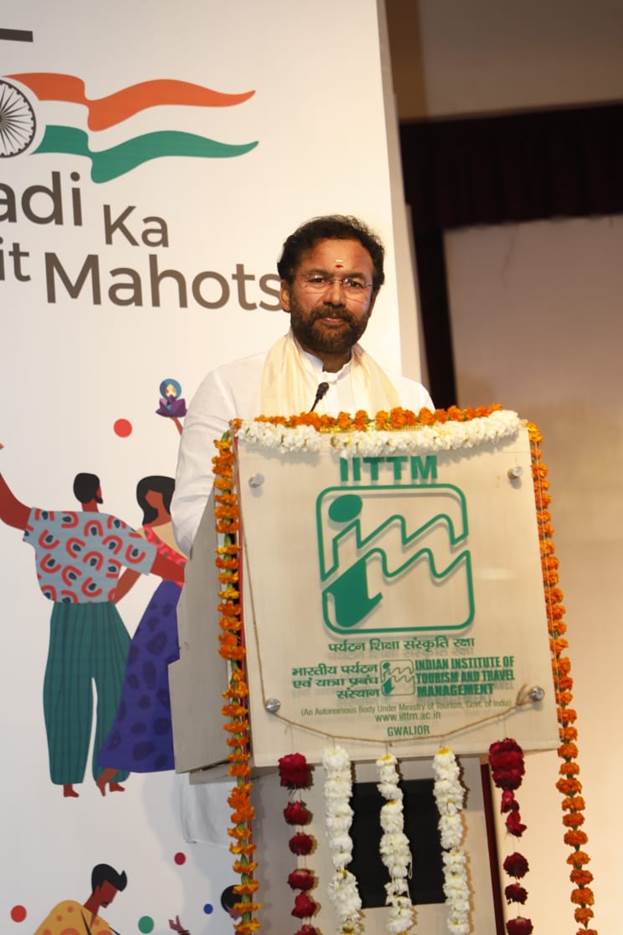
Union Minister of Tourism, Culture and DONER, Shri G. Kishan Reddy todsy launched the E-marketplace platform in an event organised at Indian Institute of Tourism and Travel Management(IITTM), Gwalior. Ministry of Tourism launched the digital platform (E-Marketplace) as part of digital tourism solution for IITFs / IITGs, to provide Web and Mobile App based interaction mechanism, which is to be used by the tourists and certified tourist facilitators/Tourist Guides. E-Marketplace portal under IITFC/IITG program of the Ministry would be more like the platforms of OLA, UBER etc., which would help IITFs/IITGs to get business opportunities and would work as a bridge between the customer and the service provider. Minister of Agriculture and Farmer Welfare, Shri Narendra Singh Tomar (virtually) Minister of Civil Aviation,Shri Jyotiraditya Scindia (virtually), Minister of State of Tourism & Defence, Shri Ajay Bhatt, Member Parliament, Gwalior, Shri Vivek Narayan Shejwalkar, Minister of Tourism and Culture, Govt. of Madhya Pradesh, Smt. Usha Thakur (Virtually)  also graced the event.

During his address Shri G Kishan Reddy said that India has great variety of tourism destinations and tourism has immense potential in generating employment and business opportunities. Shri Reddy added that Students at IITTM have several avenues in tourism sector and I am sure you will play a critical role in the growth of the tourism sector in the country. Under the guidance and leadership of Prime Minister Sri Narendra Modi ji, VIKAS is our only mantra and it is Vikas that will lead us to more tourism opportunities. Our government is working shoulder to shoulder with all states to develop tourism in the country, he added.

Minister of Tourism, Culture and DONER, Shri G. Kishan Reddy also visited Gwalior Fort along with officials of Ministry of Tourism and observed the tourist facilities at the monument. Thereafter, a review meeting was held with the officials of Ministry of Tourism, Ministry of Culture and Archaeological Survey of India (ASI) under his chairmanship. A detailed presentation was made by Principal Secretary (Tourism &Culture), Government of Madhya Pradesh on progress of various Tourism Infrastructure projects funded by Ministry of Tourism, Govt. of India.A newly built International Executive Guest House at IITTM Gwalior Campus was Inaugurated.

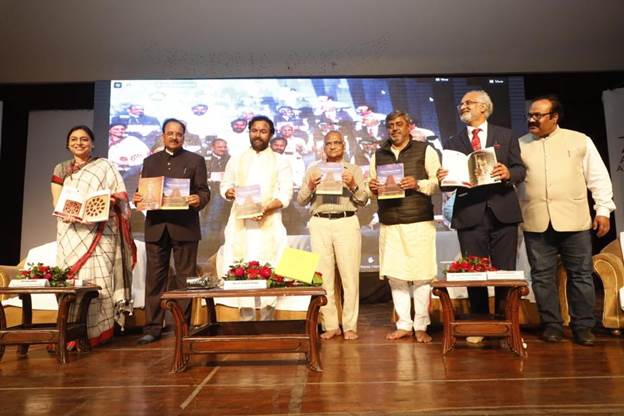
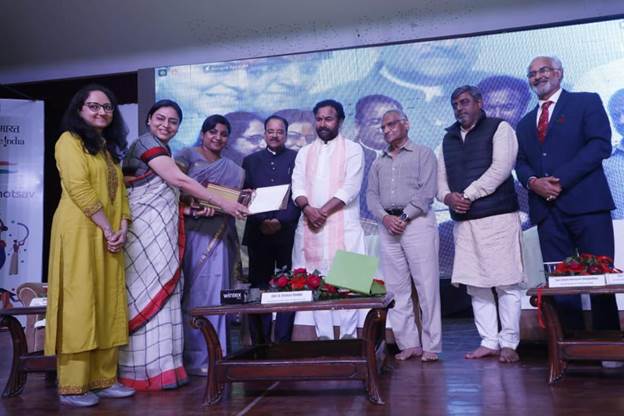
A Coffee table book on the theme Temple Iconography named “Temple Heritage of India” was released, which covers 75 plates on Indian Temples at 75 years of India’s Independence. A letter of intent was awarded to Bird Academy for collaboration with the Ministry of Tourism (MoT) for soft skill training, for IITFC program participants. More than 3000 participants were handed over with Digital Certificate for completing IITF/ IITG Course.

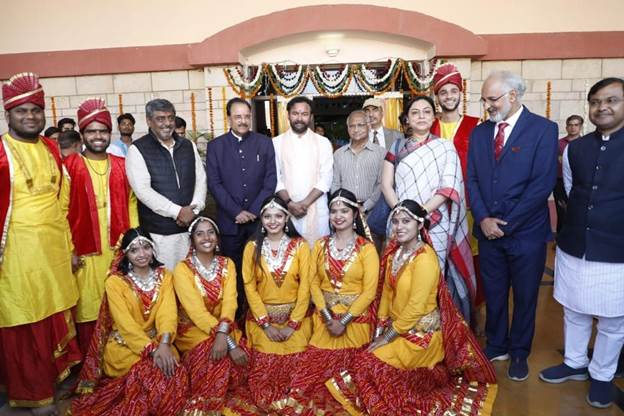
Keeping in view the significant role of women in shaping the countries’ pride, a 3-day program celebrating the spirit of ‘Azadi Ka Amrit Mahotsav’ was also launched on International Women’s Day. The event was concluded with the mesmerising cultural performances and a drama on “Ahilya Bai” by the students of IITTM.