Eight meeting of GST Council (3rd & 4th January 2017): Key takeaways

Eight meeting of GST Council: Key takeaways


January 4, 2017
The GST council headed by Finance Minister, Arun Jaitley, met 8th time after its formation. The key takeaways from council meeting are given hereunder:

1.Issue of dual control

It is very unfortunate that even in the 8th round of meeting GST council did not reach to any consensus on issue of dual control. The Centre is not willing to accept demand of States for exclusive control over assesses having turnover below Rs 1.5 crore.

2.Cess

Officials from State Govt. were of the view that cess to be levied on more items in addition to demerit goods as the demonetization drive would reduce the tax collection in first year of GST implementation. The revenue loss from GST rollout post-demonetisation could be as much as Rs 90,000 crore,” said West Bengal Finance Minister Amit Mitra.

3. Industry representation

The GST Council has also received representation from officials and Ministers of various sectors like commerce and industry, banking and insurance, civil aviation, railways etc., to understand the impact of GST on products.


Note: 

Unless administration issue is resolved it would be difficult for the Government to present the GST legislation (Central GST and Integrated GST) before the Parliament in the upcoming budget session. Thus, GST is not likely to be rolled out from April 1, 2017.

GST Updates (04 Jan 2017)

GSTN revised enrollment schedule for taxpayers; provides State wise enrollment details

January 3, 2017
Enrolment schedule for your State
The schedule of the enrolment activation drive for states is given below. GSTN encourages assessees to complete the enrolment during the specified dates.

State Start Date End Date % Enrolled
Puducherry 08-11-2016 07-12-2016 41.02%
Sikkim 08-11-2016 07-12-2016 43.27%
Maharashtra 14-11-2016 07-12-2016 41.54%
Goa 14-11-2016 07-12-2016 46.40%
Daman and Diu 14-11-2016 07-12-2016 42.63%
Dadra and Nagar Haveli 14-11-2016 07-12-2016 24.96%
Chhattisgarh 14-11-2016 07-12-2016 74.49%
Gujarat 15-11-2016 07-12-2016 78.36%
Odisha 30-11-2016 15-12-2016 24.85%
Jharkhand 30-11-2016 15-12-2016 56.29%
Bihar 30-11-2016 15-12-2016 48.79%
West Bengal 30-11-2016 15-12-2016 60.58%
Madhya Pradesh 30-11-2016 15-12-2016 76.87%
Assam 30-11-2016 15-12-2016 2.14%
Tripura 30-11-2016 15-12-2016 12.63%
Meghalaya 30-11-2016 15-12-2016 9.36%
Nagaland 30-11-2016 15-12-2016 15.50%
Arunachal Pradesh 30-11-2016 15-12-2016 4.17%
Mizoram 30-11-2016 15-12-2016 28.76%
Manipur 30-11-2016 15-12-2016 7.88%
Uttar Pradesh 16-12-2016 31-12-2016 18.17%
Jammu & Kashmir 16-12-2016 31-12-2016 0.00%
Delhi 16-12-2016 31-12-2016 45.3%
Chandigarh 16-12-2016 31-12-2016 53.13%
Haryana 16-12-2016 31-12-2016 29.10%
Punjab 16-12-2016 31-12-2016 29.97%
Uttarakhand 16-12-2016 31-12-2016 12.54%
Himachal Pradesh 16-12-2016 31-12-2016 41.14%
Rajasthan 16-12-2016 31-12-2016 67.13%
Kerala 01-01-2017 15-01-2017 0.73%
Tamilnadu 01-01-2017 15-01-2017 0.44%
Karnataka 01-01-2017 15-01-2017 1.19%
Telangana 01-01-2017 15-01-2017 1.04%
Andhra Pradesh 01-01-2017 15-01-2017 1.86%
Enrolment of Taxpayers who are registered under Central Excise Act but not registered under State VAT 05-01-2017 31-01-2017 Not Yet Started
Enrolment of Taxpayers who are registered under Service Tax Act but not registered under State VAT 09-01-2017 31-01-2017 Not Yet Started
New registration under VAT/Service Tax/Central Excise after August 2016 01-02-2017 20-03-2017 Not Yet Started


GST Council meet concludes with no consensus on dual control

January 4, 2017

GST Council meet concludes with no consensus on dual control

The states are demanding a compensation of Rs 55,000 crore in case of any losses. Sources say that the states will demand to stick to have control below Rs 1.5 crore threshold. The center is pitching for control over services.

The GST Council in its concluding two-day meet has reached a stalemate on dual control between Centre and states. With no consensus being reached in the all-crucial meet, the implementation of the Goods & Service Tax (GST) Bill on April 1 looks impossible.

The states have been demanding a compensation of Rs 55,000 crore in case of any losses. Sources say that the states will seek to have control over taxes on income below the Rs 1.5 crore threshold. The center is pitching for control over services.

Demonetisation’s shadow loomed large over Goods and Services Tax (GST) roll-out discussions as states struck a hard bargain on Tuesday demanding extra compensation to offset tax revenue losses in wake of the currency culling move.

Fresh roadblocks also emerged on products moving in high seas, with coastal states demanding taxation rights over goods transported within 12 nautical miles of their respective geographical territories.

Many states are now pushing the Centre for a grand bargain of sorts, seeking higher compensation for revenue loss on account of demonetisation. States have argued that the economy-wide cash-crunch following the unexpected ban on Rs 500 and Rs 1000 currency notes in November has hurt their revenues.

The Kerala FM Thomas Issac addressing the media said that he doens’t expect the rollout before September. Source -http://www.moneycontrol.com [04-01-2017]

HAPPY NEW YEAR 2017: RESOLUTIONS


HAPPY NEW YEAR  2017: RESOLUTIONS


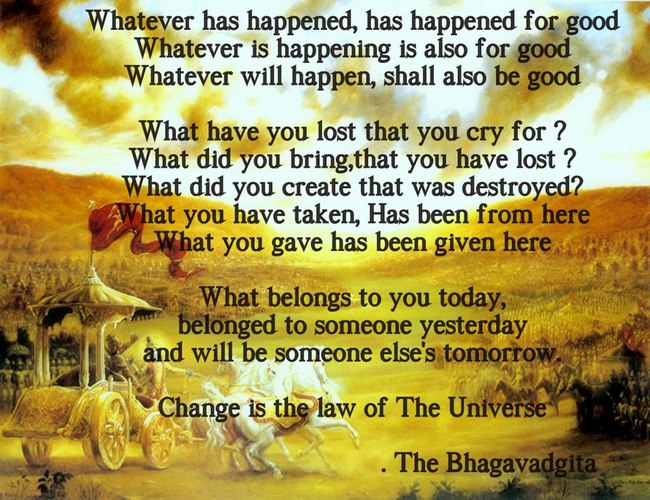
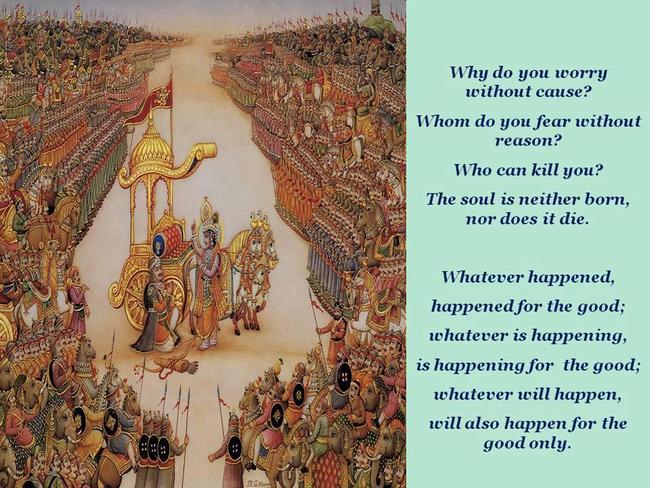
1.  Whatever happened, happened for the good. Whatever is happening, is happening for the good. Whatever will happen, will also happen for the good.


2.   You have the right to work, but never to the fruit of work.


3.  Change is the law of the universe. You can be a millionaire, or a pauper in an instant.


4.  The soul is neither born, and nor does it die


5.  You came empty handed, and you will leave empty handed.


6.   Lust, anger and greed are the three gates to self-destructive hell.


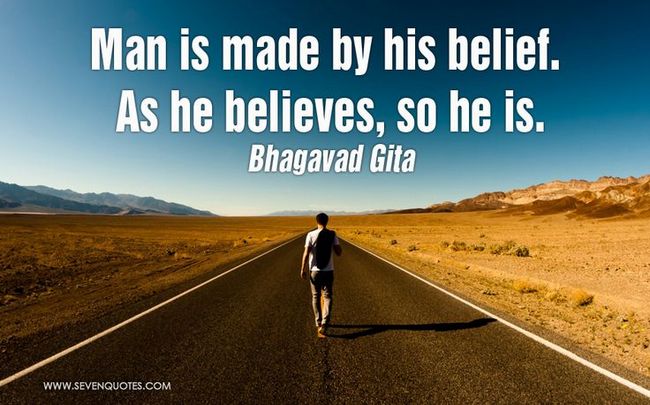
7.   Man is made by his belief. As he believes, so he is.


8.  When meditation is mastered, the mind is unwavering like the flame of a lamp in a windless place.


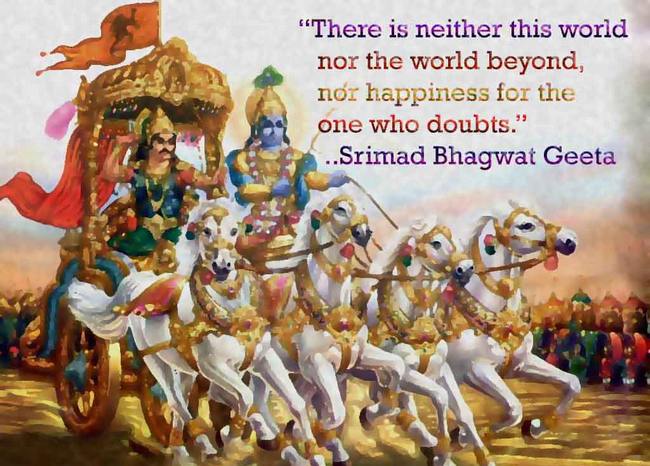
9.  There is neither this world, nor the world beyond.  nor happiness for the one who doubts.


10.  We’re kept from our goal not by obstacles, but by a clear path to a lesser goal.


11. A person can rise through the efforts of his own mind; or draw himself down, in the same manner. Because each person is his own friend or enemy.


January 1, 2017 (New Year’s Day)

New Year’s Day, also called simply New Year’s or New Year, is observed on January 1, the first day of the year on the modern Gregorian calendar as well as the Julian calendar. In pre-Christian Rome under the Julian calendar, the day was dedicated to Janus, god of gateways and beginnings, for whom January is also named. As a date in the Gregorian calendar of Christendom, New Year’s Day liturgically marked the Feast of the Naming and Circumcision of Jesus, which is still observed as such in the Anglican Church and Lutheran Church. In present day, with most countries now using the Gregorian calendar as their de facto calendar, New Year’s Day is probably the most celebrated public holiday, often observed with fireworks at the stroke of midnight as the new year starts in each time zone. Other global New Years’ Day traditions include making New Year’s resolutions and calling one’s friends and family.

(Sources : https://en.wikipedia.org/wiki/New_Year’s_Day)

GST Updates (30 Dec 2016)


Looking at rolling out GST on July 1 if it doesn’t happen on April 1

December 29, 2016
Arjun Ram Meghwal, MoS Finance amd corporate affairs on Thursday told CNBC TV18 that the government is looking at rolling Goods and Services Tax (GST) on July 1, 2017, if it doesn’t happen on April 1. The GST Council will be meeting on January 3-4 with an agenda to vet the model GST and the compensation Bills for their legal correctness, and resolving the contentious issues of Integrated GST (IGST) administration and division of assessment powers between the Centre and states. In the last GST Council meeting, FM Arun Jaitley was asked whether he was still sticking to the self-imposed April 1, 2017 deadline for GST rollout, he said, “Our effort will be to do it as quickly as possible,” but added that he wouldn’t want to “hasten the process”, as discussions were underway.

Meanwhile, Speaking on demonetisation, Meghwal also told the business news channel that this decision is a radical reform and will help change the way of life. “The GDP will increase by 2% and consumption and investment will increase rapidly once the entire demonetisation proces is complete. It will also help increase the tax base.” He further added that the government doesn’t take any decision keeping political benefits in mind.

The Modi government is pitching hard for a cashless economy. Recently, the government decided that no service charge will now be levied for use of debit cards. Department of Economic Affairs Secretary Shaktikanta Das has said that till December 31, 2016, no service charges will be levied on debit cards and that the move is meant to ensure greater penetration of digital transaction. Meanwhile, to encourage digital transactions, the RBI has increased the doubled the limit on the balance that one can keep in e-wallets. The limit has been enhanced from Rs 10,000 to Rs 20,000.

The Narendra Modi government has come under severe criticism from the Opposition for its move to demonetise old Rs 500 and Rs 1000 notes. The reaction on the ground has, however, been mixed. While most people have lauded the move to check black money and corruption, many have said that the implementation, especially when it comes to availability of currency, should have been much better.  Source – http://www.financialexpress.com [29-12-2016]

How To Resolve The Issue Of Dual Control In GST


December 29, 2016

There is no doubt that so far as possible, the taxable person (earlier termed as dealer or assessee) should face only one authority. It will be difficult for him/her to face two masters, as it is very much possible that two authorities may take entirely different views on same issue.

At the same time, it is obvious that the revenue of both central and state governments should be protected. Both the Centre and states have their sovereign powers. Hence, some golden mean is required to be found.

It is envisaged that rates of CGST and SGST will be same. Thus, broadly 50 per cent of revenue will go to the central government and 50 per cent will go to the state government.

Though IGST will be collected by the central government, it is an intermediate tax. It is a pass-through transaction. The final tax will be in form of CGST and SGST only.

However, it has to be noted that central government has taken the responsibility of compensating states for any revenue loss for five years. Thus, the central government needs to be more diligent than states to ensure proper tax collection.

Considering these factors, it is suggested that broadly, 55 per cent of tax revenue should be under control of central government and 45 per cent of tax revenue should be under the control of state government.

To start with, as a rule of thumb, a taxable person having business activities predominantly in one state should be under control of the state government. Taxable persons having multi-state businesses and those predominantly in the export field should be under the control of central government.

Industries and businesses peculiar to one state should be under control of the state government, i.e., jute in West Bengal, sugar in Maharashtra and UP, etc. The reason is that state officers already have deep knowledge of these businesses.

Businesses having national-level activities like banking, insurance, national couriers, telecommunication should be under control of central government.

Once such bifurcation is made, further refinement can be made on other reasonable criteria to achieve broadly the ratio of 55:45.

Once a bifurcation of the taxable person is made, it should be reviewed every three years. Frequent changes should be avoided.

However, that does not mean that there should be watertight compartments. It is obvious that officers of central government will be biased towards IGST and CGST while state government officers will be biased towards SGST.

To ensure that interest of both central and states are protected, the following measures should be taken:
Model GST Law provides for audits of assessee. If the audit team is led by central government authorities, one officer of state should be part of the audit team. Similarly, if audit is conducted by state government authorities, one officer of Centre should be part of the audit team.

Same principle should be followed while carrying out inspection, searches and seizures. This will ensure that in every audit, inspection, search and seizure, a one-sided view is not taken. A balanced view will be ensured.

There should be a coordination committee at state level of senior central and state authorities. Such committees may also be formed at zonal levels, even at district levels, wherever possible.

There should be a mechanism to refer the issue to GST Council through state-level committees if there is disagreement among members of the committee.

If these steps are taken and implemented in proper spirit, interest of all stakeholders – i.e. taxable persons, central government and state governments – will be protected. Source – http://profit.ndtv.co  [28-12-2016]

Demonetisation should not be used as an excuse to delay GST


December 29, 2016

The latest GST council meetings have fallen short of expectation.

Lack of consensus on the issue of tax administration or ‘dual control’ means that the April 1, 2017 deadline for GST implementation looks unachievable. A few states also believe that GST should be deferred due to the ongoing demonetisation drive.

These states argue that they cannot absorb the impact of two ‘major disruptions’ demonetisation and GST simultaneously .This is interesting, because GST was hardly seen as a ‘disruption’ before the currency ban.

So, should demonetisation be a ground for delay in implementation of GST?

A closer look at facts suggest otherwise. At a conceptual level, one of the primary objectives of both demonetisation and GST is to check tax evasion. Demonetisation does it by bringing a larger part of economy under banking channels, GST is proposing to do it by tracking all business transactions through the GST Network (GSTN) system. So, GST should complement measures to curb black money.

Some economists make the point that small businesses are most impacted by demonetisation and they would not be able to align themselves with GST so quickly . There is hardly any merit in this argument. In GST, there is a proposal to exempt small businesses up to annual sales of Rs 20 lakh (10 lakh for northeastern states). Further, those in the range Rs 20-50 lakh would have the option to pay composition tax at a flat rate, without claiming credits and maintaining detailed paperwork. These small businesses will hardly be impacted by GST.

It’s relevant to point out that agricultural produce would be kept out of GST as well. Larger businesses were anyway expected to prepare for GST, with or without demonetisation. In fact they look forward to savings, which GST-led efficiencies are expected to bring about.

These businesses are used to making tax payment online, also mandatory under current excise and service tax laws. Further, they can make GST payment through debit and credit cards as well, which will further simplify the tax payment process.In any case GST is now likely to be delayed by at least 3 months or so, which gives businesses more time to prepare for it.

From state governments’ perspective, admittedly, demonetisation could lead to drop in tax revenues (primarily VAT) in the current year, due to lower sales that many companies are experiencing, particularly those dealing with FMCG or consumer products. However, such a revenue loss is fully protected by the Centre for a period of 5 years of GST implementation.

Further, the base year to be taken for arriving at the state tax revenues is 2015-16, before demonetisation. For every year thereafter, a minimum annual growth of 14% has been assumed. Therefore, even assuming that state revenues drop in 2016-17 due to demonetisation by say 20%, they would continue to get compensation on the basis of base year 2015-16 plus 14%.

It only means that the quantum of compensation might increase for the Centre due to less than normal revenue collection by states. Thus the Centre needs ways to collect additional revenue. In the last GST council meeting, a consensus has already been reached that alternative sources to fund the additional compensation should be explored by the Centre.

For the Centre, while excise and customs duty collections may drop initially (due to fall in demand after demonetisation), they could make up the shortfall by higher collection of income tax as a significant part of parallel economy is expected to come within the tax net, as we go forward.

For consumers, GST is decidedly a better system of taxation simple and transparent. There is an expectation that GST would bring down the prices of most products of general usage. The government’s proposal to introduce an ‘anti profiteering’ clause in the revised draft of GST laws would mean that businesses would be forced to pass on the benefit accruing to them on account of GST, even though implementation of such a provision could be a challenge. Drop in prices would spur demand, which is exactly what the doctor ordered to deal with demonetisation’s fallout.

So demonetisation should not delay GST, if anything it should expedite GST. Most definitely , it cannot be used as a scapegoat for derailing the GST bandwagon. Source – http://auto.economictimes.indiatimes.com [29-12-2016]

GST Council makes headway on bills, stuck on taxpayer control

December 24, 2016

The all-powerful GST Council today made a reasonable headway on supporting legislations for the new indirect tax regime but its rollout from April 1 looked virtually impossible as it postponed discussion on the critical issue of administration and control of tax payers. The panel, which met for the seventh time since the Constitutional Amendment to replace central and state taxes with a Goods and Service Tax was approved in mid-September, tweaked the periodicity of payment of compensation for loss of revenue to states for implementation of GST to bi-monthly instead of previously decided quarterly payment. Also, the Council decided to create the kitty for the compensation from any other tax besides the cess on luxury and sin goods it had previously approved, as states saw revenues being dented by slowdown in economic activity and resultant tax collections following demonetisation. The GST Council will meet again on January 3-4 and take up the issue of which part of tax payers should be controlled by the Centre and who should be governed by the states after a single tax will replace levies like central excise, service tax and VAT. The dual control is also part of the Integrated-GST legislation that Parliament needs to pass before the new regime is rolled out. But for this stumbling block, mirror legislations of Central-GST and State-GST, that have to be approved by Parliament and state assemblies respectively, neared finality with most clauses agreed upon. Finance Minister Arun Jaitley said the law to provide for compensation to the states for loss of revenue was also approved by the GST Council at its two-day meeting which ended today but a final draft with legal language would be approved at the next meeting. “I am trying my best,” he said, when asked about the April 1 rollout schedule. “I am not going to bind myself with anything. Our effort is to do it as quickly as possible and I think we are making a reasonable headway.” Three consecutive meetings of the GST Council have not been able to take up the issue of dual control. Some states like West Bengal and Kerala want a minimum turnover criteria be fixed to decide who control which assessee, a proposal the Centre is not agreeable to because states lack expertise on levies like service tax.

“If you ask me what are the principle residuary items left, the main item of course is the IGST and dual empowerment issue. The second is the legally vetted language which will be placed in the next meeting on January 3-4,” Jaitley said, adding that the Council will take up items in each tax bracket after that. Source – http://indiatoday.intoday.in [23-12-2016]

GST Updates ( 25 Dec 2016)


GST Council makes headway on bills, stuck on taxpayer control


December 24, 2016

The all-powerful GST Council today made a reasonable headway on supporting legislations for the new indirect tax regime but its rollout from April 1 looked virtually impossible as it postponed discussion on the critical issue of administration and control of tax payers. The panel, which met for the seventh time since the Constitutional Amendment to replace central and state taxes with a Goods and Service Tax was approved in mid-September, tweaked the periodicity of payment of compensation for loss of revenue to states for implementation of GST to bi-monthly instead of previously decided quarterly payment. Also, the Council decided to create the kitty for the compensation from any other tax besides the cess on luxury and sin goods it had previously approved, as states saw revenues being dented by slowdown in economic activity and resultant tax collections following demonetisation. The GST Council will meet again on January 3-4 and take up the issue of which part of tax payers should be controlled by the Centre and who should be governed by the states after a single tax will replace levies like central excise, service tax and VAT. The dual control is also part of the Integrated-GST legislation that Parliament needs to pass before the new regime is rolled out. But for this stumbling block, mirror legislations of Central-GST and State-GST, that have to be approved by Parliament and state assemblies respectively, neared finality with most clauses agreed upon. Finance Minister Arun Jaitley said the law to provide for compensation to the states for loss of revenue was also approved by the GST Council at its two-day meeting which ended today but a final draft with legal language would be approved at the next meeting. “I am trying my best,” he said, when asked about the April 1 rollout schedule. “I am not going to bind myself with anything. Our effort is to do it as quickly as possible and I think we are making a reasonable headway.” Three consecutive meetings of the GST Council have not been able to take up the issue of dual control. Some states like West Bengal and Kerala want a minimum turnover criteria be fixed to decide who control which assessee, a proposal the Centre is not agreeable to because states lack expertise on levies like service tax.

“If you ask me what are the principle residuary items left, the main item of course is the IGST and dual empowerment issue. The second is the legally vetted language which will be placed in the next meeting on January 3-4,” Jaitley said, adding that the Council will take up items in each tax bracket after that. Source – http://indiatoday.intoday.in [23-12-2016]

Two-day meeting of GST Council begins today in Delhi


December 22, 2016
Two-day meeting of GST Council begins today in Delhi
The Goods and Services Tax (GST) Council will begin its two-day meeting in New Delhi today to consider the model laws and iron out differences on the issue of jurisdiction over assessees in the new indirect tax regime.

This will be the seventh meeting of the Council and Union Finance Minister Arun Jaitley will chair the meeting.

GST Council in its last meeting had cleared 20 chapters of the model GST law and today they will discuss the remaining seven chapters.

Earlier, the council have taken several important decision.

The decision includes the threshold limit of 20 lakh rupees exemption from levy of GST for normal states and 10 lakhs for the Special Category States.

Besides, to compensate states for five years for loss of revenue due to the implementation of GST, the base year for the revenue of the State would be 2015-16 and a fixed growth rate of 14 percent will be applied to it.

The government has time till September 16 next year to implement the GST Act as per the Constitution Amendment Bill passed by both the Houses with a two-thirds majority and by half of the states. Source – http://www.newindianexpress.com [22-12-2016]


GST Updates (20 Dec 2016)


Delhi govt starts registration of city traders under GST


The Delhi government has launched a process for enrollment under Goods and Services Tax regime on December 16, 2016. The Deputy Chief Minister, Delhi, Manish Sisodia, has formally initiated the procedure that would continue till December 31. There are currently around 3.48 lakh traders registered with the Trade and Taxes Department of Delhi who are eligible to get themselves registered under GST regime.

He said that “GST is currently in initial stage and it is our responsibility to properly shape it. Traders should come forward and tell us about their queries and concerns relating to GST so that I could raise them in the GST council”. He also demanded that the word- ‘dealers’ which exists in the current tax law should be replaced with ‘partners’ in the GST regime. His contention was that the traders collect tax from the people and give it to the State Government and, hence, they are ‘partners’ in collecting tax.

Government may call special session of the Parliament for GST-related bills


The controversy of the Parliament on demonetisation has put several important legislations including GST on hold. The last meet of winter session of the Parliament has ended with worst results. The Government is now considering for calling a special short session of the Parliament to discuss Central GST and Integrated GST Bills.
According to a report the government may call a meeting of the Cabinet committee of Parliamentary Affairs (CCPA) to discuss ways of getting these important bills passed in the Parliament.

CEA wants real estate, electricity charges to be part of GST


In an event at ASSOCHAM, Chief Economic Advisor, Arvind Subramanian said that the “GST constitutional amendment bill is the ‘mother of all achievements’. We should aspire for simple, clean rates that are lower rather than higher. This will help in fight against black money.”
He said that the Sale of land and real estate need to be part of the GST. That way the input tax credits can enter in the system. The Stamp duty can be kept separate. He further pointed that we need to bring electricity charges of this sector as part of GST.

Malaysia to share GST experience anti-terror module with India, says Najib


Prime Minister of Malaysia, Datuk Seri Najib Razak, recently said that “Malaysia is more than ready to share its experience with India on the implementation of the Goods and Services Tax (GST) and anti-terrorism measures”. He said that the information on GST was shared with a high-level delegation from India that visited Malaysia recently. Despite facing different challenges in terms of GST, he said both the countries shared a mutual resolve to provide a transparent and predictable tax regime.

‘Food processing sector may attract existing rates under GST’


Special Secretary, Food Processing Ministry GOI, recently said that the Food processing industry is unlikely to have any adverse impact in terms of taxation under the proposed GST regime as the sector will continue to be taxed at existing rates. The existing excise duty rate on food processing is six percent and is most likely to be maintained under GST. The official also said that the government would take more initiatives to make this sector more vibrant and put it on global map.

Exempt healthcare services by private hospitals from GST: IMA


The Indian Medical Association (IMA) has urged the government to exempt healthcare services offered by the private hospitals under the Goods and services Tax (GST). It stated that the exemption of GST to private sector would result in several benefits which include no increase in cost of healthcare being provided by the private sector, affordable healthcare services in India, eradication of any possibility of dis-incentivising future investments in the sector, etc.
At present, healthcare services provided by all types of clinical establishments are exempted from service tax under the mega-exemption notification, issued in June 2012, which are strictly defined to cover diagnosis, treatment and care for illness, injury or deformity

GST Rollout: If Not in April 2017, When?


The Centre’s aim of rolling out the Goods and Services Tax (GST) from April 1, 2017 has just got tougher. With the all-powerful GST Council yet to arrive at a consensus on any of the three GST laws namely, the Central GST Bill, the State GST Bill and the Integrated GST Bill. The government has missed the chance of getting the Parliament’s approval in the winter session.
The Council is also yet to decide on the list of items which would fall under the tax slabs of 5, 12, 18 and 28 percent. Finance Minister, Arun Jaitley had said that essential commodities, which include 50 percent of the goods in the current consumer price index basket will be taxed at zero percent under the GST.
Individual State legislatures will also have to ratify these bills before the new tax regime can be rolled out, making it only more difficult for the Centre to implement GST from the start of the next financial year.
Citing constitutional compulsion, Jaitley had sought to drive home the point that GST has to be rolled out before September 16 next year as the existing indirect taxes will come to an end by then and it would not be possible to run the country without revenue collection. All existing indirect tax laws of the Centre and the States will be void a year after the Constitution amendment for GST was notified in the official gazette.

Migration of traders to GST sluggish


The migration of traders and merchants registered under various State and Central tax regimes to the GST seems slow. The Pondicherry being the first State in the country to launch the Goods and Service Tax Network (GSTN) has enrolled about 3000 traders only. According to K. Sridhar, Deputy Commissioner of Commercial Taxes, as many as 15,000 traders in the Union Territory are currently registered with VAT and other tax regimes such as Central Excise. Of them, about 3,000 have enrolled themselves with the GST.

Presumptive rate u/s 44 AD for FY 2016-17 reduced to 6% (Receipt through banking channel/digital means)

Presumptive rate  u/s 44 AD for FY 2016-17 reduced to 6% (Receipt through banking channel/digital means)


Refer Press release dated 19th Dec 2016:


Government of India
Ministry of Finance
Department of Revenue
Central Board of Direct Taxes
New Delhi, 19th December, 2016.
Press Release
Measures for Promoting Digital Payments & Creation of Less-Cash Economy
Under the existing provisions of section 44AD of the Income-tax Act, 1961 (the Act), in case of certain assesses (i.e. an individual, HUF or a partnership firm other than LLP) carrying on any business (other than transportation, agency, brokerage and commission) and having a turnover of Rupees Two Crore or less, the profit is deemed to be 8% of the total turnover.

In order to achieve the Government’s mission of moving towards a less cash economy and to incentivise small traders / businesses to proactively accept payments by digital means, it has been decided to reduce the existing rate of deemed profit of 8% under section 44AD of the Act to 6% in respect of the amount of total turnover or gross receipts received through banking channel / digital means for the financial year 2016-17. However, the existing rate of deemed profit of 8% referred to in section 44AD of the Act, shall continue to apply in respect of total turnover or gross receipts received in cash.
Legislative amendment in this regard shall be carried out through the Finance Bill, 2017.
(Meenakshi J. Goswami)
Commissioner of Income Tax
(Media and Technical Policy)
Official Spokesperson, CBDT

Tax disclosure scheme that will open tomorrow will close on March 31, 2017

(By ECONOMICTIMES.COM | Updated: Dec 16, 2016, 05.28 PM IST )

NEW DELHI: Government today notified changes to income tax law for the new black money disclosure scheme ‘PM Garib Kalyan Yojana’. Revenue Secretary Hasmukh Adhia said that stringent penalties have been prescribed in the new provisions, adding that the declarations made under the new scheme will be kept secret. 

“The scheme will start from Dec 17 and will run till March 31,” said Adhia, adding that government wants people to contribute to the welfare of poor via PM Garib Kalyan Yojan . 

Adhia told reporters that those who fail to declare untaxed income, will have to pay minimum 77 percent and up to 100 percent in tax and fines. 

Adhia informed that the government has plugged in existing loopholes of I-T Act via amendments. 
There will be no immunity in criminal laws and the information will not be shared for any tax purpose. “We do not want tax officials to bother any one. We have information and I-T will use it. Financial Intelligence Unit is providing us with all tax related information,” said Adhia warning that those who have deposited money in bank accounts should not think that they have escaped by depositing Rs 2 lakh in 10 different banks 


“We are getting data on suspicious deposits on a daily basis from banks. I-T department will probe on money deposited in bank accounts and clerance will be given only after deducting taxes from any such account,” said Adhia. 

Adhia also said that the all agencies are getting daily information on deposits and payment of loans and added that people can inform government about those converting black money at blackmoneyinfo@incometaxindia.nic.in. 

“There could be more steps ahead but we can’t disclose it now….We’ll also investigate where we find misuse of provisions have happened with multiple accounts,” said Adhia. 

He also added that farmers having income more than 2.5 lakh will have to give PAN card. 

CBDT Chairman Sushil Chandra also informed about the cash seizures and various actions being taken by the department. Here are highlights: 


* Search and seizures in 291 cases after screening of data 

* Survey 295 cases 

* 3000 notices issued 

* New currency notes of Rs 80 crore seized 

* Rs 316 crore seized in cash 

* Jewellery worth Rs 76 crore seized 

* Total Rs 393 crore seized 

* Admitted concealed income is about Rs 2600 crore 

* Methods used for converting black money into white includes: 

– Purchase of gold 

– Back dating transactions 

– Depositing cash in Jan  .. 

(By ECONOMICTIMES.COM | Updated: Dec 16, 2016, 05.28 PM IST )

GST Updates (15 Dec 2016)


CEA Arvind Subramanian calls GST “mother of all achievements”

December 15, 2016

Chief Economic Advisor Arvind Subramanian on Thursday told CNBC-TV18 that managing demonetisation remains a challenge for the next two months. “Macroeconomic conditions remain stable, inflation remains muted and current account deficit (CAD) is also narrow,” he said. He also said that the Indian economy is “well cushioned” to absorb the impact of US Federal Reserve’s rate hike. “India is seen as better equipped than its other emerging market peers to weather the impact of higher US interest rates because of its stronger economic growth and record high foreign exchange reserves of more than $300 billion.”

Talking about GST he said, “The proposed Goods and Services Tax (GST) is the mother of all achievements”. “We should aspire for a simple structure for GST with lower rates”. We face the risk of missing a self-imposed deadline to launch the GST from April 2017, Subramanian said, after a meeting of officials ended last Sunday without fixing who would administer the tax. Subramanian, who headed a panel on the proposed tax structure, said that GST should also include real estate, land sales and electricity as well.

Amid concerns of missing the GST rollout deadline of April 1, the government, yesterday, came out with a report card detailing the efforts being made to reach a consensus on support legislations for timely implementation of the new indirect tax regime. “All efforts are being made to meet the necessary deadlines to ensure that GST is rolled out by April 1, 2017,” said the Finance Ministry’s report card on GST implementation. The GST Council, which took over the job of rolling out the new indirect tax regime after the Parliament passed the Constitutional amendment and half of the states ratified it, has taken major decision on fixing tax rates, compensation to states and threshold of exemption.

“At present, agenda items pertaining to GST related draft laws and provisions for cross empowerment to ensure single interface under GST are under consideration of the GST Council. The last GST Council meeting on December 11 could not find time to discuss the all important issue of cross-empowerment. Source – http://www.financialexpress.com [15-12-2016]


All efforts being made to implement GST from April 1: Government


December 15, 2016

All efforts being made to implement GST from April 1: Government
Amid concerns of missing the GST rollout deadline of April 1, the government today came out with a report card detailing the efforts being made to reach a consensus on support legislations for timely implementation of the new indirect tax regime.

“All efforts are being made to meet the necessary deadlines to ensure that GST is rolled out by April 1, 2017,” said the Finance Ministry’s report card on GST implementation.

The GST Council, which took over the job of rolling out the new indirect tax regime after the Parliament passed the Constitutional amendment and half of the states ratified it, has taken major decision on fixing tax rates, compensation to states and threshold of exemption.

The Council, headed by Finance Minister Arun Jaitley and comprising representatives of all states, has been “very cordial and all decisions till now have been taken by consensus.”

“As compared to the time taken in arriving at a consensus on the Constitutional Amendment Bill for GST, the subsequent events after the passing of the Bill indicate that the Government of India and the states have done remarkably well in taking all necessary steps for implementation of GST,” it said.

The government lost no time in implementing the Goods and Services Tax (GST) so far and a number of important decisions have been taken in six meetings of the Council, the report card added.

The Finance Ministry’s statement comes days after the GST Council for the third time failed to arrive at a decision on administering the new indirect tax regime which will have shades of both central and state levies.

“At present, agenda items pertaining to GST related draft laws and provisions for cross empowerment to ensure single interface under GST are under consideration of the GST Council.

“99 Sections the Model GST Law have already been considered by the Council and remaining Sections will be discussed in the next meeting of the Council scheduled for December 22-23, 2016,” itsaid.

The last GST Council meeting on December 11 could notfmdtimeto discuss the all important issue of cross-empowerment.

“Members of the Council are participating in the meetings with a very positive attitude and are working towards the roll-out of GST as per the deadline,” the statement added.
The GST Council in its first meeting had decided that GST would be rolled-out by April 1, 2017, itsaid.

Various timelines had been decided for different aspects of implementation of GST such as recommendation of the Model GST Laws by the GST Council and its passage by the Union Parliament and State Legislatures, the development of front-end Information Technology (IT) modules on the common GST portal and the back-end IT systems, it said.
Also included in the schedule are testing and integration of GST front-end and back-end IT systems of all stakeholders, training of both Central and state tax officials and sensitisation of trade, industry and consumers.

The statement said that the government is making efforts to meet the deadlines to roll out the new indirect tax regime from the next financial year.

Listing out the progress so far, the ministry said as soon as the President’s assent was received on the Constitutional Amendment Act for GST on September 8, 2016, the GST Council was created by the Cabinet within one week along with the Secretariat.

Under Article 279A of the Constitution, the GST Council has been entrusted with the power to make recommendations to the Union and states on various GST related issues, the threshold limit of turnover below which goods and services may be exempted from GST and the rates including floor rates with bands of GST.

Since notification of the GST Council on September 12, 2016, six meetings have been held.

During these meetings, number of important decisions have been taken paving way for timely rollout of GST, it said, adding the threshold limit for exemption from levy of GST has been fixed at Rs 20 lakh for normal states and Rs 10 lakh for Special Category States.

The threshold for availing the Composition scheme has been fixed at Rs 50 lakh while service providers have been kept out of the composition scheme.

To compensate states for 5 years for loss of revenue due to implementation of GST, the base year for the revenue of the state has been fixed at 2015-16 and a fixed growth rate of 14 per cent would be applied to it.

The Council has also approved the Draft GST Rules on registration, payment, return, refund and invoice, debit and credit notes.

All entities exempted from payment of indirect tax under any existing tax incentive scheme would pay tax in the GST regime and the decision to continue with any incentive scheme shall be with the concerned state or Central Government.

In case any state or Central government decides to continue any existing exemption/incentive scheme, it will be administered by way of a reimbursement mechanism.

The Council fixed bands of rates of goods under GST at 5, 12, 18 and 28 per cent. In addition, there would be a category of exempt goods.

Further, it was decided that a cess would be levied on certain goods such as luxury cars, aerated drinks, pan masala and tobacco products, over and above the rate of 28 per cent for payment of compensation to the states. Source – http://economictimes.indiatimes.com [14-12-2016]

Traders can register themselves under the GST from Dec 16

December 15, 2016


Around 3.48 lakh traders of the city, registered with the Delhi government’s Trade and Taxes department, can register themselves under the upcoming Goods and Services Tax (GST) regime from December 16.

The exercise for the registration of city’s traders under the new tax law will continue till December 31.

The department today organised a workshop on front-end business on GST portal for the city traders at Delhi Secretariat in order make the process smooth.

“A self-training module is available on the gst.gov.in that could be used for understanding the process. All verifications of documents will be done online. If all documents are provided, the process will be completed in three days,” an official said.

According to the Trade and Taxes department, it would also train some traders at different market hubs who could further help members of their fraternity.

Official said that the second round of training for traders will be done on December 16. Besides, government is also associating different market and trade associations in the exercise.

On the occasion, Delhi Deputy Chief Minister Manish Sisodia, who also holds the Finance portfolio, said that the GST is the biggest tax reform of the country but he was apprehensive about its implementation.

The Deputy CM said that being Finance minister, he has been involved in the process at different stages, adding that however, he is worried about its implementation.

Sisodia urged all traders to come up with their suggestions.

“Our officers will be training one trader in each market, who could further help others in registering themselves under the new regime,” said an official. Source – http://www.moneycontrol.com [15-12-2016]