Venture capitalists play a pivotal role in the Startup ecosystem and in economic growth of the country

Venture capitalists play a pivotal role in the Startup ecosystem and in economic growth of the country, says Shri Piyush Goyal


IVCA can act as a Golden bridge between the Government, Startups, market and consumers – Shri Piyush Goyal

“Venture capitalists can play a role in fast tracking self-reliance, creating an AatmaNirbhar Bharat”: Shri Goyal

Shri Goyal urges venture capitalists to focus on Tier 2, Tier 3 & Tier 4 cities and towns

Press Release posted Date:- Mar 09, 2022

Union Minister of Commerce & Industry, Consumer Affairs, Food & Public Distribution and Textiles, Shri Piyush Goyal today said the Venture capitalists have played a pivotal role in India’s Startup story and in economic growth of the country. Addressing the Indian Venture and Alternate Capital Association’s (IVCA) Conclave, he said they have been driving innovation and bringing new ideas to the fore that is legendary.

“Venture capitalists and Angel investors have a very important role to play in the Startup ecosystem. I remember the Prime Minister had once said that the current decade is going to be the ‘Tech-ade’ of India. And this will be a decade where technology & innovation will drive the future of Indian economy, whether it is UPI or Covin. Today we are showing to the whole world what Indian capabilities are and how we can leverage digital platforms from mass transformation of the lives of a billion plus people,” said Shri Goyal, in his Keynote Address delivered through video conference.

Shri Goyal said the IVCA can act as a Golden bridge between the Government, Startups, market and consumers and promote innovation.

“India has carved a distinct niche for itself in the Startup map of the world. We have over 60,000 Startups and I see it as the DNA of the future of India,” he said.

Urging venture capital funds to reach out to the Tier 3&4 towns, Shri Goyal said the Startup Advisory Council recognises there is a large pool of talent in the interiors of India. Domestic capital can play a huge role in the next wave of innovation, he said.

“Atal Tinkering Labs are a good example. The whole ecosystem is going to grow by leaps and bounds. Soon ideas will choose what funds to take. Many good ideas have been taken over by small ticket cheques for lack of alternatives. We must seriously look at some kind of instruments and a little more compassion towards these ideas,” he said.

Shri Goyal urged the investors & capital providers to focus on 4Fs:

  • Fostering Innovation & Future Technologies
  • Facilitate mobilisation of domestic capital
  • Fast tracking self-reliance: An AatmaNirbhar Bharat
  • Focus on Tier 2, Tier 3 & Tier 4 cities and towns

Shri Goyal said we are on the cusp of reaching the $400 bn merchandise exports mark.

“I wish our Startups contribute significantly as we move towards a trillion dollars of Goods and Services exports each,” he said.

Shri Goyal said the Startups will play a defining role in the Amritkaal i.e next 25 years, when India completes 100 years of its Independence.
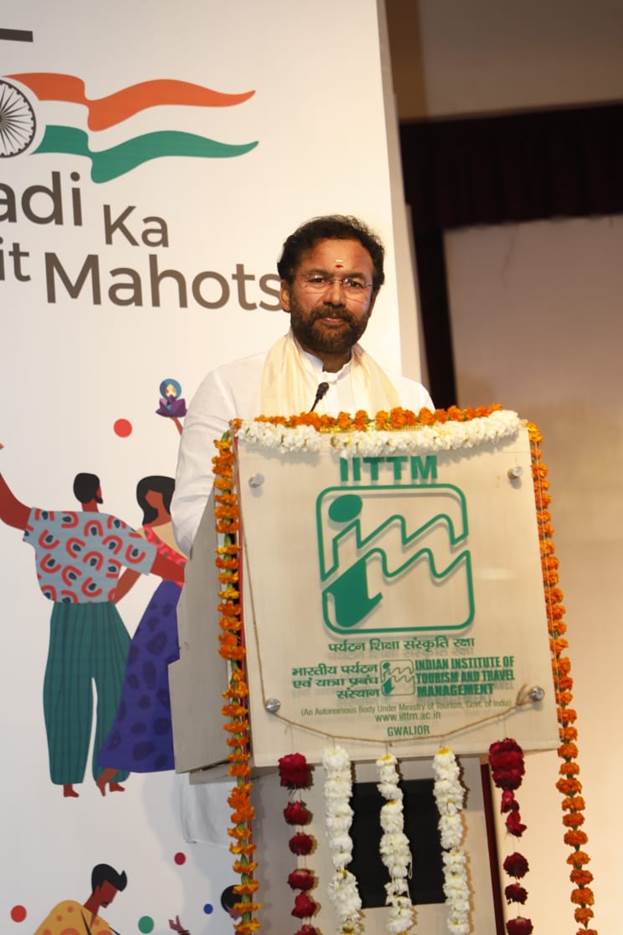
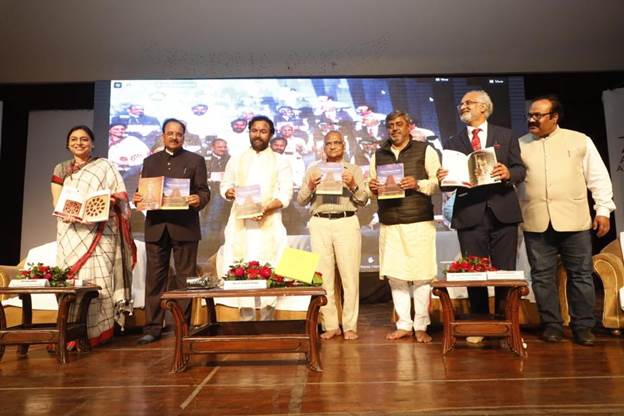
Launching of digital platform (E-Marketplace) as part of digital tourism solution for IITFs / IITGs

Tourism has immense potential in generating employment and business opportunities: Shri G Kishan Reddy

Press Release posted Date:- Mar 08, 2022

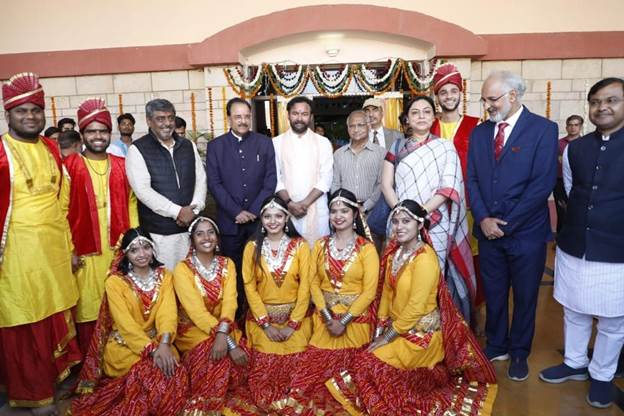
Union Minister of Tourism, Culture and DONER, Shri G. Kishan Reddy todsy launched the E-marketplace platform in an event organised at Indian Institute of Tourism and Travel Management(IITTM), Gwalior. Ministry of Tourism launched the digital platform (E-Marketplace) as part of digital tourism solution for IITFs / IITGs, to provide Web and Mobile App based interaction mechanism, which is to be used by the tourists and certified tourist facilitators/Tourist Guides. E-Marketplace portal under IITFC/IITG program of the Ministry would be more like the platforms of OLA, UBER etc., which would help IITFs/IITGs to get business opportunities and would work as a bridge between the customer and the service provider. Minister of Agriculture and Farmer Welfare, Shri Narendra Singh Tomar (virtually) Minister of Civil Aviation,Shri Jyotiraditya Scindia (virtually), Minister of State of Tourism & Defence, Shri Ajay Bhatt, Member Parliament, Gwalior, Shri Vivek Narayan Shejwalkar, Minister of Tourism and Culture, Govt. of Madhya Pradesh, Smt. Usha Thakur (Virtually)  also graced the event.

During his address Shri G Kishan Reddy said that India has great variety of tourism destinations and tourism has immense potential in generating employment and business opportunities. Shri Reddy added that Students at IITTM have several avenues in tourism sector and I am sure you will play a critical role in the growth of the tourism sector in the country. Under the guidance and leadership of Prime Minister Sri Narendra Modi ji, VIKAS is our only mantra and it is Vikas that will lead us to more tourism opportunities. Our government is working shoulder to shoulder with all states to develop tourism in the country, he added.

Minister of Tourism, Culture and DONER, Shri G. Kishan Reddy also visited Gwalior Fort along with officials of Ministry of Tourism and observed the tourist facilities at the monument. Thereafter, a review meeting was held with the officials of Ministry of Tourism, Ministry of Culture and Archaeological Survey of India (ASI) under his chairmanship. A detailed presentation was made by Principal Secretary (Tourism &Culture), Government of Madhya Pradesh on progress of various Tourism Infrastructure projects funded by Ministry of Tourism, Govt. of India.A newly built International Executive Guest House at IITTM Gwalior Campus was Inaugurated.

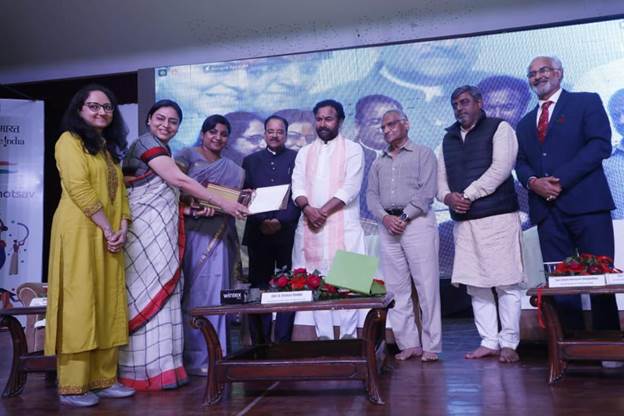
A Coffee table book on the theme Temple Iconography named “Temple Heritage of India” was released, which covers 75 plates on Indian Temples at 75 years of India’s Independence. A letter of intent was awarded to Bird Academy for collaboration with the Ministry of Tourism (MoT) for soft skill training, for IITFC program participants. More than 3000 participants were handed over with Digital Certificate for completing IITF/ IITG Course.

Keeping in view the significant role of women in shaping the countries’ pride, a 3-day program celebrating the spirit of ‘Azadi Ka Amrit Mahotsav’ was also launched on International Women’s Day. The event was concluded with the mesmerising cultural performances and a drama on “Ahilya Bai” by the students of IITTM.

Story of India and its vibrant Startups & Entrepreneurs – a result of PM Narendra Modi’s policies since 2014 – is a real, exciting & durable one

Story of India and its vibrant Startups & Entrepreneurs – a result of PM Narendra Modi’s policies since 2014 – is a real, exciting & durable one: Mr. Rajeev Chandrasekhar at IGF


Inclusion of youth from all parts of India to the growing phenomenon of entrepreneurship and innovation is a mission for Narendra Modi Govt

Digital opportunities shouldn’t be concentrated in few cities. They must spread to tier 2 cities
Posted Date:- Mar 08, 2022

Union Minister of State for Skill Development and Entrepreneurship and Electronics and Information Technology, Rajeev Chandrasekhar spoke about the New India Inc driving the AtmaNirbharBharat vision of PM Shri Narendra Modi. The Minister affirmed that the India story, it’s vibrant Startups & entrepreneurship, are a result of PM Narendra Modi’s policies since 2014 – is a real, exciting & durable one. He also mentioned that the next wave of Digitization needs to ensure that Digital opportunities should further spread to tier 2 cities as Inclusion of youth from all parts of India to the growing phenomenon of entrepreneurship and innovation is a mission for Narendra Modi Government.

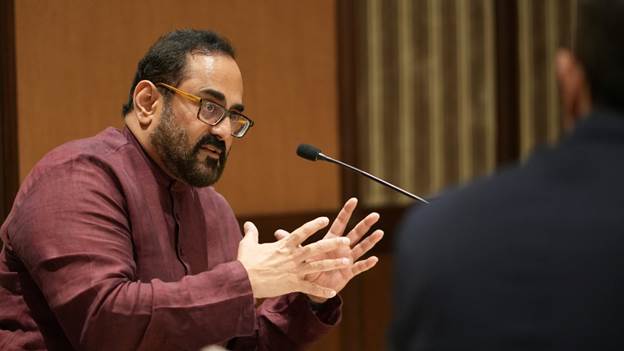
Highlighting the need for projecting the India story at the global forums, the Minister stated that there is a need to pitch India’s story in the global arena as this is the inflection point in the Indian tech space & more and more global investors must know about New India’s growth story. Pitching how technology is being embedded in governance and lives of people at a rapid pace, Mr Rajeev Chandrasekhar added “ Next 2-3 years shall witness deeper and wider expansion of innovation – unprecedented in the history of India.”

The Minister at the concluding session also gave an advice to the budding entrepreneurs –  “Try & discover the skills & abilities you have aside from the textbooks, it is necessary to develop that. There is no formula that works without determination and passion”, he added.

The Minister attended the 2 day India Global Forum 2022, organized in Bengaluru for the very first time. The earlier editions have been organized at London and Dubai. He participated in the sessions – The New India Inc, The Unicorn Round Table, The Global Supply Chain, Education & Skills Boardroom and addresses the concluding session at the Forum.

The morning breakfast roundtable session saw participation of around 30 CEOs and founder of Unicorns. The Minister, ever since he has joined office, has been meeting Startups all across the country.

Speaking on International women day the Minister mentioned “ There is a sense of confidence and aspiration post Covid that inspires both women and men in India to aim high.

There is a mood today in India where women believe they can achieve anything.”

The forum was attended by Smt Nirmala Sitharaman, Hon Finance Minister, Smt Meenakshi Lekhi, Hon Minister of State, Ministry of external affairs and Culture, and host of dignitaries from the industry, Government of Karnataka, media amongst others.

About IGF: IGF is the agenda-setting forum for international business and global leaders. It offers a selection of platforms that international corporates and policymakers can leverage to interact with stakeholders in their sectors and geographies of strategic importance. Our platforms range from large global events to invite-only, intimate conversations and analysis, interviews and thought leadership through our media assets.

Entrepreneur -03rd Feb 2022

Implementation of Agriculture Export Policy

https://pib.gov.in/PressReleaseIframePage.aspx?PRID=1794842&RegID=3&LID=1

FDI Inflow

https://pib.gov.in/PressReleaseIframePage.aspx?PRID=1794840&RegID=3&LID=1

Export of Organic Foodgrains

https://pib.gov.in/PressReleaseIframePage.aspx?PRID=1794841&RegID=3&LID=1

Micro Entrepreneurs in Rural Areas

https://pib.gov.in/PressReleaseIframePage.aspx?PRID=1794837&RegID=3&LID=1

API Manufacturers

https://pib.gov.in/PressReleaseIframePage.aspx?PRID=1794836&RegID=3&LID=1

SBI-NCF-IGNCA sign MoU for Development of Atmanirbhar Bharat Centre for Design at Red Fort, Delhi

https://pib.gov.in/PressReleaseIframePage.aspx?PRID=1794907&RegID=3&LID=1

Previous Highest Ever yearly exports crossed in 10 months this year with figures touching USD 336 billion approximately

https://pib.gov.in/PressReleaseIframePage.aspx?PRID=1794817&RegID=3&LID=1

WITH REVIVAL OF ECONOMY, EMPLOYMENT INDICATORS BOUNCED BACK TO PRE-PANDEMIC LEVELS DURING LAST QUARTER OF 2020-21

WITH REVIVAL OF ECONOMY, EMPLOYMENT INDICATORS BOUNCED BACK TO PRE-PANDEMIC LEVELS DURING LAST QUARTER OF 2020-21


MONTHLY NET ADDITION IN EPF SUBSCRIPTIONS DURING 2021 SURPASS LEVELS OF CORRESPONDING MONTHS OF PRE-PANDEMIC YEAR 2019

DEMAND FOR MGNREGS WORK STABILIZES AFTER SECOND COVID SURGE BUT REMAINS HIGHER THAN PRE-PANDEMIC LEVEL

3 TIMES MORE ADDITIONAL WORKFORCE CREATED BETWEEN 2018-19 & 2019-20 AS COMPARED TO THE PREVIOUS PERIOD (2017-18 & 2018-19)

FEMALE WORKFORCE CONTRIBUTED TO 63 PERCENT OF ADDITIONAL WORKFORCE CREATED DURING 2018-19 AND 2019-20

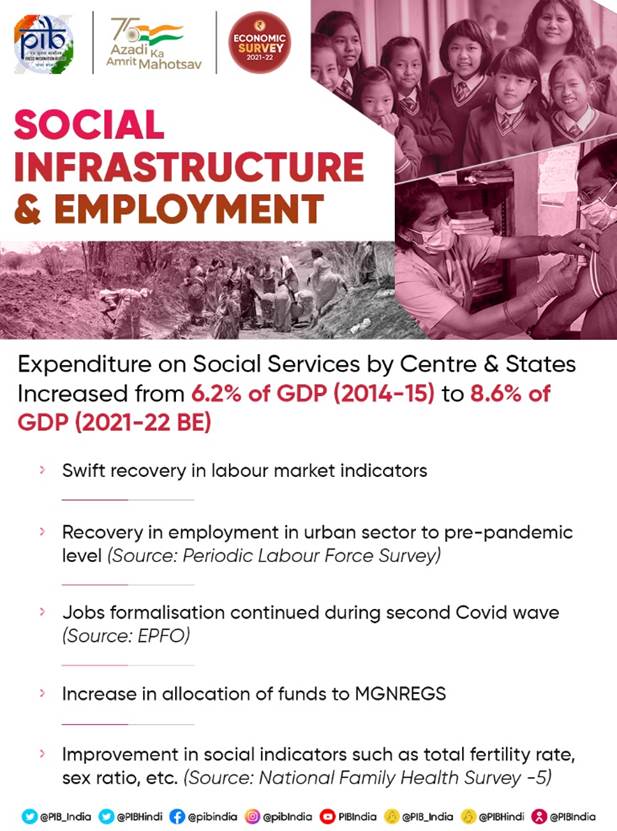
The various indicators of employment have bounced back remarkably, after showing a decline during the first quarter of 2020-21, during the nationwide lockdown due to Covid pandemic. The Economic Survey 2021-22 which was tabled in the Parliament today by the Union Minister for Finance & Corporate Affairs, Smt Nirmala Sitharaman has analysed trends in labour market and the impact of Covid-19 on employment.

Trends in Urban Labour Market:

The Survey states that with the revival of the economy, the Unemployment Rate (UR), the Labour Force Participation Rate (LFPR) and the Worker Population Rate (WPR) almost reached their pre-pandemic levels during the last quarter of 2020-21 as per Periodic Labour Force Survey Data.

The Economic Survey also analyses trends in urban employment using Employees Provident Funds Organization (EPFO) payroll data. An analysis of the EPFO data suggests significant acceleration in formalization of the job market, during 2021. In fact, in November, 2021, the monthly net additional EPF subscription peaked with 13.95 lakh new subscribers, the highest in any given month since 2017, the Survey states. This translates into growth of 109.21 percent in EPF subscription from November, 2020. The Economic Survey further states that the monthly net addition in EPF subscriptions during 2021 has not only been higher than the corresponding monthly values in 2020 but they have also surpassed the levels of the corresponding months during pre-pandemic year 2019. 

Trends in Rural Labour Market:

            Economic Survey 2021-22 analyses trends in Rural Labour Market with the help of latest data on demand for work under Mahatma Gandhi National Rural Employment Guarantee Scheme (MGNREGS).

            The Survey observes that the MGNREGS employment peaked during the nationwide lockdown in 2020. However an interesting trend was observed for many migrant source states like West Bengal, Madhya Pradesh, Odisha, Bihar, in which the MGNREGS employment in most months of 2021 has been lower than the corresponding level in 2020. In contrast, the demand for MGNREGS employment has been higher for migrant recipient states like Punjab, Maharashtra, Karnataka and Tamil Nadu for most months in 2021 over 2020.

Giving further details, the Economic Survey points out that the demand for MGNREGS work has stabilized after the second Covid wave. It further states that the aggregate MGNREGS employment is still higher than pre-pandemic level. During the second Covid wave, demand for MGNREGS employment reached the maximum level of 4.59 crore persons in June 2021.

Long Term Trends in Employment using Annual PLFS Data:

            During PLFS 2019-20 (survey period from July 2019 to June 2020), employment at usual status continued to expand. Between 2018-19 and 2019-20, about 4.75 crore additional persons joined the workforce. This is about three times more than the employment created between 2017-18 and 2018-19. The rural sector contributed much more to this expansion relative to the urban sector (3.45 crore in rural sector and 1.30 crore in urban sector). Further, amongst the additional workers, 2.99 crore were females (63 percent). About 65 percent of the additional workers joined in 2019-20 were self employed. About 75 percent of the female workers who joined as self- employed were ‘unpaid family labour’. About 18 percent of the additional workers were Casual Labourer and 17 percent were ‘Regular Wage/Salaried Employee’. Further, the number of unemployed persons in 2019-20 has also decreased by 23 lakhs, constituted largely by males from the rural sector.

            With respect to industry wise employment in India, of the workers added in 2019-20, more than 71 percent were in agricultural sector. Among the new workers in the agriculture sector, females account for about 65 percent. Trade, hotel and restaurant sector accounted for a little over 22 percent of the new workers, in line with previous year’s trend where the sector represented more than 28 percent of the new workers. The share of manufacturing has declined from 5.65 percent of new workers added in 2018-19 to about 2.41 percent of new workers added in 2019-20, and so has that of construction from 26.26 percent to 7.36 percent.

Important Policy Measures to boost livelihoods:

The Economic Survey has highlighted several policy responses to boost livelihoods. These include Aatmanirbhar Bharat Rojgaar Yojana which was announced as a part of Aatmanirbhar 3.0 package to boost the economy, increase the employment generation in post Covid recovery phase and to incentivise creation of new employment alongwith the social security benefits and restoration of loss of employment during Covid-19 pandemic.

To boost employment and livelihood for returnee migrant workers, Garib Kalyan Rojgar Abhiyan was launched in June 2020. It focused on 25 target driven works to provide employment and create infrastructure in the rural areas of 116 districts 6 states with  resource envelope of Rs.50,000 Crore.

Similarly, allocation to MGNREGS in FY 2021-22 increased to Rs. 73,000 crore, from Rs. 61,500 crore in FY 2020-21. Allocation for FY 2021-22 has been enhanced to Rs.98000 crore so far. In FY 2021-22 over 8.70 crore individuals and 6.10 crore households were provided work so far.


The Survey also highlights several other social protection measures which have been stepped up like Pradhan Mantri Shramyogi Mandhan (PM-SYM) Yojana, National Pension Scheme for traders/shopkeepers/self employed persons, e-SHRAM portal to facilitate delivery of Social Security Schemes to workers and Labour Reforms for welfare of labour.

CENTRAL THEME OF ECONOMIC SURVEY 2021-22 IS THE “AGILE APPROACH” (Press Release 31 Jan 2022)

CENTRAL THEME OF ECONOMIC SURVEY 2021-22 IS THE “AGILE APPROACH”


PREFACE TAKES A BIRD’S EYE VIEW OF EVOLUTION OF ECONOMIC SURVEYS SINCE INDEPENDENCE

NEW CHAPTER DEMONSTRATES USE OF SATELLITE & GEO-SPATIAL IMAGES TO GAUGE VARIOUS ECONOMIC PHENOMENON

ECONOMIC SURVEY REVERTS TO A SINGLE VOLUME PLUS A SEPARATE VOLUME FOR STATISTICAL APPENDIX

The central theme of this year’s Economic Survey is the “Agile approach”, implemented through India’s economic response to the COVID-19 Pandemic shock. Informing further, the preface of Economic Survey states that the “Agile approach” is based on feed-back loops, real-time monitoring of actual outcomes, flexible responses, safety-net buffers and so on.

The Economic Survey 2021-22 tabled by the Union Minister for Finance & Corporate Affairs Smt. Nirmala Sitharaman in the Parliament today, argues that some form of feedback loop based policy-making was always possible, but the “Agile framework: is particularly relevant today because of the explosion of real-time data that allows for constant monitoring. Such information includes GST collections, digital payments, satellite photographs, electricity production, cargo movements, internal/external trade, infrastructure roll-out, delivery of various schemes, mobility indicators, to name just a few. Some of them are available from public platforms but many innovative forms of data are now being generated by the private sector. Short-term policy responses, therefore, the Survey states, can be tailored to an evolving situation rather than what a model may have predicted.

 Planning matters in this framework but mostly for scenario-analysis, identifying vulnerable sections, and understanding policy options rather than as a deterministic prediction of the flow of events. The Survey notes that the previous Economic Survey did briefly discuss this approach but it is a central theme for this Survey.

Another theme highlighted in this Economic Survey relates to the art and science of policy-making under conditions of extreme uncertainty. It is not just about the immediate disruptions and uncertainty caused by repeated waves of the COVID-19 pandemic, but also the longer-term uncertainty about the post-COVID world due to accelerated shifts in technology, consumer behaviour, supply-chains, geo-politics, climate change and a host of other factors. Not only are these individual factors difficult to forecast, the impact of their interactions are fundamentally unpredictable. The same recognition of uncertainty informs the longer-term supply-side strategy: the combination of policies that encourage economic flexibility through innovation, entrepreneurship and risk-taking on one hand, and simultaneously invests in resilient infrastructure, social safety-nets and macro-economic buffers on the other.

The Survey states that various policies of the Government of India are all about protection from or taking advantage of an uncertain future.  It expects its readers to recognise the links between seemingly disparate policies ranging from deregulation, process simplification, privatization, foreign exchange reserves accumulation, inflation-targeting, housing-for-all, green technology, the Insolvency and Bankruptcy Code, health insurance for the poor, financial inclusion, infrastructure spending, direct benefit transfers and so on.

The Preface also takes a bird’s eye view of the “great deal of evolution” of the Economic Surveys presented since the first Survey in 1950-51. The Survey charted out many permutations and combinations in terms of language, statistics, formats, topics, length, scope and prescriptions projected through the Economic Surveys. Interestingly, for more than a decade after 1st Survey, the Survey document was clubbed with the Union Budget.

Making a shift from the two-volume format of recent years to a single volume plus a separate volume for statistical tables, the Survey argues for smaller and terse document. Over the years, increasing voluminous state of the document has made it unwieldy with last year’s Economic Survey 2020-21 with almost 900 pages. Therefore, this year’s Survey reverts to a single volume plus a separate volume for the Statistical Appendix. The idea of having a separate volume for the statistical appendix is to give it a distinct identity as the one-stop source of authentic data. The Economic Survey hopes that it will evolve in the next few years to include new kinds of socio-economic data in line with the emphasis on a feedback loop approach.

Along with the sectoral chapters, this year’s Survey adds a new chapter that demonstrates the use of satellite and geo-spatial images to gauge various economic phenomenon – urbanisation, infrastructure, environmental impact, farming practices and so on.

What are conditions for Food License ?

A food business operator must comply following conditions:

1. Form C ( License copy) must be displayed in a conspicuous location on the premises at all times.

2. Allowing Licensing Authorities to access the premises as needed.

3. Notify authorities of any changes or alterations to the license’s activity or content.

4. At least one technical expert should be hired to oversee the manufacturing process.

The person in charge of the production process must have at least a bachelor’s degree in science with chemistry, biochemistry, food and nutrition, or microbiology, or a bachelor’s degree or diploma in food technology, dairy technology, dairy microbiology, dairy chemistry, dairy engineering, oil technology, veterinary science, hotel management, and catering technology, or any other degree or diploma in any other discipline related to the business’s specific requirements from a recognized

5. Reporting : Submit a periodic yearly report (from April 1 to March 31) by May 31 of each year. Half-yearly returns for the collection, handling, and production of milk and milk products are also required (1st April to 31st September before 30th November and 1st October to 31st March).

6. Ensure that the unit does not create any products other than those listed in the license/registration.

7. Maintain factory sanitary and hygienic requirements, as well as worker hygiene, as stipulated in Schedule – 4 for the food industry category.

8. Separately keep track of production, raw material usage, and sales on a daily basis.

9.Ensure that the raw material source and standards are of the highest possible quality.

10. No Food Business Operator shall manufacture, store, expose for sale, or authorize the sale of any article of food in any premises that is not adequately isolated from any privy, urinal, sullage, drain, or place of storage of foul and waste matter to the satisfaction of the licensing authority.

11. Ensure Clean-In-Place systems (where applicable) for frequent machine and equipment cleaning.

12. Ensure that relevant chemical and/or microbiological contaminants in food products are tested as frequently as required in accordance with these regulations, based on historical data and risk assessment, to ensure the production and delivery of safe food, at least once every six months, through own or NABL accredited/FSSA notified labs.

13. Ensure that the proper temperature is maintained as much as feasible throughout the supply chain, including chilling, shipping, and storage, from the point of procurement or sourcing until it reaches the end customer.

14 Owners of hotels, restaurants, and other food stalls that sell or expose for sale savouries, sweets, or other food items must post a notice board with separate lists of the items cooked in ghee, edible oil, vanaspati, or other fats for the knowledge of potential buyers.

15. A notice board describing the nature of the items being exposed for sale must be displayed by a food business operator selling cooked or prepared meals.

16. Every manufacturer [including ghani operator] or wholesale dealer in butter, ghee, vanaspati, edible oils, Solvent extracted oil, de-oiled meal, edible flour, and any other fats shall keep a record of the quantity manufactured, received, or sold, the nature of the oil seed used, the quantity of de-oiled meal and edible flour used, and the destination of each consignment of the substances sent out from his factory or place of business.

Steps taken by Government to improve flow of credit to MSME sector (Press release dated 21st Dec 2021)

The Reserve Bank of India (RBI) vide circular dated 05.02.2021 and 05.05.2021, has allowed Scheduled Commercial Banks (SCBs) to deduct the amount equivalent to credit disbursed to New Micro Small and Medium Enterprises (MSMEs), who have not availed any credit facilities from banking_system as on 01.01.2021, from their Net Demand and Time Liabilities (NDTL) for calculation of the Cash Reserve Ratio (CRR). This was stated by Union Minister of State for Finance Dr Bhagwat Kisanrao Karad in a written reply to a question in Rajya Sabha.

The Minister stated that this exemption is available upto Rs 25 lakh per borrower, disbursed upto fortnight ending 31.12.2021, for a period of one year from date of origination of loan or the tenure of the loan, whichever is earlier.

The Minister listed out the measures taken by the Government for improving the flow of credit to MSME sector:

  1. The Emergency Credit Line Guarantee Scheme (ECLGS) was announced as part of the Aatma Nirbhar Bharat Package with the objective to help MSMEs and business enterprises to meet their operational liabilities and resume businesses in view of the distress caused by the COVID-19 crisis, by providing Lending Institutions 100 per cent guarantee against any losses suffered by them due to non-repayment by borrowers. As informed by National Credit Guarantee Trustee Company Limited, as on 10,12.2021, loans amounting to Rs. 3.09 lakh crore have been sanctioned under the Scheme.
  2. The psbloansin59minutes Portal was launched on 2nd November 2018 to facilitate in-principle approval of loans of up to Rs 1 crore (enhanced subsequently to Rs. 5 crore) to MSMEs without human intervention. As informed by SIDBI as on 30.11.2021, loans amounting to 79,285 crore were sanctioned on the portal.
  3. RBI operationalized TReDS in 2017 to solve the problem of delayed payments to MSMEs. TReDS is an electronic platform where receivables of MSMEs drawn against buyers (large corporates, PSUs, Government Departments, etc.) are financed through multiple financiers at competitive rates through an auction mechanism. As on 03.12.2021, 26.64 lakh invoices amounting to Rs 56,694.14 crore have been discounted since inception by the three entities on TReDS platform.
  4. Factoring transactions taking place through TReDS are eligible for classification under Priority Sector Lending (PSL). Further, loans sanctioned by banks to NBFC­ MFls and other MFls (Societies, trusts, etc.) which are members of RBI recognized SRO for the sector for on-lending to MSE sector, loans to registered NBFCs (other than MFls) for on-lending to MSMEs and bank finance to start-ups up to 50 crore also form a part of PSL. RBI has also permitted co-lending by Banks and NBFCs to Priority sector.
  5. Subordinate Debt scheme for Stressed MSMEs was approved on 01.06.2020. Under the scheme, banks provide promoters of stressed MSMEs with subordinate debt up to 15% of promoter’s stake or Rs. 75 lakh, whichever is lower to be infused as equity/quasi equity in the business.
  6. Pradhan Mantri Mudra Yojana (PMMY) scheme was launched on 08.04.2015 to provide access to institutional finance to unfunded Micro/Small business units with collateral free loans up to Rs 10 lakh for manufacturing, processing, trading, services and activities allied to agriculture and to help in creating income generating activities and employment.
  7. RBI had permitted one-time restructuring for MSME accounts vide circular dated 01.01.2019, 11.02.2020 and 06.08.2020. In view of the need to support the viable MSME entities on account of the fallout of COVID-19, it was decided to extend the facility for restructuring existing loans to MSMEs up to 50 crore classified as ‘standard’ without a downgrade in the asset classification subject to the conditions issued vide circular, dated 05.05.2021 and 04.06. 2021 on ‘Resolution Framework 2.0.
  8. For better transmission of monetary policy, RBI has advised banks to link all new floating rate loans to external benchmark for MSEs from 01.10.2019 and Medium enterprises from 01.04.2020.
  9. The Regulatory Retail Portfolio threshold to a single counterparty was increased from 5 crore to 7.5 crore enabling Banks to assign a lower risk weight of 75% to such exposure to MSME entities.

युवा उद्यमी हेनरी सिंगुरा ने मशरूम की खेती को एक सफल व्यावसायिक उद्यम के रूप में विकसित किया (Ministry of Micro,Small & Medium Enterprises Press Release dated 10th Dec 2021)

मिजोरम के श्री हेनरी सिंगुरा ने मशरूम की खेती को एक सफल व्यावसायिक उद्यम के रूप में विकसित किया है और अपने क्षेत्र के युवाओं को रोजगार के नए अवसर प्रदान किए हैं। हेनरी हमेशा से ही अपने आस – पास के लोगों के लिए कुछ करने की इच्छा रखते थे इसलिए उन्होंने वर्ष 2019 में फूड माइक्रो लैब की स्थापना की। सूक्ष्म, लघु एवं मध्यम उद्यम मंत्रालय की प्रधानमंत्री रोजगार सृजन कार्यक्रम (पीएमईजीपी) योजना ने उनके उद्यम को सफल बनाने में प्रमुख भूमिका निभाई है। हेनरी ने बताया है कि मिजोरम में मशरूम की खेती आमदनी का एक मुख्य स्रोत है। एक स्टार्टअप होने की वजह से धन का प्रबंधन करना हमारे सामने आने वाली प्रमुख समस्याओं में से एक थी। पीएमईजीपी योजना के तहत हमें ऋण और 35 फीसदी सब्सिडी मिली। इससे हमारे स्टार्टअप को काफी सहायता मिली है।

Choose road to success with Ministry of MSME like Henry did.#MSME #SCSTHUB #KVIC #NSIC #NSSH@NSICLTD @minmsme @kvicindia @IndianCoir pic.twitter.com/kcntLYmnVl— Ministry of MSME (@minmsme) December 10, 2021


हेनरी आज एक सफल उद्यमी के रूप में कार्य कर रहे हैं और अन्य लोगों को भी मशरूम की खेती करने का प्रशिक्षण दे रहे हैं। हेनरी की शुरुआती चुनौती थी अपने स्टार्टअप के लिए धन की व्यवस्था करना और इसके लिए उन्हें #पीएमईजीपी योजना के तहत #मिनिस्ट्रीऑफ़एमएसएमई का सहयोग मिला।

Revival of Exports (Press release dated 10th Dec 2021)

There are signs of revival of exports of the country. India’s overall exports (merchandise and services) has increased by 39.74% in 2021-22 (April-October) as compared to the corresponding period of previous year.

In order to boost India’s exports, the Government has taken several measures which include:

  1. The mid-term review (2017) of the Foreign Trade Policy (2015-20) was carried out and corrective measures were undertaken.
  2. Foreign Trade Policy (2015-20) extended by one year i.e. upto 31-3-2022 due to the COVID-19 pandemic situation.
  3. Assistance provided through several schemes to promote exports, namely, Trade Infrastructure for Export Scheme (TIES) and Market Access Initiatives (MAI) Scheme. 
  4. A Central Sector Scheme –‘Transport and Marketing Assistance for Specified Agriculture Products’–for providing assistance for the international component of freight to mitigate the freight disadvantage for the export of agriculture products.
  5. Remission of Duties and Taxes on Exported Products (RoDTEP) scheme and Rebate of State and Central Levies and Taxes (RoSCTL) Scheme have been launched with effect from 01.01.2021.
  6. Common Digital Platform for Certificate of Origin has been launched to facilitate trade and increase FTA utilization by exporters.
  7. Promoting and diversifying services exports by pursuing specific action plans for the 12 Champion Services Sectors.
  8. Promoting districts as export hubs by identifying products with export potential in each district, addressing bottlenecks for exporting these products and supporting local exporters/manufacturers to generate employment in the district.
  9. Active role of Indian missions abroad towards promoting India’s trade, tourism, technology and investment goals has been enhanced.
  10. Package announced in light of the Covidpandemic to support domestic industry through various banking and financial sector relief measures, especially for MSMEs, which constitute a major share in exports.

This information was given by the Minister of State in the Ministry of Commerce and Industry, Smt. Anupriya Patel, in a written reply in the Rajya Sabha today.