People will get land records in their own language soon

People will get land records in their own language soon, says Shri Giriraj Singh


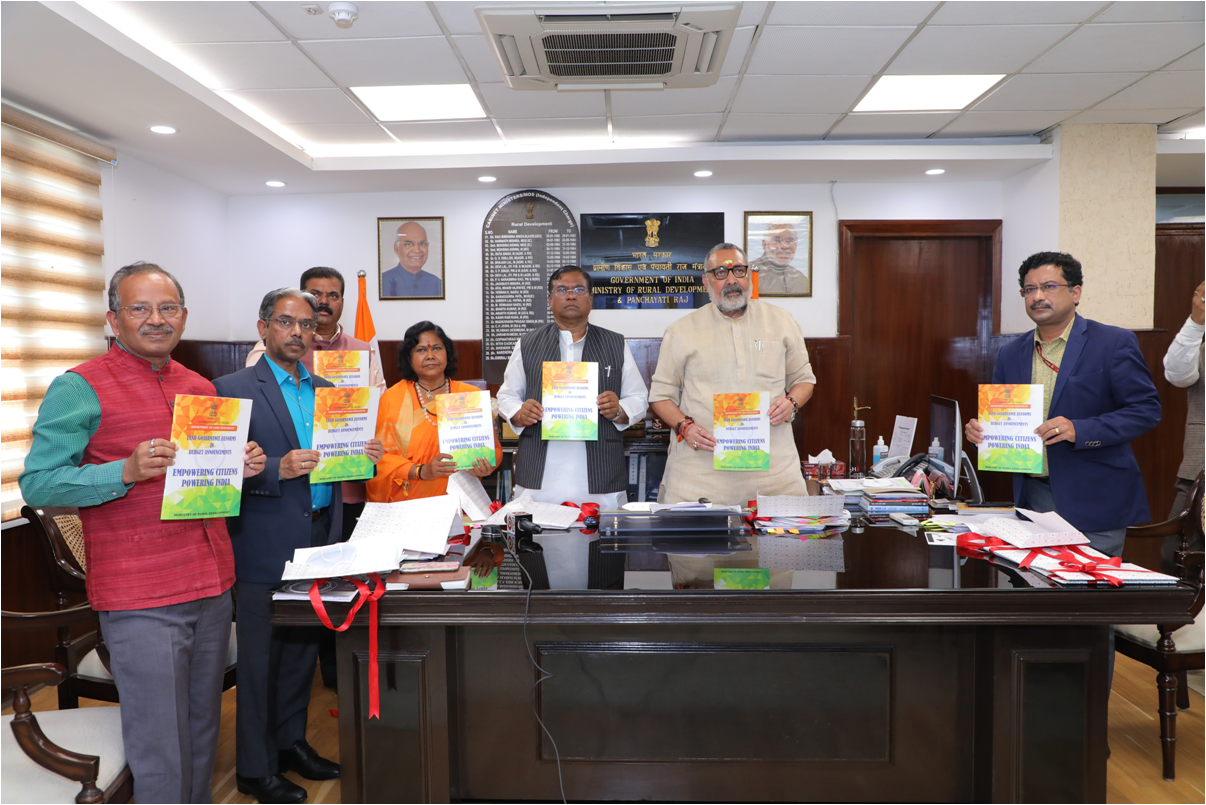
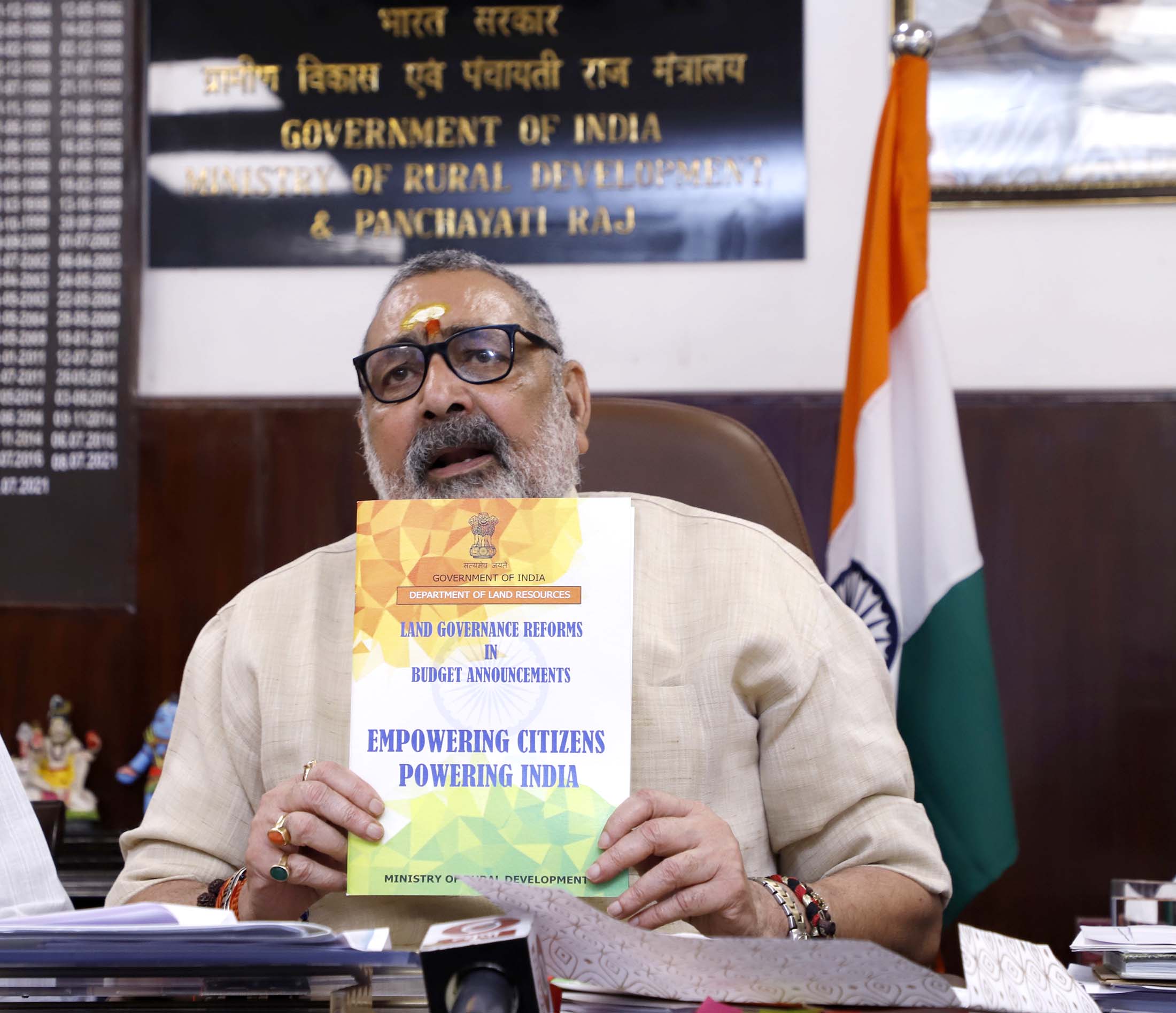
Union Minister Shri Giriraj Singh releases e-book on Land Governance Reforms announced in Budget

State Governments got a significant increase in the land revenue through the use of NGDRS software: Shri Giriraj Singh

Press Release posted Date:- Mar 14, 2022

Union Minister for Rural Development and Panchayati Raj Shri Giriraj Singh announced that soon, people in the country will be able to get their land records in their own language. He said that the Department of Land Resources, MoRD will plan to roll out the multilingual software from April 2022. After that, the land records will be available in 22 languages. The Minister was speaking after releasing an e-book on  Land Governance Reforms announced in Budget titled “Empowering Citizens-Powering India.”
Speaking on the NGDRS software developed indigenously, Shri Giriraj Singh said that the NGDRS software costs around 4 crores to the government but the use of this software resulted in increasing land revenue by the State Governments. The Minister said that State NGDRS is being implemented in 13 States which will be benefitted to 22 crore people. Till now, 30.9 lakh documents registered through the system from which revenue of more than 16 thousand crores has been received.
The Minister said that after the rollout of ULPIN (Unique Land Parcel  Identification Number) in the country, No one can take away the rights of the poor. Linking ULPIN with PAN, Aadhar, land records, Courts and banking system, will get rid of corruption and fraud in land matters. So far, ULPIN is rolled out in 14 States. The Minister also requested State Governments to spread awareness about the land reforms amongst people.

The contents of the e-book are related to Unique Land Parcel Identification Number (ULPIN), National Generic Document Registration System (NGDRS) and Multilingual Land Records – to break the linguistic barrier in land records. There has been tangible transparency in land records information and management after the adoption of digital technology by the Department of Land Resources. A Unique Land Identification Number (ULPIN) to each land parcel is being assigned to land Parcels to prevent fraudulent and Benami property transactions. Further Digitization of Land Records will empower citizens and India for Atmanirbhar Bharat- the vision of Prime Minister. Moreover, the updated land records will reduce the time for payment of compensation and provide rehabilitation and resettlement benefit for land acquisition considerably. The Multilingual Land Records will facilitate access of information for the prospective individuals in his regional and mother languages.

Union Minister of State for Steel and Rural Development, Shri Faggan Singh Kulaste, Minister of State for Rural Development Sadhvi Niranjan Jyoti, Minister of State for Panchayati Raj, Shri Kapil Moreshwar Patil, Secretary, Department of Land Resources Shri Ajay Tirkey and Secretary, Department of Rural Development Shri Nagendra Nath Sinha, Shri Sonmoni Borah, Joint Secretary, DoLR were also present on the occasion.
Microfinance Loan (RBI Master Direction dated 14th March 2022)

A microfinance loan is defined as a collateral-free loan given to a household having annual household income up to ₹3,00,000. For this purpose, the household shall mean an individual family unit, i.e., husband, wife and their unmarried children.

In exercise of the powers conferred by Section 21, Section 35A and Section 56 of the Banking Regulation Act, 1949; Chapter IIIB of the Reserve Bank of India Act, 1934; and Sections 30A and Section 32 of the National Housing Bank Act, 1987, the Reserve Bank, being satisfied that it is necessary and expedient in the public interest so to do, hereby, issues the directions hereinafter specified.

1. Short Title and Commencement

1.1 These directions shall be called the Reserve Bank of India (Regulatory Framework for Microfinance Loans) Directions, 2022.

1.2 These directions shall be effective from April 01, 2022, subject to stipulations as at paragraphs 5.3 and 9.3.

2. Applicability

2.1 The provisions of these directions shall apply to the following entities:

I. All Commercial Banks (including Small Finance Banks, Local Area Banks, and Regional Rural Banks) excluding Payments Banks;

II. All Primary (Urban) Co-operative Banks/ State Co-operative Banks/ District Central Co-operative Banks; and

III All Non-Banking Financial Companies (including Microfinance Institutions and Housing Finance Companies).

2.2 The entities mentioned at points 2.1(i) to 2.1(iii) above are hereafter referred to as ‘Regulated Entities (REs)’ for the purpose of these directions.

https://m.rbi.org.in//Scripts/NotificationUser.aspx?Id=12256&Mode=0

Reserve Bank clarifies on the mode of receipt of complaints under Reserve Bank – Integrated Ombudsman Scheme 2021(RB-IOS)

RBI Press release 09th March 2022

Instances of misinformation being spread through certain sections of the social media about the Reserve Bank – Integrated Ombudsman Scheme 2021 (RB-IOS) have come to the notice of the RBI. These messages are conveying to public at large to lodge their complaints against entities regulated by RBI through third parties for a charge/fee or otherwise for early redress of grievances.

It is clarified that RBI does not have any such arrangement with any entity for redress of grievances against the Regulated Entities (REs). RBI has laid down a cost free grievance redress mechanism under RB-IOS which does not involve payment of fees or charges in any form or manner. Customers having grievances against REs for deficiency in services, which is not redressed satisfactorily or in a timely manner by the REs can directly lodge their complaint on the Complaint Management System (CMS) portal (https://cms.rbi.org.in) or by e-mail at crpc@rbi.org.in or in physical mode at the ‘Centralised Receipt and Processing Centre’ (CRPC) set up at RBI, 4th Floor, Sector 17, Chandigarh – 160017.

Complainants having queries on RB-IOS or desiring information relating to their complaints lodged through the above methods, can reach the Contact Centre of RBI at toll-free #14448 (currently available from 9:30 am to 5:15 pm on working days) in Hindi, English and nine regional languages (Bengali, Gujarati, Kannada, Odia, Malayalam, Marathi, Punjabi, Tamil and Telugu). The status of complaints can also be tracked on the CMS portal.

(Yogesh Dayal)     
Chief General Manager

Press Release: 2021-2022/1836

Action against Paytm Payments Bank Ltd under section 35 A of the Banking Regulation Act, 1949 (RBI Press Release 11th March 2022)

RBI Press Release 11th March 2022

Reserve Bank of India has today, in exercise of its powers, inter alia, under section 35A of the Banking Regulation Act, 1949, directed Paytm Payments Bank Ltd to stop, with immediate effect, onboarding of new customers. The bank has also been directed to appoint an IT audit firm to conduct a comprehensive System Audit of its IT system. Onboarding of new customers by Paytm Payments Bank Ltd will be subject to specific permission to be granted by RBI after reviewing report of the IT auditors.

This action is based on certain material supervisory concerns observed in the bank.

(Yogesh Dayal)     
Chief General Manager

UPI123pay & DigiSaathi II RBI New Launching II 08th March 2022

Dear Sir,

Please find below YouTube video link on UPI123pay & DigiSaathi II RBI New Launching II 08th March 2022

🇮🇳 UPI123pay for Feature phones

🖋️ App-based Functionality

🖋️ Missed Call

🖋️ Interactive Voice Response (IVR)

🖋️ Proximity Sound-based Payments

🇮🇳 DigiSaathi

 (a) Toll-free number (1800-891-3333)

(b) A short code (14431)

(c) Website – www.digisaathi.info,

Refer extract of Press release

Reserve Bank of India launches (a) UPI for Feature Phones (UPI123pay) and (b) 24×7 Helpline for Digital Payments (DigiSaathi) (08th March 2022)

The Reserve Bank has launched two key initiatives today – (1) UPI123Pay – Option to make Unified Payments Interface (UPI) payments for feature phone users, and (2) DigiSaathi – a 24×7 Helpline to address the queries of digital payment users across products. While launching the two initiatives, RBI Governor Shri Shaktikanta Das highlighted the importance of these initiatives in enhancing the diversity, utility and transformational power of digital innovations in the country. These initiatives will further deepen the digital ecosystem and financial inclusion. The Governor also stated that the RBI stands committed to providing an enabling environment for this.

At present, efficient access to UPI is available on smart phones. UPI can be accessed through NUUP (National Unified USSD Platform) using the short code of *99#. But this option is cumbersome and not popular. Considering that there are more than 40 crore feature phone mobile subscribers in the country, UPI123pay will materially improve the options for such users to access UPI. UPI123Pay includes four distinct options as below:

  1. App-based Functionality: An app would be installed on the feature phone through which several UPI functions, available on smartphones, will also be available on feature phones.
  2. Missed Call: This will allow feature phone users to access their bank account and perform routine transactions such as receiving, transferring funds, regular purchases, bill payments, etc., by giving a missed call on the number displayed at the merchant outlet. The customer will receive an incoming call to authenticate the transaction by entering UPI PIN.
  3. Interactive Voice Response (IVR): UPI payment through pre-defined IVR numbers would require users to initiate a secured call from their feature phones to a predetermined number and complete UPI on-boarding formalities to be able to start making financial transactions without internet connection.
  4. Proximity Sound-based Payments: This uses sound waves to enable contactless, offline, and proximity data communication on any device.

The 24×7 Helpline – ‘DigiSaathi’ – provides a channel to obtain help on the entire gamut of digital payments. Automated responses on information related to digital payment products and services are available in Hindi and English through multiple options like – (a) toll-free number (1800-891-3333), (b) a short code (14431), (c) website – www.digisaathi.info, and chatbots. DigiSaathi will assist users with their queries on digital payments via website & chatbot facility and through toll-free calls where user can dial or call out the options / products for which the information is required. More interactive options and language choices shall be enabled going forward.

The above initiatives are envisioned to accelerate the process of digital adoption in India, by creating a richer and inclusive ecosystem that can accommodate larger sections of population.

(Yogesh Dayal)     
Chief General Manager

Press Release: 2021-2022/1830

BE(A)WARE – A Booklet on Modus Operandi of Financial Frauds (07th March 2022)

BE(A)WARE – A Booklet on Modus Operandi of Financial Frauds (March 07, 2022) The Reserve Bank of India (RBI) has released a booklet, “BE(A)WARE” on the common modus operandi used by fraudsters and precautions to be taken while carrying out various financial transactions. The surge in the digital modes of payments witnessed in the past few years gained further momentum during the COVID-19 induced lockdowns. The booklet released by RBI, aims to enhance public awareness about various types of financial frauds perpetrated on gullible customers while carrying out digital payments and other financial transactions. The booklet emphasises the need for keeping one’s personal information confidential at all times, being mindful of unknown calls / emails / messages, etc., and also outlines the due diligence measures to be followed while undertaking financial transactions. For details:

https://m.rbi.org.in/Scripts/BS_PressReleaseDisplay.aspx?prid=53372

New e-Bill system to enable paperless submission and end to end digital processing of bills

Finance Minister Smt. Nirmala Sitharaman launches e-Bill system on 46th Civil Accounts Day


New e-Bill system to enable paperless submission and end to end digital processing of bills

Press Release posted Date:- Mar 02, 2022

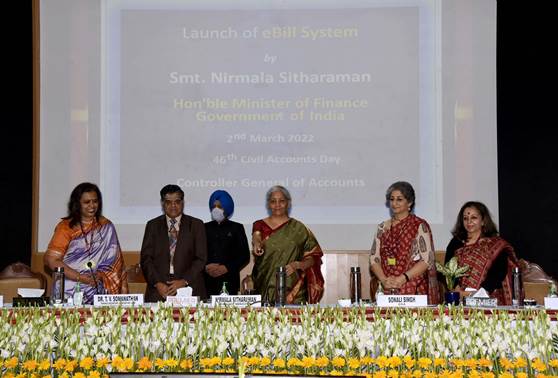
The Union Minister for Finance & Corporate Affairs Smt. Nirmala Sitharaman launched the e-Bill system for Central Government Ministries on the 46th Civil Accounts Day here today.

In a phased manner, the new system will make the entire process of submission and backend processing of bills completely paperless and transparent.  Thus, it is a major step forward in realizing the vision of “Digital India” and promoting ease of doing business. 

The objectives of the system are to:

a)         Provide convenience to all vendors/suppliers of the government to submit their bills/claims at anytime, from anywhere.

b)         Eliminate physical interface between suppliers and government officers.

c)         Enhance efficiency in processing of bills/claims.

d)         Reduce discretion in processing of bills through “First-In-First-Out”(FIFO) method.

Currently, the suppliers of various goods and services to the Government have to submit physical, ink signed copies of their bills to the respective Ministries/Departments/offices of the Government of India.  Similarly, the government employees also need to submit hard copies of their claims.  At the backend too, the processing of bills is done through a mixed system of physical and digital modes. So the suppliers/vendors or their representatives need to visit the offices to deliver bills.  Moreover, they are unable to track the status of processing of their bills. 

Under the newly launched e-Bill system, vendors/suppliers can upload their bills online along with supporting documents from the convenience of their homes/offices at any time through digital signature.  For those not having a digital signature, the facility of e-sign using Aadhaar has also been provided. So, the suppliers will no longer be required to visit the offices concerned for this purpose. 

At the backendtoo, the electronic bill received will be processed by the authorities digitally at every stage and finally, the payments will be credited digitally to the bank account of the vendor.  The vendor/supplier would be able to track the status of processing of their bills online.  Thus, the new system will bring in lot of efficiency and transparency in the system and is a big citizen-centric decision of the Government of India.

The e-Bill system has been developed by the Public Financial Management System (PFMS) Division in the office of the Controller General of Accounts in the Department of Expenditure, Ministry of Finance. The bills will be processed by First-In-First-Out (FIFO) method.

The system has been initially rolled out in the following nine Pay and Accounting Units of following nine Ministries/Departments:-

1)         PAO Ministry of Food Processing Industry

2)         PAO, Department of Pharmaceuticals, Ministry of Chemical and Fertiliser

3)         PAO, Department of Science and Technology, Ministry of Science and Technology

4)         PAO (CGA HQ), Department of Expenditure, Ministry of Finance

5)         PAO (PFMS Division), Department of Expenditure, Ministry of Finance

6)         PAO, Ministry of New and Renewable Energy

7)         PAO (Census), Ministry of Home Affairs

8)         PAO M/o Steel

9)         PAO (NIC), Ministry of Electronics and Information Technology

            The e-Bill system will be rolled out in other Ministries/Departments in a phased manner in 2022-23. 

In addition to promoting ease of doing business and brining convenience to lakhs of vendors/suppliers, the e-Bill system will be environment friendly, eliminating the need to submit crores of paper bills annually and will thus save tonnes of papers every year.  The e-Bill system has an elaborate digital storage facility for retrieval of documents and a robust audit trail.

****

Invitation for public comments on draft ‘IFSCA Guidance framework on Sustainable and Sustainability linked lending by financial institutions in IFSCs’(Press Release 02 March 2022)

The International Financial Services Centres Authority (IFSCA) has been established as a unified regulator to develop and regulate financial products, financial services and financial institutions in the International Financial Services Centres (IFSCs) in India.

As the climate crisis deepens, economies across the globe are transitioning towards sustainable and low-carbon growth. This transition is fueled by their commitment to meet the Paris Agreement and the Sustainable Development Goals (SDG’s). Banks and financial institutions are one of the key players who can support this transition by directing financial flows to sustainable and climate friendly solutions via lending or by raising capital for sustainable and sustainability-linked projects. However, there is a need for banks and financial institutions to have a policy to ensure transparency in this process to avoid concerns like greenwashing.

In view of the above, the draft guidance framework, intends to encourage the IFSC Banking Units (IBU) and Finance Companies/Finance Units (FC/FUs) (undertaking lending activities from IFSCs) to internally develop a comprehensive Board approved policy on green/social/sustainable/sustainability linked lending. The guidance intends to provide a broad framework for adoption of principles aligned with the existing international standards viz. Green/Social Loan Principles developed by Loan Market Association (LMA), Bond Principles developed by International Capital Markets Association (ICMA), Climate Bond Standards by Climate Bonds Initiative and any other similar recognized standards.

IFSCA proposes to direct the IBUs and FC/FUs (undertaking lending activities from IFSCs) registered with it to develop a Board approved policy on sustainable lending within a time period of 9 months from the date of issuance of the final framework. Further, such entities shall have at least 10 per cent of their loan assets in the form of lending to green/social/sustainable/sustainability-linked sectors/facilities, from the financial year beginning April 2023 /calendar year beginning January 2023. In case, if the IBU or FC/FU is unable to meet the above targets, it shall report to the Authority explaining reasons for non-compliance of the same.

The core components of such policy on lending shall cover aspects such as:

Borrower assessment process,Assessing the use of proceeds and appropriately describing it in the legal documentation of the loan facility,Process to be adopted for project evaluation and selection, management of proceeds,Reporting mechanism,Monitoring either internally or through external reviewer, and;De-classification of lending facilities.

The Draft further provides an illustrative list of eligible green projects, social projects and certain industry green standards based on which labelling or classification of a facility can be carried out.

The Draft guidance is uploaded on the IFSCA website at the URL https://www.ifsca.gov.in/PublicConsultation.

The comments / suggestions are invited from general public and stakeholders on the draft framework, so as to reach us on or before March 22, 2022 (i.e. within 21 days from the date of press release).

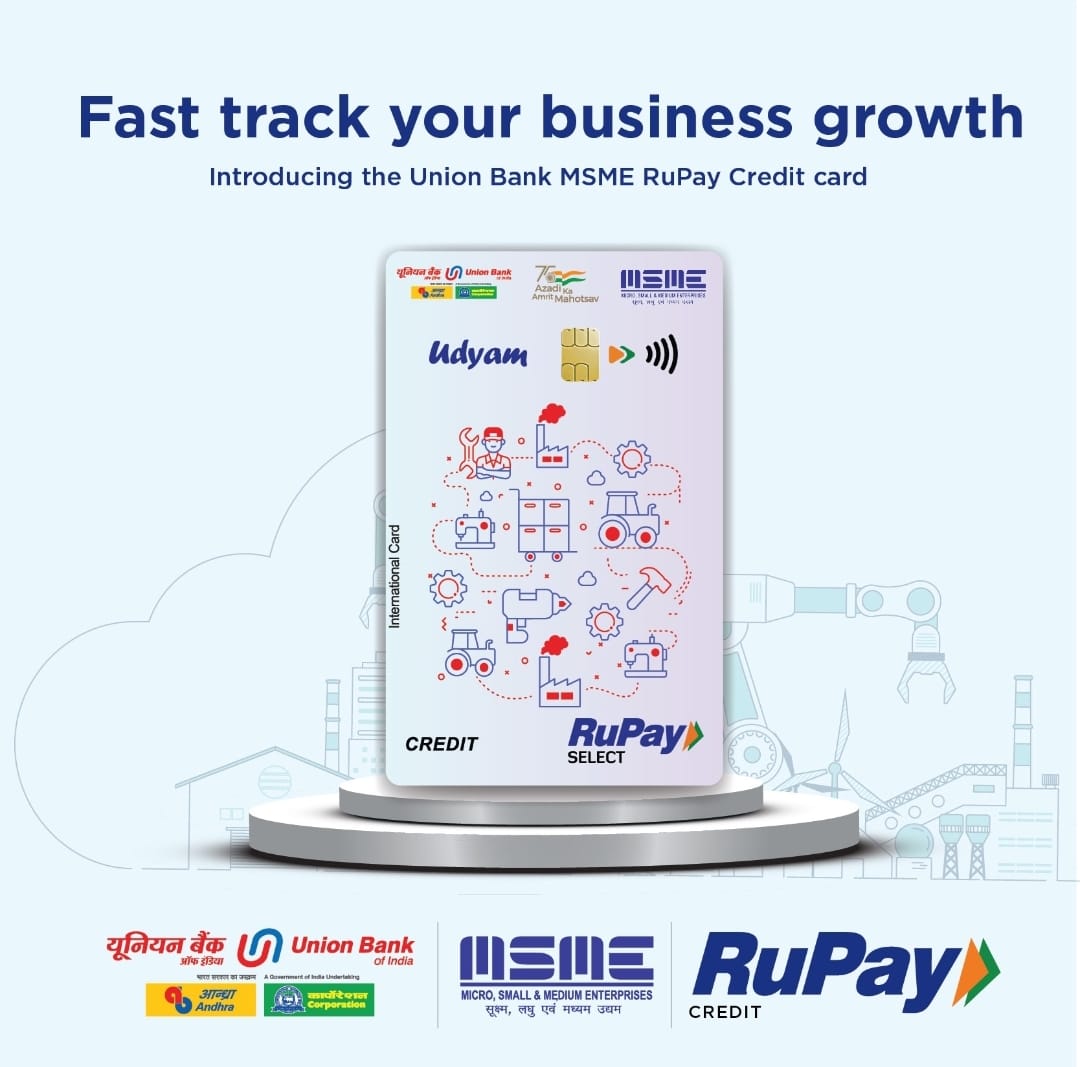
Union MSME Minister Narayan Rane launches Union Bank MSME RuPay Credit Card (Press release 25th Feb 2022)

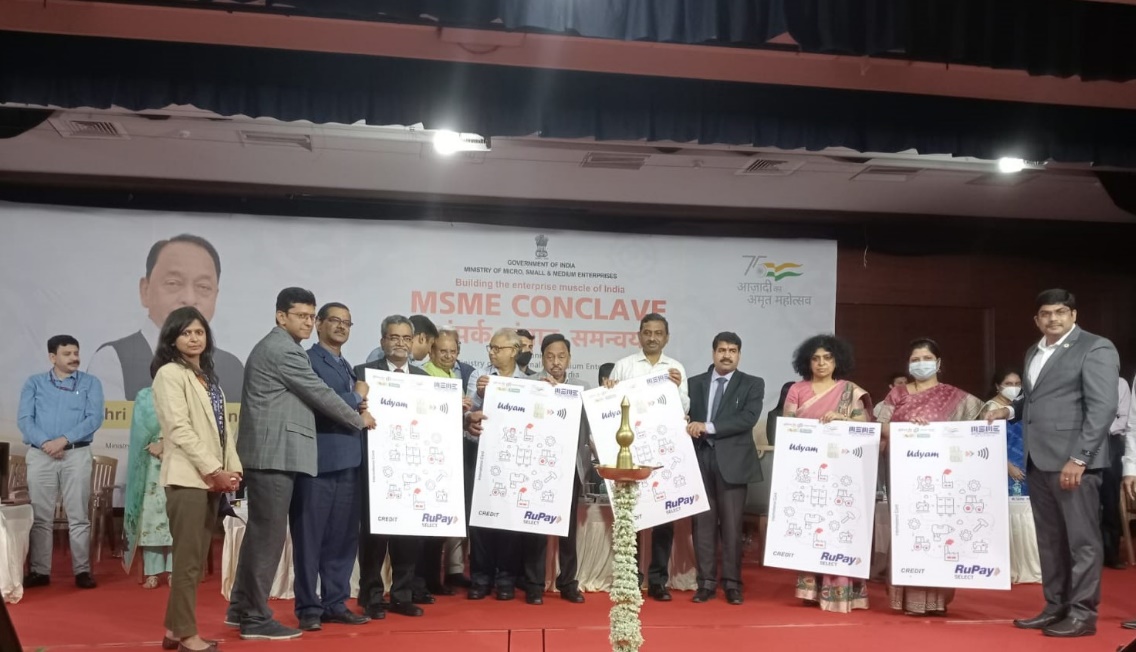
Union Minister for Micro, Small & Medium Enterprises, Shri Narayan Rane today launched the Union MSME RuPay Credit Card of Union Bank of India in Sindhudurg at the two day MSME Conclave being held in the district.  The card is being offered by Union Bank of India in association with National Payments Corporation of India (NPCI).  It provides a simplified payment mechanism to MSMEs to meet their business-related operational expenses.

The RuPay Card offers benefits like anytime digital payments, interest-free period and will carry interest rate similar to the rate charged for loans. MSME borrowers will be able to enjoy an interest-free credit period of up to 50 days on their business spends. The card also offers the EMI facility to the customers on their business-related purchases. MSMEs will also get specially curated efficient business services on this card which will help them in taking their business on most of the digital platforms.

The RuPay Credit card will simplify and expedite payment mechanism for MSMEs while enabling banks to monitor the transactions at granular level. The Credit card will also reduce the demand for cash withdrawal by the businesses due to availability of the digital payment tool.

Other benefits include accidental insurance coverage, lounge access, and other rewards being offered by NPCI on RuPay cards. Besides this, the card offers variety of additional features and business services for the MSMEs. 

During the MSME Conclave, the Union Minister distributed the first batch of RuPay cards to select MSME entrepreneurs.

***

PIB Mumbai 001 / DJM / JSP /DLakshmi/ PK

Also read PIB Release

Rs 200 crore MSME Technology Centre to be set up in Sindhudurg
https://pib.gov.in/PressReleasePage.aspx?PRID=1801096

Follow us on social media: @PIBMumbai  Image result for facebook icon /PIBMumbai    /pibmumbai  pibmumbai@gmail.com

Sovereign Gold Bond Scheme 2021-22– Issue price Series-X (Press release 25 Feb 2022)

In terms of Government of India Notification No.4(5)-B(W&M)/2021 dated October 21, 2021, Sovereign Gold Bonds 2021-22 (Series X) will be opened for subscription during the period February 28- March 04, 2022 with Settlement date March 08, 2022. The issue price of the Bond during the subscription period shall be Rs 5,109  (Rupees five thousand one hundred nine only) – per gram, as also published by RBI in their Press Release dated February 25, 2022.      

The Government of India in consultation with the Reserve Bank of India has decided to allow discount of Rs 50 (Rupees Fifty only) per gram from the issue price to those investors who apply online and the payment is made through digital mode. For such investors the issue price of Gold Bond will be Sr 5,059 (Rupees five thousand fifty nine only) per gram of gold.