Bhagavad Gita : Engaged in devotional service (Karma-yoga-Action in Krsna (divine) Consciousness (Text 6, Ch 5)

Sannyasas tu maha-baho
Duhkham aptum ayogatah
Yoga-yukto munir brahma
na cirenadhigacchati
(Text 6, Ch 5)

Meaning : Merely renouncing all activities  yet not engaging  in the devotional  service of the Lord cannot make one happy. But a thoughtful person engaged in devotional service can achieve the supreme without delay.

Happy Diwali (The time to light lamps of Wisdom)


This Diwali let us pray and feel grateful – let there be prosperity in every corner of the world – let all people experience love, joy and abundance in their lives.


Diwali: The time to light lamps of wisdom

Originating from the Sanskrit word ‘Deepavali’, it literally means rows (Avali) of lights (Deepa). This festival of lights is celebrated on the darkest night (Amavasya) of the Kartik month in the Indian calendar, and it symbolizes the vanquishing of ignorance (darkness) by the knowledge (light).
Sri Sri explains the reason for playing with fireworks on Diwali. Whatever negativity – anger, jealousy or fear – has accumulated in your mind in the last one year should get dissolved in the form of all the crackers. With each cracker, burst any negativity you may have for any person, or at the most write the name of that person on the cracker and burst it, and just know that all ill feelings, jealousy etc, has got burnt. But what do we do? Instead of finishing the negativity, either we wish that person to get finished or burn ourselves in that fire of negativity. It should be the other way around. Thinking all the negativity or ill feelings have gone out with those crackers, become friendly with that person again. There is a feeling of lightness, love, peace and happiness, and then go and have sweets with that person and celebrate Diwali. This is only true Diwali, by bursting crackers burn the bad qualities of that person, not the person.
The festivities start from the 13th day of the fortnight of the waning moon.
On the first day of celebration, Dhantrayodashi houses and business premises are renovated and decorated. The entrances are made colourful with lovely traditional motifs of Rangoli designs to welcome the Goddess of wealth and prosperity (Lakshmi). To indicate her long awaited arrival, small footprints are drawn with rice flour and vermillion powder all over the house. Lamps are kept burning all through the nights. Believing this day to be auspicious, women purchase some gold or silver or some new utensils, and in some parts of India, cattle are also worshipped.
This day is considered to be the birthday of Dhanvantari – the God of Ayurveda or the Physician of Gods, and celebrated as Dhanvantari Jayanti. On this day, lamps are lit all night in reverence to the Lord Yama – the God of Death and hence also known as ‘Yamadeepdaan’. This is supposed to take away the fear of an untimely death.
On the second day, Narakachaturdashi there is a tradition to wake up early in the morning and have a bath before sunrise. The story goes that the demon king Narakasur – ruler of Pragjyotishpur (a province to the South of Nepal) – after defeating Lord Indra had snatched away the magnificent earrings of Aditi (the Mother Goddess) and imprisoned sixteen thousand daughters of the Gods and saints in his harem. On the day previous to Narakachaturdashi, Lord Krishna killed the demon and liberated the imprisoned damsels and also recovered those precious earrings of Aditi. The womenfolk massaged scented oil to his body and gave him a good bath to wash away the filth from his body. Hence, this tradition of an early morning bath signifies the victory of the Divine over Evil. This day represents the heralding of a future full of goodness.
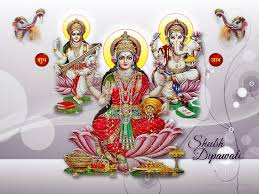
The most important day of the celebrations is the third day – Lakshmi Puja.This is the day when the sun enters its second course. This day is considered to be very auspicious, in spite of it being the darkest night. The impenetrable darkness of the night slowly disappears as small twinkling lamps light up entire cities. It is believed that Lakshmi walks on this planet on this night and showers blessings for abundance and prosperity. This evening people perform Lakshmi Puja and distribute homemade sweets to everyone.
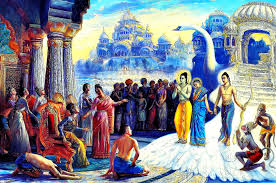
On this very auspicious day, many saints and great people have taken Samadhi and left their mortal bodies. The great seers include Lord Krishna and Bhagwan Mahavir. This is also the very day when Lord Rama returned home with Sita and Lakshman after 14 years in exile.
One very interesting story about this Diwali day is from Kathopanishad of a small boy called Nachiketa who believed that Yama, the god of Death was as black as the dark night of Amavasya. But when he met the Yama in person, he was puzzled seeing Yama’s calm countenance and dignified stature. Yama explained to Nachiketa that only by passing through the darkness of death, man sees the light of the highest wisdom and his soul can escape from the bondage of his body to become one with the Divine. Nachiketa, then, realized the importance of worldly life and significance of death. With all his doubts set at rest, he whole-heartedly participated in the Diwali celebrations.
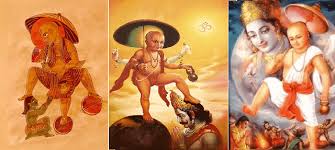
The fourth day of the celebrations is known Varshapratipada and marks the coronation of King Vikram. This is also the day when Lord Krishna lifted the mighty mountain Govardhan to save the people of Gokul from the torrential anger of Lord Indra.
The fifth day – Bhai-duj
– symbolizes the love between brothers and sisters. The brothers give them a gift as a token of their love.
It is believed that wealth (Goddess Lakshmi) is very transient and it stays only where there is hard work, sincerity and gratefulness. In Shriman Bhagvatam, there is a mention about an incident when Goddess Lakshmi left the body of King Bali and wanted to go with Lord Indra. On questioning, she mentioned that she resides only where there is Satya‘, ‘Daan‘, ‘Vrat‘, ‘Tapa‘, ‘Parakram‘ and ‘Dharma‘.
This Diwali let us pray and feel grateful – let there be prosperity in every corner of the world – let all people experience love, joy and abundance in their lives.

(Source: http://www.artofliving.org/wisdom/knowledge-sheets/diwali-time-light-lamps-wisdom)

Threshold limit for GST registration for persons making inter-State supplies of services (Notification No. 10/2017, dated 13th Oct 2017)

Threshold limit for GST registration is also applicable for persons making inter-State supplies of services


Now, there is no need to take registration upto aggregate turnover of Rs. 20 lakhs/ 10 lakhs even if the taxpayers are making inter-State taxable supplies of services.

Refer extract of notification:

[To be published in the Gazette of India, Extraordinary, Part II, Section 3, Sub-section (i)]
Government of India
Ministry of Finance
Department of Revenue
Central Board of Excise and Customs
Notification No. 10/2017 – Integrated Tax dated New Delhi, the 13th October, 2017
G.S.R. …..(E).— In exercise of the powers conferred by section 20 of the Integrated Goods and Services Tax Act, 2017 (13 of 2017) read with sub-section (2) of section 23 of the Central Goods and Services Tax Act, 2017 (12 of 2017) (hereafter in this notification referred to as the said Act), the Central Government, on the recommendations of the Council, hereby specifies the persons making inter-State supplies of taxable services and having an aggregate turnover, to be computed on all India basis, not exceeding an amount of twenty lakh rupees in a financial year as the category of persons exempted from obtaining registration under the said Act:
Provided that the aggregate value of such supplies, to be computed on all India basis, should not exceed an amount of ten lakh rupees in case of “special category States” as specified in sub-clause (g) of clause (4) of article 279A of the Constitution, other than the State of Jammu and Kashmir.

Bhagavad Gita: Sees things as they are (Karma-yoga-Action in Krsna(divine) Consciousness (Text 5, Ch 5)

yat sankhyaih prapyate sthanam
tad yogair api gamyate
ekam sankhyam ca yogam ca
yah pasyati sa pasyati

(Karma-yoga-Action in Krsna(divine) Consciousness (Text 5, Ch 5)

Meaning:  One who knows that the position reached by means of analytical study can also be attained by devotional service, and who therefore sees analytical study and devotional service to be on the same level, sees things as they are.

*** Detachment from matter and attachment to divine are one and the same. One who can see this sees things as they are.

Bhagavad Gita: Achieve results of both (Karma-yoga-Action in Krsna(divine) Consciousness (Text 4, Ch 5)


sankhya-yogau prthag balah
pravadanti na panditah
ekam apy asthitah samyag
ubhayor vindate phalan

(Karma-yoga-Action in Krsna(divine) Consciousness (Text 4, Ch 5)

Meaning: Only the ignorant speak of devotional service [karma-yoga] as being different from the analytical study of the material world. Those who are actually learned say that he who applies himself well to one of these paths achieves the results of both.

Bhagavad Gita: Completely liberated person (Karma-yoga-Action in Krsna(divine) Consciousness (Text 3, Ch 5)


jneyah sa nitya-sannyasi
yo na dvesti na kanksati
nirdvandvo hi maha-baho
sukham bandhat pramucyate

Bhagavad Gita: Completely liberated person (Karma-yoga-Action in Krsna(divine) Consciousness (Text 3, Ch 5)

Meaning: One who neither hates nor desires the fruits of his activities is known to be always renounced. Such a person, free from all dualities, easily overcomes material bondage and is completely liberated, O mighty-armed Arjuna.

***  One who is fully in divine consciousness is always a renouncer because he feels neither hatred nor desire for the results of his actions. Such a renouncer, dedictaed to the transcendental loving service of the Lord, is fully qualified in knowledge because he knows his constitutional position in his relationship with divine.

Bhagavad Gita: Devotional Service is better than renunciation of work ( Karma-yoga-Action in Krsna(divine) Consciousness (Text 2, Ch 5)

sri-bhagavan uvaca

sannyasah karma-yogas ca
nihsreyasa-karav ubhau
tayos tu karma-sannyasat
karma-yogo visisyate

(Karma-yoga-Action in Krsna(divine) Consciousness (Text 2, Ch 5)

Meaning: The Personality of Godhead replied: The renunciation of work and work in devotion are both good for liberation. But, of the two, Work in devotional service is better than renunciation of work. 

*** 

  • Fruitive activities ( seeking sense gratification) are cause for material bondage. As long as one is engaged in activities aimed at improving the standard of bodily comfort, one is sure to transmigrate to different types of bodies, thereby continuing material bondage perpetually.
  • One is considered to be a failure in life as long as he makes no inquiry about his real identity.
  • Develop love for devotional service to divine. Only then can one have the opportunity to get out of the bondage of material existence.
  • When persons eager to achieve liberation renounce things related to the Supreme Personality of Godhead, thinking them to be material, their renunciation is called incomplete. Renunciation is complete when it is in the knowledge that everything in existence belongs to the Lord and that no one should claim proprietorship over anything. One should understand that factually, nothing belongs to anyone.Then were is the question of renunciation. One who knows that everything is divine(God)  property is always situated in renunciation. Since everything belongs to divine, everything should be employed in the service of divine(God).  

PRESS RELEASE: 22nd GST Council Meeting 06th Oct 2017


PRESS RELEASE


6th October, 2017

Recommendations made by the GST Council in the 22nd meeting at New Delhi on 6th October, 2017

GST package for Small Units

The GST Council, in its 22nd meeting held at New Delhi on 6th October 2017, has recommended the following facilitative changes to ease the burden of compliance on small and medium businesses:

Composition Scheme

1. The composition scheme shall be made available to taxpayers having annual aggregate turnover of up to Rs. 1 crore as compared to the current turnover threshold of Rs. 75 lacs. This threshold of turnover for special category States, except Jammu & Kashmir and Uttarakhand, shall be increased to Rs. 75 lacs from Rs. 50 lacs. The turnover threshold for Jammu & Kashmir and Uttarakhand shall be Rs. 1 crore. The facility of availing composition under the increased threshold shall be available to both migrated and new taxpayers up to 31.03.2018. The option once exercised shall become operational from the first day of the month immediately succeeding the month in which the option to avail the composition scheme is exercised. New entrants to this scheme shall have to file the return in FORM GSTR-4 only for that portion of the quarter from when the scheme becomes operational and shall file returns as a normal taxpayer for the preceding tax period. The increase in the turnover threshold will make it possible for greater number of taxpayers to avail the benefit of easier compliance under the composition scheme and is expected to greatly benefit the MSME sector.


2. Persons who are otherwise eligible for composition scheme but are providing any exempt service (such as extending deposits to banks for which interest is being received) were being considered ineligible for the said scheme. It has been decided that such persons who are otherwise eligible for availing the composition scheme and are providing any exempt service, shall be eligible for the composition scheme.

3. A Group of Ministers (GoM) shall be constituted to examine measures to make the composition scheme more attractive.


Relief for Small and Medium Enterprises


4. Presently, anyone making inter-state taxable supplies, except inter-State job worker, is compulsorily required to register, irrespective of turnover. It has now been decided to exempt those service providers whose annual aggregate turnover is less than Rs. 20 lacs (Rs. 10 lacs in special category states except J & K) from obtaining registration even if they are making inter-State taxable supplies of services. This measure is expected to significantly reduce the compliance cost of small service providers.


5. To facilitate the ease of payment and return filing for small and medium businesses with annual aggregate turnover up to Rs. 1.5 crores, it has been decided that such taxpayers shall be required to file quarterly returns in FORM GSTR-1,2 & 3 and pay taxes only on a quarterly basis, starting from the third quarter of this financial year i.e. October-December, 2017. The registered buyers from such small taxpayers would be eligible to avail ITC on a monthly basis. The due dates for filing the quarterly returns for such taxpayers shall be announced in due course. Meanwhile, all taxpayers will be required to file FORM GSTR-3B on a monthly basis till December, 2017. All taxpayers are also required to file FORM GSTR-1, 2 & 3 for the months of July, August and September, 2017. Due dates for filing the returns for the month of July, 2017 have already been announced. The due dates for the months of August and September, 2017 will be announced in due course.

6. The reverse charge mechanism under sub-section (4) of section 9 of the CGST Act, 2017 and under sub-section (4) of section 5 of the IGST Act, 2017 shall be suspended till 31.03.2018 and will be reviewed by a committee of experts. This will benefit small businesses and substantially reduce compliance costs.

7. The requirement to pay GST on advances received is also proving to be burdensome for small dealers and manufacturers. In order to mitigate their inconvenience on this account, it has been decided that taxpayers having annual aggregate turnover up to Rs. 1.5 crores shall not be required to pay GST at the time of receipt of advances on account of supply of goods. The GST on such supplies shall be payable only when the supply of goods is made.
8. It has come to light that Goods Transport Agencies (GTAs) are not willing to provide services to unregistered persons. In order to remove the hardship being faced by small unregistered businesses on this account, the services provided by a GTA to an unregistered person shall be exempted from GST.


Other Facilitation Measures

9. After assessing the readiness of the trade, industry and Government departments, it has been decided that registration and operationalization of TDS/TCS provisions shall be postponed till 31.03.2018.

10. The e-way bill system shall be introduced in a staggered manner with effect from 01.01.2018 and shall be rolled out nationwide with effect from 01.04.2018. This is in order to give trade and industry more time to acclimatize itself with the GST regime.

11. The last date for filing the return in FORM GSTR-4 by a taxpayer under composition scheme for the quarter July-September, 2017 shall be extended to 15.11.2017. Also, the last date for filing the return in FORM GSTR-6 by an input service distributor for the months of July, August and September, 2017 shall be extended to 15.11.2017.

12. Invoice Rules are being modified to provide relief to certain classes of registered persons.

***************************************************
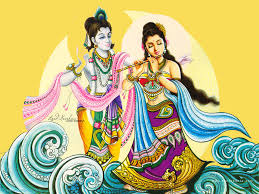

Bhagavad Gita: Which of the two is more beneficial-To renounce work or work with devotion- (Karma-yoga-Action in Krsna(divine) Consciousness (Text 1, Ch 5, )


Arjuna uvaca
sannyasam karmanam krsna
punar yogam ca samsasi
yac chreya etayor ekam
tan me bruhi su-niscitam

Bhagavad Gita: Karma-yoga-Action in Krsna(divine) Consciousness (Text 1, Ch 5, )

Meaning: Arjuna said: O Krsna, first of allYou ask me to renounce work, and then again You recommend work with devotion, Now will you kindly tell me definitely which of the two is more beneficial?

*** In the fifth chapter, Lord says that work in devotional service is better than dry mental speculation. Devotional service is easier than the latter because, being transcendental in nature, it frees one from reaction.